
 Bitaigen Research
 The DeFAI concept currently spans three major directions: abstraction layers, AI trading agents, and AI‑driven dApps. Representative projects include Griffain, Orbit, Neur, Almanak, Cod3x, Axal, ASYM, and others.
The AI theme continues to dominate the market: $ai16z, $zerebro, and $griffain are all listed on Binance Futures, while narrative‑driven frameworks $arc and $swarms have surged more than tenfold in a single week. New AI agents appear constantly—overall, the AI‑centric market can be described as utterly frenetic.
Beyond soaring token prices, the practical utility of AI is also evolving. Numerous AI projects are now targeting the DeFi sector, allowing AI to execute complex DeFi operations. Consequently, the DeFAI (DeFi + AI) concept is being mentioned repeatedly.
From the perspective of the Bitaigen editorial team, we have organized the conceptual framework of DeFAI and its core projects, dissected the technical pathways that merge AI with DeFi, and evaluated how these emerging solutions lower the entry barrier for ordinary users. If you want to know which projects are leading the AI + DeFi trend, this article provides a panoramic reference worth a careful read.
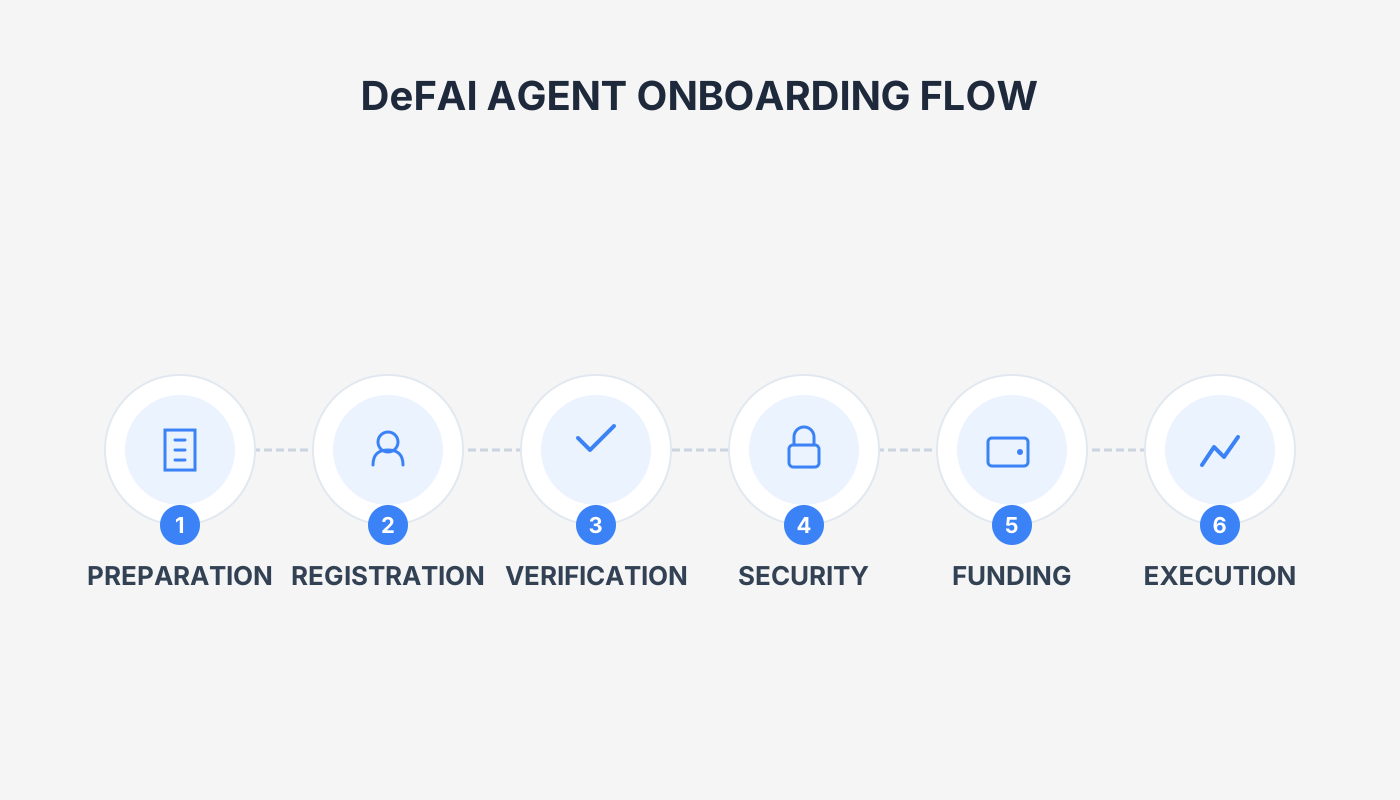
What Is DeFAI?
DeFi has become one of the pillar concepts of the crypto world, yet its practical use still presents a relatively high barrier for ordinary participants. To enjoy the convenience that DeFi promises, users must master a suite of skills, including locating reputable platforms, configuring wallets, distinguishing between Layer‑1 and Layer‑2 solutions, and avoiding phishing scams. The overall workflow remains cumbersome.
The emergence of DeFAI reduces these barriers to a certain extent. As the name suggests, DeFAI is the AI + DeFi hybrid that leverages artificial intelligence to simplify intricate DeFi operations, allowing more people to engage with DeFi through a more intuitive interface. Managing assets with a DeFAI service feels as easy as chatting with GPT.
Which Projects Belong to the DeFAI Concept?
DeFAI projects are beginning to take shape and mainly concentrate on three domains:
- Abstraction Layer – provides user‑friendly interaction interfaces
- Self‑Trading AI Agents – autonomous bots capable of self‑learning and decision‑making
- AI‑Driven dApps – fully decentralized applications that integrate AI functionalities
Abstraction Layer – Simplifying Interaction
The abstraction layer essentially wraps DeFi’s complex operations with a user‑friendly interface, much like driving a car without needing to understand the engine’s inner workings.
Before DeFAI, Uniswap experimented with the ERC‑7683 “abstract cross‑chain intent” standard to optimize cross‑chain routes, but it still required users to possess a certain level of DeFi knowledge.
In the DeFAI era, the abstraction layer advances further, allowing users to express investment intentions in natural language, e.g., “I want to DCA ETH with $100 every week.” The system then automatically carries out all on‑chain actions.
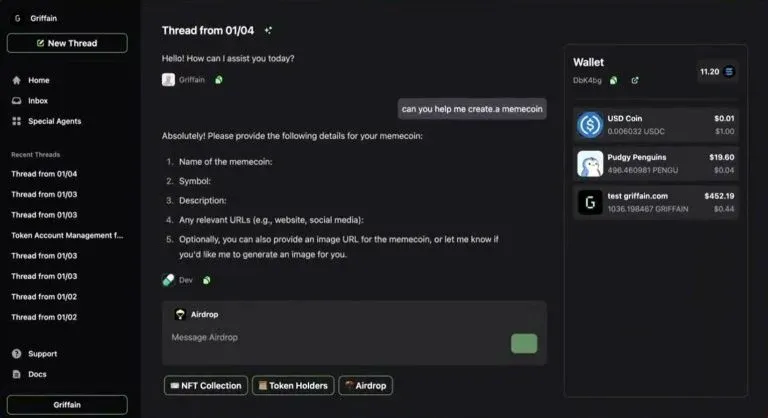
The most closely watched abstraction‑layer products on the market today are Griffain, Orbit, and Neur. All aim to let users complete DeFi tasks via chat, but each has a different emphasis: Griffain focuses on all‑round capability, Orbit specializes in cross‑chain operations, and Neur concentrates on the Solana ecosystem.
Griffain
Token contract address: `KENJSUYLASHUMfHyy5o4Hp2FdNqZg1AsUPhfH2kYvEP`
Griffain (@griffaindotcom) is an early‑issued DeFAI‑sector AI agent. The platform offers two categories of agents:
- Personal agents – created and controlled by the user, customizable commands, continuously updated memory, capable of executing on‑chain actions as well as information retrieval. Future plans include delegating tasks to other specialist agents.
- Special agents – professionally crafted AI agents released by Griffain’s team. The current lineup includes Baxus, Blink, Onchain, Holiday, Sniper, Flipper, and others, each endowed with a specific function.
Griffain operates on an invitation basis; users holding an early‑access pass or a Saga Genesis token receive entry rights, after which they can create personal AI agents and connect to the special‑agent network.
Orbit
Token contract address: `GekTNfm84QfyP2GdAHZ5AgACBRd69aNmgA5FDhZupump`
Orbit (@orbitcryptoai) is an AI‑driven DeFi assistant platform that aims to streamline user interaction with DeFi. It currently supports seamless integration with over 100 blockchain networks and more than 175 protocols, greatly enhancing cross‑chain efficiency. Core functionalities include cross‑chain prediction markets, asset bridging, staking and yield‑farming strategy optimization, lending protocol access, and comprehensive portfolio management, all operable across 116 chains.
Neur
Token contract address: `3N2ETvNpPNAxhcaXgkhKoY1yDnQfs41Wnxsx5qNJpump`
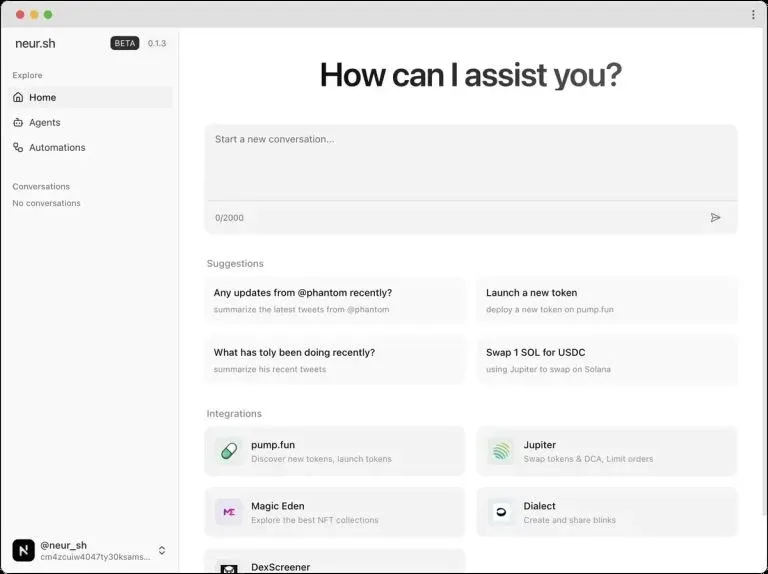
Neur (@neur_sh) is a smart assistant for the Solana ecosystem, built on an open‑source full‑stack architecture and supported by the Solana Agent Kit. The platform delivers natural‑language interaction and has already integrated major Solana protocols such as Jupiter and Magic Eden. Core features cover smart‑wallet management, NFT collection analytics, real‑time market tracking, and more, helping users simplify DeFi and NFT interactions through an AI‑driven UI.
Slate
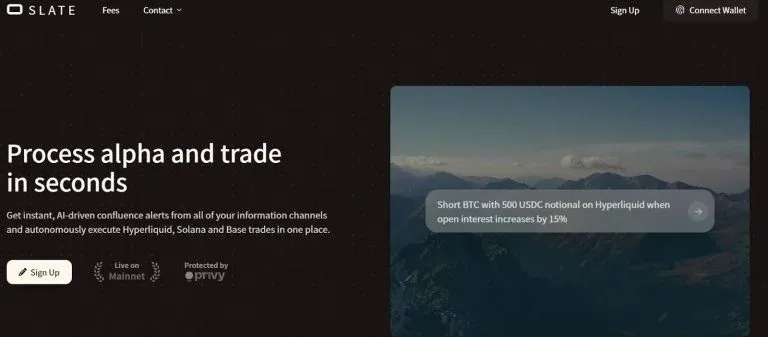
Slate (@slate_ceo) is still in the early development stage, with automation as its core differentiator. User feedback indicates that Slate excels at executing complex trading strategies, borrowing automation concepts from Chainlink to deliver secure and cost‑effective solutions. The project has not issued a token yet; development remains its primary focus.
AI Wayfinder
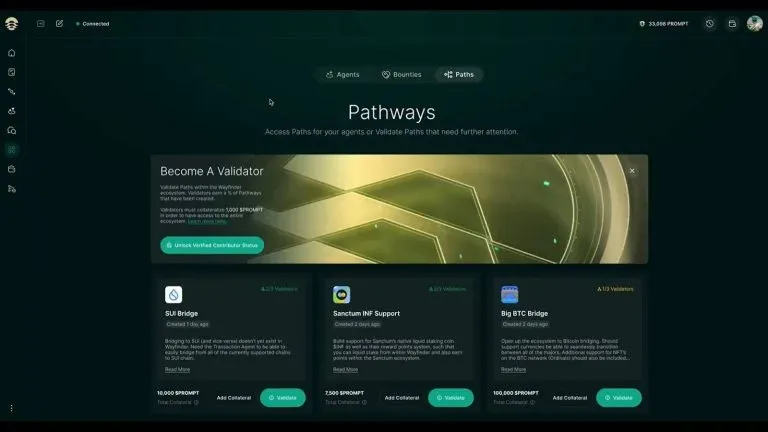
Wayfinder (@AIWayfinder) is a full‑chain AI tool that enables users’ self‑hosted AI agents to navigate the blockchain ecosystem safely and efficiently, executing asset trades via a dedicated Web3 wallet.
Self‑Trading AI Agents
Traditional trading bots merely run pre‑programmed scripts, whereas the next‑generation AI trading agents can extract information from complex environments, perform contextual reasoning, learn patterns, and act beyond their original code.
The field is shifting from early‑stage entertainment‑oriented use cases (e.g., meme‑coin prediction games) toward practical profit‑generating tools. A critical question is whether an “agent” truly operates as AI rather than as a conventional bot or a human‑in‑the‑loop. To address this, the industry has introduced two foundational infrastructures:
- Trusted Execution Environments (TEE) – ensure that agent code runs in a secure, tamper‑proof setting.
- Transparent Execution Verification Frameworks – leverage zero‑knowledge proofs and similar technologies to guarantee the integrity of computational processes.
As autonomous agents manage larger pools of capital, these verification mechanisms become especially important; users need to understand an agent’s risk‑management model to safeguard their assets.
Below are projects that are exploring the aforementioned key technologies:
Almanak
Almanak (@Almanak__) aims to democratize quantitative trading, allowing anyone to create and employ AI trading agents for profit. Its core advantage lies in a unique simulator that blends agent‑based modeling with blockchain‑driven Monte Carlo simulations, delivering high‑precision prediction environments for financial strategies.
The platform uses the simulator for strategy testing and optimization, while an execution engine handles deployment and monitoring. Almanak incentivizes strategy contributors through a token‑based reward system.
Cod3x
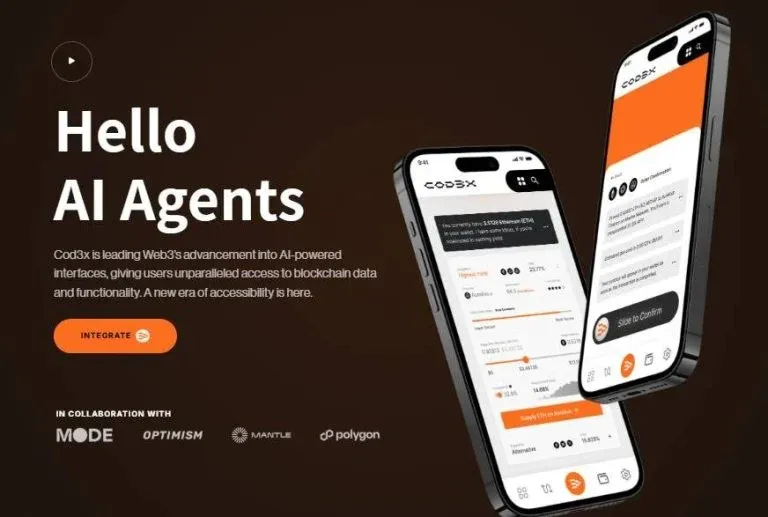
Cod3x (@Cod3xOrg) is built by the Byte Mason team (developers of Fantom and Sonic Labs) and offers a no‑code builder that lets users create trading agents, define strategies, personalize traits, and even mimic a specific tweet style.
The project aggregates a rich set of APIs and strategy libraries, and collaborates with Allora Network to incorporate its machine‑learning price‑prediction models, enhancing the effectiveness of trading strategies. Its flagship agent, Big Tony, trades major cryptocurrencies using the Allora model, demonstrating a real‑world AI‑driven trading application.
Axal & Gekko Agent
Token contract address: `0xf7b0dd0B642a6ccc2fc4d8FfE2BfFb0caC8C43C8`
Axal (@getaxal) is an innovative AI trading platform whose flagship product Autopilot lets users build custom trading agents. Since 2023, Axal has focused on AI‑agent infrastructure, handling agent source management, competitive auctions, and payment processing. Through Autopilot, users can set automatic rebalancing rules, yield‑harvesting triggers, and bespoke token baskets—for example, “automatically liquidate the portfolio if its value drops below a certain threshold.”
Recently, Axal partnered with Agora Finance to broaden its automated strategy capabilities, enabling complex operations ranging from rebalancing to custom token‑index creation.
Gekko Agent (@Gekko_Agent) is an AI agent released by Axal via Virtuals.io. It primarily shares crypto‑market insights and trade commentary on social media, adopting the persona of a 1980s Wall Street trader.

ASYM
Token contract address: `KENJSUYLASHUMfHyy5o4Hp2FdNqZg1AsUPhfH2kYvEP`
ASYM Agents (@ASYM41b07) are dubbed the “cheat code” for memecoin trading. They analyze massive blockchain and social‑media datasets to forecast memecoin trends, primarily targeting tokens listed on the Pumpfun platform.
The project’s functionality is split into two components:
- Prediction System – employs multiple machine‑learning models to forecast short‑term token prices and automatically executes the corresponding trading strategy.
- Social Interaction – runs a bot on X (formerly Twitter) that engages users based on an enhanced a16z framework.
The official website receives infrequent updates; the X account mainly publishes market‑analysis reports akin to AIXBT, regularly disclosing model accuracy and development progress.
Project Plutus
Token contract address: `76PsEyML7UV9uiBDWMdG3itRRuupDuRs6nNpjNBpump`
Project Plutus (@ProjectPlutus_) is deployed on the Solana blockchain. Its AI‑trading‑agent token PPCoin was issued through Pumpfun. The project’s goal is to help users maximize returns while eliminating the need for manual chart analysis and financial administration.
Unlike @aixbt_agent, which only provides research insights, Project Plutus combines analysis with autonomous trading: the system conducts market research and, using a funded wallet, executes trades, allowing users to both invest and withdraw assets (AUM). Core functions include automated strategy execution, portfolio‑management optimization, and goal‑oriented trade completion based on user‑defined financial targets.
Future development plans involve adding capabilities such as having the agent evaluate a project’s GitHub code quality, thereby expanding analytical dimensions. Users holding 5,000,000 or more PPCoin can unlock premium analytics, similar to token‑staking models on platforms like Cookie, giving the token real utility.
AI‑Driven dApps
AI‑driven dApps represent the forward‑looking segment of the DeFAI landscape. These fully decentralized applications embed AI or AI agents to boost functionality, automation, and user experience. Although still nascent, several ecosystems and projects are beginning to emerge.
Mode Network
Token contract address: `0x084382d1cc4f4dfd1769b1cc1ac2a9b1f8365e90`
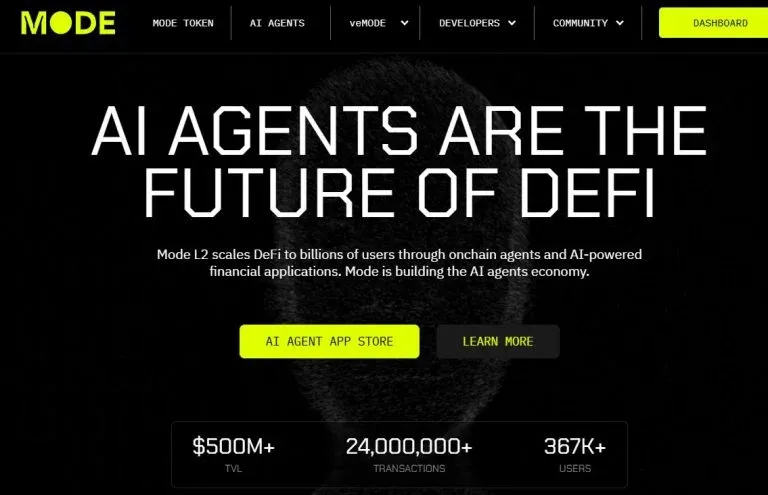
Mode Network (@modenetwork) is a layer‑2 network specifically designed for AI × DeFi developers and has quickly become one of the most active ecosystems in this niche. Multiple teams are building cutting‑edge AI‑powered applications on Mode.
##### ARMA (by Giza Tech)
ARMA (@0xARMAgeddon) is an emerging AI‑driven yield‑optimization project within the Mode Network ecosystem, developed by Giza Tech (@gizatechxyz). The project focuses on the automated management of USDC assets and is a flagship application in the Mode Network AI Agent App Store.
ARMA operates in a self‑custodial manner, using smart contracts to ensure users retain full control over their funds. Its core function continuously monitors interest rates across lending protocols on Mode Network and automatically rebalances capital when advantageous.


