
 Bitaigen Research
 Decentralized finance (DeFi) allows users to control their crypto assets directly without relying on banks or intermediaries, but this freedom also comes with greater responsibility. Hackers and malicious actors continuously hunt for exploitable flaws in DeFi, making security the top priority for anyone involved in the space.
DeFi security risks refer to the possibility of assets being stolen or lost on decentralized finance platforms due to contract vulnerabilities, protocol flaws, phishing attacks, and similar threats. Mitigation methods include auditing contracts, verifying addresses, and using hardware wallets.
In this article we outline the most common security hazards in DeFi—from contract bugs to phishing scams—and provide practical protection measures such as code audits, address verification, and hardware‑wallet usage, helping users enjoy the freedom of decentralized finance while reducing the risk of asset theft.
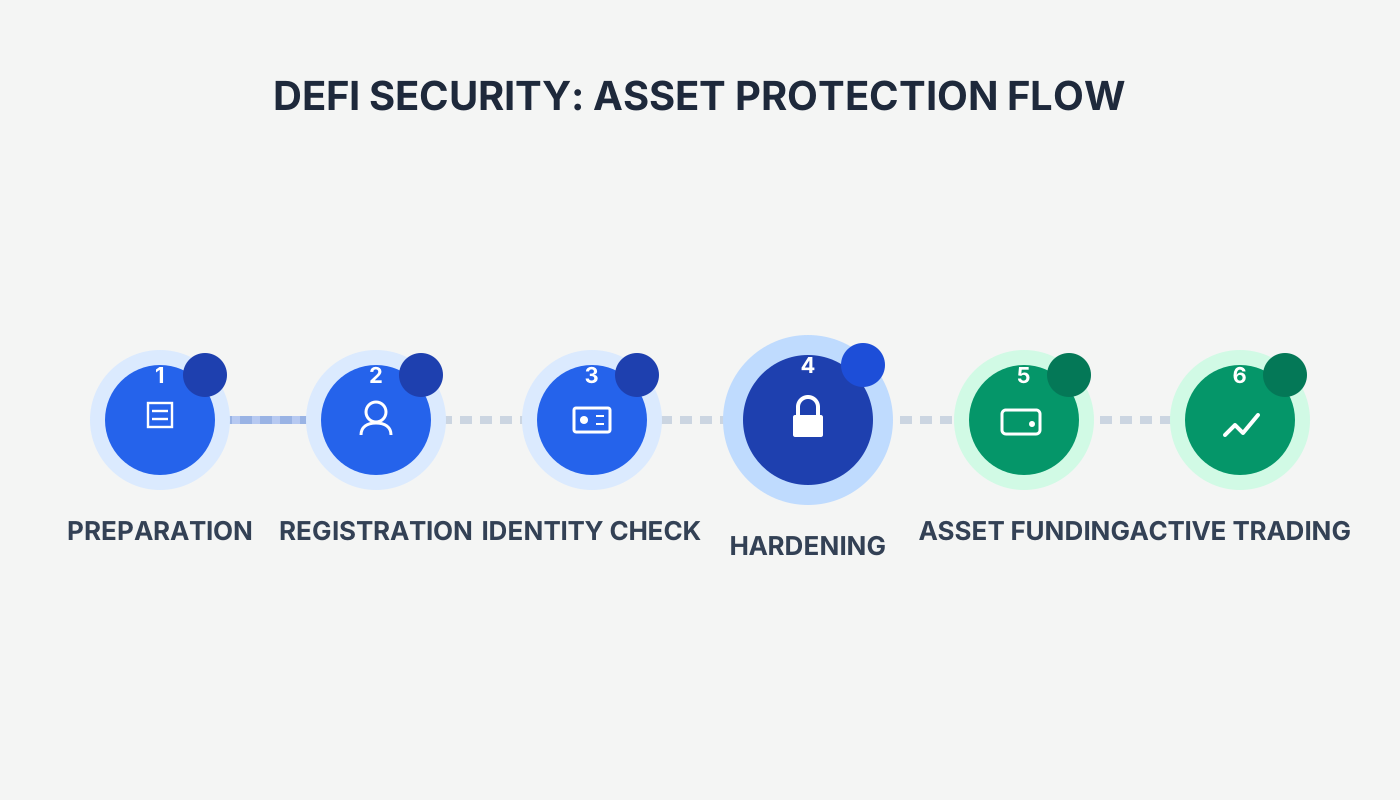
Understanding DeFi Security Risks
DeFi gives users unprecedented control over their assets, but its openness also makes it an attractive target for attackers. Unlike traditional finance, DeFi lacks centralized regulation and runs entirely on public smart contracts; a single vulnerability can result in irreversible loss of funds.
Typical technical and structural weak points include:
- Smart‑contract vulnerabilities: Coding errors that hackers can exploit to siphon funds directly.
- Protocol flaws: Logical defects in lending, liquidity, or staking mechanisms that can be manipulated.
- Exit scams: Project teams withdraw user funds and disappear.
- Phishing attacks: Tricks that persuade users to approve malicious transactions or reveal private keys.
The rapid pace of DeFi innovation often leads to rushed or omitted audits, further amplifying risk.
Representative cases
- In 2021, Poly Network suffered an attack exploiting a contract flaw, resulting in roughly $600 million in losses.
- Cream Finance endured multiple flash‑loan attacks totaling over $130 million.
- High‑profile protocols such as Balancer and bZx have also been breached, demonstrating that no project is immune.
These incidents remind us that robust security practices are especially critical in DeFi.
Smart‑Contract Security: What to Look at Before Investing
A smart contract is a self‑executing program on the blockchain that becomes immutable once deployed; any code defect becomes a permanent vulnerability.
When assessing a project, focus on the following:
- Audit reports: Prioritize projects that have been reviewed by reputable firms such as CertiK, Trail of Bits, Quantstamp, and others.
- Open‑source code: Public source code enables community scrutiny and improves transparency.
- Bug‑bounty programs: Projects that incentivize independent security researchers to disclose flaws usually demonstrate stronger security awareness.
- Community sentiment: Monitor Reddit, Twitter, Discord, and similar platforms for warnings from developers and users.
Useful tools:
| Tool | Function |
|---|---|
| **Etherscan** | View contract source code, transaction history, token interactions |
| **CertiK Security Rankings** | Provides audit outcomes and real‑time security scores |
| **DeFiLlama** | Tracks a protocol’s total value locked (**TVL**) as a proxy for trust and adoption |
By combining these resources you can gain a clearer picture of a project’s risk profile.
Secure Trading Practices in DeFi
In DeFi, once a transaction is on‑chain it cannot be reversed, and there is no customer service or refund channel. Consequently, adhering to the following six basic practices is essential:
- Verify contract addresses and URLs: Ensure you are on the official website or interacting with the correct contract address to avoid phishing links.
- Use revocation tools to manage allowances: Services like Revoke.cash and the Etherscan allowance checker let you revoke token permissions granted to dApps at any time.
- Set reasonable slippage limits: Prevent excessive slippage that can lead to front‑running or poor execution prices.
- Watch out for MEV bots and sandwich attacks: Privacy‑focused wallets can reduce the likelihood of being manipulated.
- Execute large trades with a hardware wallet: Devices such as Ledger or Trezor keep private keys offline, protecting them from browser‑based malware.
- Separate a primary wallet from a trading wallet: Keep long‑term holdings apart from high‑risk operations to limit potential loss if a single wallet is compromised.
Avoiding Scams and Malicious Projects in DeFi
Not every DeFi project operates with honest intentions. Bad actors often launch counterfeit or poorly designed protocols to lure users, lock liquidity, then collapse the system or outright steal assets. Recognizing the following red flags helps mitigate risk:
- Anonymous or unverified development team
- Projects promising unusually high or guaranteed returns
- Low market cap, high volatility, and a token supply heavily concentrated in a few wallets
- Absence of a whitepaper, technical documentation, or clear use‑case description
- Unverified smart contracts
Helpful analysis tools:
- DEX Screener / DEXTools: Examine token liquidity, price trends, and holder distribution.
- DeFiLlama: Supplies TVL data for protocols, assisting in assessing credibility and adoption.
Conduct thorough due diligence using these resources before committing capital to any project.
Staying Informed: Tools and Communities for Enhanced DeFi Security
The DeFi ecosystem evolves rapidly, with new scams and vulnerabilities emerging constantly. The following platforms deliver real‑time security intelligence:
- Chainalysis Alerts
- DeFi Saver
- CertiK Skynet
These services push instant notifications about abnormal protocol behavior, exploit attempts, or emerging risks.
Additionally, transaction simulators let you preview the exact effects of a transaction before confirming, helping you spot hidden permissions or unexpected token movements.
Joining reputable crypto communities—such as Telegram groups, Discord servers, and Reddit subreddits—remains vital. Community members often raise early warnings before a risk spreads widely. By combining practical security measures, continuous vigilance, and active community participation, DeFi users can better safeguard their assets and make more informed decisions in a high‑risk environment.
*Note:* Cryptocurrency gains may be taxable in your jurisdiction; consult local tax regulations or a professional advisor for guidance.
*For U.S. users:* When purchasing crypto with fiat, use Binance.US or another U.S.-compliant exchange; global Binance is not available to residents of the United States.
This concludes the comprehensive analysis of “What are DeFi security risks? How to avoid scams and malicious projects in DeFi.” For more DeFi‑security content, follow Bitaigen (比特根)’s other articles.
Related Reading
- Binance vs OKX Security Comparison: Which Exchange Offers Better Protection?
- Binance Security 2026: Protecting Crypto Funds from Hacks
- Web3 Anti-Theft Guide 2024: 8 Scam Tactics & Defense
💡 Register on Binance with referral code B2345 for the maximum trading fee discount. See Binance complete guide.



