
 Bitaigen Research
 The Bitaigen editorial team believes that, as the regulatory environment stabilizes, ETFs are becoming the bridge that allows ordinary investors to gain exposure to Ethereum. This article examines the product structure, operational mechanics, advantages, and potential risks, helping readers clarify concepts, assess suitability, and make more prudent allocation decisions.
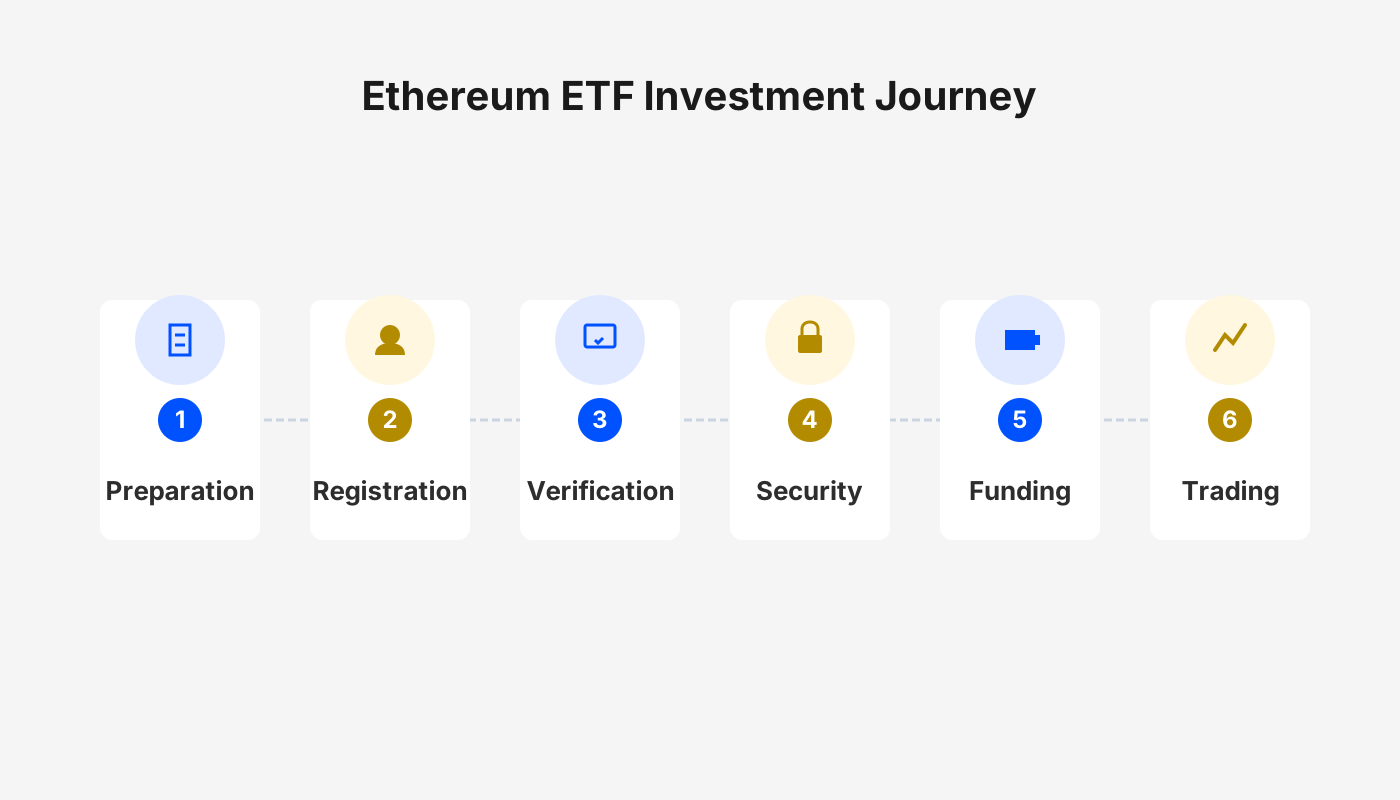
Key Points
- Ethereum ETF enables investors to participate in the price movements of Ether (ETH) without directly purchasing or storing the cryptocurrency, lowering the technical barrier to entering the crypto market.
- The product offers regulatory protection, high liquidity, and other benefits, but it still faces risks such as price volatility and tracking error.
- Before investing, individuals should align the decision with their financial goals, risk tolerance, and level of understanding of crypto assets, and proceed cautiously.

Introduction
In recent years, interest in cryptocurrency investing has surged dramatically. However, many investors find that the process of buying and storing digital assets is complicated and riddled with technical challenges.
An Ethereum ETF is an exchange‑traded fund that tracks the price of Ether (ETH), allowing investors to benefit from its price movements without holding ETH directly.
This article systematically explains the concept, operational mechanism, advantages, and risks of an Ethereum ETF, giving readers a comprehensive view of this financial instrument.
What Is an ETF?
ETF (Exchange Traded Fund) refers to an investment fund that is listed and traded on a securities exchange. The fund holds a basket of assets—such as stocks, bonds, commodities, or crypto assets—with the aim of replicating the performance of a specific index or underlying asset. Investors can buy or sell shares of the fund as easily as they would trade ordinary stocks.
Ethereum ETF Overview
An Ethereum ETF is a dedicated fund that tracks the price of ETH. By purchasing ETF shares through a brokerage account, investors gain indirect exposure to ETH price fluctuations without needing to manage a crypto wallet or log into a digital‑asset exchange.
How Does an Ethereum ETF Work?
Ethereum ETFs operate primarily under two models: spot ETFs and futures ETFs. The basic workflow is as follows:
- Fund Creation: Large financial institutions acquire ETH (or ETH futures) and place them into the fund, then issue corresponding ETF shares.
- Price Tracking: By holding the underlying asset or futures contracts, the fund closely mirrors the market price of ETH, and price changes are reflected directly in the ETF’s net asset value (NAV).
- Exchange Listing: ETF shares are listed on exchanges such as NASDAQ, allowing investors to buy or sell them during trading hours with liquidity comparable to ordinary equities.
Investors typically fund their brokerage accounts in USD using conventional payment rails like SEPA or SWIFT transfers.
Spot Ethereum ETF vs. Futures Ethereum ETF
| Feature | **Spot Ethereum ETF** | **Futures Ethereum ETF** |
|---|---|---|
| Underlying | Physical holding of ETH | Futures contracts based on ETH price |
| Price Source | Spot market price of ETH | Futures contract price (influenced by spot price, market expectations, etc.) |
| Tracking Error | Small; closely aligns with spot price | May be larger due to contract rolling, premium/discount dynamics |
| Investment Strategy | Directly mirrors ETH price movement | Uses futures to speculate on future price direction |
Differences in Price Tracking
- Spot ETF: The fund’s assets consist of actual ETH, so the share price is almost identical to the current spot price.
- Futures ETF: Value derives from futures contract prices, which are affected by forward‑looking market expectations and contract expiration structures, potentially causing a deviation from the spot price.
Advantages
1. Simplified Investment Process
For investors lacking technical expertise, purchasing and safeguarding crypto assets can be daunting. An Ethereum ETF lets users place orders through familiar brokerage platforms, eliminating the need for wallet management and on‑chain transfers.
2. High Liquidity
Because ETF shares trade on regulated exchanges, transaction costs are low and execution is rapid, offering liquidity comparable to major stocks.
3. Regulatory Safeguards
ETFs are overseen by securities regulators, which enforce strict disclosure and compliance standards. This provides investors with greater transparency and legal protection.
4. Portfolio Diversification
Including an Ethereum ETF in an asset allocation grants crypto exposure without directly holding ETH, helping to diversify overall investment risk.
Risks
1. Market Volatility
The cryptocurrency market is inherently volatile; ETF share values will rise and fall in tandem with ETH’s price, producing corresponding gains or losses.
2. Tracking Error
Management fees, trading costs, and operational efficiency can cause the ETF’s NAV to diverge from the spot price of ETH. This divergence is known as tracking error.
Should I Invest in an Ethereum ETF?
Whether to invest depends on an individual’s risk tolerance, investment objectives, and familiarity with crypto assets. An Ethereum ETF offers a convenient way for investors seeking regulated exposure to ETH, but they must still consider management fees, possible tracking error, and market volatility.
- If you prefer a streamlined process, regulatory oversight, and do not wish to manage a digital wallet, an Ethereum ETF may be appropriate.
- If you have a deep understanding of blockchain technology and want full ownership of the underlying asset, purchasing ETH directly might better suit your needs.
The final decision should be based on personal financial planning and risk preference.
Outlook for Ethereum ETFs
As institutional demand for crypto assets grows, the number of Ethereum ETF products and their market coverage are expected to expand. Ongoing refinement of regulatory frameworks will provide clearer compliance pathways for such instruments, boosting investor confidence and attracting additional capital.
Conclusion
An Ethereum ETF offers investors a convenient, regulated channel to participate in cryptocurrency price movements without directly holding ETH. It combines high liquidity, regulatory safeguards, and portfolio diversification benefits, while still exposing investors to market volatility and tracking error. After thoroughly understanding the product’s characteristics, investors should align their choice with their financial goals and risk appetite.
That concludes “What Is an Ethereum ETF? How Does an Ethereum ETF Work? Advantages and Risks”. For more information on Ethereum ETFs, feel free to explore other articles from Bitaigen (比特根)!
Related Reading
- Why Ethereum ETFs Struggle Without a “Digital Gold” Tagline
- Ethereum ETF Pressure vs Bitcoin ETF: Signs of a Crypto Market Bottom
- Bitcoin ETF Outflows Hit 4th Week as Trump Media Files for ETFs
💡 Register on Binance with referral code B2345 for the maximum trading fee discount. See Binance complete guide.



