
 Bitaigen Research
 From a regulatory perspective, we systematically outline the compliance pathway for NFT trading platforms, clarifying the scope of key qualifications such as blockchain information service filing and value‑added telecom business licenses, and analyzing the specific requirements under different business models. By reading this article, operators can quickly determine whether their platform needs to obtain the relevant licenses, thereby avoiding legal risks. For detailed information, continue reading.
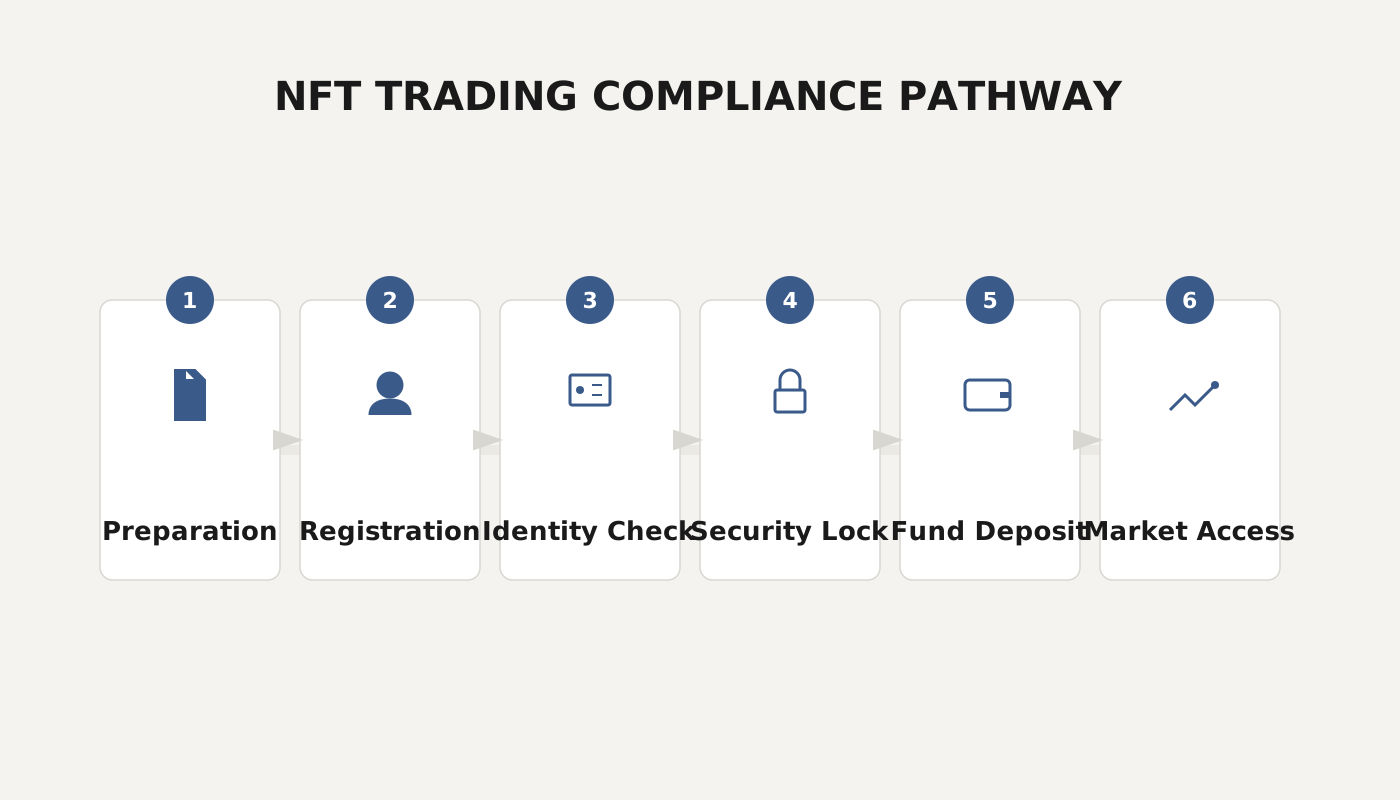
As blockchain technology becomes increasingly mainstream, more entrepreneurs and investors are paying attention to the compliance requirements of NFT platforms. Do these platforms actually have to obtain specific qualifications? Below, we examine common licensing categories from a regulatory standpoint to help operators identify which certificates they need to secure.
Does an NFT Trading Platform Need a License?
Regulators have introduced a series of filing and licensing obligations for NFT trading platforms based on the nature of their services. Operators must apply for the appropriate permissions according to their specific service model.
(1) Blockchain Information Service Filing
All steps involved in minting, buying, and selling NFTs rely on blockchain technology. According to the *Regulations on the Administration of Blockchain Information Services*, a platform must complete a filing in the National Internet Information Office’s blockchain information service filing system (https://bcbeian.ifcert.cn/index). If the platform also provides blockchain information services directly (e.g., it builds its own on‑chain functionality), it must additionally fulfill obligations such as user identity verification.
(2) Value‑Added Telecom Business License
When a platform adopts a third‑party‑entry model for digital collectible transactions—meaning the platform only offers information publishing and matchmaking services—it falls under value‑added telecom services and must obtain an ICP license (Value‑Added Telecom Business License).
(3) EDI Certificate: Online Data Processing and Transaction Processing Services
If the platform operates in a “marketplace model” where it does not directly issue or trade NFTs but instead allows participating merchants to conduct those activities themselves (similar to the Tmall model), an EDI certificate is required. Conversely, if the platform itself issues and sells NFTs (akin to JD.com’s self‑operated model), this certificate is not necessary.
(4) Artwork Copyright (Authorization / Original Acquisition)
Platform operators must secure authorization from the copyright holder of each artwork before displaying or issuing the corresponding NFT on the platform, ensuring compliance with intellectual‑property rights.
---
Introduction to the Functions of NFTs
NFTs provide gamers, digital‑collectible enthusiasts, and artists with a brand‑new way to circulate value. Data from CryptoSlam shows that *Axie Infinity*, an NFT project centered on cartoon characters, has entered the global top‑10 list of crypto collectibles platforms. In 2020, the platform recorded over 10,000 monthly active users, making it one of the most watched games within the Ethereum ecosystem.
Similarly, NFT collectibles based on classic arcade titles such as *Street Fighter* are experiencing rapid growth. Within just a few weeks of launch, the platform generated USD 1.5 million in revenue, and in the most recent month its earnings surpassed USD 600 k. In February 2022, Altitude Games released the blockchain racing game *Battle Racers* on Arkane Market, attracting more than 100,000 blockchain‑gaming players to date, further confirming the expanding momentum of NFT‑based gaming.
Non‑Fungible Tokens (NFTs) represent a core innovation in digital assets today. Built on blockchain technology, they possess uniqueness and indivisibility, making them impossible to duplicate or exchange on a one‑to‑one basis. NFTs can correspond to images, domain names, trading cards, videos, artworks, and many other forms of digital assets, and they are bought and sold on decentralized NFT marketplaces. Numerous NFT trading venues exist, and users select the market that best fits their needs based on factors such as liquidity, fee structures, and security.
The above sections summarize the licensing requirements for NFT trading platforms and the primary functions of NFTs in the digital economy. For more detailed coverage of platform compliance, stay tuned to Bitaigen (比特根) for upcoming special reports.
💡 Register on Binance with referral code B2345 for the maximum trading fee discount. See Binance complete guide.



