
 Bitaigen Research
 In this article we outline the concept of stablecoins, their core differences from Bitcoin, and common purchasing channels, helping newcomers quickly discern their functions and risks. We then introduce the main categories of stablecoins in detail, giving you more confidence and peace of mind when selecting them and making wiser decisions.
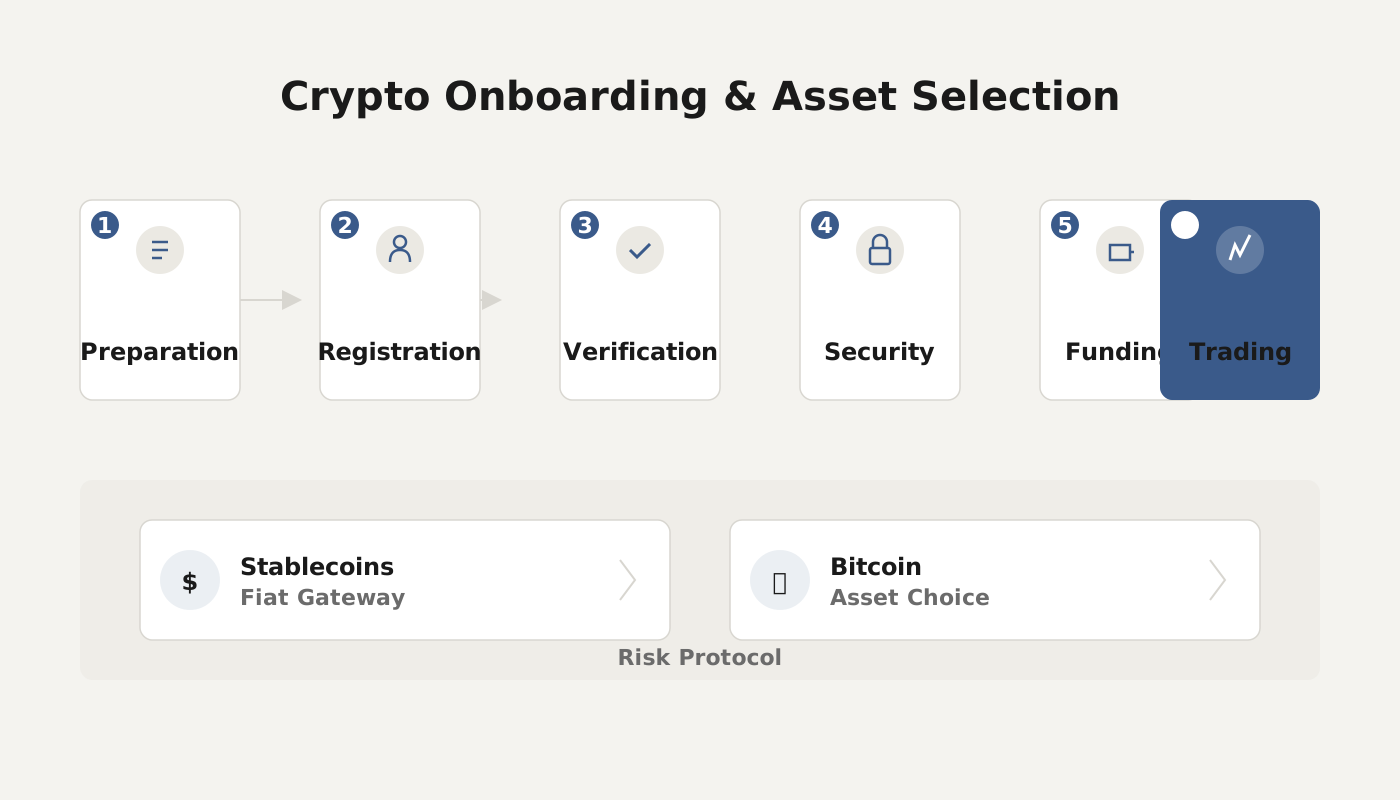
These past few years have seen rapid development of blockchain technology, giving rise to many new tokens and new exchanges. Because the price volatility of cryptocurrencies is extremely high, stablecoins emerged as a solution, and their growth has been swift. Which country first proposed stablecoins? How do they differ from Bitcoin? Where can they be purchased? Let’s explore these questions together.
A stablecoin is a cryptocurrency whose value is pegged to a fiat currency and exhibits relatively low volatility; it can be bought directly with Chinese yuan on supported exchanges such as OKEx and KuCoin.

What is a stablecoin? What types exist?
Stablecoins refer to digital currencies whose value remains relatively fixed and whose price swings are far lower than those of typical crypto assets. They were created to solve the payment and store‑of‑value problems caused by the dramatic price fluctuations of Bitcoin and similar cryptocurrencies, acting as a bridge between digital assets and fiat money. Since the launch of USDT by Tether Limited, a subsidiary of Bitfinex, in 2014, stablecoins have expanded rapidly within just a few years, aiming to become “cash in digital form without the need for physical notes.”
Main classifications of stablecoins
| Category | Core characteristics | Typical examples |
|---|---|---|
| **Fiat‑backed stablecoins** | Easy to understand and use; usually centralized | Tether (**USDT**), TrustToken (**TUSD**), Gemini (**GUSD**), Paxos (**PAX**), Circle (**USDC**) |
| **Crypto‑backed stablecoins** | Decentralized design; require strong protocol support | MakerDAO, Havven |
| **Uncollateralized (algorithmic) stablecoins** | No collateral; mimic real‑world monetary mechanisms; risk concentrated in a “sovereign” fund | Basis, Carbon |

Where can stablecoins be purchased?
1. Register on an exchange that supports USDC trading
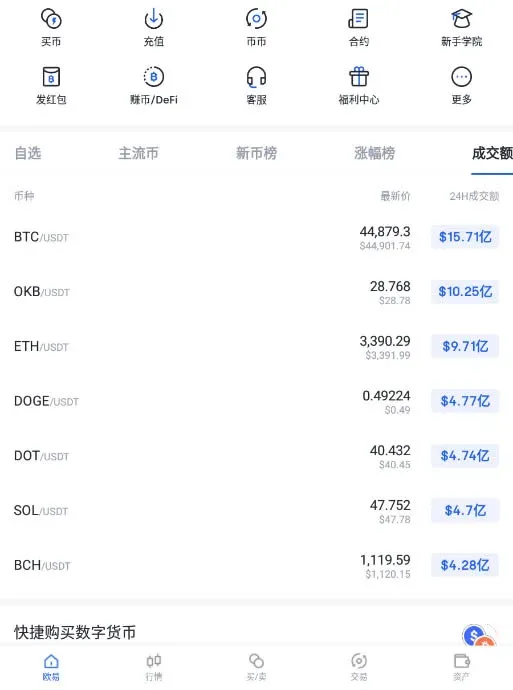
We recommend OKEx for its straightforward registration process and user‑friendly buying experience. Download the official app, enter your phone number and set a password to complete registration. *(U.S. residents should use Binance.US or another regulated U.S. platform instead of the global version of Binance.)*
2. Complete identity verification
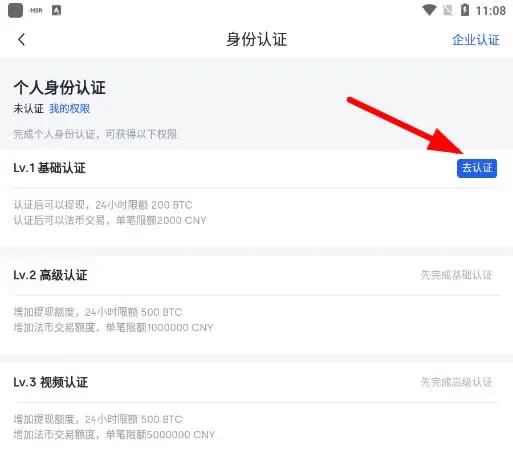
Just like buying stocks, trading digital assets requires real‑name verification. Go to the OKEx personal center and follow the prompts to finish the KYC process.
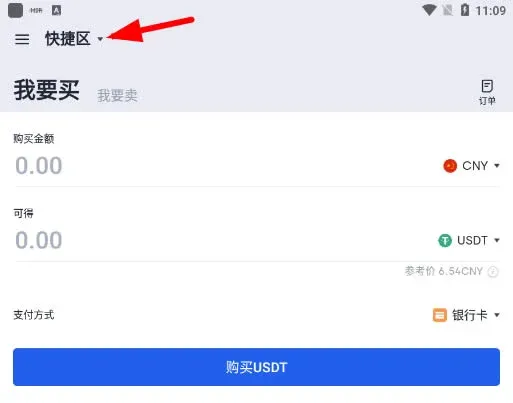
3. Use the fast‑track channel to buy USDT
At the time of writing, USDC does not yet have a direct Chinese yuan purchase channel. We suggest first buying USDT (another stablecoin with higher liquidity) using yuan, then swapping USDT for USDC on the exchange.
4. Transfer USDT to your spot‑trading (coin‑to‑coin) account
USDT purchased with fiat initially lands in the fiat (or “C2C”) account. To trade it against other cryptocurrencies you must move it to the spot‑trading account. Path: Fiat account → Funds transfer → Spot account.
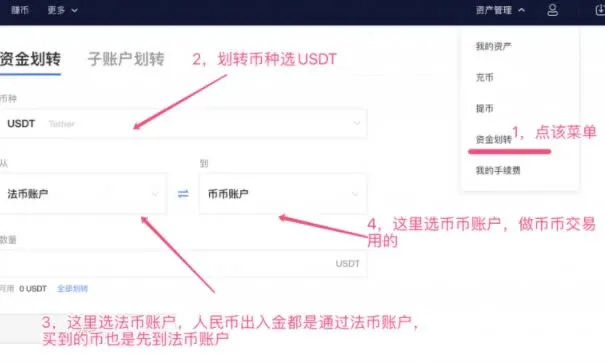
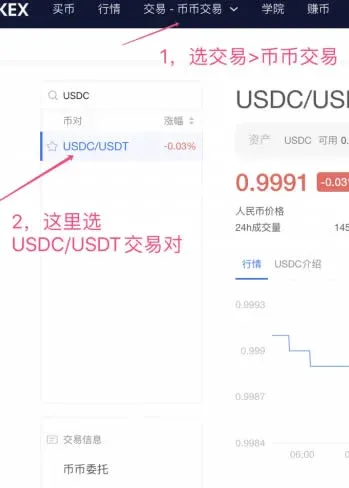
5. Execute a USDC/USDT trading pair to perform the swap
On the spot‑trading page, select the USDC/USDT pair, place an order to sell USDT and buy USDC, and the conversion will be completed.
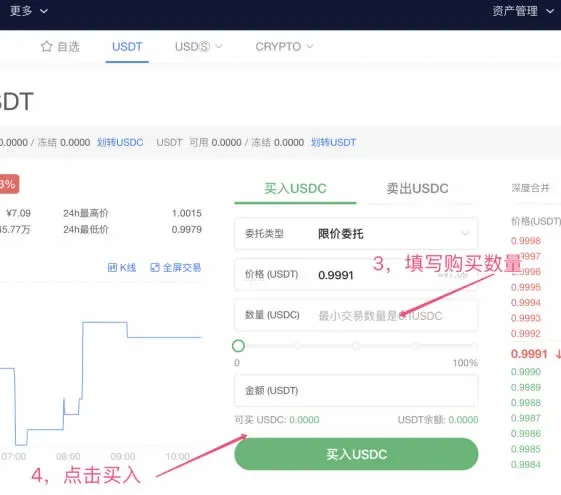
After the swap, USDC will appear in your spot account. If you wish to withdraw it, you can use the funds‑transfer function again to move USDC to another exchange or an external wallet. For cross‑border transfers, SEPA (for EUR) or SWIFT (for USD) can be used where supported.
Differences between stablecoins and Bitcoin
- Value anchoring: Stablecoins are usually pegged to a fiat currency such as the US dollar, keeping their price relatively constant; Bitcoin’s price is determined entirely by market supply and demand and can be highly volatile.
- Issuance mechanisms: Fiat‑collateralized stablecoins rely on actual fiat reserves; crypto‑collateralized ones lock up digital assets via smart contracts; algorithmic stablecoins depend on code‑driven supply adjustments and fund management. Bitcoin is issued through a decentralized proof‑of‑work (PoW) consensus mechanism.
- Use cases: Stablecoins are better suited for everyday payments, cross‑border settlements, and as a hedge within the crypto ecosystem; Bitcoin is primarily viewed as a store of value and a foundational asset for decentralized finance (DeFi) applications.
The above sections answer “What is a stablecoin?” and “Where can stablecoins be purchased?”. For a deeper dive into stablecoins, feel free to follow Bitaigen (比特根) and its related topic articles.
*Note: Crypto transactions may generate taxable events. Gains, losses, or income from cryptocurrency activities could be subject to tax in your jurisdiction; consult a tax professional for guidance.*
Related Reading
- What Are Smart Contracts? The Core of Web3, DeFi, NFTs & Gaming
- Quick Guide to Verifying Crypto Token Contract Addresses
- Crypto Payment Gateways: Complete Guide for Businesses
💡 Register on Binance with referral code B2345 for the maximum trading fee discount. See Binance complete guide.



