
 Bitaigen Research
 As blockchain technology matures, attention is shifting toward how it can be adapted to real‑world scenarios. “Oracles” are the critical components that bridge the information gap between on‑chain and off‑chain worlds. Below we systematically review blockchain oracles from four dimensions: concept, operating principle, practical applications, and common classifications.
In this article we provide a systematic overview of the concept, mechanics, and use‑cases of blockchain oracles, helping readers understand how they build information bridges between on‑chain and off‑chain environments, and dissecting their typical categories and real‑world scenarios. Curious why oracles have become a key building block for smart contracts? Keep reading.
Concept of Oracles
In ancient Greek mythology, the prophet conveyed the will of the gods to mortals. In the blockchain space, an oracle plays a similar intermediary role: it can feed real‑time external information into a smart contract and also relay results generated on‑chain back to off‑chain systems. Because a blockchain is a closed, immutable distributed ledger, it can only process data that originates on the chain. Yet many contract trigger conditions depend on off‑chain information—such as stock prices, weather forecasts, or sports results. Oracles were created specifically to solve the problem of “off‑chain” data that cannot be read directly by on‑chain contracts.
What Is a Blockchain Oracle?
In short, a blockchain oracle is a third‑party service that fetches information from external data sources and securely injects it into a blockchain network. While the closed nature of blockchains enhances system security, it also limits a smart contract’s ability to perceive the real world. Oracles bridge this gap through the following steps:
1. Data collection
The oracle actively gathers real‑time data that may affect contract execution from websites, APIs, IoT devices, sensors, or even manual input channels.
2. Data verification
After acquisition, the oracle rigorously validates the data to ensure its authenticity and integrity, preventing false or tampered information from reaching the chain.
3. Transmission to the smart contract
Verified results are written to the blockchain as signed messages, making them readable by the relevant smart contract as trigger conditions or computational inputs.
4. Autonomous execution
Once reliable data is received, the smart contract can automatically carry out the predefined logic without human intervention.
5. Symbiotic relationship
Oracles and smart contracts complement each other: the oracle provides an external viewpoint, turning static code into a decentralized application that can respond to real‑world changes.
Uses and Functions of Blockchain Oracles
Oracles are the link that connects the deterministic on‑chain world with the volatile off‑chain environment, supplying Web 3.0 ecosystems with an essential “data entry point.” Their core value lies in:
- Data injection: Collecting information from trusted external channels and securing it with cryptographic signatures during on‑chain transmission.
- Information storage: Writing verified data into smart contracts so that subsequent protocols or nodes can read it directly.
- Business enablement: Allowing smart contracts to execute complex financial transactions, asset management, risk assessment, and other operations based on real‑time external data.
Concrete industry examples include:
- Finance: Using oracles for automated derivative settlement, asset clearing, and risk monitoring.
- Internet of Things (IoT): Writing sensor‑captured environmental or device status data to the blockchain in real time, supporting self‑governing smart devices.
- Supply chain: Recording logistics details, product provenance, and other traceability data via oracles to achieve end‑to‑end visibility and trustworthy tracking.
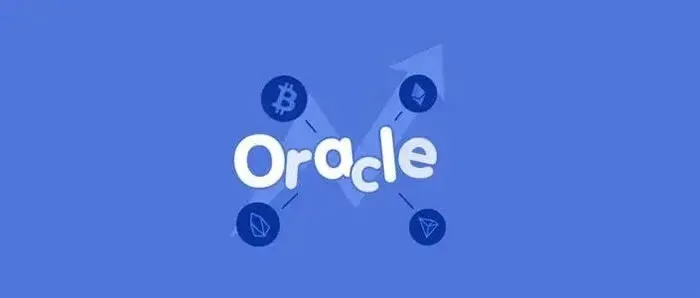
Types of Blockchain Oracles
Depending on implementation methods and use cases, oracles can be classified into several categories, each playing a distinct role in ensuring the timeliness and reliability of off‑chain data.
1. Centralized vs. Decentralized
Centralized oracles are managed by a single entity; they are easy to deploy but suffer from single‑point‑of‑failure and data‑manipulation risks. Decentralized oracles involve multiple nodes that collectively provide data and employ distributed consensus mechanisms for verification, thereby enhancing security and censorship‑resistance.
2. Inbound vs. Outbound
Inbound oracles bring off‑chain information into smart contracts—for example, supplying weather data to an insurance contract. Outbound oracles push on‑chain results to external systems, such as notifying a traditional financial platform to complete a settlement.
3. Software vs. Hardware
Software oracles scrape data from online platforms (websites, servers, etc.) and are suited for digital information like exchange rates or news feeds. Hardware oracles use physical devices—sensors, barcode scanners, etc.—to translate real‑world events into blockchain‑readable digital signals.
4. Contract‑specific oracles
These are tailor‑made data providers for a particular smart contract, delivering highly precise functionality. Because of their limited applicability and higher maintenance costs, they are less common.
5. Human oracles
In domains where automation is difficult, professionals with subject‑matter expertise can manually collect, verify, and submit data on‑chain. Cryptographic signatures guarantee the trustworthiness of the submitted information.
6. Cross‑chain oracles
Focused on the flow of data and assets between different blockchain networks, cross‑chain oracles improve interoperability and foster collaborative development across multi‑chain ecosystems.
---
In summary, blockchain oracles are the key technology that enables interaction between on‑chain smart contracts and the real world. By reliably gathering data, performing strict verification, and securely transmitting it onto the ledger, they empower decentralized applications to operate in genuine environments. As oracle technology continues to evolve, blockchain use‑cases will broaden further, driving more innovative business models into production.
*Note: Cryptocurrency gains may be subject to taxation in your jurisdiction. Users in the United States should access services through Binance.US (or other regulated platforms) rather than the global Binance site, and fiat transfers typically use USD via SEPA/SWIFT where applicable.*
Related Reading
- DeFi Oracles: Secure Off‑Chain Data for Smart Contracts
- Blockchain Oracles: How They Work and Why They Matter
- Understanding Blockchain Oracles: Bridging On-Chain and Off-Chain Data
💡 Register on Binance with referral code B2345 for the maximum trading fee discount. See Binance complete guide.



