
 Bitaigen Research
 If you are a cryptocurrency enthusiast, you have almost certainly heard of smart contracts. Smart contracts are a foundational building block of the Web3 industry and underpin the rapidly growing applications in DeFi, NFTs, gaming and many other use‑cases that are gaining prominence on Web3.
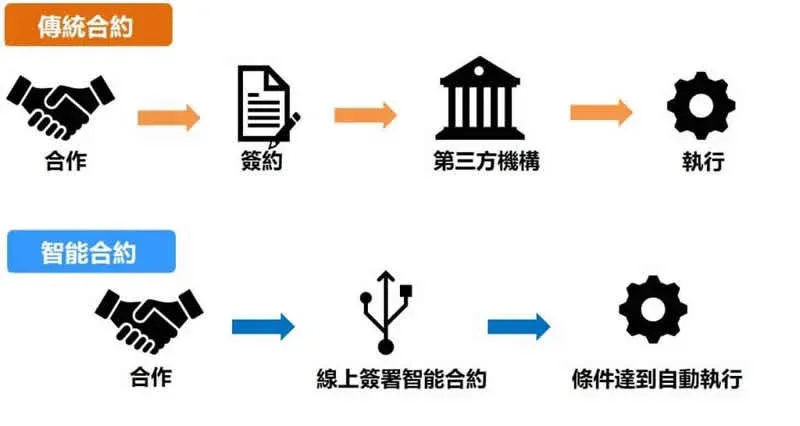
A smart contract is a digital protocol written onto a blockchain that automatically executes once its preset conditions are satisfied, requiring no third‑party intervention, and whose outcome is public and immutable.
In this article we systematically outline the core concepts and execution mechanisms of smart contracts, dissect their technical principles, advantages and limitations, and showcase the most representative current use‑cases. Through easy‑to‑understand examples we help readers quickly build a complete mental model of the Web3 infrastructure. Subsequent sections will dive deeper into practical implementation details and risk mitigation, making this a worthwhile read.
What Is a Smart Contract?
A smart contract is a digital agreement that is signed and stored on a blockchain network. When the contract’s terms and conditions (T&C) are met, the contract runs automatically. The T&C are written in a blockchain‑specific programming language such as Solidity.
At the same time, a smart contract can be regarded as an application that lives on the blockchain, allowing each participant to fulfill their respective obligations within a transaction. Applications powered by smart contracts are commonly called decentralized applications (DApps).
In typical smart‑contract use‑cases, the buyer’s and seller’s agreement is encoded directly into code, stored on a decentralized blockchain, and the execution flow is governed entirely by that code. The transaction becomes traceable and irreversible. Because the contract runs on a decentralized chain rather than a centralized server, it can deliver results that are accurate, timely and tamper‑proof for all parties involved.
Moreover, smart contracts are not controlled by any single entity and are resistant to single‑point attacks from malicious actors. Consequently, in multi‑party digital agreements they can reduce transaction risk, boost efficiency, lower costs, and provide a higher degree of transparency for business processes.
History of Smart Contracts
Nick Szabo, an American computer scientist, introduced the idea of “recording contracts in computer code” in 1994. In 1998 he developed a virtual currency called Bit Gold, a full decade before Bitcoin. Szabo’s vision was that a contract could automatically trigger when certain conditions were satisfied, forming the prototype of what we now call a smart contract.
The core of his proposal was to eliminate the need for a trusted third party (e.g., a bank) by having the transaction executed automatically on a trustworthy, computer‑controlled network. Szabo spent many years researching this concept and authored the seminal paper *Smart Contracts: The Building Blocks for Digital Free Markets*.
In 2009 Bitcoin introduced blockchain technology to the world. In 2015 Vitalik Buterin launched Ethereum, releasing the first batch of practically usable smart contracts and marking the transition of smart contracts from theory to real‑world deployment.
Relationship Between Smart Contracts and Blockchains
Blockchains that support smart contracts give developers a decentralized consensus layer on which they can write arbitrary business logic. This relationship can be visualized as a hierarchy:
Blockchain → Smart Contract → Application (including tokens)
The application (or token) is created by the contract code, while the operations defined by the contract are executed and stored by the underlying blockchain.
🤔 Do all blockchains support smart contracts?
No. Only blockchains that can execute arbitrary logic on‑chain are considered *smart‑contract‑compatible*, such as Arbitrum, Avalanche, Base, BNB Chain and Ethereum. The Bitcoin main chain, for example, does not provide native smart‑contract functionality.
How Smart Contracts Operate
At its core, a smart contract is a binding agreement between parties that leverages code to transform blockchain’s inherent strengths—security, transparency, and decentralization—into higher efficiency, openness and safety. The execution logic typically follows an “if/when … then …” conditional structure:
- Condition Trigger – When the predefined condition is verified on‑chain, the network carries out the corresponding action.
- Automatic Execution – The action may be a transfer of funds, asset registration, notification dispatch, or the invocation of another contract.
- State Update – After execution, the new state is permanently recorded on the blockchain; the transaction cannot be altered, and only authorized parties can view the result.
To satisfy business requirements, developers must clearly define three elements:
- On‑chain representation of transaction data
- The “if/when … then …” rule set
- Exception handling and dispute‑resolution mechanisms
In recent years, an increasing number of organizations provide templates, web‑based interfaces and online tools that enable non‑technical users to quickly assemble smart contracts.
Advantages of Smart Contracts: Why They Matter
Traditional digital agreements often rely on centralized intermediaries (such as banks) for custody and execution, leading to:
- Counterparty default risk
- High intermediary fees
- Limited transparency
Smart contracts address these pain points through the following advantages:
| Advantage | How It Manifests |
|---|---|
| **Security** | A decentralized network eliminates single‑point failures, preventing centralized intermediaries from being hacked or bribed. |
| **Immutability** | Redundant validation across many nodes ensures contract logic cannot be altered arbitrarily; execution results are public and irreversible. |
| **Cost Reduction** | Removing privileged middle‑man profits lowers transaction fees. |
| **Automation & Efficiency** | Once conditions are met, the contract runs automatically without human intervention or waiting periods, dramatically speeding up settlements. |
Taken together, smart contracts provide a safer, verifiable and more efficient protocol for moving value and data.
Disadvantages of Smart Contracts
Smart contracts are still an emerging technology and face several limitations:
- Irreversibility – Once deployed, contract code cannot be changed. This immutability is a security feature but also a constraint; bugs or required new features must be addressed via upgrade mechanisms rather than direct edits.
- Code Vulnerability Risks – Undetected bugs before deployment can cause irrecoverable losses, making rigorous auditing a critical step in the development pipeline.
- Complexity of Upgrade Patterns – The most common upgrade strategy involves a proxy contract that points to a newer version. While this preserves the original contract’s immutability, it adds layers of architectural and governance complexity.
Real‑World Use Cases
Because the essence of a smart contract is the automatic enforcement of an agreement, it can be applied to a wide spectrum of business scenarios. Below are several representative categories.
1. Permission Management (Tokens)
Token contracts are responsible for creating, tracking and allocating ownership of specific digital assets on‑chain. Different token types grant holders distinct capabilities:
- Utility Tokens – Provide usage rights within a DApp (e.g., FIL is used to pay for Filecoin storage services).
- Governance Tokens – Allow holders to participate in protocol decisions (e.g., COMP enables voting on Compound governance proposals).
- Security Tokens – Represent equity, debt or other regulated assets.
2. Financial Products (DeFi)
Decentralized Finance (DeFi) rebuilds traditional financial services using smart contracts, including:
- Lending Platforms (e.g., Aave) that enable permissionless borrowing and lending of assets.
- Asset Management (e.g., BarnBridge) that automatically rebalances portfolios according to predefined ratios.
- Stablecoins, Decentralized Exchanges and other composite financial primitives that consist of multiple interacting contracts.
3. Gaming & NFTs
Blockchain‑based games employ contracts to guarantee the tamper‑proof nature of in‑game assets. Examples include:
- PoolTogether – A “no‑loss” savings game where users deposit funds, earn interest, and periodically receive a random prize drawn from the accrued interest.
- NFT Drops – Contracts enforce fair minting and distribution, ensuring every participant has an equal chance to acquire rare digital collectibles.
4. Parametric Insurance
Parametric insurance payouts are directly linked to predefined external events. Smart contracts act as a trustworthy trigger, for instance:
- Automatically compensating farmers when rainfall in a specific region falls below a set threshold.
- Distributing premiums proportionally from a pooled fund, lowering administrative overhead and enhancing transparency.
Frequently Asked Questions
Q: What is a smart contract?
A: A smart contract is program code stored on a blockchain that automatically carries out the parties’ agreed‑upon actions once off‑chain conditions are satisfied, eliminating the need for intermediaries or trust.
Q: What is a typical example of a smart contract?
A: The most common example is a purchase transaction between a consumer and a merchant—once payment is confirmed on‑chain, the contract automatically triggers the shipment process.
Q: Why do smart contracts matter?
A: They remove reliance on trusted third parties for mutually distrustful participants, enabling automatic, transparent and immutable execution of agreements.
Q: What are the main components of a smart contract?
A: Typical structures include state variables (data storage), functions (executable actions), events (on‑chain messages) and modifiers (access‑control), though specifics vary by blockchain and design.
Summary
Smart contracts automatically enforce agreements on a blockchain according to predefined rules. Their tamper‑proof, transparent and efficient nature makes them one of the most innovative technologies within the blockchain ecosystem. As trust in on‑chain code progressively replaces reliance on centralized entities such as banks, lawyers or financial advisors, smart contracts are poised to drive the emergence of a “trust‑less” system era.
Practical Note for Global Users: When converting fiat to crypto or withdrawing crypto to fiat, use USD‑based services where applicable, and for cross‑border transfers consider SEPA (Euro) or SWIFT (global) channels. U.S. residents should transact through Binance.US rather than the global Binance platform.
Tax Disclaimer: Cryptocurrency gains may be taxable in your jurisdiction. It is advisable to consult a local tax professional to understand any reporting obligations.
Related Reading
- Earn Money in Web3 2026: NFTs, Play-to-Earn & DeFi
- deBridge Cross‑Chain Bridge: Deep Technical & Ecosystem Analysis for DeFi
- Understanding Blockchain Immutability and Its Key Benefits
💡 Register on Binance with referral code B2345 for the maximum trading fee discount. See Binance complete guide.



