
 Bitaigen Research
 When researching blockchain projects, you often encounter the term “oracle.” What exactly is it? Can it predict the price movements of tokens on a blockchain? Below is a detailed explanation.
An oracle is the bridge that connects off‑chain real‑world data with a blockchain, safely bringing information such as prices, weather, or sports results on‑chain. However, it can only supply existing data and cannot forecast future token price changes.
Oracles (Oracle) transform real‑world information into on‑chain data readable by smart contracts, enabling interaction between off‑chain and on‑chain environments.
In this article we systematically outline the core concepts of oracles, their main use cases, and the various implementation methods, helping readers clarify the pivotal role they play in obtaining on‑chain data and emphasizing that oracles are not tools for price prediction. If you want to understand how they ensure the reliability of smart contracts, keep reading.
What Is an Oracle
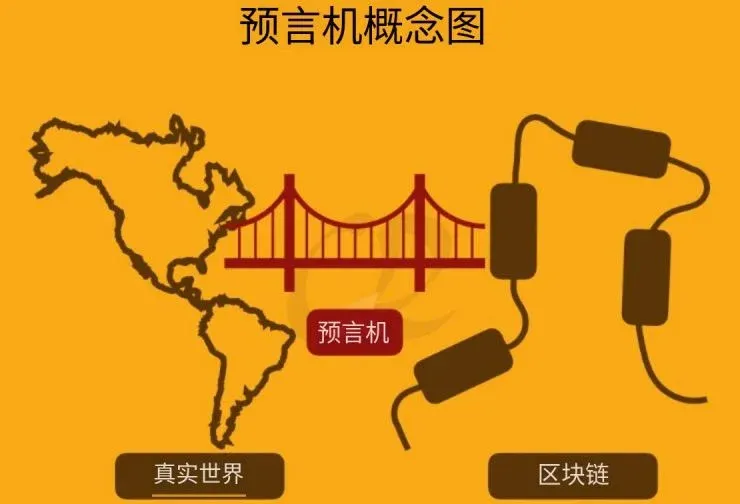
Concept diagram
An oracle is the bridge that links the off‑chain real world with a blockchain, capable of converting weather data, asset prices, sensor readings, and other real‑world information into data usable by smart contracts. Because a blockchain is a closed system, it cannot directly obtain external events—such as the USD exchange rate, Tokyo temperature, a football match result, or gold price—without an oracle to collect and transform that information.
Oracles acquire off‑chain data through various mechanisms and may employ technologies like zero‑knowledge proofs to verify data correctness before delivering trusted information to the blockchain. Use cases such as prediction markets, real‑world assets (RWA), and decentralized exchanges (DEX) all rely heavily on oracles.
Common Oracle Applications
| Use case | Description |
|---|---|
| **On‑chain price feeds** | Push real‑time prices of cryptocurrencies like Bitcoin, Ethereum, etc., to DeFi protocols for lending, liquidation, and more. |
| **Random number generation** | Provide unpredictable random numbers for NFT blind boxes, on‑chain games, lotteries, airdrops, and similar scenarios. |
| **Off‑chain event triggers** | Convert weather, election outcomes, flight delays, sports results, and other real‑world events into on‑chain data that drives contract execution. |
| **Cross‑chain messaging** | Enable information sharing between different blockchains, supporting cross‑chain asset states and bridge verification. |
| **RWA (Real‑World Asset) integration** | Bring prices of gold, U.S. Treasury bonds, real‑estate valuations, corporate earnings, etc., onto the blockchain to keep on‑chain pricing aligned with market reality. |
On‑chain price feeds
Oracles feed prices such as BTC/USDT to lending platforms, allowing accurate collateral valuation, forced liquidation triggers, and other operations.
Random number generation
Because blockchains lack intrinsic randomness, the random numbers supplied by oracles support NFT blind boxes, on‑chain game draws, and similar use cases.
Off‑chain event triggers
Prediction markets like Polymarket need oracles to fetch event outcomes—e.g., sports results or election results—before they can settle.
Cross‑chain messaging
Oracles let status information be shared across different chains, facilitating the synchronization of cross‑chain bridges and protocols.
RWA (Real‑World Asset) integration
Gold prices, U.S. Treasury yields, real‑estate appraisals, and other tangible‑asset valuations depend on oracles to stay in sync with actual market data, preventing on‑chain prices from drifting away.
Types of Oracles
Centralized vs. Decentralized
- Centralized oracle: A single entity provides the data. Updates are fast, but there is a risk of malicious manipulation.
- Decentralized oracle: Multiple nodes collectively supply data. Costs are higher, but the approach is more resistant to tampering. Notable projects include Chainlink and Band Protocol.
Software Oracle vs. Hardware Oracle
- Software oracle: Handles internet‑sourced data such as market prices or website information.
- Hardware oracle: Collects physical data via IoT devices (thermometers, logistics sensors, etc.) and publishes it on‑chain.
Oracle‑related Tokens and Projects
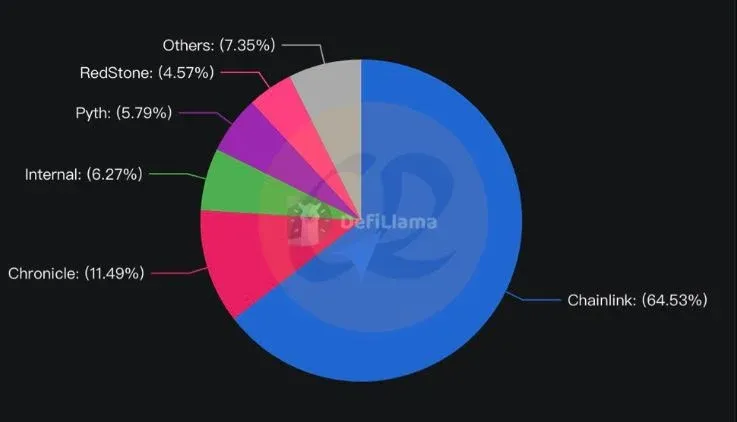
Below are the top nine oracle projects listed on DefiLlama (alphabetical order):
| Project | Brief description |
|---|---|
| **Chainlink** | The largest and most widely adopted decentralized oracle network, supporting multiple chains and data sources. Associated token: **LINK**. |
| **Chronicle Protocol** | Built by the former MakerDAO oracle team, offering transparent, low‑cost price‑feed services. |
| **Pyth Network** | Aggregates data from major exchanges, delivering high‑frequency price updates, primarily on Solana. |
| **Redstone Finance** | Modular “Lego‑style” oracle that supports many data sources; token **RED**. |
| **Chaos Labs** | Risk‑management simulation platform that integrates risk data and asset‑reserve information, providing attack‑prediction services. |
| **Switchboard** | Native Solana oracle offering price feeds, random numbers, and custom data sources. |
| **UMA** | Optimistic Oracle that initially accepts data and only validates it if challenged, suitable for prediction markets, KPI verification, etc. |
| **Stork** | High‑frequency oracle delivering low‑latency data for derivatives markets, often used by DEX contract trading. |
| **Supra** | Decentralized oracle providing price, random number, and cross‑chain data, emphasizing low latency and high throughput. |
In addition, the world’s largest exchange Binance has launched the Binance Oracle, offering off‑chain data services on the BNB Chain. To trade oracle‑related tokens such as LINK, you can use major exchanges like Binance. U.S. residents should use Binance.US for compliance with local regulations.
Quick start with Binance
- Official registration: https://www.bitaigen.com/binance
- Official download: https://www.bitaigen.com/binance/download
- Referral code: `B2345`
- Guides: comprehensive tutorials on Binance deposits, withdrawals, fees, and security; C2C trading for beginners; APP download and installation instructions.
*(For U.S. users, replace the above with Binance.US links where applicable.)*
Risks Associated with Oracles
| Risk type | Explanation |
|---|---|
| **Price manipulation** | An attacker could tamper with liquidity‑pool prices, causing the oracle to return values that deviate from the true market, potentially triggering abnormal liquidations in DeFi protocols. |
| **Single point of failure** | Oracles that rely on a single data source may provide incorrect information if that source experiences an outage or is attacked. |
| **Data aggregation disputes** | The method used to combine multiple sources (e.g., equal‑weight average vs. volume‑weighted) can affect result credibility and, consequently, the degree of decentralization. |
Perspective from “Fu Ge” on Oracles
Oracles play an indispensable role in the current ecosystem and determine the security of DeFi. Until technology emerges that can directly “inject” real‑world data into a blockchain, oracles remain essential. If an oracle supplies erroneous information, on‑chain contracts lose their connection to reality, causing system failure.
As AI and the Internet of Things continue to converge, oracles may gain richer data sources and leverage AI to assess information authenticity and reliability, enabling more automated on‑chain operations.
Frequently Asked Questions
Can an oracle predict the future?
No. Oracles only convert existing off‑chain information into on‑chain data and do not possess predictive capabilities.
Is oracle data always correct?
Not necessarily. Errors in data sources, processing biases, or hacker attacks can all lead to inaccurate oracle outputs.
Summary
- Oracles are the critical service that brings off‑chain information “on‑chain” for smart contracts.
- Typical use cases include price feeds, random‑number generation, cross‑chain messaging, and RWA asset onboarding.
- Depending on data source and implementation, they can be categorized as centralized vs. decentralized and software vs. hardware.
- When using oracles, one must still monitor risks such as price manipulation, single‑point failures, and the chosen data‑aggregation methodology.
This concludes the full article “What Is an Oracle? Can It Predict Blockchain Token Price Movements? A Detailed Look at Oracle Uses, Types, and Tokens.” For more oracle‑related material, search Bitaigen (比特根) for comprehensive resources.
*Note: Crypto gains may be taxable in your jurisdiction; consult local tax regulations or a professional adviser.*
Related Reading
- What Is ERC‑20? Complete Guide to the Ethereum Token Standard
- Cryptocurrencies: A Century‑Level Attraction Shaping 21st Century Finance
- Perp DEX Guide: Decentralized Perpetual Contracts Explained
💡 Register on Binance with referral code B2345 for the maximum trading fee discount. See Binance complete guide.



