
 Bitaigen Research
 Binance Coin (BNB) is the native token issued by the Binance platform. It can be used to pay trading fees, participate in ecosystem governance, and power a wide range of applications on the BNB Chain.
By 2025, BNB has become a core asset that spans multiple layers of the ecosystem, playing a pivotal role in everything from underlying blockchain infrastructure to DeFi, NFTs, and the tokenization of real‑world assets. This article systematically explains the definition of BNB, its ecosystem architecture, the advantages of holding it, and how to acquire it.
Our Bitaigen editorial team has compiled a comprehensive overview of BNB’s core concepts, ecosystem structure, and holder benefits, and provides clear purchase guidance. Through this article you can quickly grasp BNB’s practical value in fee discounts, on‑chain gas, and governance participation. Subsequent sections will further reveal its use cases in DeFi and cross‑chain scenarios, so we recommend you continue reading.
What is the BNB cryptocurrency?
BNB first launched in 2017 as an ERC‑20 token, intended to give Binance exchange users a discount on trading fees. It later migrated to the BNB Chain (originally the BNB Smart Chain + Beacon Chain) and became the native token of that network. Today, BNB serves several practical functions:
- Trading fees: Pay fees on Binance and selected partner platforms to enjoy a discount.
- On‑chain gas: Acts as the “fuel” token for the BNB Chain (EVM‑compatible), covering transaction and contract execution costs.
- Ecosystem participation: Holders can take part in token launches, staking, governance voting, and other ecosystem benefits.
- Payments and collateral: Can be used as payment or collateral in certain merchants, staking programs, and DeFi projects.
Ecosystem structure in 2025
- BNB Chain: A high‑performance, EVM‑compatible public blockchain whose sole native token is BNB.
- BNB Beacon Chain: Handles governance‑level voting and validator elections.
- Token‑burn mechanism: Binance regularly buys back and burns BNB, reducing circulating supply and increasing scarcity.
- DeFi, NFT, and Real‑World Assets (RWA): Supports decentralized exchanges, liquidity pools, NFT marketplaces, and tokenization of on‑chain‑backed real‑world assets.
These layers elevate BNB beyond a simple utility token, making it an integral component of Web3 infrastructure.
Advantages of holding BNB
The main benefits of owning BNB include:
- Fee savings
Paying trading fees with BNB grants platform discounts, lowering transaction costs.
- Ecosystem access
Holders can join exclusive token sales, staking programs, governance votes, and other ecosystem perks.
- Scarcity potential
Periodic burns gradually shrink the circulating supply, supporting long‑term value accumulation.
- Real‑world use cases
As the BNB Chain ecosystem expands, demand for BNB in smart contracts, payments, and other on‑chain applications continues to rise.
It is important to note that these benefits depend on ecosystem adoption, competitive dynamics, and regulatory environment; past performance does not guarantee future returns.
BNB price outlook and investment considerations
BNB ranks among the top‑market‑cap crypto assets, and its price trajectory is closely linked to the health of the Binance ecosystem and the broader blockchain infrastructure. The primary scenarios are:
- Bullish scenario: Continuous network scaling, growing DeFi and tokenized‑asset usage, and rising demand for BNB.
- Base‑case scenario: Steady growth, a competitive yet sustainable ecosystem, and moderate competitive pressure.
- Bearish scenario: Regulatory constraints, pressure from competing chains, or technical failures could curb growth.
Investment note: View BNB as an asset that blends utility with speculative characteristics. Track on‑chain metrics such as total value locked (TVL) and trading volume, and stay aware of regulatory and policy risks.
How to purchase BNB tokens?
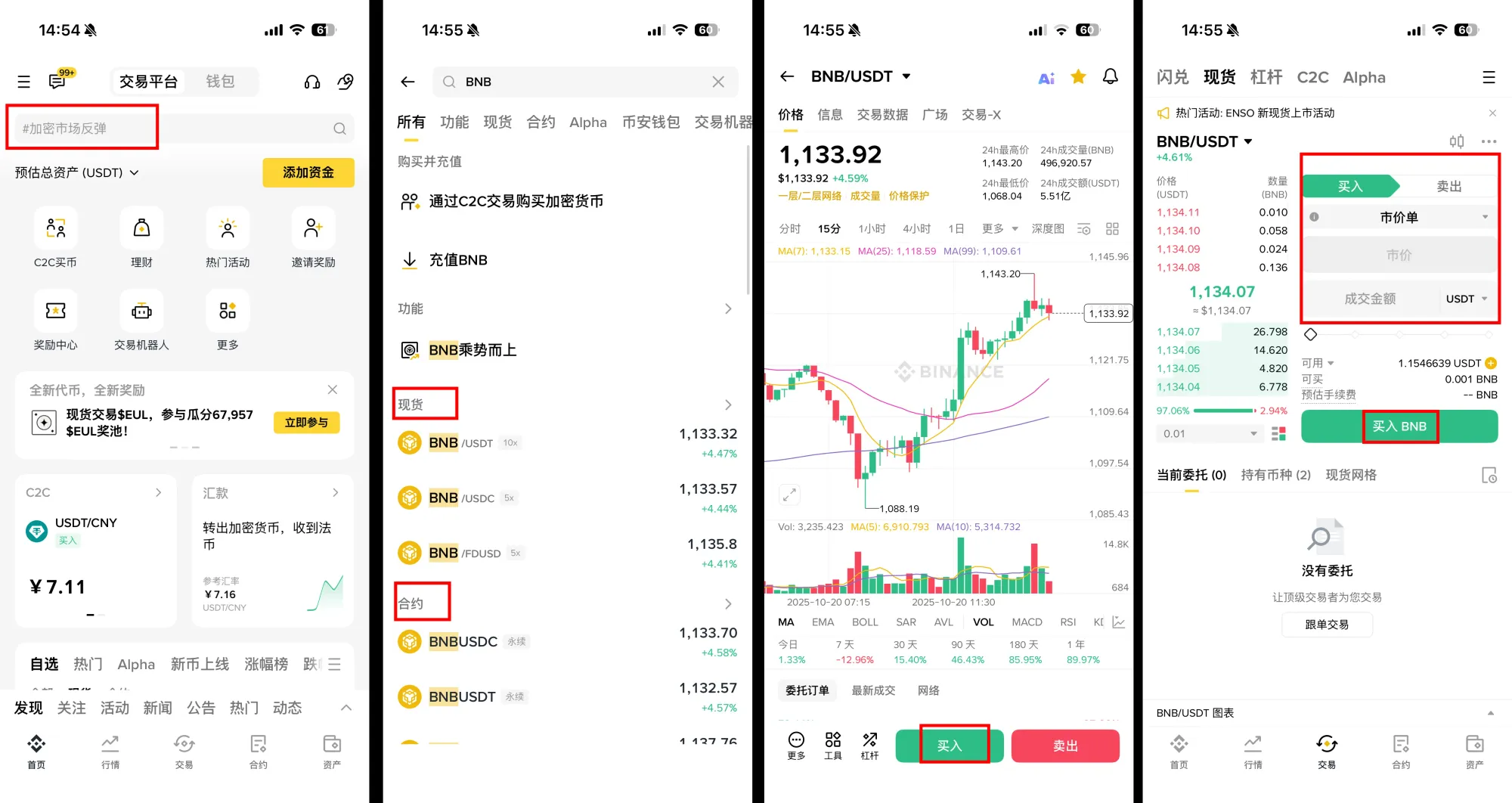
BNB trades on most centralized exchanges and on several decentralized platforms. Below is a basic purchase flow using Binance as an example (U.S. residents should use Binance.US, which operates under separate licensing and compliance requirements):
- Open the Binance (or Binance.US) app and enter “BNB” in the top‑search bar.
- From the results, select the desired market type (e.g., spot or futures).
- Tap Buy, and for a quick fill you may choose a market order.
- Enter the amount you wish to purchase, verify the details, and submit the order.
Fiat considerations: When funding your account, you can use USD via bank transfer (SEPA for Europe, SWIFT for other regions) or supported credit/debit cards, depending on your jurisdiction.
Case studies that boost BNB momentum
- Institutional entry: Hong Kong technology firm Nano Labs announced a plan to acquire $1 billion worth of BNB, indicating strong interest from large institutions.
- Partnership milestone: In September 2025, Binance partnered with investment firm Franklin Templeton to launch a digital‑asset product, further promoting mainstream adoption.
*Note on taxation*: Crypto gains may be taxable in your local jurisdiction. Consult a tax professional to understand your obligations.
Related Reading
- Enso: Blockchain Shortcut for Cross‑Chain Interaction
- Reef Finance Analysis: Tech, Governance & REEF Token Outlook
- Reef Finance: Multi‑Chain DeFi for Easy Yield Optimization
💡 Register on Binance with referral code B2345 for the maximum trading fee discount. See Binance complete guide.



