
 Bitaigen Research
 In this article we systematically outline the key factors that affect Dogecoin’s daily production, including total network hash rate, difficulty adjustments, block time, and the evolution of the reward mechanism. We also provide practical estimates of output under typical mining conditions. By comparing the impact of different halving phases, miners can better assess potential earnings. If you want to know how many Dogecoins can be generated with a standard GPU setup, keep reading.
How Many Dogecoins Can Be Mined Per Day?
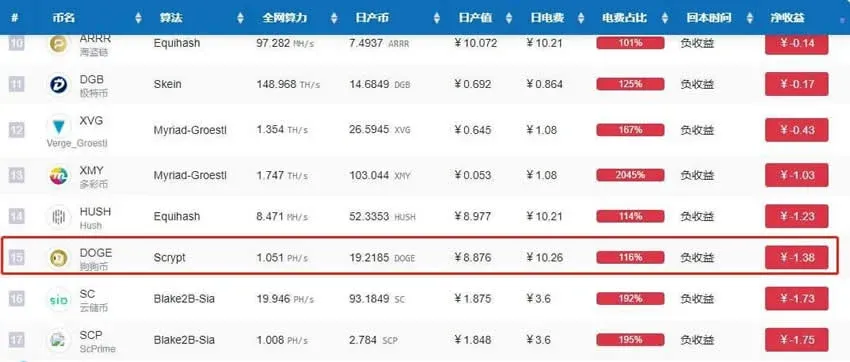
In a typical GPU mining rig environment, a single day yields roughly 19 Dogecoins. The actual output fluctuates with changes in network hash rate, mining difficulty, and the reward structure.
Main Factors Influencing Daily Output
- Total Network Hash Rate: The higher the global hash rate, the smaller each individual miner’s share of the total work.
- Mining Difficulty: Difficulty automatically adjusts in response to hash rate changes and directly determines the computational cost of solving each block.
- Block Time: Dogecoin’s block interval is about 1 minute; faster block production translates into higher overall issuance.
- Mining Reward: The block reward decreases over time following each “halving” event.
Mining Reward Mechanism
- At genesis, each block awarded 10,000 Dogecoins.
- After each halving, the block reward is cut in half.
- The halving cadence is similar to Bitcoin’s, but the exact timing depends on the network’s difficulty adjustments.
Comprehensive Overview of Dogecoin
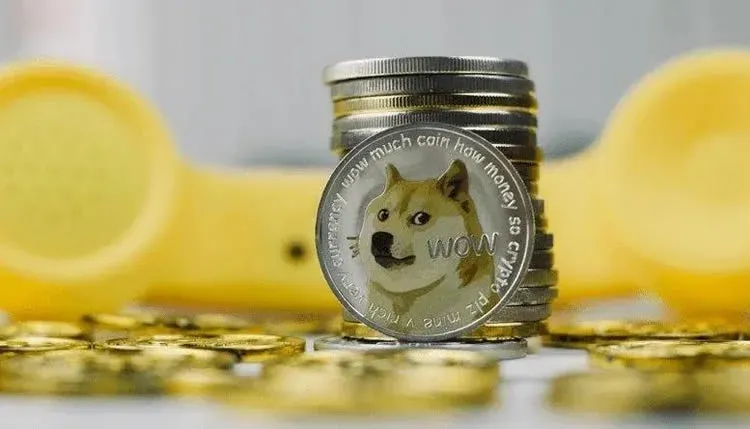
Dogecoin (DOGE) was created by Billy Markus and Jackson Palmer on December 6 2013. It began as a light‑hearted meme coin, featuring the iconic Japanese Shiba Inu (the “Doge” meme) as its logo.
Core Technology
- Blockchain Architecture: Like Bitcoin and other mainstream cryptocurrencies, Dogecoin uses a decentralized ledger.
- Consensus Algorithm: It employs the Scrypt proof‑of‑work algorithm, which can be mined with both CPUs and GPUs, though GPUs are considerably more efficient.
Community and Ecosystem
- The community is known for its friendly, optimistic vibe and frequently participates in charitable drives and fundraising campaigns.
- Unlike Bitcoin’s capped supply of 21 million, Dogecoin has no maximum supply; it has already surpassed 100 billion coins in circulation.
Mining Options
| Mining Method | Description |
|---|---|
| **Solo Mining** | Individual miners contribute their own hardware (CPU/GPU) directly to the network’s hash rate. |
| **Pool Mining** | Hash power is combined in a mining pool to increase the probability of finding blocks and to receive steadier reward payouts. |
| **Cloud Mining** | Users rent remote hash power from a service provider, eliminating the need to maintain physical hardware. |
Use Cases
- Some merchants accept Dogecoin as a payment method.
- It is commonly used for micro‑tips, donations, and social‑media incentives.
Investment and Risk Considerations
- When choosing a trading platform, prioritize reputation, fees, user experience, and security. Look for services that support USD deposits via SEPA or SWIFT for global users; U.S. residents should use Binance.US rather than the international Binance platform.
- Dogecoin’s price is highly volatile. Investors should conduct thorough risk assessments and maintain a cautious, rational approach to any exposure.
The above provides a complete answer to the question “How many Dogecoins can be mined per day?”.
Related Reading
💡 Register on Binance with referral code B2345 for the maximum trading fee discount. See Binance complete guide.



