
 Bitaigen Research
 Ethereum (ETH) is the native cryptocurrency of the Ethereum blockchain, created by Vitalik Buterin and the founding team in 2015. Users can interact with it through spot trading, derivatives, DeFi, staking, and many other methods.

In this article we outline the core concepts of Ethereum, explain Vitalik Buterin and the founding team’s original vision, and examine ETH’s practical applications in smart contracts, DeFi, and staking. Through a clear, structured explanation we help newcomers get up to speed and understand its unique value within the blockchain ecosystem. Subsequent sections will dive deeper into technical details and usage tips, so keep reading.
Beginner’s Guide to Ethereum
Ethereum is the world’s second‑largest public blockchain network, the first to introduce smart contracts and decentralized applications (dApps), providing a programmable layer for the crypto industry.
- ETH: the network’s native token, used to pay transaction fees (gas) and incentivize validators.
- Market cap: second only to Bitcoin (BTC), making it the second‑largest crypto asset by market value.
- Core distinction: Bitcoin focuses on value transfer, while Ethereum offers executable contract logic that supports a wide range of decentralized services.
Vitalik Buterin likens Bitcoin to a “pocket calculator” and Ethereum to a “smartphone,” emphasizing its breadth and flexibility.
Who Created Ethereum?
Vitalik Buterin (often called “V God”) is the primary founder of Ethereum. He was born in Moscow, Russia, and later obtained Canadian citizenship.
- In 2011, he co‑founded *Bitcoin Magazine*.
- In 2013, at just 19 years old, he proposed the concept of Ethereum.
- He then received the Thiel Fellowship, worked full‑time on the project, and established the non‑profit Ethereum Foundation.
The Ethereum Foundation later launched the Enterprise Ethereum Alliance, bringing together blockchain leaders, developers, and enterprises to drive the underlying technology into global business use cases.
In 2014, the foundation conducted an online crowdsale, issuing 72 million ETH and raising roughly $18 million USD.
Co‑Founding Team (partial)
| Founder | Main Contributions |
|---|---|
| **Gavin Wood** | Authored the *Yellow Paper*, founded Polkadot and Kusama, developed Solidity |
| **Jeff Wilke** | First engineer to implement Ethereum client software |
| **Joseph Lubin** | Founder of ConsenSys, driving ecosystem development |
| **Charles Hoskinson** | Co‑founder of IOG (formerly IOHK) |
| **Mihai Alisie** | Former foundation vice‑president, founder of Akasha |
| **Anthony Di Iorio** | Founder of Decentral and the Jaxx wallet |
| **Amir Chetrit** | Contributor to the Colored Coins project |

How Does Ethereum Work?
1. The Ethereum Blockchain
The Ethereum blockchain is the core ledger that records every transaction and the state of smart contracts. The “Merge” in September 2022 shifted the consensus mechanism from Proof‑of‑Work (PoW) to Proof‑of‑Stake (PoS), dramatically cutting energy consumption and laying the groundwork for future scaling.
2. Node Network
- Nodes: computers running client software that store the full transaction history, validate new transactions, and maintain network security.
- Global node count: now exceeds 6.1 million; the more nodes there are, the higher the cost of a 51 % attack.
- Validators (stakers): lock up a certain amount of ETH to participate in PoS validation; misbehavior triggers a “slashing” mechanism that automatically confiscates part of the staked assets.
3. Ethereum Virtual Machine (EVM)
The EVM runs on every node, interpreting and executing smart contracts written in Solidity or Vyper. Contract code is first compiled into EVM bytecode, then run by the EVM via roughly 140 opcodes, providing Turing‑complete computational capability.
What Is Ether (ETH)?
Ether (ETH) is the native cryptocurrency that powers the Ethereum network, primarily used for:
- Paying gas fees to complete transactions and contract executions.
- Acting as a value medium within DeFi, NFT, and other ecosystem applications.
Supply fluctuates with the total amount staked on the network, and each transaction burns a portion of ETH, creating an elastic supply model. After the implementation of EIP‑1559, the initial issuance was 72 million ETH, with 80 % allocated to the public and 20 % to the foundation. As of June 2025, circulating supply stands at roughly 120.5 million ETH.
Why Does ETH Have Value?
- Network utility: Every dApp and DeFi protocol on Ethereum requires ETH to pay gas. Higher usage translates into stronger demand.
- Decentralization attributes: ETH offers pseudonymity, censorship resistance, and worldwide accessibility.
- Supply‑demand market: Global exchanges and institutional investors continuously assess its potential as a next‑generation cloud‑computing platform, creating a price‑discovery mechanism.

What Can You Do With Ethereum?
- Develop tokens and dApps: Create interoperable utility tokens and decentralized services.
- DeFi finance: Participate in lending, liquidity mining, yield farming, and more.
- Payments and transfers: Move value without relying on centralized intermediaries.
- NFT issuance: Mint and trade non‑fungible tokens on Ethereum, representing digital art, music, gaming assets, etc.
Current high‑profile NFT projects include CryptoPunks, Bored Ape Yacht Club, Doodles, among others.
How to Use ETH? Five Common Ways Explained
| Method | Main Features | Suitable For | Primary Risks |
|---|---|---|---|
| **Spot trading** | Direct buying and holding; ideal for long‑term holding | Low‑risk investors who are bullish on ETH | Price volatility can cause short‑term losses |
| **Derivatives trading** | Leverage amplifies returns; supports long and short positions | Experienced traders able to tolerate high risk | Leverage can magnify losses and trigger liquidation |
| **DeFi** | Earn interest or fees by lending or providing liquidity | Users exploring on‑chain finance and willing to learn new tech | Contract bugs or project defaults can lead to fund loss |
| **Staking** | Lock ETH to help secure the network and earn rewards | Long‑term believers who have idle ETH | Liquidity is limited; price drops can cause unrealized losses |
| **Exchange new‑token mining** | Deposit specified assets to earn newly issued tokens | Investors with idle ETH looking for high‑yield opportunities | Platform risk; project failure may result in total loss |
Spot trading: Buy and sell ETH directly on exchanges; suited for long‑term holders.
Derivatives trading: Use leverage for long/short exposure; high risk, requires strict margin management.
DeFi: Provide liquidity or borrow on platforms like Aave, Uniswap; returns coexist with contract risk.
Staking: Lock ETH in the network to receive block rewards, similar to a term deposit but with limited liquidity.
New‑token mining: Participate in exchange Launchpool‑type events to receive newly issued tokens; watch out for platform security.
Spot Trading
- Suitable for: Investors who are bullish on ETH over the long term and have low risk tolerance.
- Risk note: Price swings may cause short‑term losses; consider stop‑loss orders and position sizing.
Derivatives Trading
- Suitable for: Traders who can handle high volatility and are familiar with leverage.
- Risk note: Leverage magnifies gains and losses; maintain margin and set stop‑loss limits.
Decentralized Finance (DeFi)
- Suitable for: Users willing to learn about on‑chain financial tools.
- Risk note: Smart‑contract vulnerabilities and project credit risk can render funds unrecoverable.
Staking
- Suitable for: Holders with idle ETH seeking additional yield.
- Risk note: Staked assets are illiquid during the staking period; a drop in ETH price can erode overall value.
Major exchanges such as Binance (global platform; U.S. users should use Binance.US), Bybit, and Pionex offer instant‑withdraw staking services, lowering the entry barrier.
Exchange New‑Token Mining Activities
- Suitable for: Investors with idle ETH who want to try high‑yield opportunities.
- Risk note: Platform collapse or project failure may result in total loss of assets; conduct thorough due diligence.
What Does the Future Hold for Ethereum?
1. Ecosystem‑Driven Demand Growth
- DApps and DeFi: More decentralized applications will use ETH to pay gas, boosting network utilization.
- NFT market: A large share of NFT pricing and trading remains denominated in ETH, further expanding demand.
2. Asset‑Value Potential
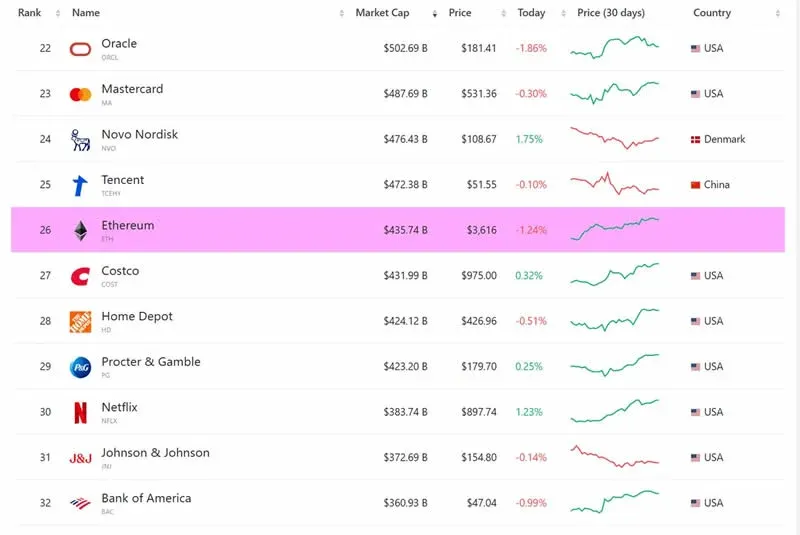
- Historical performance: From below $10 USD in 2017 to an all‑time high of around $4,800 USD in 2021; after a correction to roughly $1,000 USD in 2022, it remains one of the fastest‑growing assets over the past decade.
- Institutional entry: In 2024 the first ETH spot ETF launched, bringing traditional finance capital into the space and enhancing visibility and regulatory compliance.
Main Risks Facing ETH
- Competing blockchains: Chains such as Solana, which claim higher speed and lower fees, could siphon away some DApp traffic, limiting ETH usage.
- Regulatory uncertainty: PoS mechanisms are more susceptible to regulatory scrutiny; some exchanges have paused staking services due to compliance concerns.
- Technical security: Smart‑contract bugs or network attacks remain potential threats that could affect user confidence and price performance.
---
This completes the comprehensive answer to What is Ethereum (ETH)? Who created it? How can you use ETH? For more introductory material on Ethereum, please follow additional articles on Bitaigen.
Related Reading
- Ethereum Merge: Ethereum vs Ether Explained
- Ethereum Reclaims $4,000: 3 Drivers to Boost ETH in Oct
- Believe Ecosystem's Bond Curve Grows 6 Token Market Caps
💡 Register on Binance with referral code B2345 for the maximum trading fee discount. See Binance complete guide.



