
 Bitaigen Research
 In this article we provide an in‑depth analysis of Bybit’s newly launched TradFi module, focusing on the core highlights such as using USDT directly as margin, a unified cross‑market interface, and flexible leverage settings. By dissecting the functional logic and typical use cases, we help you quickly assess the product’s suitability for trading traditional financial assets. Subsequent sections will present operational tips and risk warnings, so please continue reading.
What Is Bybit TradFi?
Beyond the crypto space, traditional financial assets are gradually making their way onto digital trading platforms. Bybit (official registration link | official download link) has introduced a TradFi (Traditional Finance) module that lets users, within a single account, directly trade foreign exchange, precious metals, global indices, and U.S. tech‑stock contracts‑for‑difference (CFDs). This enables a “one‑stop” experience for cross‑market trading.
Core Advantages of TradFi
1. USDT Directly Used as Margin
No need to first convert USDT into fiat, and you never have to leave the Bybit platform. By using a familiar stablecoin you can access traditional‑finance products, dramatically reducing conversion costs and entry barriers.
2. Unified Trading Interface
Whether you are trading gold, crude oil, or U.S. stock CFDs, the same interaction logic applies inside the Bybit app or the MT5 client, saving you the time required to learn multiple systems.
3. Flexible Leverage Settings
Maximum leverage varies by instrument, reaching up to 500× for certain forex pairs, while most commodities such as gold and indices stay below 100×. This allows experienced traders to adjust position size according to volatility.
- USD/JPY: up to 500×
- XAU/USD (Gold): about 100×
- NASDAQ‑100 (CFD): about 50×
Beginners can start with low leverage and gradually become comfortable with risk management.
4. Deep Liquidity and Low Spreads
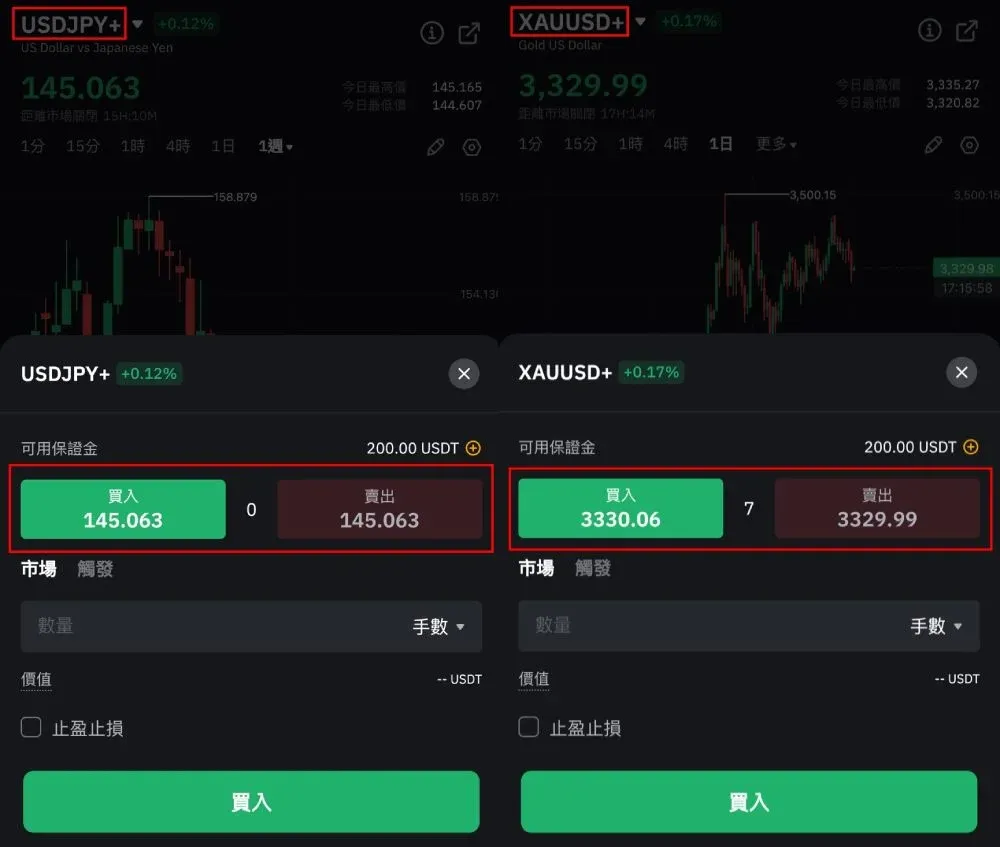
Bybit partners with several top‑tier liquidity providers to ensure a deep order book and minimal slippage. Below are the average spreads for a few popular contracts (for reference only; real‑time quotes apply on the platform):
| Asset Type | Trading Pair | Bid Price | Ask Price | Measured Spread | Remarks |
|---|---|---|---|---|---|
| Forex | USD/JPY | +145.06 | 3.063 | 0.0 pip | Virtually zero spread |
| Gold | XAU/USD | +3330.06 | 33.299 | 0.07 USD | Below the industry‑common 0.2–0.3 USD range |
Bybit’s maker‑taker fees for both limit and market orders remain competitive, with no hidden charges and high transparency—ideal for cost‑sensitive users.
5. Demo Practice and Copy‑Trading Tools
To help newcomers get acquainted, TradFi offers a simulated‑trading environment and a copy‑trading feature, allowing users to “test the waters” before committing real capital and to observe how other traders execute their strategies.
Supported Asset Classes
As of June 2025, Bybit TradFi covers four major categories comprising more than 100 CFD contracts:
- Forex: EUR/USD, USD/JPY, GBP/USD and other major currency pairs
- Commodities: Gold (XAU/USD) and crude oil (WTI/OIL)
- U.S. Stock CFDs: AAPL, AMZN, GOOG, TSLA, META and other tech leaders
- Global Indices: S&P 500, NASDAQ 100, Nikkei 225, etc.
All instruments are traded as CFDs, meaning investors do not need to own the underlying asset to benefit from price movements via leverage.
Target User Profiles
TradFi is not aimed at a single niche; it is designed to serve several user groups:
- Seasoned crypto holders who wish to diversify their portfolio without switching platforms.
- Traditional‑finance professionals or investors curious about crypto but unsure where to start.
- Investors seeking a consolidated asset‑allocation hub, preferring not to juggle multiple accounts and platforms.
With a single entry point, users can seamlessly toggle between the Web3 ecosystem and traditional finance markets.
Overview of the Trading Workflow
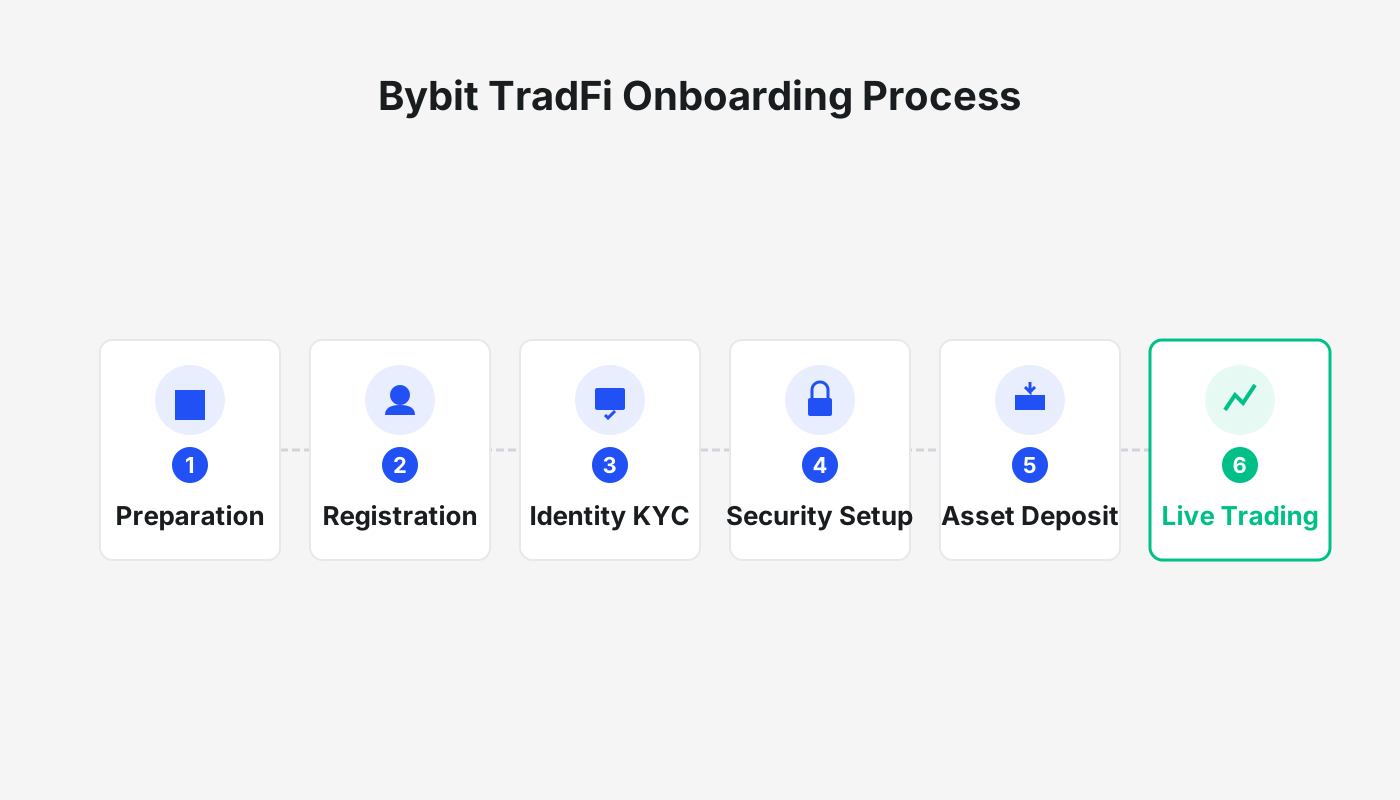
Bybit TradFi is accessible via web and mobile. The steps below will get you up and running quickly:
1. Open a TradFi Account
- Log in with your existing Bybit account.
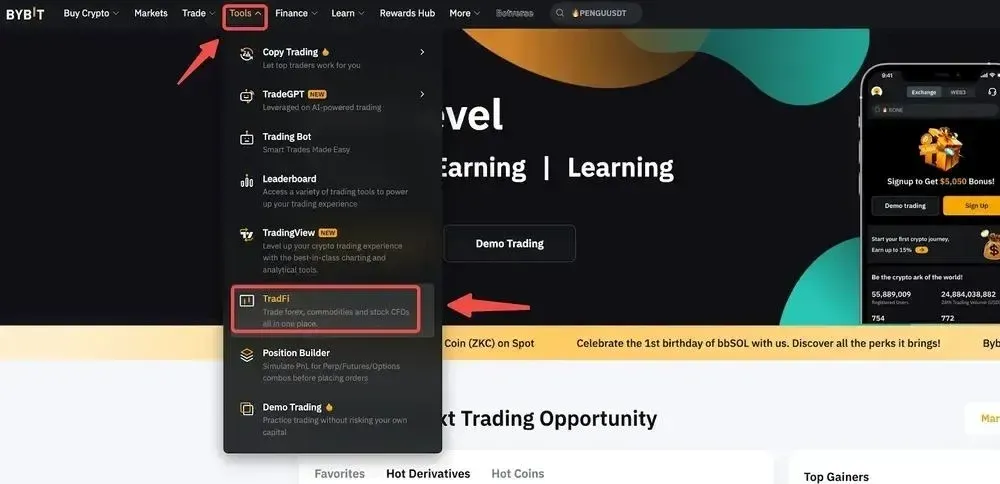
- Locate the “TradFi” entry point on the website or app.
- If the account status shows “Not activated,” complete identity verification and request access to TradFi services.
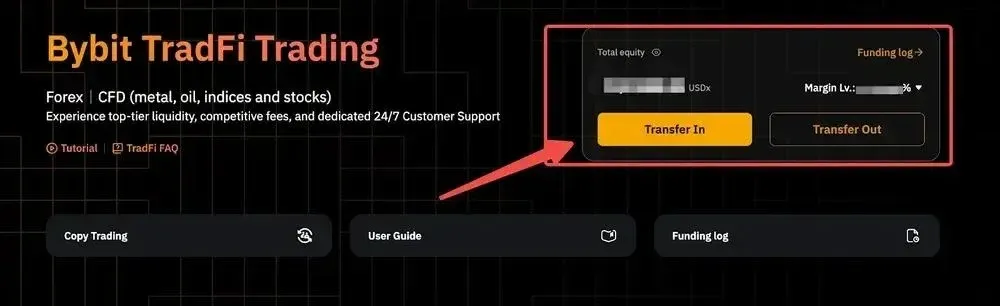
2. Deposit Trading Funds
- Transfer USDT into your Bybit funding wallet.
- Navigate to the TradFi assets page and click “Deposit Funds.”
- Enter the amount; the system will convert USDT 1:1 into USDx (a USD‑pegged token) to be used as margin.
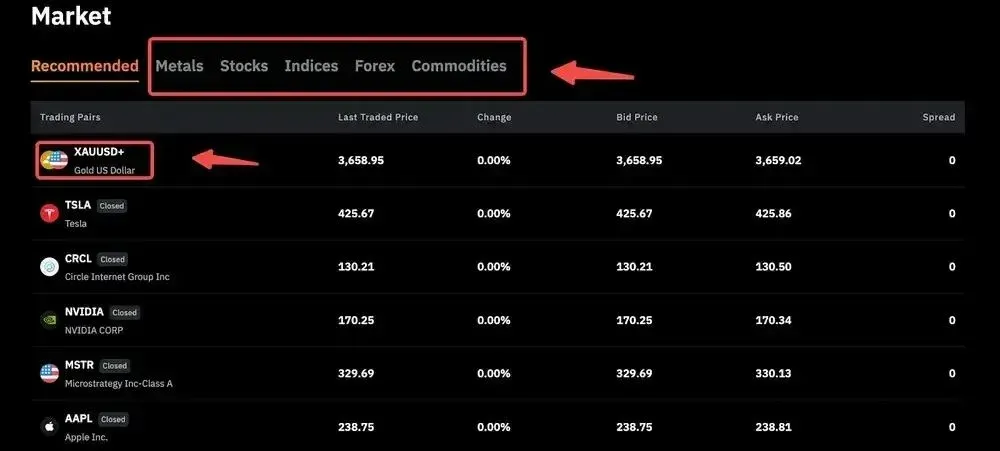
3. Choose a Trading Instrument
Browse the list of forex, metals, indices, or U.S. stock CFDs, click a contract to view real‑time spreads, candlestick charts, and contract specifications, then confirm the trading session before proceeding.
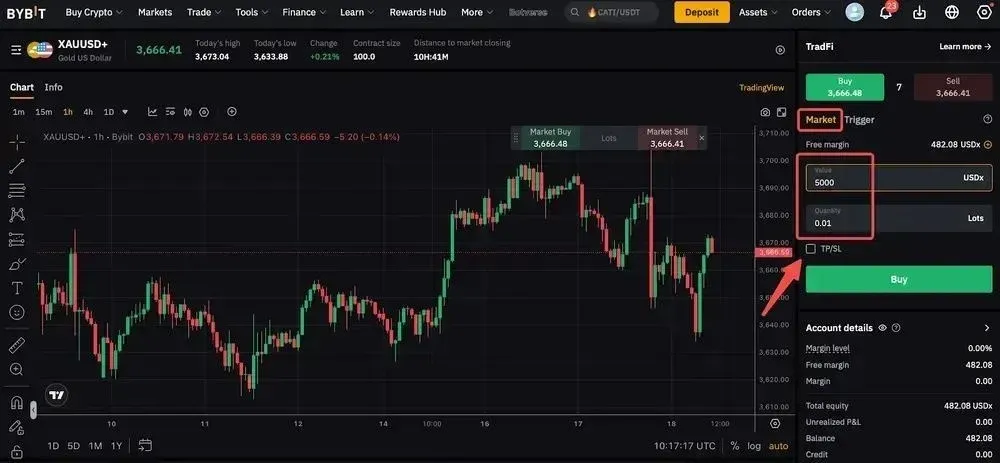
4. Set Order Parameters
- Select Buy (Long) or Sell (Short).
- Choose order type: market, limit, stop‑loss, or trailing‑stop.
- Input the trade size or notional value and adjust the leverage according to the contract’s limits.
5. Add Risk Controls
Before submitting, set a stop‑loss and a take‑profit level, review the used margin and potential exposure, then confirm the order.
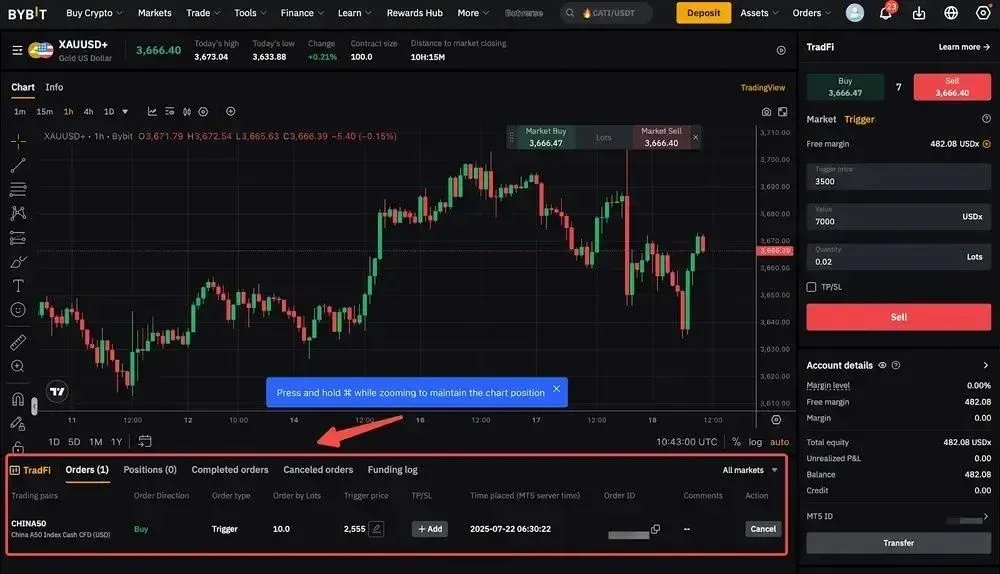
6. Monitor Positions and Fees
- Keep an eye on real‑time P&L and margin ratio; the platform will trigger a forced liquidation if the margin falls below 50 %.
- Check whether overnight positions incur swap (roll‑over) fees and adjust positions accordingly to manage costs.
Risk Warnings and Usage Notes
- Leverage amplifies gains and losses: While high leverage can boost profit potential, it also magnifies downside risk. Choose leverage levels that match your risk tolerance.
- Trading hours are limited: Traditional‑finance products can only be traded during their respective market sessions (generally Monday‑Friday).
- Regional compliance: Users in certain jurisdictions, such as the European Economic Area, may not have access to TradFi features at this time.
- Margin‑currency restriction: Currently only USDT is accepted as margin; other cryptocurrencies (e.g., ETH, BTC) cannot be used as collateral.
---
This article systematically examined “What is TradFi and what are its features?” as well as the practical details of using Bybit TradFi. For more information, you can search the Bitaigen (比特根) archive or continue reading the recommended articles below. Thank you for your continued interest in Bitaigen (比特根)!
Related Reading
- Bybit TradFi: Trade Crypto & US Stocks on One Platform
- OKX vs Binance: Crypto Exchange for Liquidity & Security
- OKX Crypto Guide: User‑Friendly Entry for Beginners
💡 Register on Binance with referral code B2345 for the maximum trading fee discount. See Binance complete guide.



