
 Bitaigen Research
 Centralized exchanges (CEX) are cryptocurrency trading platforms operated by a single company (the centralized operator). All activities—including asset custody, order execution, buyer‑seller matching, and deposit/withdrawal processing—are handled through that company’s servers and infrastructure. Users place their trust in the exchange, delegating the storage of private keys and funds to it.
Decentralized exchanges (DEX) are platforms without a central operator or intermediary. All trades are executed directly between users via blockchain smart contracts. Users retain full control over their private keys and assets at all times.
Centralized exchanges (CEX) offer high liquidity, fiat‑on‑ramps and comprehensive customer support, but require trust in the platform and completion of KYC; decentralized exchanges (DEX) let users self‑custody their private keys, provide pseudonymous trading without intermediaries, yet typically have higher fees and transaction speed can be affected by on‑chain congestion.
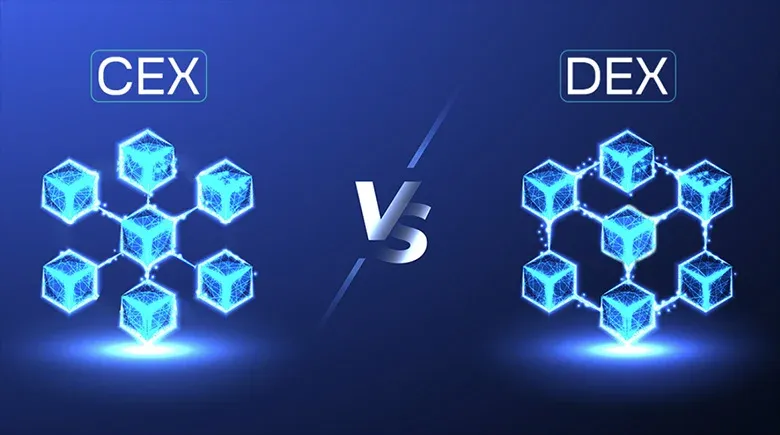
From a technical, liquidity and compliance perspective, we provide a panoramic analysis of the core characteristics of centralized and decentralized exchanges, and we curate a list of reputable platforms to help you quickly determine which model better fits your trading needs. Continue reading to master the pros and cons of both types of exchanges and to obtain practical selection guidance.
Expert‑selected Best Centralized (CEX) Crypto Exchanges
- Bybit – KYC verification required; reserve‑ratio verification > 100 % according to Hacken audit (2025‑02); spot fee 0.1 % (maker/taker), futures fee 0.02 %/0.055 %.
- OKX – KYC verification required; zk‑STARK proof > 100 % reserve ratio (2025‑10); spot fee 0.08 %/0.1 %, futures fee 0.02 %/0.055 %.
- Binance – KYC verification required; reserve ratio > 100 % verified via Merkle Tree (2025‑10); spot fee 0.1 % (maker/taker), futures fee 0.02 %/0.05 %. *U.S. residents must use Binance.US, the separate platform that complies with U.S. regulations.*
- BingX – KYC optional; reserve proof > 100 % (Merkle Tree, 2025‑02); spot fee 0.1 %/0.1 %, futures fee 0.02 %/0.05 %.
- MEXC – KYC optional; audited reserve > 100 % (2025‑10); spot fee 0.0 %/0.04 %, futures fee 0.01 %/0.04 %.
- KuCoin – KYC verification required; reserve verification > 100 % (Hacken, 2025‑06); spot fee 0.1 %, futures fee 0.02 %/0.06 %.
- Gate – KYC required; zk‑SNARKs reserve confirmation 128.58 % (2025‑01); spot fee 0.1 %/0.1 %, futures fee 0.02 %/0.05 %.
- HTX – KYC optional; reserve proof > 100 % (Merkle Tree, 2025‑11); spot fee 0.2 %/0.2 %, futures fee 0.02 %/0.06 %.
- CoinEx – KYC optional; reserve proof > 100 % (Merkle Tree, 2025‑09); spot fee 0.2 %/0.2 %, futures fee 0.03 %/0.05 %.
- Phemex – KYC optional; Merkle Tree reserve proof > 100 % (2025‑01); spot fee 0.1 % (maker/taker), futures fee 0.01 %/0.06 %.
Expert‑selected Best Decentralized (DEX) Crypto Exchanges
- Aster Dex – Supports Ethereum, BNB Chain, Arbitrum, Solana; spot/futures fees 0.01 %/0.035 %; audited by Salus Security and PeckShield (2025).
- Hyperliquid – Native Hyperliquid L1 protocol, bridges to Arbitrum, Ethereum, Solana; same fee schedule; audited by Zellic (Nov 2023, updated 2025).
- Binance Web3 – Supports 60+ chains (Ethereum, BNB, Solana, Polygon, Arbitrum, etc.); fee 0.1‑0.3 % + gas; audited by CertiK and Hacken (2025).
- ApeX Pro – Supports Arbitrum, Ethereum, BNB Chain, Polygon; maker 0.02 % / taker 0.05 %; audited by Secure3 and StarkWare (2025).
- OKX DEX – Supports 25+ chains (Ethereum, BNB Chain, Solana, Tron, Sui, TON, etc.); spot aggregation fee 0.05‑0.3 % + gas; audited by CertiK, Hacken, SlowMist (2025).
- Alpha DEX – Supports TON, Ethereum, Solana, Base, Tron, BSC, Sui; spot fee 0.25 % + gas; audited by PeckShield and CertiK (2025).
- Storm Trade – TON‑only; no spot fee, futures fee 0.05 % + funding rate; audited by CertiK and SlowMist (2025).
- dYdX – Built on the Cosmos‑based dYdX chain; spot trades fee‑free, futures 0.01 %/0.05 %; audited by Informal Systems and PeckShield (2025).
- Uniswap – Supports Ethereum, Polygon, Arbitrum, Optimism, Base, BNB Chain (v3/v4); AMM fee 0.01‑1 %; audited by Trail of Bits and OpenZeppelin (v4, 2025).
- PancakeSwap – Supports BNB Chain, Ethereum, Arbitrum, Base, Linea, opBNB, Aptos; AMM fee 0.01‑1 %, futures 0.02 %/0.07 %; audited by CertiK and SlowMist (2025).
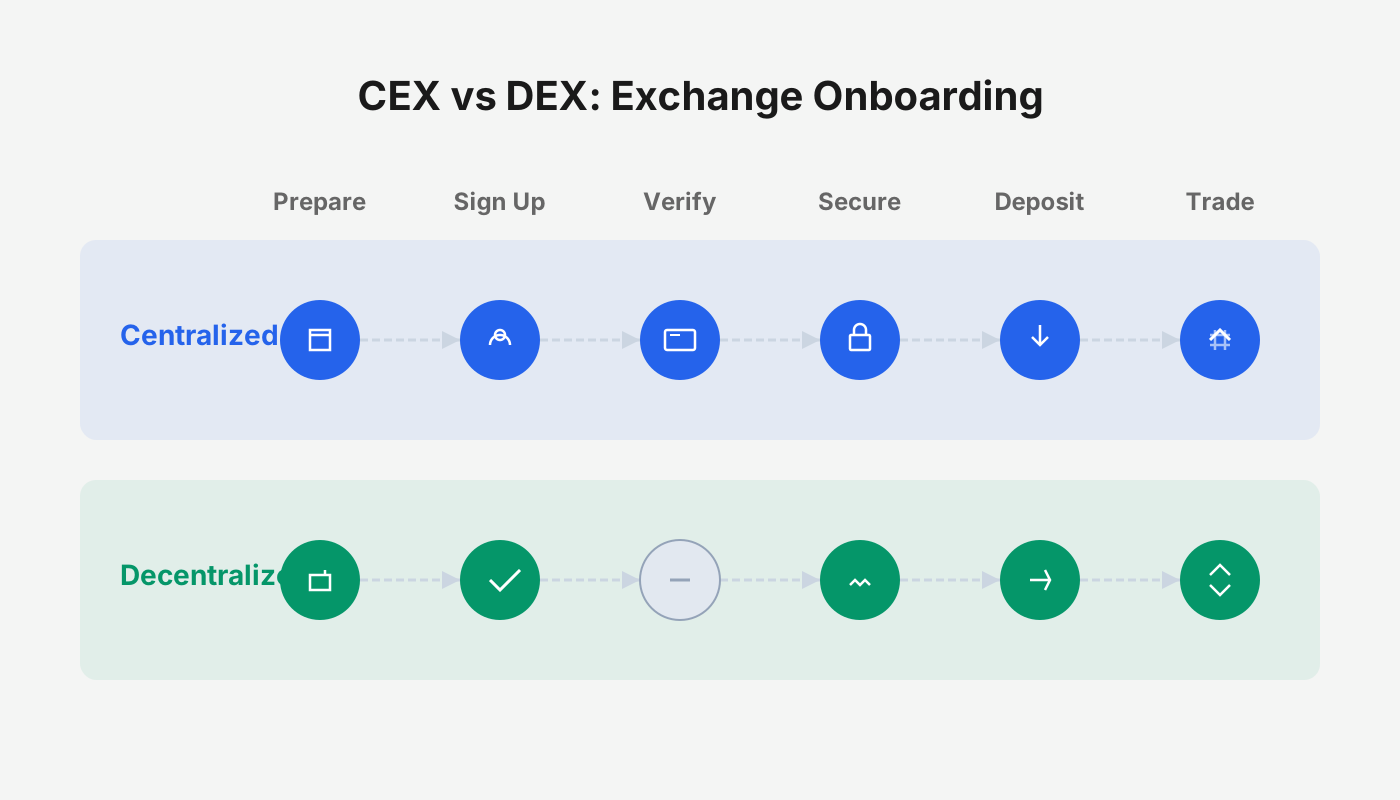
Almost all mainstream centralized exchanges (CEX) now require identity verification (passport, selfie, etc.), especially for fiat on‑ramps and large withdrawals. This makes them part of the regulated financial system. In contrast, decentralized exchanges (DEX) are typically completely pseudonymous—users only need to connect a wallet and submit no documents.
What Is a Centralized Exchange?
A centralized exchange (CEX) is operated by a single entity that handles every aspect of the service, including asset custody, order matching, technical maintenance, and regulatory compliance. Its model resembles traditional securities exchanges, charging users transaction fees to cover service costs.
Key Classifications
- Trading Products
- Spot trading: Immediate transfer of assets.
- Derivatives (futures, options): Contracts settled under predefined conditions; can be perpetual or have an expiry date.
- Fiat On‑Ramp
- Exchanges that support fiat gateways allow users to purchase crypto directly with bank cards, SEPA transfers, or SWIFT payments, but they require completion of KYC/AML procedures.
- Leverage & Margin
- Some platforms offer up to 200× leverage, letting users borrow funds to amplify positions; interest is charged and must be repaid upon closing.
- Liquidity Depth
- High liquidity means a deep order book and low slippage, suitable for large‑scale or high‑frequency trading.
Peer‑to‑peer (P2P) platforms belong to a different category: trades occur directly between users, with the platform only providing escrow and arbitration services and never holding user assets.
Advantages and Disadvantages of Centralized Exchanges
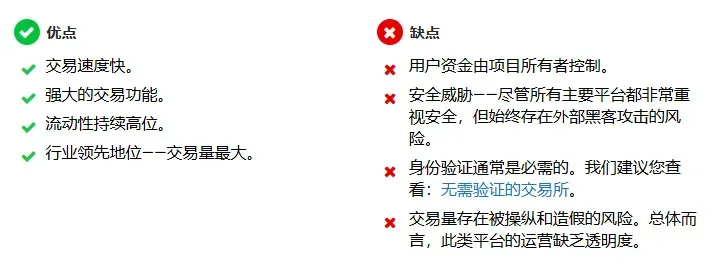
Advantages
- High liquidity: Large volumes of buy and sell orders ensure rapid execution.
- Fiat support: Direct entry and exit using USD, EUR (via SEPA), or other fiat currencies.
- Professional services: Comprehensive features such as leverage, options, staking, and lending.
- User experience: Graphical interfaces, responsive customer support, and extensive educational resources.
Disadvantages
- Centralized risk: Funds are custodial; a hack or internal mismanagement could jeopardize user assets.
- Compliance barrier: KYC/AML requirements limit anonymity.
- Fee structure: In addition to trading fees, deposits, withdrawals, and margin interest may incur extra charges.
Examples of Centralized Exchanges
| Exchange | Supported Assets | Year Founded | Main Features |
|---|---|---|---|
| **Binance** | 357 tokens | 2017 | Fiat gateways, BNB fee discounts |
| **Bybit** | 255 tokens | 2018 | Optional KYC, focus on derivatives |
| **OKX** | 349 tokens | 2013 | Multi‑chain ecosystem, DeFi expansion |
| **HTX** | 656 tokens | 2013 | P2P, futures, staking full suite |
| **KuCoin** | 737 tokens | 2017 | Low fees, frequent promotions |
| **Gate.io** | 1,519 tokens | 2013 | Copy‑trading, rich derivatives |
| **Bynex** | 22 tokens | 2021 | Belarusian regulation, diverse fiat |
| **MEXC** | 1,579 tokens | 2018 | Spot, margin, IEO platform |
| **BitMEX** | 9 assets (spot) | 2014 | High‑leverage derivatives, Bitcoin‑only settlement |
| **EXMO** | 56 tokens | 2013 | Multiple fiat options, Russian‑language focus |
What Is a Decentralized Exchange?
A decentralized exchange (DEX) matches trades directly on‑chain via smart contracts, keeping user assets in their own wallets without the need to trust a third party. Roughly 100 decentralized protocols are currently operating in production.
Three Main Technical Approaches
- On‑chain matching: Order data is written to the blockchain, offering maximum security but slower speeds and higher gas costs.
- Off‑chain order books (e.g., 0x protocol): Orders are maintained off‑chain, with settlement occurring on‑chain, balancing speed and security.
- Smart‑contract liquidity pools: Automated market maker (AMM) models provide instant swaps; users interact only with the contract.
Development Trends
As total locked value grows, demand for faster execution, cross‑chain compatibility, and stronger security rises. Second‑generation DEXs are adopting aggregated routing, layer‑2 scaling, and modular architectures to narrow the gap with CEXs.
Advantages and Disadvantages of Decentralized Exchanges
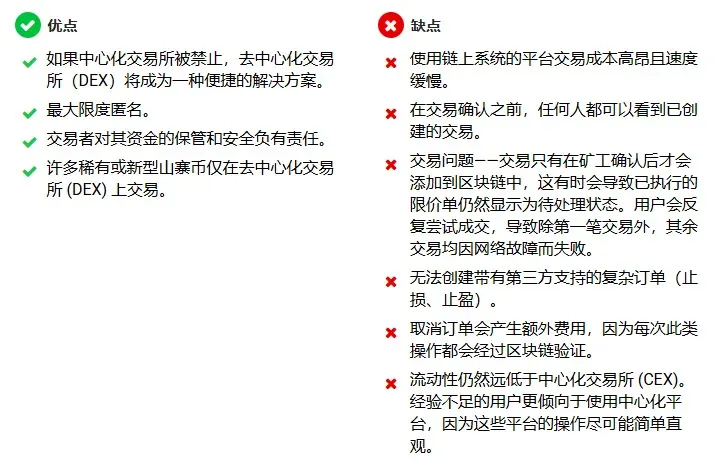
Advantages
- Self‑custody: Private keys remain with the user, reducing custodial risk.
- Pseudonymous trading: No personal identification required to trade.
- No centralized censorship: Once assets are on‑chain, the platform cannot unilaterally freeze them.
Disadvantages
- Transaction costs: In addition to any protocol fee, users must pay on‑chain gas, often making total costs higher than CEXs.
- Liquidity fragmentation: Liquidity is spread across multiple chains and protocols, potentially causing higher slippage.
- User experience: Managing wallets, private keys, and on‑chain actions raises the entry barrier for newcomers.
Examples of Decentralized Exchanges
| Exchange | Supported Chain/Protocol | Fee Structure | Auditing Entity |
|---|---|---|---|
| **IDEX** | Ethereum ERC‑20 | Maker 0.1 % | Contract audit |
| **Kyber Network** | ERC‑20 | 0 % (liquidity provider fee) | Multiple audits |
| **Bancor** | Multi‑chain AMM | 0.1 %‑0.3 % | Automated pricing |
| **Waves Dex** | Waves | 0.2 % (paid in WAVES) | Centralized node signatures |
| **Aster Dex** | ETH, BNB, Arbitrum, Solana | 0.01 %/0.035 % | Salus Security, PeckShield |
| **Hyperliquid** | L1 + multi‑chain bridges | Same as above | Zellic |
| **Uniswap** | Multi‑chain AMM | 0.01‑1 % | Trail of Bits, OpenZeppelin |
| **PancakeSwap** | BNB, ETH, etc. | 0.01‑1 % (AMM), futures 0.02 %/0.07 % | CertiK, SlowMist |
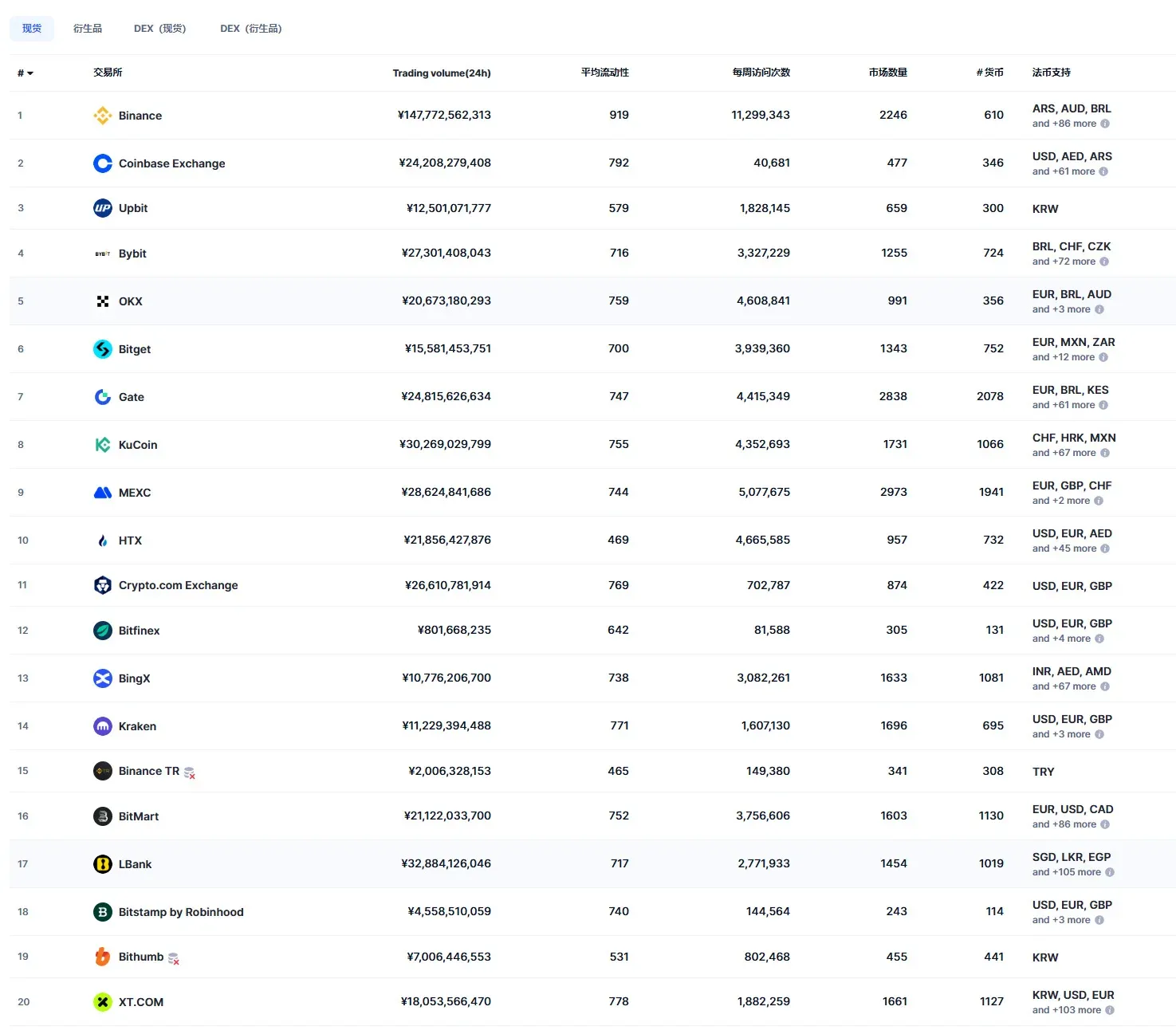
November 2025 Top 20 Spot Crypto Exchanges
Rankings based on traffic, liquidity, trading volume and the credibility of reporting sources.
Source: CoinMarketCap
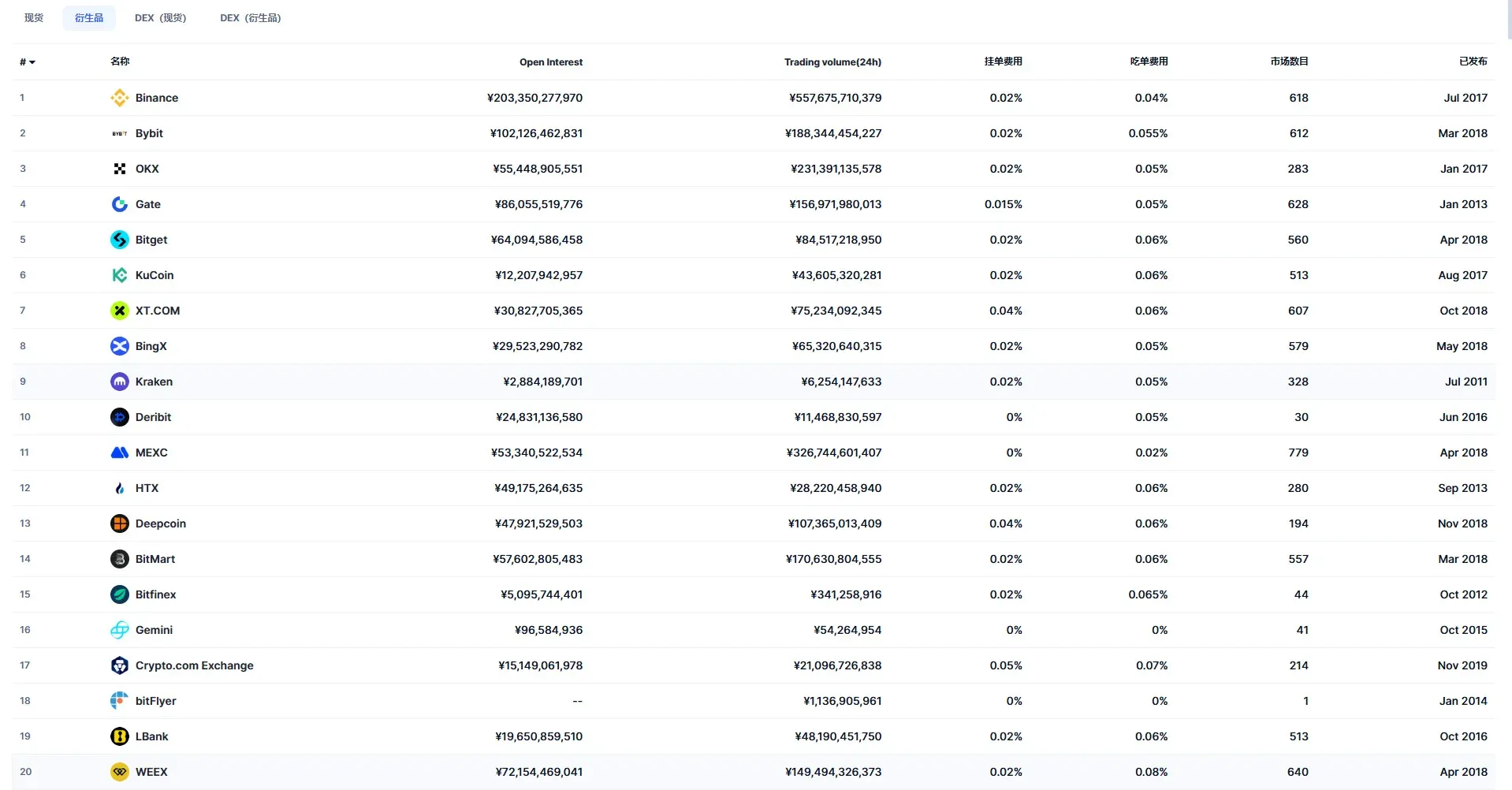
November 2025 Top 20 Derivatives Crypto Exchanges
Evaluated with consideration for liquidity, standardized trading volume and other factors.
Source: CoinMarketCap
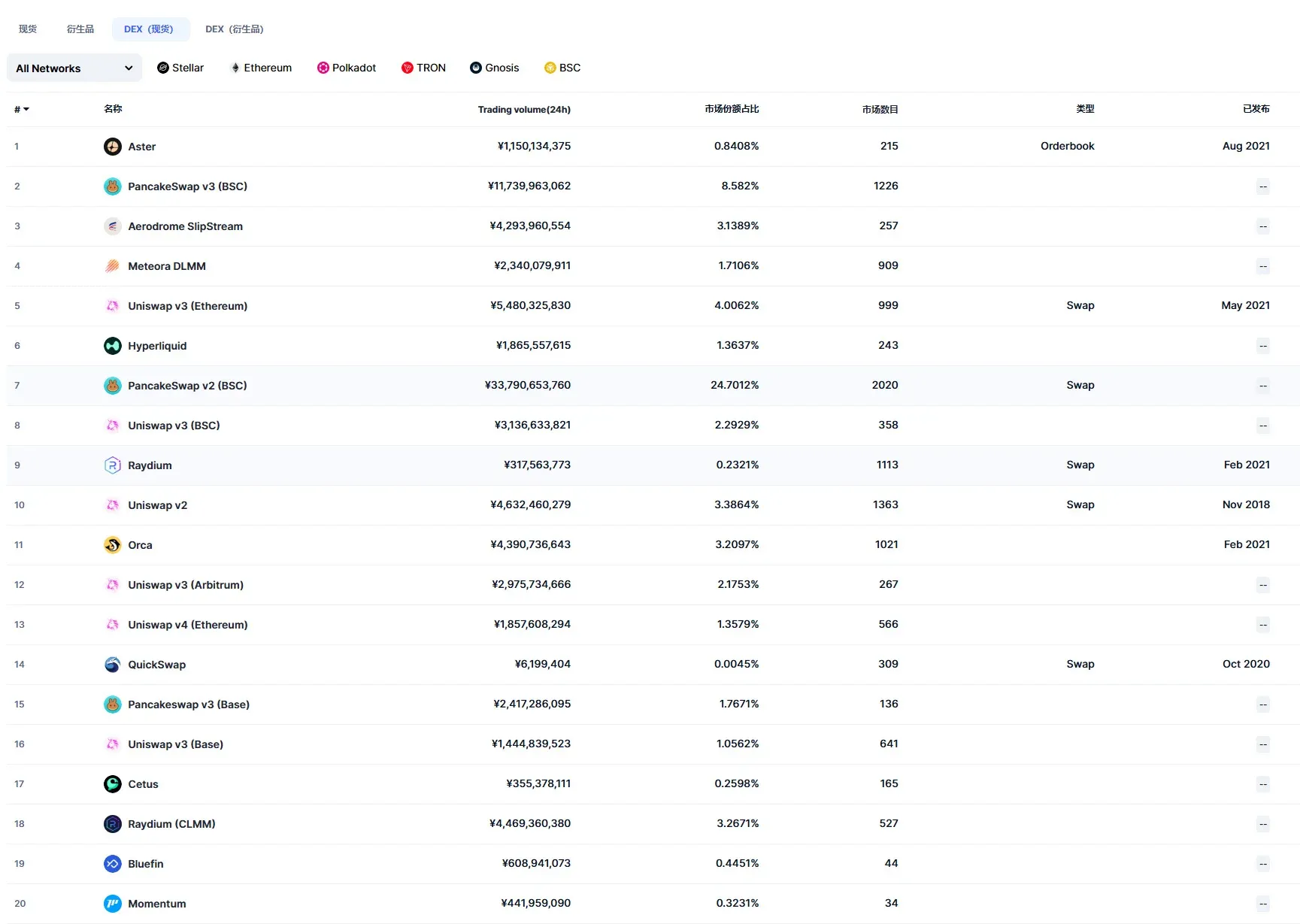
November 2025 Top 20 Decentralized Crypto Exchanges
Ranked by trading volume and share of the DeFi market.
Source: CoinMarketCap
How to Choose the Best Exchange Among the Many Options
- Security & Regulation: Verify cold‑storage ratios, enable 2FA, check for regular audits, and confirm the platform’s KYC/AML compliance within its jurisdiction.
- Liquidity & Volume: Higher trading volume translates to lower slippage; pay special attention to major pairs such as BTC/USD, ETH/USD, and other high‑li
Related Reading
- What Is a DEX? Complete Guide to Decentralized Exchanges
- 去中心化交易所(DEX)深度解析:核心概念、AMM机制与使用风险
- Bybit vs MEXC 2026 Review: Which Crypto Exchange Is Best?
💡 Register on Binance with referral code B2345 for the maximum trading fee discount. See Binance complete guide.



