
 Bitaigen Research
 In Gate.io, conducting contract trading is as simple as opening the contract page, selecting either perpetual or delivery contracts, setting the leverage and position size, and confirming a buy or sell order to place the trade.
In this article we walk newcomers through the step‑by‑step process of starting contract trading on Gate.io. We cover how to access the contract page, choose between perpetual and delivery contracts, configure leverage and position size, and key points for order placement. A brief explanation of long and short directions is also included. With clear, ordered instructions, readers can quickly grasp the essentials; later sections will discuss risk management and common issues, so a thorough read is recommended.
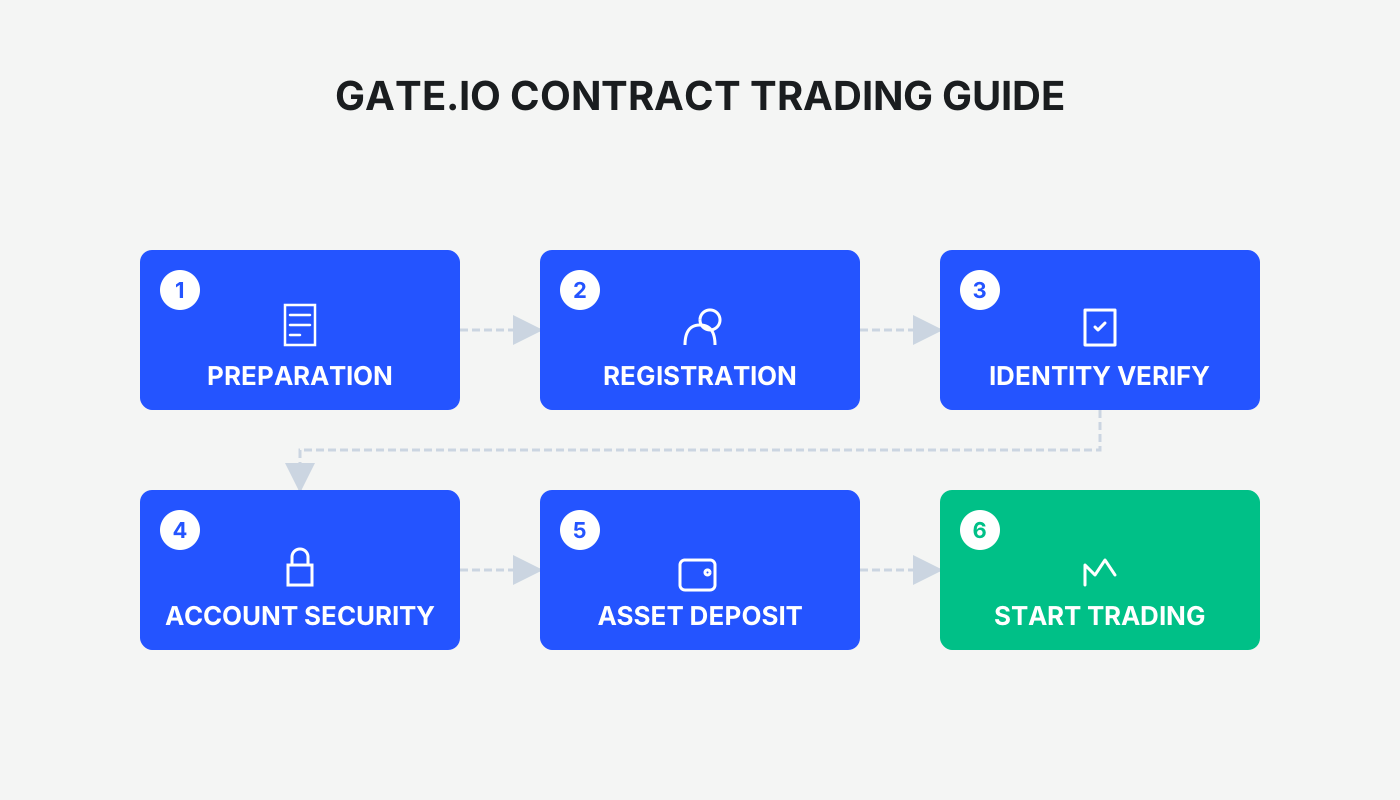
What Is Contract Trading?
Contract trading is a type of derivative trading where users do not need to own the underlying asset itself. Instead, they buy or sell a contract that bets on the price movement of the asset to generate profit. The contract defines the trading conditions and price, allowing traders to act flexibly amid the volatility of the cryptocurrency market.
Gate.io Reference Guides
- Gate.io Contract Trading Step‑by‑Step (App version)
- How to download, install, and register the Gate.io mobile app (iOS / Android)
- Gate.io USDT Deposit and Withdrawal Process (Gate Chain)
- Common questions about on‑chain deposits and withdrawals
- Quick Buy/Sell steps in the Gate.io mobile app
Basic Concepts of Contract Trading
Long and Short
- Long: Open a position when you expect the asset’s price to rise; profit is realized as the price goes up.
- Short: Open a position when you expect the asset’s price to fall; profit is realized as the price goes down.
Leverage
Leverage magnifies the capital you control. For example, using 10× leverage means the effective trade size is ten times your margin, but the associated risk is also magnified proportionally.
Liquidation and Forced Liquidation
If the market moves against your position and the margin becomes insufficient, the system will automatically close the position—this is called liquidation or forced liquidation.
Margin
Margin is the amount of funds locked in advance to open and maintain a position. It acts as a guarantee that the user has enough assets to cover potential losses.
Funding Rate
The funding rate anchors the perpetual contract to the spot price and is settled every 8 hours. When the rate is positive, longs pay shorts; when negative, shorts pay longs.
Perpetual Contracts vs. Delivery (Delivery) Contracts
| Feature | Perpetual Contract | Delivery Contract |
|---|---|---|
| Expiration | No fixed expiry | Fixed delivery date (weekly, monthly, quarterly) |
| Funding Rate | Yes (every 8 h) | No |
| Typical Use | Short‑term, high‑frequency | Medium‑ to long‑term trends |
- Perpetual contracts: Can be held indefinitely, suited for short‑term traders.
- Delivery contracts: Have a clear expiry, suited for trend‑following traders.
Benefits and Risks of Contract Trading
Benefits
- Higher Potential Returns: Leverage amplifies capital, increasing profit potential.
- Two‑Way Trading: Opportunities exist whether the price moves up or down.
Risks
- Higher Risk: Leverage also amplifies losses.
- Market Volatility: Sharp moves can trigger liquidation.
Gate.io Contract Trading Practical Guide
- Open the official Gate.io website or the mobile app, navigate to the Contracts section, and select USDT Perpetual or BTC Perpetual.
- (Beginners are advised to start on the Demo Trading page for practice.) This guide uses the USDT Perpetual Contract** as an example to demonstrate the basic workflow.
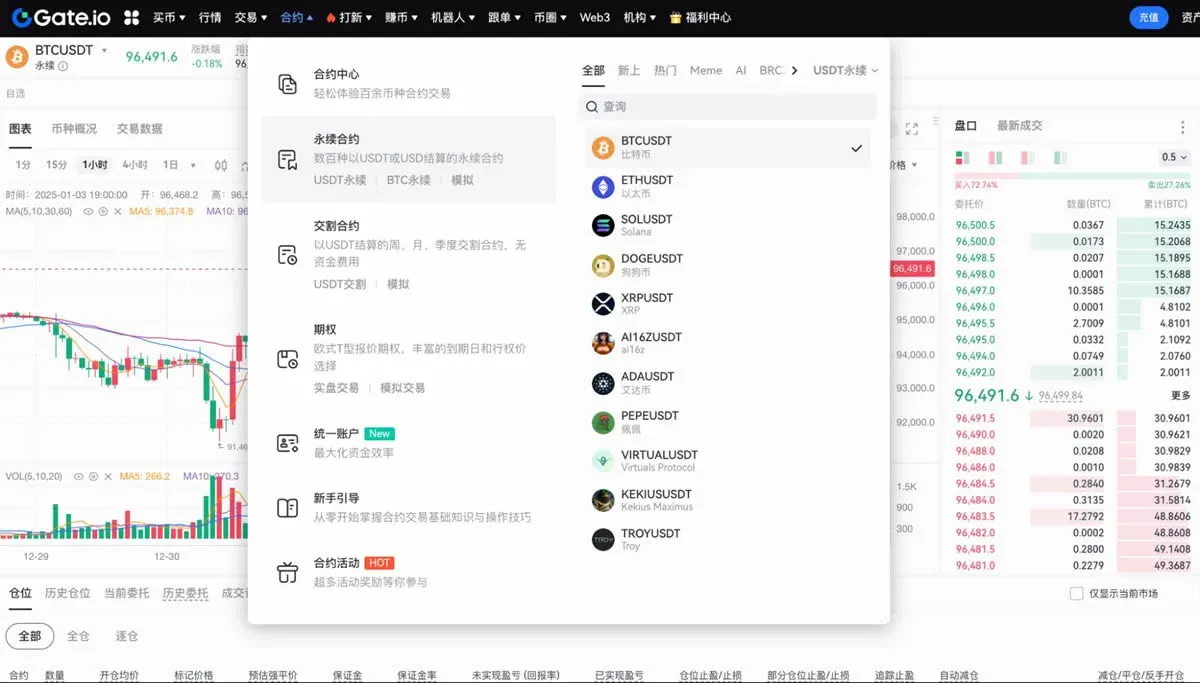
Key Interface Elements
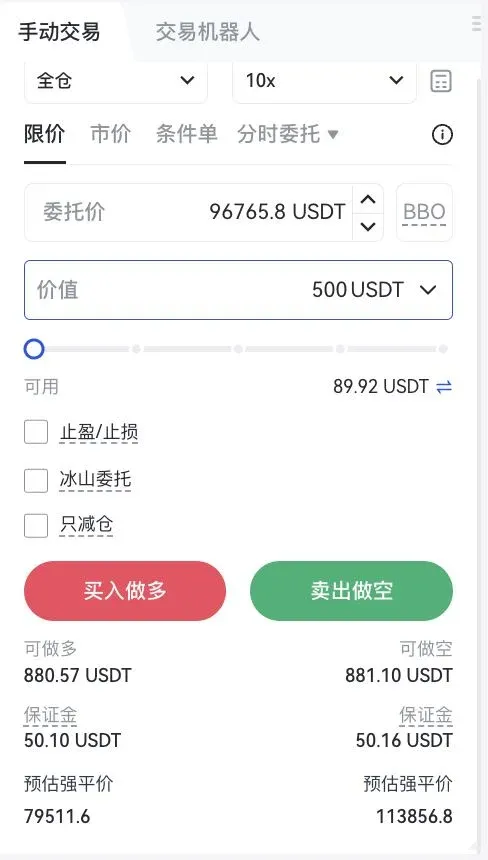
In the red box on the right‑hand side you will see the following options:
- Margin Mode: Cross‑margin vs. Isolated
- Cross‑margin: All positions share the same margin pool; a loss in one position can affect the others.
- Isolated: Each position uses its own margin; a liquidation of one position does not impact the rest.
- Leverage Ratio: Choose the appropriate leverage. BTC/USDT perpetual contracts can go up to 125×; higher leverage carries higher risk.
- Order Price: Choose Market or Limit.
- Position Value: Set the contract value for this order.
- Order Direction: Buy to go long (Long) or Sell to go short (Short).
- Pre‑Order Information
- Max Long/Short: The largest position you can open at the current leverage.
- Margin Required: The amount of margin needed for this order.
- Estimated Liquidation Price: The price at which the system would trigger liquidation.
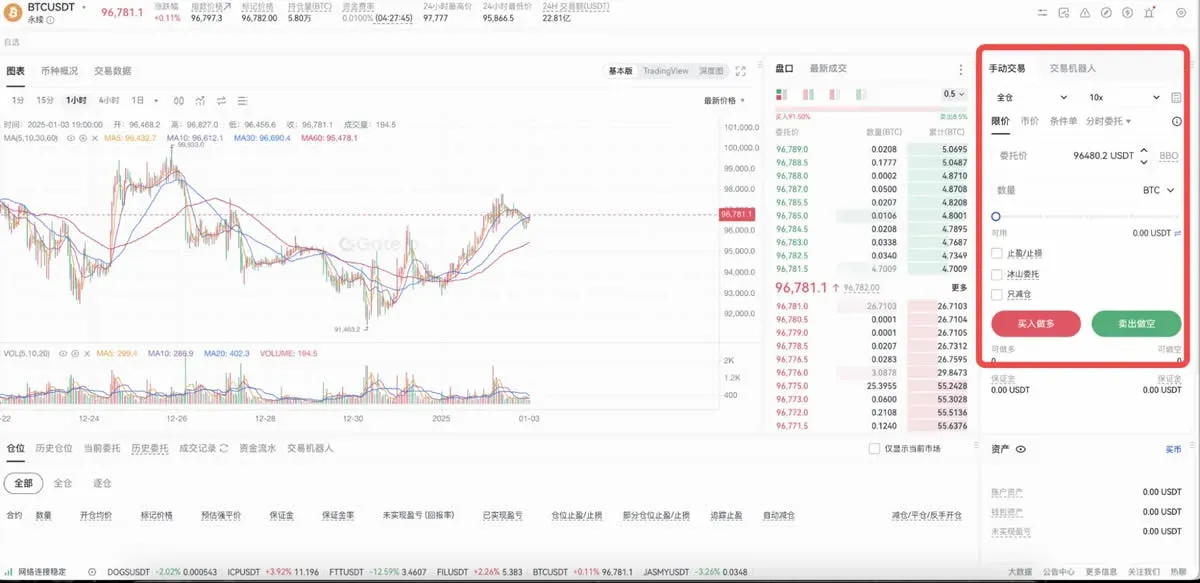
Viewing Your Position After the Order Is Filled
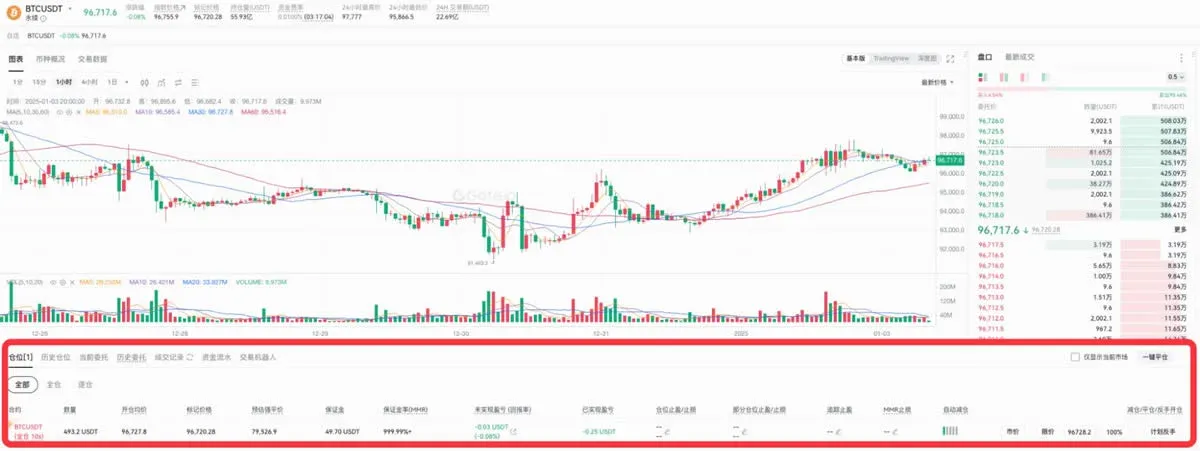
Once the order is successful, the red box will display detailed information about the opened position, for example:
- Position Value: 493.2 USDT
- Direction: Buy Long
- Entry Price: 96,727.8 USDT
- Estimated Liquidation Price: 79,536.9 USDT
Explanation of Key Metrics
- Margin Ratio: A risk indicator; liquidation occurs when the ratio ≤ 100 %.
- Unrealized P/L: Floating profit or loss calculated using the mark price.
- Realized P/L: Profit or loss that has been settled, including fees and funding costs.
- Take‑Profit / Stop‑Loss: Price levels that trigger automatic closing of the position.
- Partial Take‑Profit / Stop‑Loss: Applies only to a portion of the position.
- Trailing Stop: Automatically closes the position at market price after the price retraces a preset percentage.
- MMR Stop‑Loss: Stops the position when the Minimum Maintenance Margin (MMR) falls to a set level.
- Auto‑Deleveraging (ADL): A forced liquidation mechanism the platform uses in extreme market conditions to control risk.
- Market & Limit Orders: Executed at current market price or at a user‑specified price, respectively.
- Reverse & Planned Reverse: Open a reverse position immediately or after a trigger price is reached.
Settlement Methods
Select any take‑profit/stop‑loss option or close the position manually to settle the contract trade.
Tip: Beginners should start with small‑size trades or use the demo contract environment to avoid unnecessary financial loss.
Frequently Asked Questions (FAQ) for Contract‑Trading Beginners
Q1: Which is more suitable for beginners, perpetual contracts or delivery contracts?
A1: We recommend beginners start with perpetual contracts because they have no expiry date, making them more flexible for learning.
Q2: What is the funding rate and how is it calculated?
A2: The funding rate is a periodic fee used to balance long and short positions in perpetual contracts. It settles every 8 hours, and the exact rate can be viewed on the platform’s funding‑rate page.
Q3: How can I reduce the risk of liquidation?
A3: Use lower leverage (e.g., 2‑5×), keep position sizes reasonable, and set stop‑loss levels to limit potential losses.
Important Considerations for Contract Trading
- Leverage Management: New traders should start with low leverage to avoid large losses caused by high leverage.
- Responsible Investing: Never trade with money needed for essential living expenses.
- Monitor Funding Rates: The longer you hold a perpetual position, the more the funding rate will affect your overall cost.
- Diversify Positions: Avoid allocating too much margin to a single trade; this reduces the chance of a cascade of liquidations.
- Stay Updated on Market Movements: Keep a close eye on price action and adjust strategies promptly.
Disclaimer on Taxes
Cryptocurrency gains may be taxable in your jurisdiction. Consult a qualified tax professional to understand your local tax obligations, especially when converting crypto profits to fiat currencies such as USD via SEPA or SWIFT transfers.
Summary
This tutorial systematically outlines the core concepts, operational steps, and risk points of Gate.io contract trading. Beginners should always prioritize risk control, gradually build practical experience, and maintain a rational, disciplined mindset. By doing so, they can aim for relatively stable returns over the long term. We wish you smooth trading and an enjoyable investing experience!
The above comprises the entire content of “Gate.io Contract Trading Tutorial: Quick Start Guide for Beginners.” For more Gate.io contract‑trading resources, please follow Bitaigen (比特根) and explore additional related articles.
Related Reading
- Gate.io WeChat Top Up Guide for Beginners
- Gate.io Review: Top Alt‑Coin Exchange & Fee‑Saving Tips
- Binance vs Gate.io vs Bybit vs Bitget: Best Crypto Exchange
💡 Register on Binance with referral code B2345 for the maximum trading fee discount. See Binance complete guide.



