
 Bitaigen Research
 In this article we systematically outline the common obstacles encountered when logging into OKX (formerly OKEx) from a new device, and we provide practical troubleshooting steps and verification techniques to help users quickly restore account access and safeguard their assets. Continue reading to master the complete solution. Whether it is your first login or a device change, you will be able to handle it with ease.
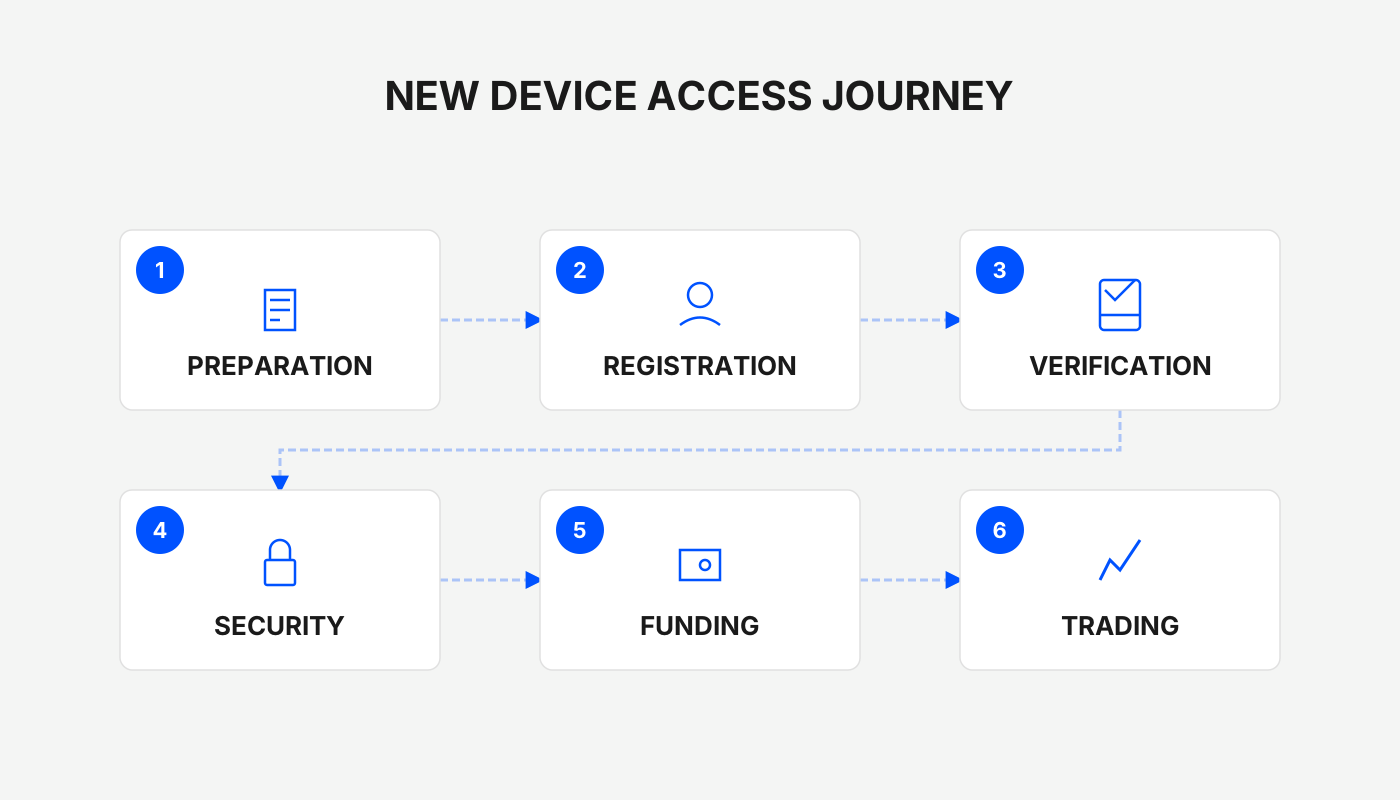
The Relationship Between New‑Device Login Verification and Account Security
OKX implements multi‑factor checks whenever it detects a “new device” login. Even if a password has been compromised, the account remains protected as long as the new device does not pass the required verification steps. Consequently, this mechanism is a core component of the platform’s overall security architecture.
---
Official Entry Points
- OKX Official Registration Page (US users should use Binance.US for any Binance‑related services)
- OKX App Download Link (global download; US users must obtain the app via Binance.US if the link points to Binance services)
When logging in with a new device, an unstable access path may cause the captcha to fail to load or the verification page to behave oddly. It is recommended to always reach the platform through the official channels listed above.
---
When New‑Device Verification Is Triggered
The system classifies a device as “new” and prompts additional identity confirmation under any of the following circumstances:
- First‑time login from a phone or computer
- Switching browsers or clearing local cache and then logging in again
- Change of network environment or geographic region
- Re‑installing the OKX app
- First login after a system upgrade
These actions are interpreted as significant changes to the login environment, prompting the platform to initiate the corresponding verification flow.
---
Common Verification Methods
Depending on the security settings attached to the account, OKX may combine one or more of the following methods:
- SMS verification code
- Email verification code
- Time‑based one‑time password (e.g., Google Authenticator)
- Facial recognition or video verification
- Interactive actions on a security confirmation page
In some cases, multiple verifications must be completed before the login can proceed.
---
Facial Recognition Verification
When logging in from a new device, the system will request a facial match with the real‑name ID holder that was previously bound to the account. Perform the verification in a well‑lit environment, keep your face fully visible, and follow the prompts to blink, nod, or shake your head as required. If the first attempt fails, it is advisable to update the app to the latest version (Android 6.75.1, iOS 6.75.0) before trying again.
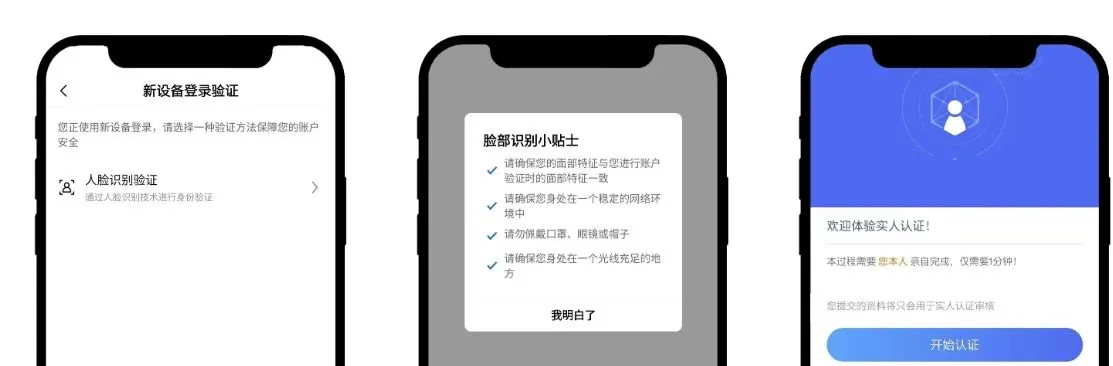
If the verification still does not succeed, follow these steps:
- Ensure that the OKX app has permission to access your photo library and camera.
- Update to the latest app version, power‑off the device, restart it, and clear the phone’s cache.
- Switch the network to a stable 4G/5G connection.
Should these measures fail, send clear front‑ and back‑side photos of your ID document to the official support team via the bound email address, and wait for an engineer to handle the case.
---
Device Verification
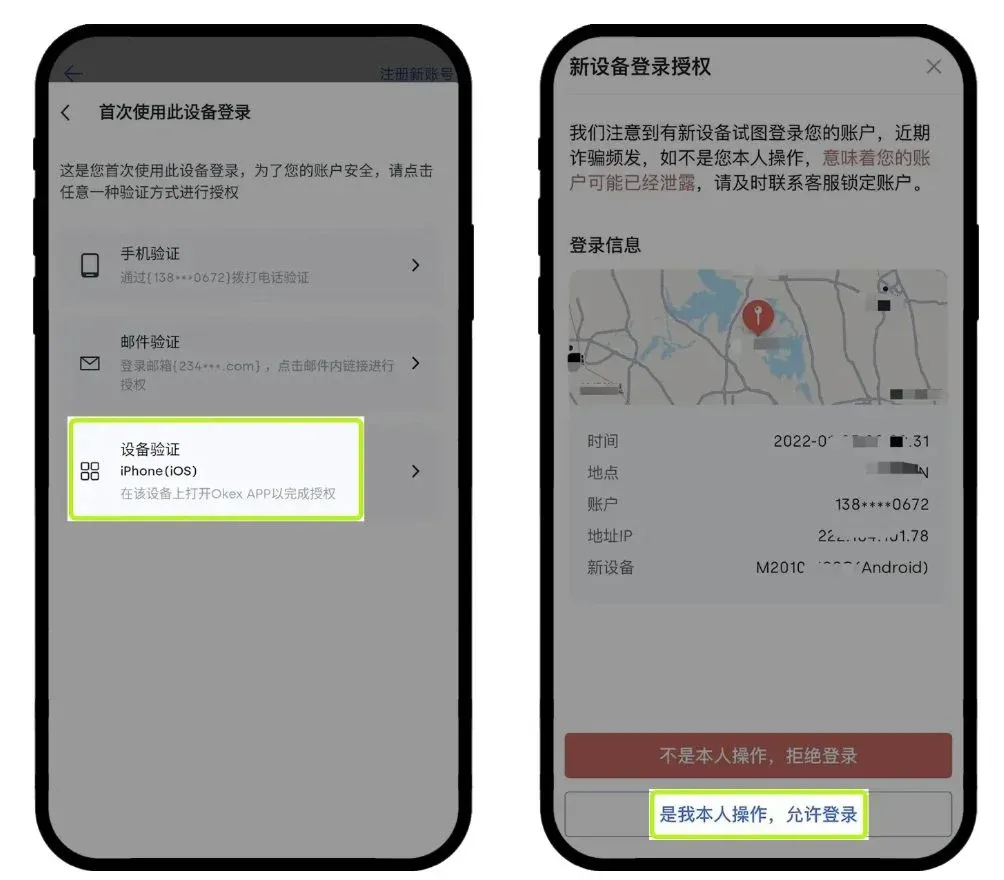
If you opt for “Device Verification,” you must open the OKX app on the original (old) device—such as an iPhone—and grant the required authorization. Once the authorization succeeds, you can complete the login on the new device.
---
Security Code Verification
For accounts that have not yet completed real‑name verification, logging in from a new device will require validation of all bound security elements, including mobile number, email address, and any authentication app.
Friendly Reminder: The platform only supports one real‑name ID per individual. If you use someone else’s ID for verification and later encounter asset disputes, you will be solely responsible for the associated risks.
---
Operational Recommendations for New‑Device Login
Once you enter the verification flow, consider the following order of checks:
- Confirm that the delivery channels are functioning
- Verify mobile signal strength, check both the inbox and spam folders of your email, and ensure any time‑based codes are synchronised.
- Avoid excessive refreshing
- Rapidly clicking “Send verification code” can trigger risk‑control throttling; wait for the countdown to finish before requesting a new code.
- Make sure the app is up to date
- Older app versions may be incompatible with the current verification module; download the latest release from the official entry points.
- Maintain a stable network connection
- Switching between Wi‑Fi and mobile data sometimes resolves page‑loading anomalies.
---
Handling a Verification Page That Won’t Load or Fails Repeatedly
If you encounter a blank page, prolonged loading, or repeated error messages, try the following remedies:
- Use a different browser or restart the app.
- Clear cache and attempt to log in again.
- Access the platform via OKX’s alternative link.
- Disable any proxy services or change the network environment.
- Verify that the device’s system time is correct.
If the issue persists, click [Get Help] or [Contact Support] on the login screen to initiate a manual assistance process.
---
Common Points to Keep in Mind
- After successful authorization the system usually redirects automatically to the login page; if it does not, click “I have verified.”
- Phone‑based verification codes can be used up to 5 times per hour; exceeding this limit requires waiting until the next hour.
- Each verification code (SMS or email) remains valid for roughly 60 seconds.
- If the device has not been used to log in within the past 30 days, you will need to repeat the login process and complete the required authorizations.
---
Closing Remarks
The extra verification triggered by logging into OKX from a new device is a standard security measure designed to protect user assets. By accessing the platform through official channels, following the on‑screen prompts for SMS, email, or time‑based codes, and keeping both your network connection and app version current, most users can complete the process smoothly. Should multiple attempts still fail, promptly contact official customer support for further investigation and assistance.
This article provides a complete tutorial on changing Google Authenticator and performing new‑device login verification for OKX (Web / App). For more related content, search Bitaigen or continue browsing the articles below. Thank you for your attention and support.
Related Reading
- Best Mainstream Bitcoin Exchange to Choose in 2026
- On-Chain Earn vs Simple Earn: Security Comparison & Key Differences
- PancakeSwap Fees & Security Review: Low-Cost Trading on BSC
💡 Register on Binance with referral code B2345 for the maximum trading fee discount. See Binance complete guide.



