
 Bitaigen Research
 OKX (formerly OKEX) – Overview and Trading Guide
OKX (formerly known as OKEX) is registered in Malta and is a globally recognized cryptocurrency exchange where users can conduct spot, margin, and derivatives trading.
OKX is a digital‑currency exchange that virtually every crypto investor has used at some point. The platform supports spot and derivative trading for a wide range of digital assets and enjoys a very high profile worldwide. Nevertheless, many users are still unclear about the jurisdiction of the exchange and the exact steps required to start trading. This article provides a comprehensive answer.
From the perspective of the Bitaigen editorial team, we outline OKX’s registration location, business scope, and entry‑level trading workflow. The focus is on the latest entry points, key steps for spot and contract trading, and tips for newcomers to get up to speed while avoiding common pitfalls. If you want to understand the exchange’s country affiliation and practical details, keep reading for the full guide.
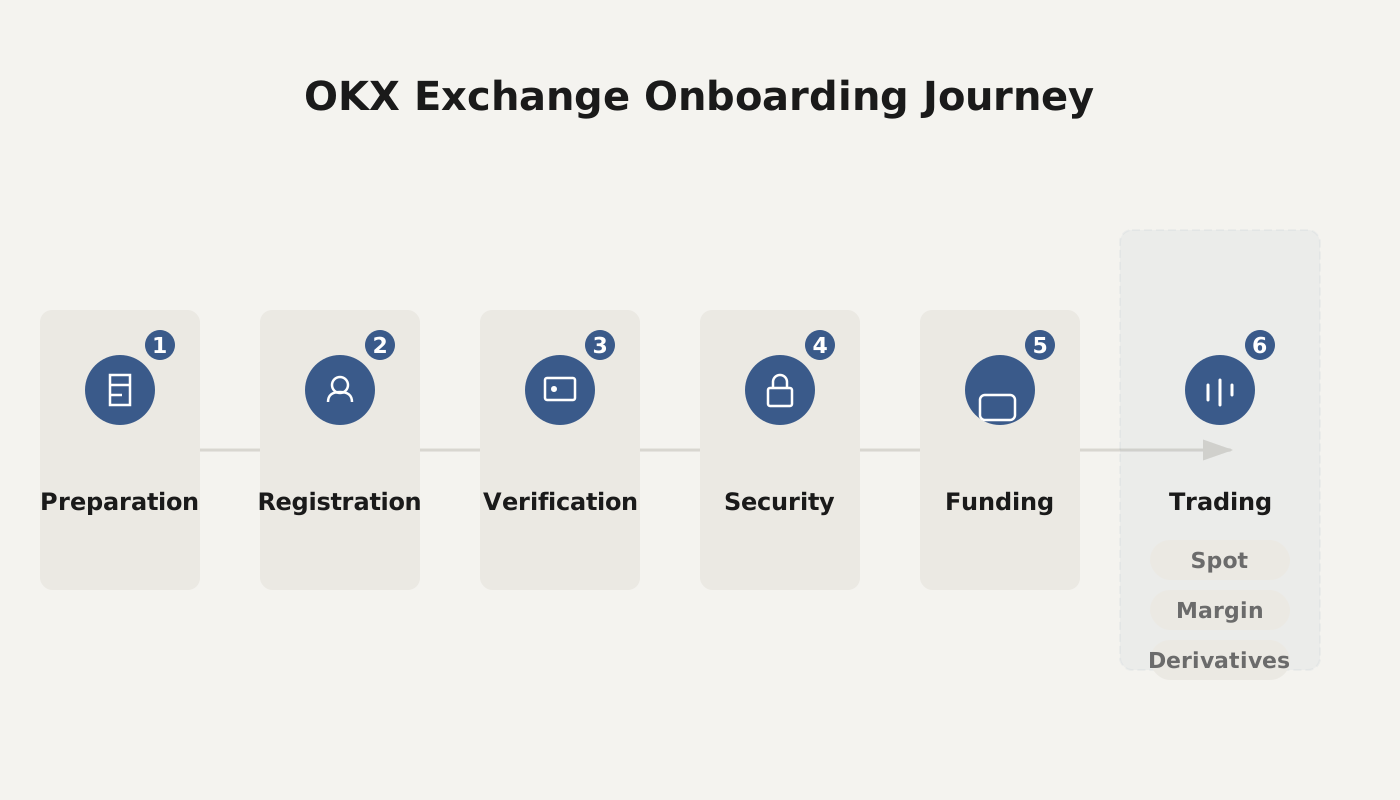
Latest Official Entry for OKX
- Official website: https://www.qlxkj.com
- Referral link: https://www.okx.com/zh-hans/join/B2345
OKX has rebranded from OKEX, and the old URL may no longer work. If you cannot reach the site, download the latest OKX client application or navigate directly to the official website.
Which Country Is OKX Registered In?
The exchange (https://www.qlxkj.com/) originated as OKCoin and is now one of the world’s leading digital‑asset trading platforms, offering spot and derivatives services for Bitcoin, Litecoin, Ethereum and many other assets to a global user base. OKX is registered in Malta and operates under OKEx Technology Company Limited.
- In its early stage, the company secured a multi‑million‑dollar angel round from world‑renowned investors such as Tim Draper.
- In 2014, OKEX closed a Series A round that included China‑based venture fund Ceyuan Capital and Longling Investment, founded by the creator of the Hong Kong‑listed company Meitu (01357.HK), raising tens of millions of USD.
Since its inception, the platform has placed security at the forefront, continuously upgrading encryption technologies and risk‑control systems to protect user assets and information. At the same time, OKEX treats innovation as a driver of sustained growth, developing new products to meet user demand and keeping the platform competitively positioned. Industry data shows that OKEX’s daily turnover ranks among the top three worldwide, with trading volumes reaching several hundred billion USD.
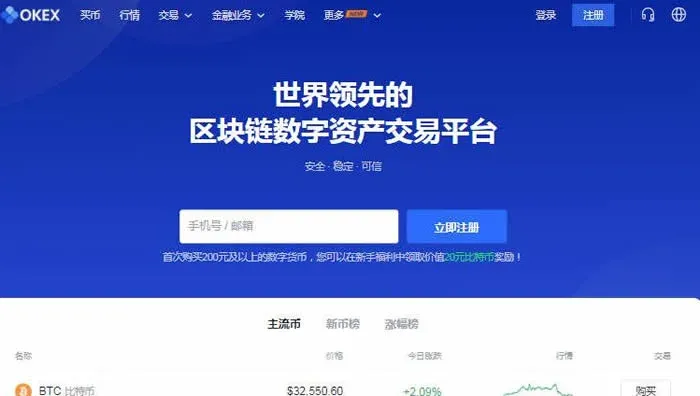
How to Trade on OKX?
1. Transferring Funds
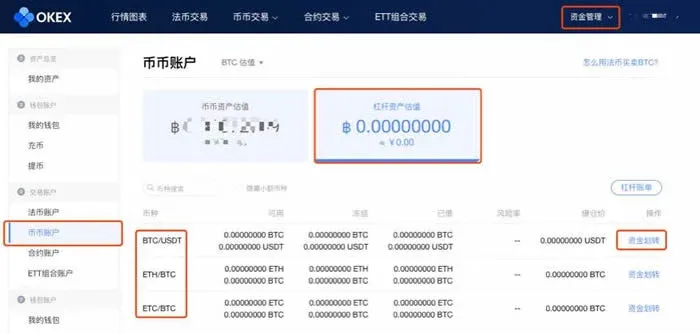
- Open the OKX website. When you first visit the margin‑trading page, you must tick and accept the “Margin Borrowing User Agreement” to enable margin functionality.
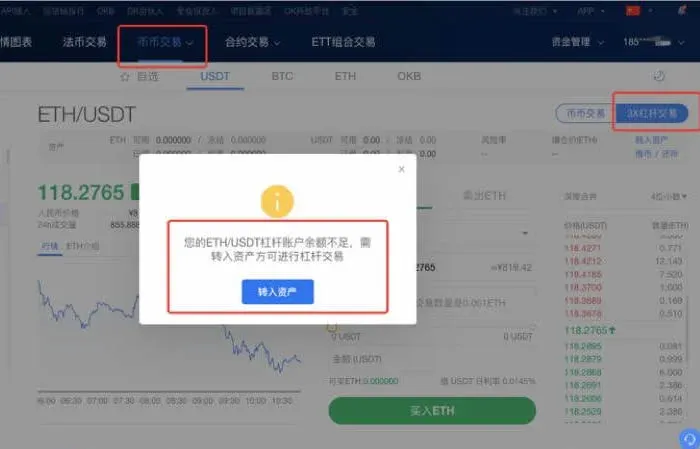
- Transfer your capital into the Margin Trading Account. You can do this by clicking the “Transfer In” button at the top‑right corner, or directly from the pop‑up window.
Three ways to move funds into the margin account:
- Method 1: On the “Spot Trading” page, locate a trading pair that bears the “5X” label, click Transfer In, and move funds from your spot wallet to the margin wallet.
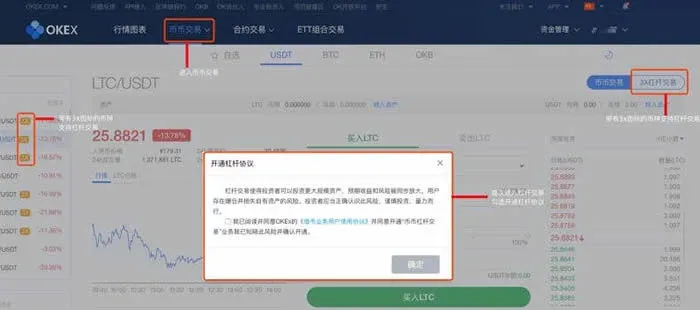
- Method 2: Navigate to Funds Management → Spot‑Margin Account, select the desired trading pair, and execute the transfer.
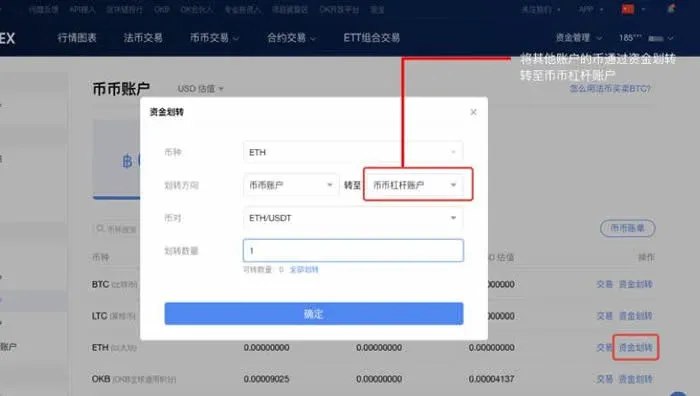
- Method 3: Upon first login, the system will display a fund‑transfer prompt; follow the on‑screen instructions to complete the move.
2. Borrowing Assets
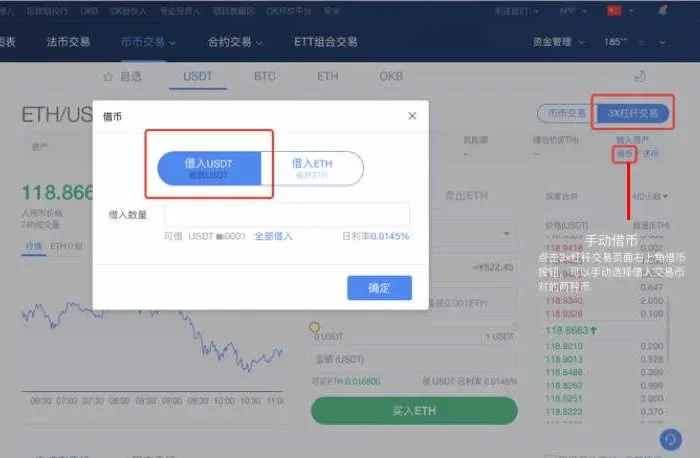
On the “Spot Trading” page, select a margin pair marked with “5X” and click Borrow.
- Borrowing limit: You may borrow up to four times the combined holdings of the two assets in your margin account; after borrowing, the maximum position you can open is five times your original holdings.
- Direction of borrowing: Using the BTC/USDT pair as an example, borrowing BTC is used for shorting (selling), while borrowing USDT is used for going long (buying) BTC.
3. Executing Margin Trades
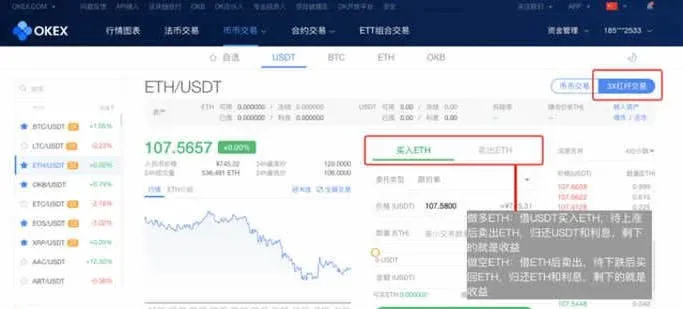
After successfully borrowing, you can start margin trading. The platform automatically applies the chosen leverage when you buy or sell assets.
- Long example: Borrow USDT, purchase ETH, and later sell ETH at a higher price. Repay the borrowed USDT plus accrued interest; the remaining amount is your profit.
- Short example: Borrow ETH and sell it, then repurchase a lower amount of ETH after the price drops. Repay the borrowed ETH plus interest; the difference is your gain.
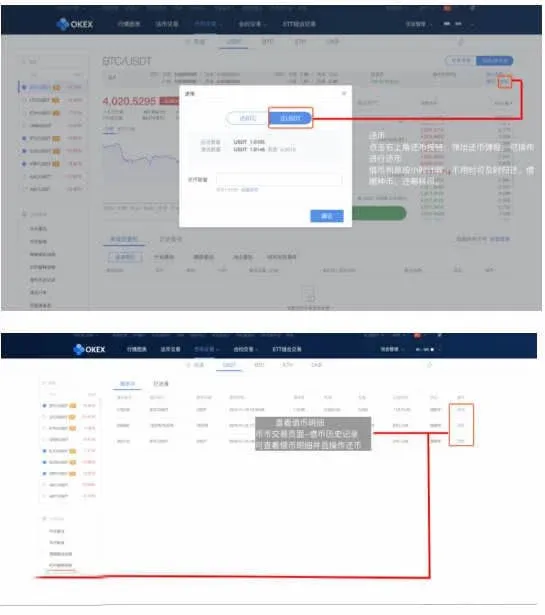
4. Repaying Borrowed Assets and Interest
Interest on borrowed assets is calculated hourly; you should repay both principal and accrued interest promptly after use. Steps:
- Open the margin account where you have an outstanding loan.
- Click the Repay button on the right side, enter the amount you wish to repay, and confirm.
Important Notes
- Interest is now charged on an hourly basis, reducing borrowing costs.
- The daily interest rate is refreshed hourly and dynamically adjusts according to market supply and demand.
- Once a loan is approved, you can lock the interest rate for 24 hours; after that, it updates every 24 hours.
- The system forces an interest settlement every 7 days, but there is no fixed maximum loan term.
Tax disclaimer: Crypto‑related gains may be subject to taxation in your jurisdiction. Please consult a qualified tax professional to understand your obligations.
U.S. users: For fiat on‑ramps and off‑ramps, use Binance.US (instead of the global Binance platform) to comply with local regulations.
The above constitutes a complete walkthrough of OKX (formerly OKEX), its country of registration, and the step‑by‑step process for trading on the platform. For more information about OKX, feel free to explore other Bitaigen (比特根) articles.
Related Reading
- OKX Review: Registration, Security & Trading Features Guide
- OKEx Trading Fees Explained: Spot, Margin, Futures & Fiat
- Deposit & Buy Dogecoin on OKX: Beginner Step‑by‑Step Guide
💡 Register on Binance with referral code B2345 for the maximum trading fee discount. See Binance complete guide.



