
 Bitaigen Research
 PancakeSwap (PancakeSwap) charges a trading fee of 0.25%, offers relatively high security, employs publicly‑available contracts and an Automated Market Maker (AMM) mechanism, and delivers low‑cost, transparent trading on the Binance Smart Chain (BSC). *(U.S. users should access the platform via Binance.US rather than the global Binance service.)*
We have systematically examined PancakeSwap’s fee structure and security mechanisms from two major dimensions: technology and cost. By dissecting contract transparency, the AMM operating principle, and on‑chain overhead on BSC, we help you quickly assess whether the platform meets your trading requirements. For a deeper dive into fee tiers and risk‑mitigation details, please continue reading.
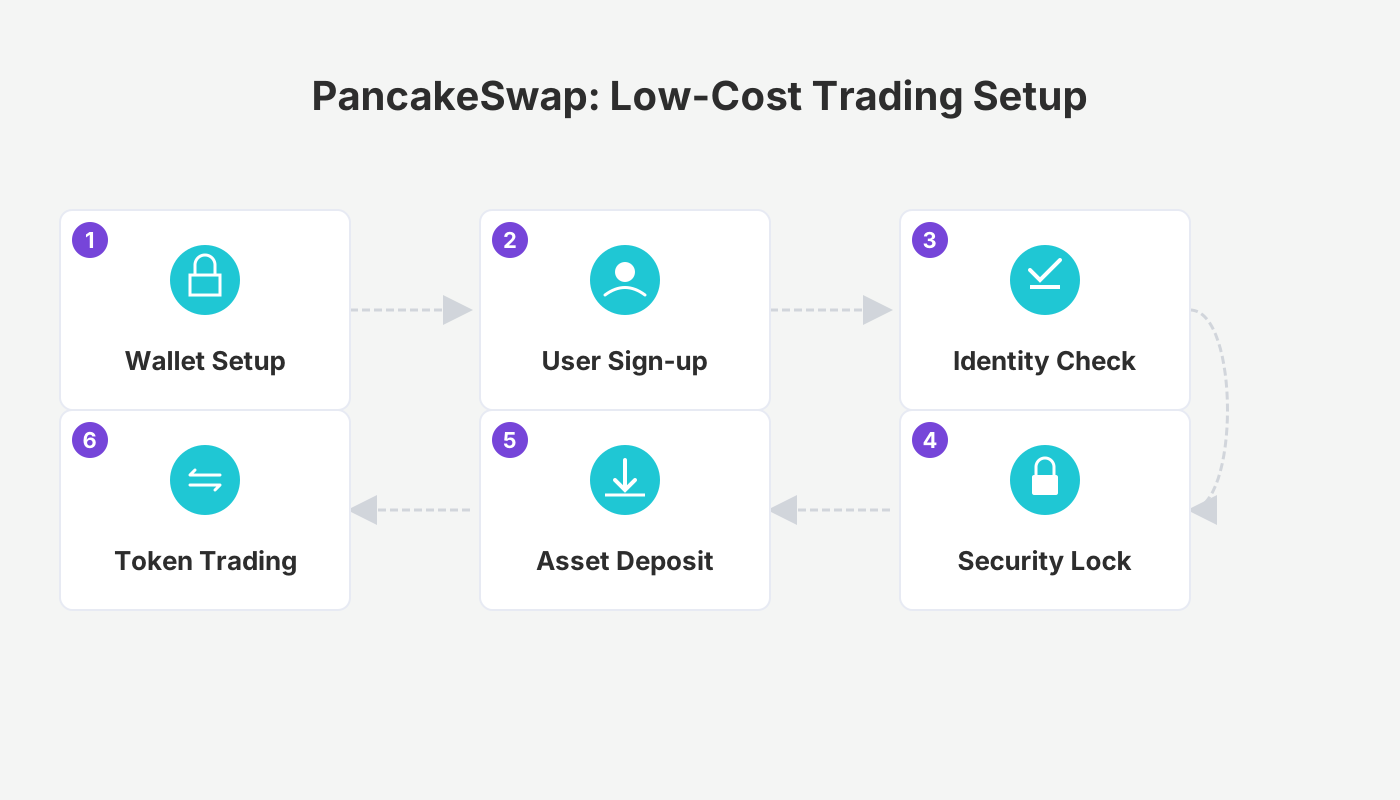
What is the PancakeSwap trading fee?
According to the official documentation, PancakeSwap requires a 0.25% fee for each swap in V2 liquidity pools. Of this amount, 0.17% is automatically returned to the corresponding trading‑pair liquidity pool, deepening the pool’s reserves. Because the platform runs on Binance Smart Chain (BSC), on‑chain transaction costs are far lower than those on Ethereum or other public chains, resulting in an overall trading cost that is lower than most other decentralized exchanges. *(For fiat‑on‑ramp or off‑ramp operations, fees are typically quoted in USD and can be settled via SEPA or SWIFT transfers.)*
In V3 liquidity pools, fees follow a tiered model, with the per‑trade charge ranging from 0.01% to 0.1% depending on the specific pool configuration. Common fee examples include:
- 0.01% – Ultra‑low‑fee pool
- 0.05% – Medium‑fee pool
- 0.1% – High‑fee pool
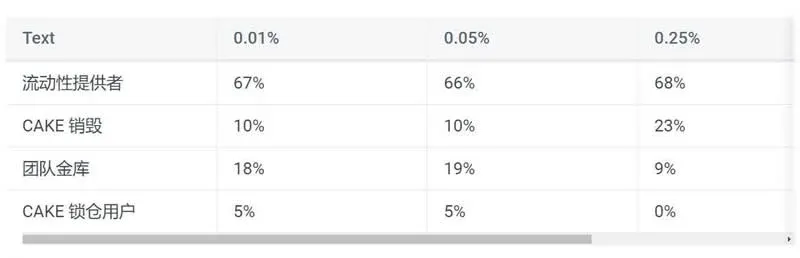
Fee distribution example (0.25% fee tier)
- A liquidity provider holds 10 CAKE and 10 BNB within the designated price range.
- User A swaps 1 CAKE for 1 BNB, while User B swaps 1 BNB for 1 CAKE.
- The swap generates 0.0017 CAKE and 0.0017 BNB, which are proportionally allocated to the liquidity providers inside that range.
When the market price moves outside the defined range, the out‑of‑range liquidity does not participate in trades and therefore does not earn any fee revenue.
PancakeSwap uses an AMM pricing model that eliminates the need for an order book; users can execute swaps directly on‑chain while retaining full control over their assets at all times.
Is PancakeSwap safe?
PancakeSwap is the leading decentralized exchange on BSC and incorporates the following security features:
- Transparent contracts: All smart‑contract source code is publicly viewable and verified on BscScan, allowing users to conduct their own audits.
- Self‑custody of assets: The trading process does not involve platform custodianship; assets remain in the user’s wallet throughout.
- Rapidly expanding ecosystem: Since launch, trading volume has continuously risen, and the platform now hosts a mature liquidity network.
- Low fees and high efficiency: BSC’s inexpensive gas fees make small‑value transactions especially cost‑effective.
Through these mechanisms, PancakeSwap achieves a high degree of transparency and security, making it suitable for everyday token swaps and broader DeFi participation.
---
The content above addresses the two core questions: “What is the PancakeSwap trading fee?” and “Is PancakeSwap safe?” PancakeSwap combines low fees, fast transaction confirmation, and publicly auditable contracts, positioning it as a preferred decentralized exchange for many cryptocurrency users worldwide.
Related Reading
- Gate.io Registration & Real‑Name Verification for Mainland China
- Top 3 Secure Cryptocurrency Exchanges 2026: Binance, OKX & More
- OKX vs Binance vs Gate.io: Fees, UX & Security Review
💡 Register on Binance with referral code B2345 for the maximum trading fee discount. See Binance complete guide.



