
 Bitaigen Research
 Aster Perpetual DEX: A Multi‑Chain Decentralized Perpetual Trading Platform
Aster Perpetual DEX is a multi‑chain decentralized perpetual contract exchange that offers up to 1001× leverage, hidden (dark‑pool) orders, and interest‑bearing collateral. Its goal is to compete with mainstream perpetual platforms such as Hyperliquid.
From both technical and ecosystem perspectives, we systematically outline the core operation and product features of the Aster perpetual DEX, compare it with Hyperliquid, and then deeply analyze the incentive mechanisms of the ASTER token, helping readers understand its potential value within the multi‑chain perpetual trading landscape.
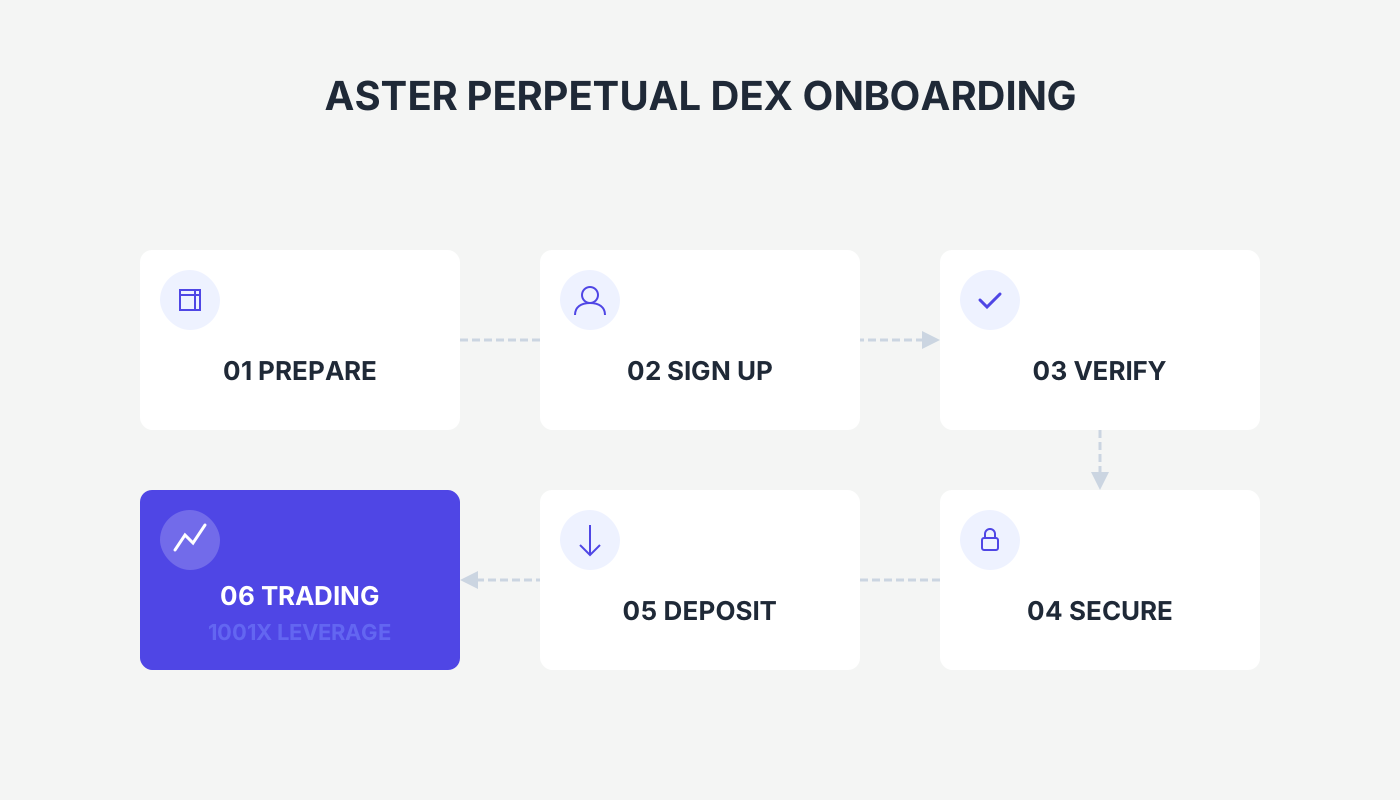
What is Aster (ASTER) Perpetual DEX?
Aster DEX is a decentralized perpetual exchange (Perp DEX) that launched at the end of 2024 after the merger of Astherus and APX Finance. The platform merges Astherus’s yield‑generating products with APX’s perpetual‑trading infrastructure, delivering a one‑stop DeFi ecosystem for spot trading, perpetual futures, yield farming, and on‑chain incentives.
Since the token‑generation event (TGE) on September 17 2025, the price of $ASTER surged from $0.08 to $2.42 on September 24, a gain of more than 2,700 %. By November 2025, the fully‑diluted valuation (FDV) had topped $7 billion, total value locked (TVL) reached $1.48 billion, and 24‑hour trading volume exceeded $1.32 billion (USD). *U.S. users wishing to move fiat into the ecosystem should use Binance.US or other SEPA/SWIFT‑compatible gateways.*
Core Features of the Aster Decentralized Exchange
Aster combines a hybrid model that fuses the performance of centralized exchanges (CEX) with decentralized custody, operating on BNB Chain, Ethereum, Solana, and Arbitrum. Its main features include:
- Spot market
- Perpetual futures with up to 1001× leverage
- Stock perpetual contracts (24/7 on‑chain trading)
- MEV‑resistant operation
- Professional order‑book mode with deep liquidity
- Hidden orders (reducing front‑running risk)
- Interest‑bearing collateral (e.g., asBNB, USDF)
Interest‑bearing collateral lets traders keep earning yield on their assets while maintaining open positions, improving capital efficiency and acting as a strong migration incentive for liquidity providers and active traders.
How Does the Aster Perpetual DEX Operate?
Aster blends CEX‑level trading experience with fully on‑chain settlement. Its core consists of a high‑performance order book, MEV‑resistance mechanisms, multi‑chain connectivity, and interest‑bearing collateral. The platform offers several trading modes:
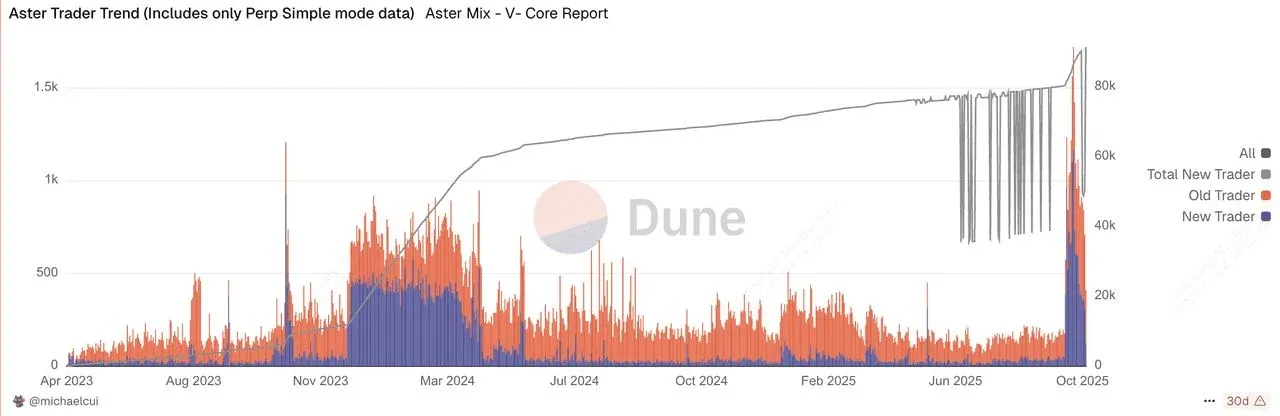
1. Professional Mode: Order Book + Multi‑Asset Margin
A deep order book provides low‑fee trading and supports multiple assets—USDF, asBNB, ASTER, etc.—as margin, enabling flexible position management. Advanced functions such as grid trading and conditional orders give users a CEX‑like interface while retaining full custody of funds.
2. Hidden Orders: Private Execution for Whales
Hidden orders act as a decentralized dark pool: large orders remain invisible until they are matched, preventing front‑running and reducing price impact. In October 2025, several massive ASTER positions were executed via this feature.
3. 1001× Mode: MEV‑Resistant Ultra‑Leverage
A single click can apply up to 1001× leverage, backed by the ALP cross‑asset liquidity pool. Orders are matched and settled on‑chain automatically through Pyth, Chainlink, and Binance oracle feeds, delivering extreme leverage without sacrificing transparency.
4. Stock Perpetual Contracts: 24/7 On‑Chain Traditional Finance
The platform supports perpetual contracts on traditional equities that trade 24 hours a day on‑chain. Users can leverage crypto collateral to take positions on stocks. During the “rocket launch” period, Aster captured over 90 % of the AT‑stock perpetual market share within the first five days.
5. Interest‑Bearing Collateral: asBNB + USDF
Unlike most DEXs, Aster allows collateral that continues to generate yield (e.g., asBNB, USDF). While positions stay active, the collateral keeps earning, markedly boosting capital efficiency.
These combined capabilities propelled the platform to $1.32 billion in 24‑hour volume and $1.48 billion in TVL in Q4 2025, establishing Aster as one of the fastest‑growing perpetual DEXs.
Aster vs. Hyperliquid: Who Holds the Edge in 2025?
Market Size & Growth
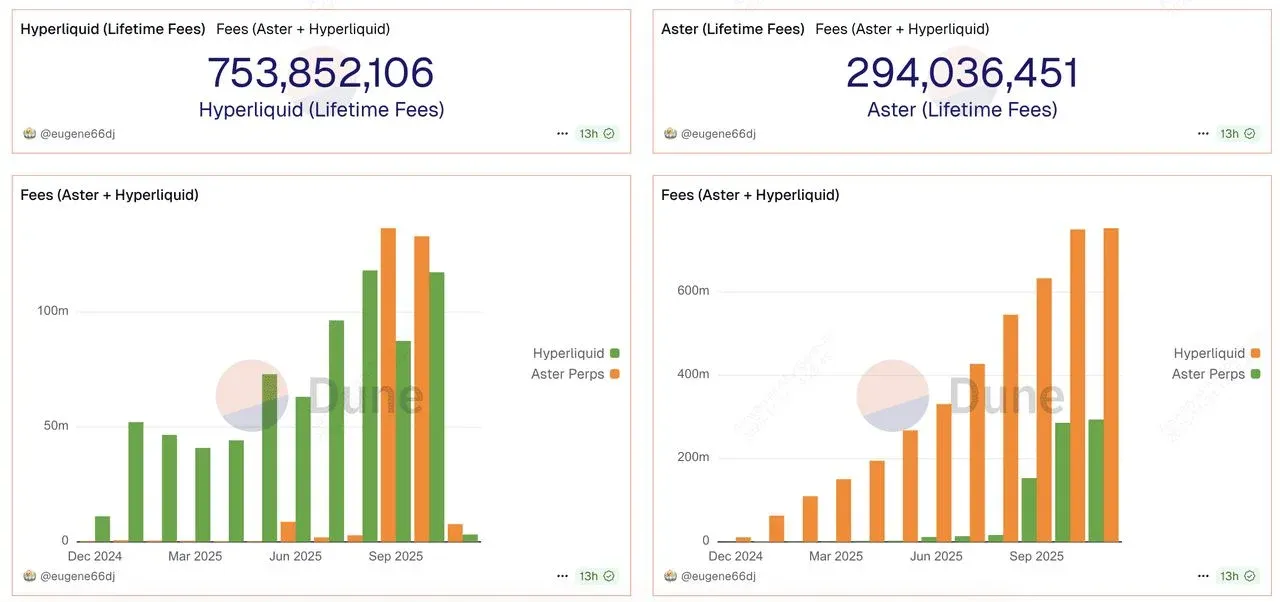
The DeFi derivatives segment reached a $18.9 billion market cap in August 2025, with cumulative perpetual DEX volume surpassing $408 billion. Hyperliquid still commands 70‑80 % of the market share, but Aster is rapidly closing the gap thanks to innovations such as 24/7 stock perpetuals, hidden orders, interest‑bearing collateral, and the 1001× leverage offering.
Catalytic Events
Binance founder Changpeng Zhao (CZ) purchased 2 million ASTER on November 2 2025, triggering a short‑term price bump of roughly 20 % and sparking a wave of speculative demand. Following the purchase, perpetual trading volume on Aster multiplied eight‑fold in October.
Feature‑Level Differences
| Feature | **Aster** | Hyperliquid |
|---|---|---|
| Multi‑chain support | BNB Chain, Ethereum, Solana, Arbitrum | Ethereum only |
| Hidden orders | Dark‑pool style hidden orders | Not supported |
| Leverage cap | Up to 1001× | Up to 100× |
| Stock perpetual contracts | 24/7 on‑chain trading | Not yet launched |
| Interest‑bearing collateral | asBNB, USDF, etc. | Native token only |
Overall, Aster achieves a CEX‑grade user experience primarily through product innovation rather than pure token incentives, attracting a sizable cohort of whales and active traders.
What Is the $ASTER Token?
$ASTER is the native utility token of the Aster DEX, serving multiple roles: trading margin, fee payment, governance voting, and ecosystem incentives.
Primary Uses of the ASTER Token
- Margin & Fees: Can be used as collateral for perpetual futures and to pay transaction fees. Holders receive fee discounts.
- Governance: Token holders vote on fee rates, market listings, “rocket launch” schedules, and other protocol parameters.
- Incentives & Airdrops: The majority of the supply is earmarked for trading rewards, loyalty programs, rocket‑launch incentives, and community airdrops.
- Value Capture: The protocol allocates a portion of fee revenue to open‑market buybacks of ASTER, which are then redistributed to token holders, aligning earnings with platform growth.
- Ecosystem Migration: Supports APX token migration, cross‑chain liquidity partnerships, and long‑term expansion plans.
*Please note that any gains realized from holding or trading ASTER may be subject to tax in your jurisdiction. Users should consult local tax advisors.*
$ASTER Token Allocation
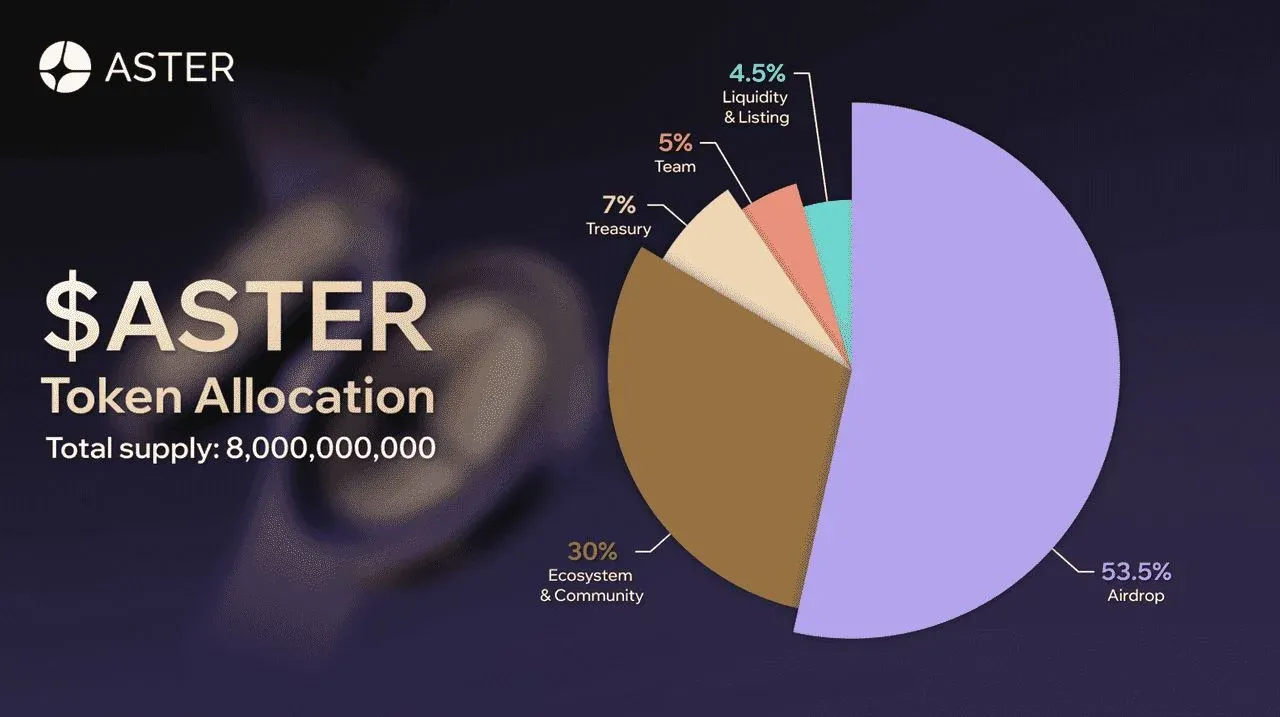
| Category | Percentage | Description |
|---|---|---|
| Airdrop & Community Rewards | **53.5 %** (4.28 billion) | Traders, stakers, rocket‑launch participants |
| Ecosystem & Grants | **30 %** (2.4 billion) | APX migration, partners, liquidity incentives |
| Treasury | **7 %** (560 million) | Governance & protocol sustainability reserve |
| Team & Advisors | **5 %** (400 million) | Vesting with cliffs to ensure long‑term alignment |
| Liquidity & Listing | **4.5 %** (360 million) | Market‑making, cross‑chain liquidity depth |
A community‑first token model ties rewards to genuine usage and trading volume, discouraging short‑term speculation.
What Is the Aster Airdrop and Who Is Eligible?
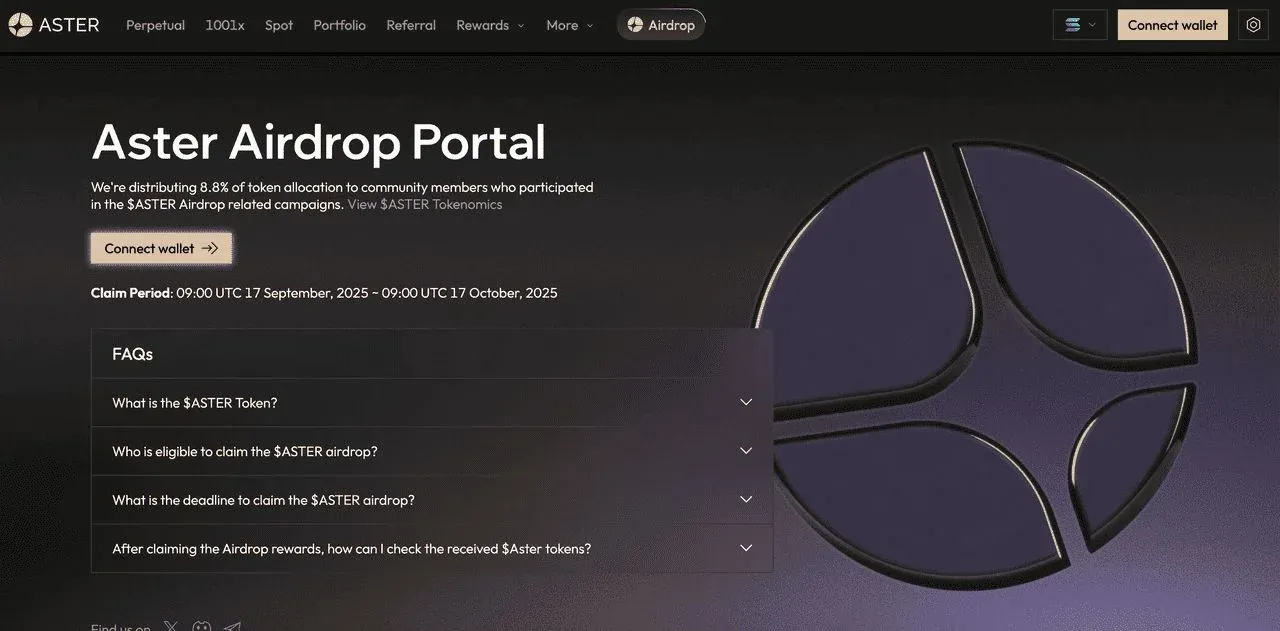
Aster launched its first airdrop concurrently with the TGE on September 17 2025, targeting Aster Spectra participants, active community members, and APX holders who migrated into the unified ASTER ecosystem. Recipients could claim directly on Aster Spot until October 17 2025.
Overview of the Third‑Phase “Dawn” Airdrop
- Start date: October 6 2025
- Reward mechanism: The Rh points system awards points for the following activities, which can be exchanged for ASTER:
- Trading perpetual or spot markets
- Staking assets
- Providing liquidity
- Completing community tasks
Points settle weekly; a portion of platform fees is used to buy back ASTER and redistribute it, further binding user earnings to protocol growth.
Aster’s Roadmap
Aster is developing Aster Chain, a dedicated layer‑1 network that will introduce zero‑knowledge privacy, intent‑based trade routing, and cross‑chain order aggregation, enabling smarter and more automated liquidity migration. Future milestones include:
- Supporting additional interest‑bearing collateral types
- Mobile‑first UI upgrades
- VIP membership tiers with exclusive fee rebates
- Ongoing “rocket launch” incentive programs
While growth has been rapid, users should remain mindful of high‑leverage risk, token price volatility, and competition from more established perpetual DEXs. It is advisable to start with modest capital, conduct thorough testing, and employ strict risk‑management practices when trading or holding ASTER.
Frequently Asked Questions (FAQ)
1. When was the ASTER token launched?
$ASTER was officially listed on September 17 2025 during the token‑generation event (TGE) and surged more than 2,700 % in the weeks that followed.
2. When did the first ASTER airdrop occur?
The airdrop launched simultaneously with the TGE on September 17 2025, with a claim window closing on October 17 2025.
3. When is the next airdrop scheduled?
The third‑phase “Dawn” airdrop started on October 6 2025, using the Rh points system to reward trading, staking, and liquidity provision.
4. Which blockchains does Aster support?
Aster is deployed on BNB Chain, Ethereum, Solana, and Arbitrum. The ASTER token itself is a BEP‑20 asset on BNB Chain.
5. Which wallets are compatible with ASTER?
Any Web3 wallet that supports BEP‑20 tokens can be used, including MetaMask, Trust Wallet, SafePal, as well as hardware wallets like Ledger and Trezor.
6. Does Aster support stock perpetual contracts?
Yes, the platform offers 24/7 on‑chain perpetual contracts for traditional equities.
7. What are the main differences between Aster and Hyperliquid?
Hyperliquid maintains a larger market share, but Aster differentiates itself through hidden orders, 1001× leverage, interest‑bearing collateral, and a multi‑chain architecture, allowing it to close the gap quickly.
---
This completes the comprehensive analysis of the Aster Perpetual DEX, covering its operational mechanics, comparison with Hyperliquid, and an in‑depth look at the ASTER token. For more content about the ASTER exchange, search for past articles on Bitaigen (比特根) or continue exploring the links below. Thank you for your attention and support!
Related Reading
- Top 5 Permanent Decentralized Exchanges to Watch in 2025
- 2025 Perp DEX Boom: $1.2 Trillion Trading Volume Surge
- Hyperliquid vs Aster: Decentralized Perpetual Trading Review
💡 Register on Binance with referral code B2345 for the maximum trading fee discount. See Binance complete guide.



