
 Bitaigen Research
 We have outlined the key milestones indicating that Bitcoin’s supply is approaching its final phase, explained how the halving mechanism will shift miners’ revenue toward transaction fees, and examined the profound impact of permanently lost coins due to private‑key loss on the circulating supply. Finally, we look ahead to the possible scenario in which the remaining Bitcoins are mined over the next several centuries, helping readers grasp the ecosystem’s long‑term trajectory.
Key Takeaways
- At block height 939,999, the Foundry USA mining pool successfully produced the 20 millionth BTC, representing roughly 95 % of the total supply. The very last coin is expected to be minted around 2140.
- After four halving events, the block reward has fallen from 50 BTC to 3.125 BTC; future miners will derive all of their income from transaction fees.
- Chainalysis estimates that 2.3 – 3.7 million BTC have become permanently inaccessible due to lost private keys, hardware destruction, death of holders, or accidental transfers. Of those, roughly 1.1 million BTC attributed to Satoshi Nakamoto have never moved since the genesis block, further compressing the effective circulating amount.

Milestone: The 20 Millionth Bitcoin Has Been Mined
Around 9 p.m. (UTC) on March 10, 2026, the blockchain reached block height 939,999, marking the official mining of the 20 millionth Bitcoin. Given the protocol’s hard cap of 21 million BTC, this means about 95 % of all coins are already in circulation, leaving roughly 1 million BTC to be released gradually over the next ≈ 114 years.
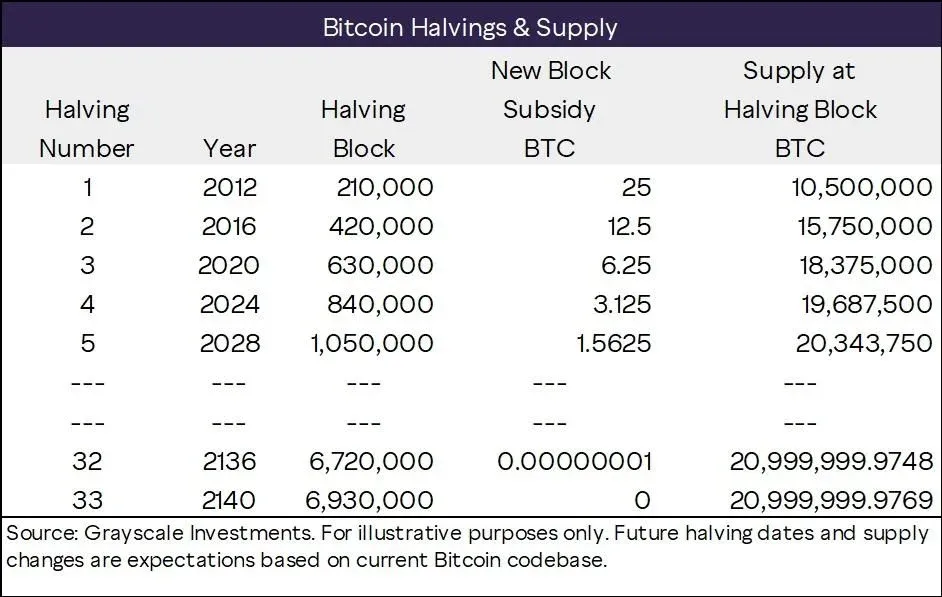
The “long‑tail” shape of Bitcoin’s issuance curve stems from the protocol’s built‑in halving mechanism. Every 210,000 blocks—approximately every four years—the block reward is cut in half. Since the network’s launch in 2009, the reward schedule has progressed as follows:
- 50 BTC → 25 BTC → 12.5 BTC → 6.25 BTC → 3.125 BTC
Supply Tightening: Lost Bitcoins Make Circulation Scarcer
Although the nominal cap stands at 21 million BTC, the number that can actually be traded may be considerably lower. On‑chain analytics firm Chainalysis estimates that 2.3 – 3.7 million BTC are permanently locked due to lost private keys, damaged hardware, deceased owners, or erroneous transfers. Notably, Satoshi Nakamoto is believed to control about 1.1 million BTC, none of which has moved since the genesis block 17 years ago.
Because no central authority can recover or re‑issue these coins, any Bitcoin whose private key becomes unusable is forever inaccessible, making the true circulating supply scarcer than the official figure.
What Happens After All Coins Are Mined? Miners’ Revenue Shifts to Fees
When the 21 million BTC supply is fully exhausted—projected around 2140—the Bitcoin network will continue to operate, but its economic incentive structure will undergo a fundamental transformation. Today, miners earn income from two sources:
- Block reward – the newly created bitcoins awarded for each mined block.
- Transaction fees – the fees users attach to their transactions.
As halving events proceed, the proportion of revenue coming from the block reward diminishes, eventually disappearing entirely after 2140. At that point, miners will rely solely on transaction fees to cover the costs of hashing power and to validate blocks, thereby safeguarding network security. Whether fee revenue will be sufficient to sustain the network is a central question for Bitcoin’s long‑term safety.
The industry has proposed several approaches to address this challenge, including:
- Accelerating the adoption of the Lightning Network to increase off‑chain payment efficiency.
- Exploring novel use‑cases such as Ordinals and BRC‑20 tokens.
- Allowing the fee market to evolve organically toward a self‑balancing equilibrium.
Seventeen Years of “Code is Law” Supply Rules
Since January 3, 2009, when Satoshi Nakamoto mined the genesis block (block 0), Bitcoin’s issuance and operational rules have been strictly dictated by the protocol’s code: block generation intervals, reward halvings, and the decreasing total supply. These rules cannot be altered arbitrarily by any single entity, contrasting sharply with traditional fiat systems where governments or central banks adjust money supply.
Because of this immutable monetary policy, Bitcoin is hailed as a prime example of “Code is Law.” The creation of the 20 millionth Bitcoin reaffirms the robustness of this electronic monetary system after more than a decade of operation. In today’s uncertain global economic and geopolitical climate, a fixed and unchangeable supply curve remains a core attribute that Bitcoin supporters frequently highlight.
---
That concludes the analysis of the headline “Only 1 million Bitcoins left to be mined; the final coin won’t appear until the 22nd century?” For further reading on Bitcoin, feel free to search for previous articles from Bitaigen or continue exploring the related posts below. We appreciate your continued interest and support for Bitaigen!
*Note: Cryptocurrency gains may be subject to tax in your local jurisdiction. Please consult a tax professional to understand your obligations.*
*For fiat transactions, use USD and SEPA/SWIFT where applicable. U.S. residents should use Binance.US rather than the global Binance platform.*
💡 Register on Binance with referral code B2345 for the maximum trading fee discount. See Binance complete guide.



