
 Bitaigen Research
 By examining token design, governance mechanisms, and ecosystem layout, we deeply analyze the core value and development potential of the Bitfinity Network, helping readers understand BTF’s role in DeFi and cross‑chain scenarios and assess its long‑term outlook. If you want to know how incentives are allocated, the team’s holdings, and community‑governance details, keep reading.
BTF Token Overview
Token name: Bitfinity Network
Token symbol: BTF
Total supply / Max supply: 1,000,000,000 BTF
Primary Functions of the Token
- Used for on‑chain governance and voting
- Supports staking to enhance network security
- Provides liquidity for DeFi use‑cases (lending, prediction markets, etc.)
- Pays ecosystem fees and enables cross‑chain transfers
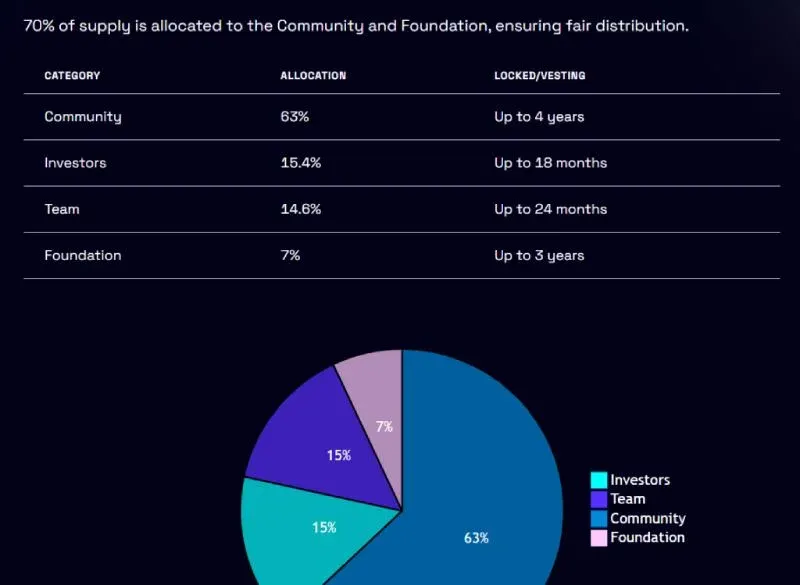
Token Distribution Structure
| Category | Share | Allocation Schedule |
|----------|-------|---------------------|
| Community | 63% | Staking, burning, ecosystem development, linear release over four years |
| Investors | 15.4% | Vesting over 9–18 months |
| Team | 14.6% | Staged vesting over 24 months |
| Foundation | 7% | Network security, partners, and development, linear vesting over three years |
- Incentive breakdown: 28% burned, 15% for staking, 10% for liquidity, 6% for ecosystem, 4% for airdrops.
---
Positioning and Technical Framework of Bitfinity Network
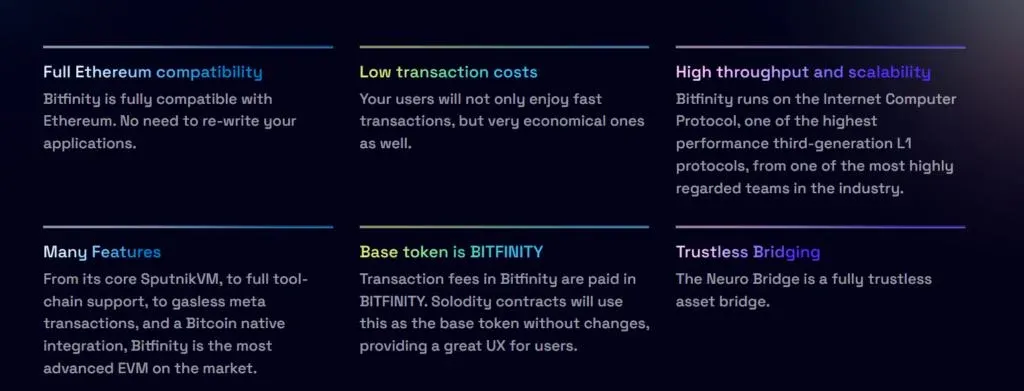
Bitfinity Network aims to provide a high‑throughput layer‑2 sidechain solution for Bitcoin. By being compatible with the Ethereum Virtual Machine (EVM) and the Solidity development environment, smart contracts originally written for Ethereum can be migrated directly to the Bitcoin ecosystem. Leveraging sharding technology, the network claims to achieve over 1,000 TPS, with single‑transaction confirmation times of roughly 2–3 seconds and relatively low fees.
The network runs on the Internet Computer, with its core built on the SputnikVM engine and a full toolchain that supports gas‑free native Bitcoin transactions. All on‑chain fees are settled in BTF, and Solidity contracts also use BTF as the base currency.
In addition, the platform employs a Neuro Bridge to enable decentralized, trust‑less cross‑chain asset transfers, ensuring that users’ assets remain secure throughout the process.
---
Project Progress and Key Milestones
- Bitcoin mining and sharded chain construction – Completed
- Runes and Ordinals integration – In progress
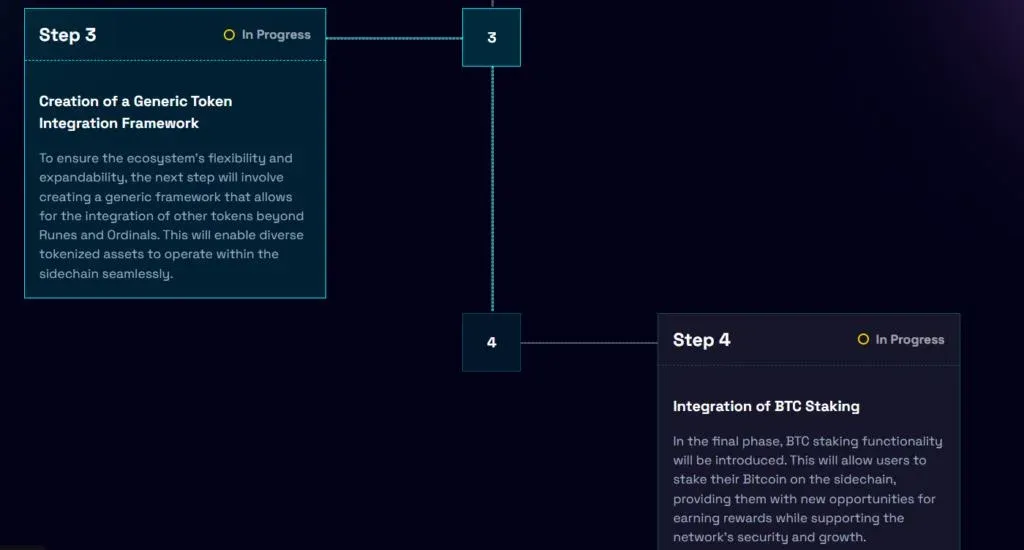
- Universal token integration framework – In progress
- BTC staking functionality – In progress
By 2026, Bitcoin’s mining difficulty is projected to approach 148 T, and the real‑world asset (RWA) market size could exceed USD 100 billion. Bitfinity plans to provide credit support during Bitcoin’s resurgence via an IPO and the LightningUSD project, while also incorporating privacy‑preserving and AI technologies into its development roadmap.
---
Team and Capital Background
The project was launched by Artia Moghbel and Jacob Philips, with Robert Lauko serving as Chief Executive Officer and Michael Lee as Vice President of Marketing. Former director Arthur Falls and the rumored co‑founder Max Chamberlin are also part of the team. Members generally possess deep experience in blockchain and crypto‑related fields.
In terms of financing, Bitfinity has raised approximately USD 19 million to date. The most recent round, valued at USD 130 million, secured USD 7 million in funding, led by investors such as Polychain Capital, ParaFi Capital, Andreessen Horowitz (a16z), Warburg Serres, Dokia Capital, Draft Ventures, Beacon Fund, and 9 Yards Capital.
---
Ecosystem and Partner Network
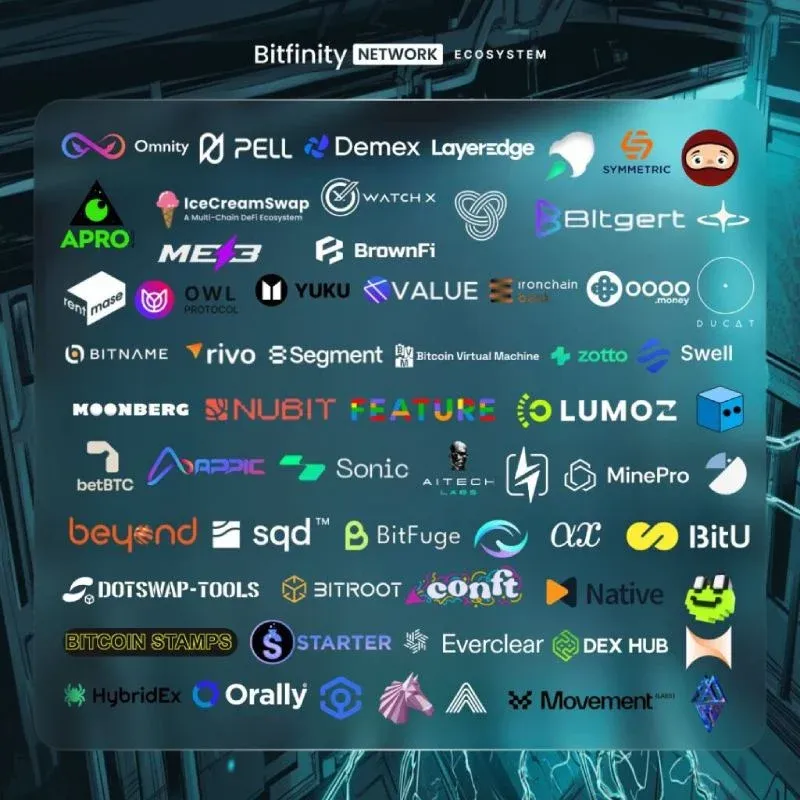
To date, the Bitfinity ecosystem has attracted more than 100 projects spanning DeFi, NFT, AI, and cross‑chain technologies. The platform’s high transaction capacity and sharding mechanism provide richer implementation pathways for Bitcoin assets like Runes and Ordinals. Users can also earn rewards by staking BTC, and the network design includes defenses against quantum attacks. A privacy‑focused AI solution is slated for introduction in 2026 to boost transaction security and intelligence.
On the partnership front, Bitfinity has established technical linkages with underlying infrastructure projects such as Omnity, Pell, LayerEdge, deepening its Layer‑2 solution stack. Meanwhile, platforms like Sonic, DEX HUB, IceCreamSwap supply DeFi liquidity. Additional collaborators—including NFT marketplace YUKU, AI startup AITECH Labs, cross‑chain specialist Movement Labs, the Bitcoin Virtual Machine (BVM), and Nubit—strengthen its ties to core Bitcoin technology.
---
Closing Remarks
This article systematically reviews the attributes, technical implementation, team background, and ecosystem layout of the Bitfinity Network (BTF) token. For more in‑depth information, you may consult previous reports from Bitaigen (Bitgen) or continue reading related articles below. Thank you for following and supporting Bitaigen (Bitgen)!
💡 Register on Binance with referral code B2345 for the maximum trading fee discount. See Binance complete guide.



