
 Bitaigen Research
 Enso is not merely a brand‑new blockchain; it is a cross‑chain smart layer designed to let developers innovate around business needs rather than low‑level technology. By abstracting Actions (such as swaps, lending, NFT minting) and offering a shared execution network, it enables projects to integrate multi‑chain functionality quickly without having to repeat costly audits.
---
In this article we systematically review ENSO’s cross‑chain smart‑layer architecture, ecosystem layout, and token utilities, helping readers assess its positioning and potential value within decentralized‑finance (DeFi) interoperability. We then detail the purchase channels and step‑by‑step procedures so you can get started promptly.
Is the ENSO token valuable?
Official data shows that ENSO is currently trading at roughly $0.7 USD per token, with an all‑time high of $4.63 USD and a low of $0.6806 USD—only about 3.4 % above its lowest recorded price. Its market capitalization is approximately $14,460,789 USD, and circulating supply accounts for 20.59 % of total issuance (i.e., 20,590,000 tokens). From these figures ENSO appears to be in an early stage; market performance is relatively stable with limited volatility, and future price action will depend heavily on project development and ecosystem activity.
ENSO’s core is not simply a token; it is a comprehensive ecosystem aiming to solve the interoperability challenges of decentralized finance. By enabling seamless communication across multiple blockchains, it opens a new pathway for developers and users to build cross‑chain applications. The efficient cross‑chain transaction processing, data sharing, and application deployment at the technical layer provide essential infrastructure for the next generation of DeFi products. As the crypto industry’s demand for interoperability grows, projects like ENSO that prioritize user experience are likely to attract increasing attention.
Developer friendliness is another of the platform’s strengths. Enso supplies a full‑featured API and SDK, allowing developers to construct innovative DeFi solutions rapidly. As the number of projects in the ecosystem expands, a large volume of novel financial services that leverage cross‑chain capabilities is expected to emerge.
---
What kind of token is ENSO?
ENSO is the native token of the Enso public blockchain, serving multiple roles including network governance, validator incentives, and contributor rewards. Enso itself is a Layer‑1 framework built on the Tendermint consensus algorithm, dedicated to abstracting complex blockchain interactions into reusable Actions and Shortcuts, so product teams can focus on business logic instead of low‑level contract integration and cross‑chain fragmentation.
The platform’s core innovation lies in constructing a composable library of Actions (including swaps, lending, NFT minting, etc.) together with a shared execution network for optimal routing and verification. Developers can launch a project with minimal effort, avoiding repeated security‑audit costs and escaping the technical bottlenecks of a single chain.
---
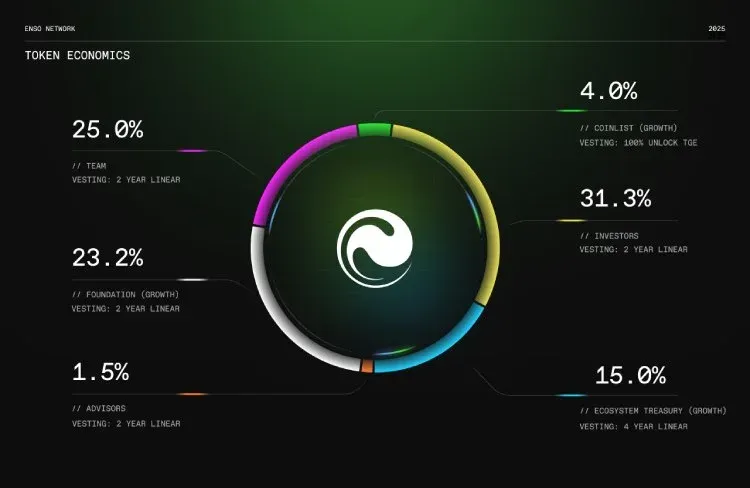
ENSO Tokenomics
Token Allocation
| Category | Percentage |
|---|---|
| Team | 25 % |
| Foundation | 23.2 % |
| Advisors | 1.5 % |
| CoinList | 4 % |
| Investors | 31.3 % |
| Ecosystem Fund | 15 % |
Practical Functions
- Query Fees: Requests sent to the Enso network incur fees, which are auctioned in ENSO and distributed to network participants.
- Governance Rights: Token holders can vote on network upgrades, reward distribution, and key infrastructure decisions, ensuring that project direction aligns with community interests.
- Validator Incentives: Holders may delegate their stake to globally distributed professional node operators, enhancing the network’s decentralized security.
- Staking Mechanism: By staking ENSO, holders provide additional economic security for the network.
These mechanisms create a positive feedback loop that strengthens the ecosystem as the network expands.
---
Roadmap
The evolution of the Enso network is divided into several phases:
- Phase 1 – Initial Network Launch
- Independent validators simulate byte‑code execution proposals.
- A centralized Enso service is retained to guarantee basic network availability.
- Developers can contribute code to this centralized service, helping maintain smooth operation.
- Phase 2 – Fully Permission‑less Contribution Environment
- All types of contributors (drawers) may freely join the network.
- The network expands from supporting only the Ethereum Virtual Machine (EVM) to also being compatible with the Solana Virtual Machine (SVM) and the Mobile Virtual Machine (MVM), improving the cross‑chain developer experience.
---
Where can you buy ENSO?
At present ENSO is listed on several liquid exchanges, the main ones being:
- Binance (global) – note that U.S. residents must use Binance.US instead of the global platform.
- Gate.io
- Bitget
- KuCoin
- Kraken
All of these platforms offer an ENSO/USDT trading pair, allowing you to select the exchange that best fits your needs.
1. Binance
Binance is one of the world’s largest digital‑asset exchanges by trading volume, providing a secure, open, and efficient trading environment while holding multiple regional regulatory licences.
2. Gate.io
Founded in 2013, Gate.io operates in many countries, supports roughly 200 digital assets and over 400 trading pairs, and enjoys a solid reputation in the industry.
3. Bitget
Bitget is known for “one‑click copy‑trading, zero‑fee spot trading, and low‑fee derivatives,” serving more than 100 countries and regions with a user base exceeding 20 million.
4. KuCoin
KuCoin introduced grid‑trading bots and lending services early on, supporting spot, fiat, derivatives, and Pool‑X products across 207 countries and regions.
5. Kraken
Kraken is one of the oldest U.S. crypto‑asset platforms, offering spot, OTC, margin, and futures trading to more than 7 million users worldwide.
---
How to purchase ENSO?
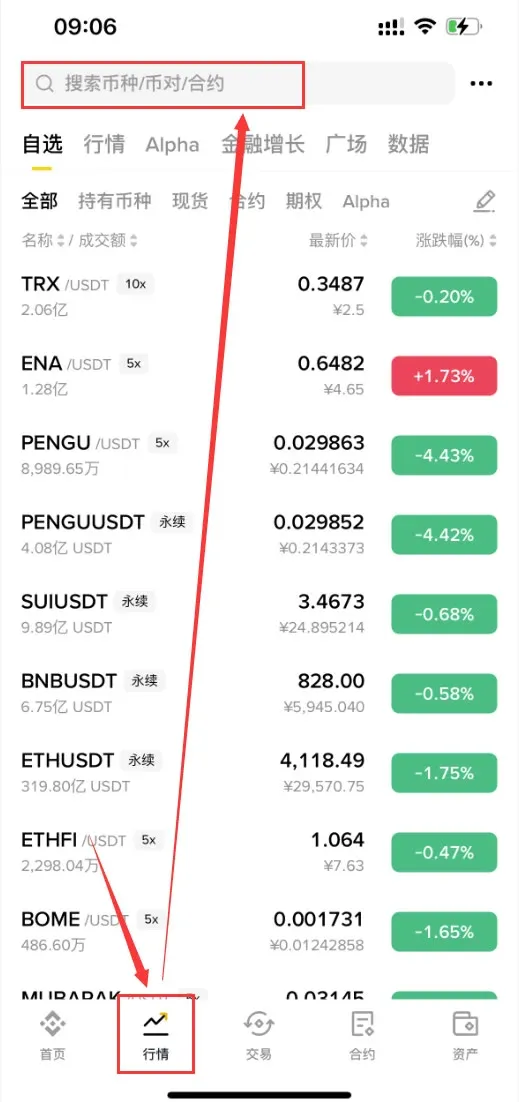
Below is a step‑by‑step example using Binance (or Binance.US for U.S. residents) to buy ENSO on a mobile device. If you do not yet have a Binance account, first complete the App download → Registration → Deposit process.
1. Open the Binance app, go to the market page, and tap the search bar
2. Type “ENSO” and select the ENSO/USDT spot pair from the dropdown list
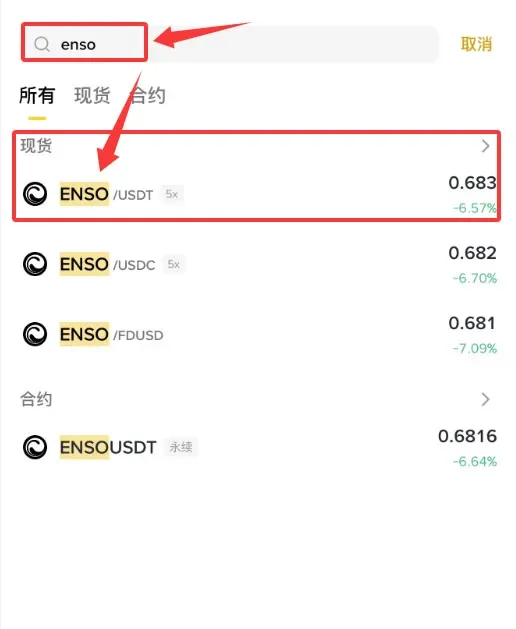
Note: Beginners are advised to stick to spot trading and avoid futures or contract products until they are familiar with the mechanics.
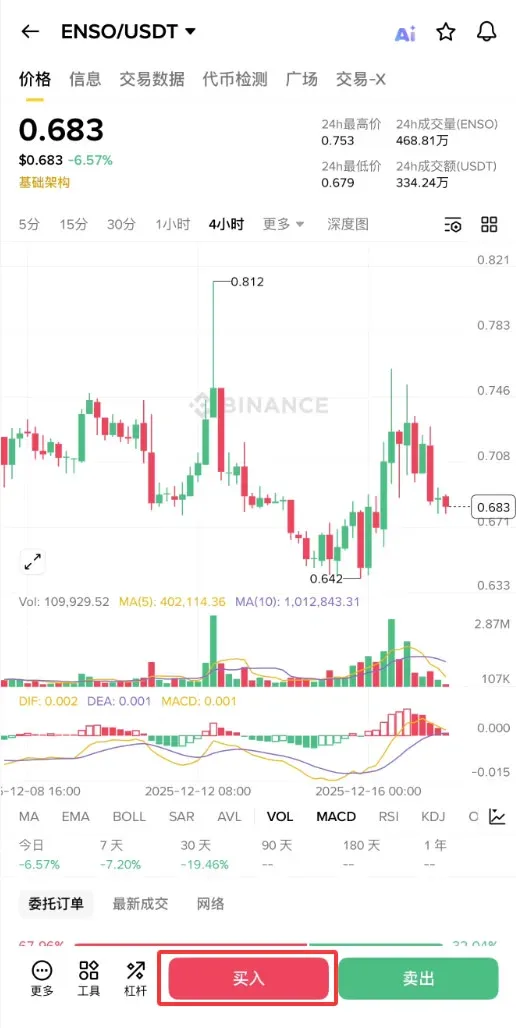
3. Review the order book; when the price is acceptable, tap Buy
4. In the order window, choose Limit Order, enter your desired price and amount, then confirm by tapping Buy ENSO
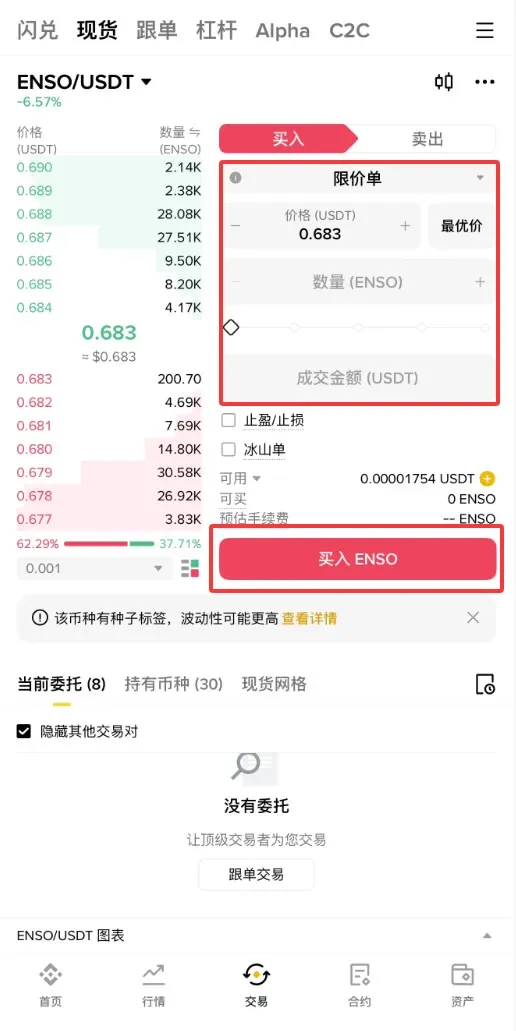
After completing these steps, ENSO will appear in your asset list, ready for holding, governance participation, or staking.
---
Summary
Enso abstracts the technical challenges of cross‑chain interactions, delivering a unified execution layer that centers on business requirements. Its native token, ENSO, combines governance, incentive, and fee‑payment functions, forming the economic backbone of the ecosystem. Although the token has a relatively short issuance history and modest price swings, investors should monitor project milestones and ecosystem vitality closely, evaluate risks prudently, and decide accordingly.
For a more comprehensive ENSO beginner’s guide or the latest updates, stay tuned to Bitaigen’s future reports.
*Please be aware that cryptocurrency gains may be subject to taxation in your jurisdiction; consult a tax professional for advice on reporting and compliance.*
Related Reading
- Enso (ENSO) Blockchain Framework: Easy On‑Chain Development
- Enso: Unified Cross‑Chain Network for Rapid DeFi & Web3 Development
- Zora Network: Cross‑Chain Architecture & Content Tokenization
💡 Register on Binance with referral code B2345 for the maximum trading fee discount. See Binance complete guide.



