
 Bitaigen Research
In this article we outline Monero’s core technology, privacy features, and current ecosystem status, and we analyse its future development logic from the perspectives of regulation and market demand. By applying conservative, base‑case, and optimistic scenario models, we provide a price‑trend reference for 2026‑2030 to help readers form a more comprehensive judgment.
Executive Summary
Monero (XMR) is a privacy‑centric cryptocurrency that enables untraceable, anonymous transactions and is expected to display different price ranges and market outlooks between 2026 and 2030 depending on regulatory and market factors.
As of early 2026, XMR trades around the $600 USD level, with a market capitalization of roughly $12.8 billion USD, and a circulating supply of about 18.4 million XMR, placing it among the top 20‑30 crypto assets by market cap.
Monero’s investment narrative revolves around financial privacy, fungibility, and censorship resistance, positioning it as a store of value and transaction medium for users who prioritize confidentiality. Because of its strong privacy guarantees, the asset faces regulatory scrutiny and exchange delisting risk, which may limit liquidity and accessibility in certain jurisdictions.
This paper bases its price scenarios on Monero’s technology, token economics, and adoption trajectory, presenting illustrative price ranges for 2026‑2030 under conservative, base‑case, and optimistic assumptions. These scenarios are for educational analysis only and do not constitute any investment recommendation.
Project Overview — What Is Monero and How Does It Work?
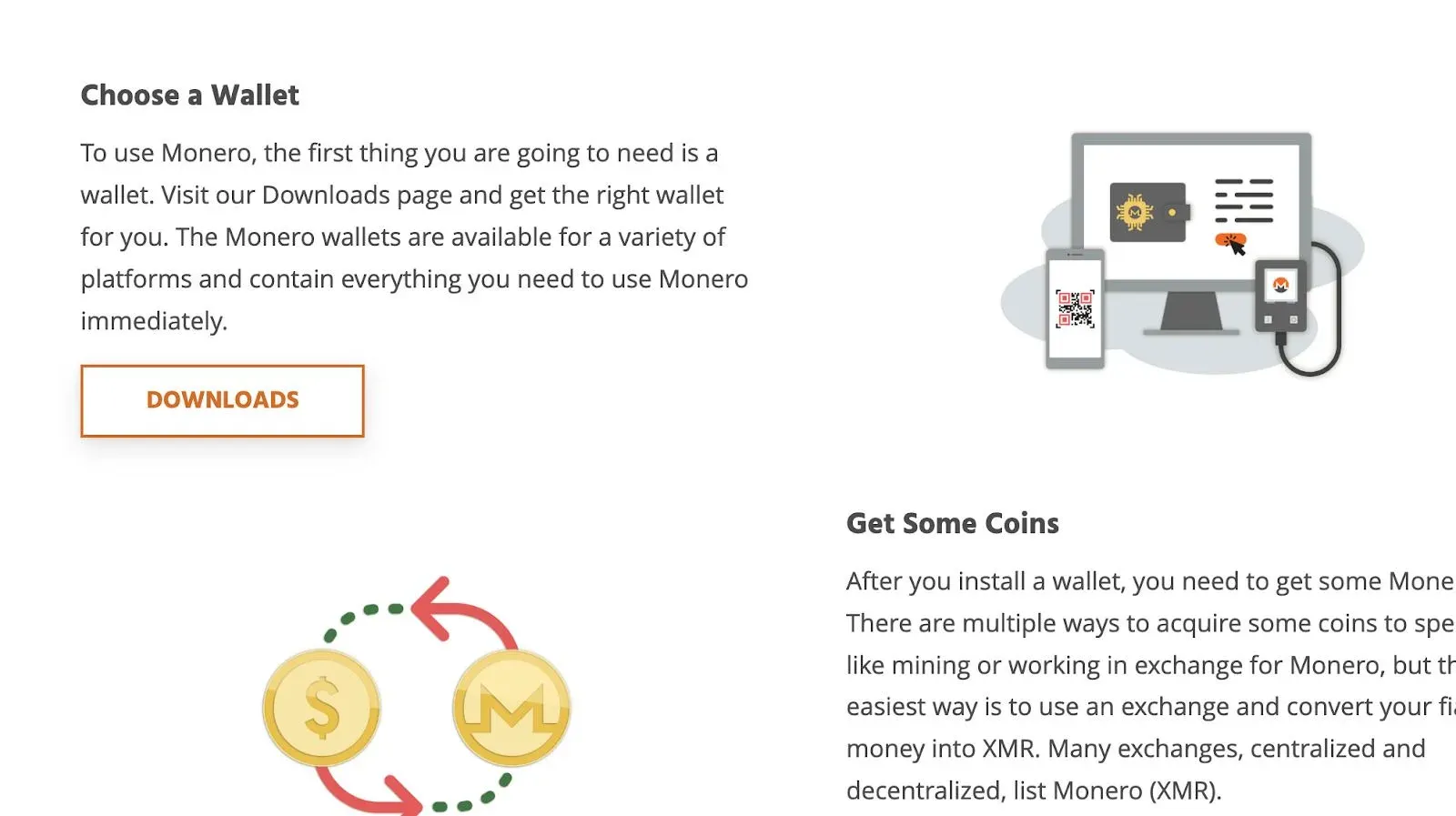
Monero originated in 2014 as a fork of Bytecoin and has since evolved into an independent project with an active open‑source community rather than a centralized company. Its core mission is to provide secure, private, and fungible digital cash, automatically concealing the sender, receiver, and transaction amount.
The network uses the RandomX proof‑of‑work (PoW) algorithm, which is ASIC‑resistant and friendly to general‑purpose CPUs, aiming to promote a more decentralized mining ecosystem. Privacy is achieved through a combination of ring signatures, Ring Confidential Transactions (RingCT), and stealth addresses, which together obfuscate transaction metadata on the public ledger.
Key Features
- Default Privacy: Every transaction automatically employs ring signatures, stealth addresses, and RingCT, blurring the sender, receiver, and amount.
- Fungibility: Because transaction history is hidden, each XMR unit is indistinguishable from any other, reducing the risk of “tainted” coins.
- ASIC‑Resistant RandomX Mining: Supports CPU miners, improving the decentralization of hash power distribution.
- Decentralized Community: No central owner, enhancing resilience and censorship resistance.
- Optional Transparency: Transactions can be made viewable via a view key, satisfying audit or compliance needs.
- Mature Ecosystem: Provides desktop, mobile, and hardware wallets that are purpose‑built for privacy.
Project Category
Monero is classified as a privacy coin and a digital cash protocol focused on confidential payments. It competes in the niche market of privacy‑preserving value transfer rather than in the broader smart‑contract platforms or DeFi infrastructure space.
Relevant categories include:
- Privacy‑first cryptocurrencies
- Censorship‑resistant payments and remittances
- Highly fungible value stores
- On‑chain anonymity tools for financial confidentiality
Token Economics — The Role of XMR
Monero’s circulating supply is about 18.4 million XMR, which equals its total supply. Unlike Bitcoin, XMR does not have a hard cap; it has entered a “tail emission” phase where each block rewards 0.6 XMR to sustain miner incentives indefinitely, theoretically creating an infinite supply.
Tail emission introduces a modest inflation rate, but the design keeps it low enough that the inflation rate converges toward zero over time, still ensuring network security. The primary uses of XMR are:
- Paying network transaction fees
- Conducting highly private peer‑to‑peer payments and remittances
- Storing value with strong confidentiality, acting as a hedge against surveillance
- Potentially serving as collateral in niche DeFi or over‑the‑counter lending protocols (if supported)
Monero had no traditional ICO; early distribution was entirely mining‑driven, and the community stresses fair, open participation. Supply distribution is influenced by mining economics, long‑term holders, and exchange liquidity.
Market Position and Competitive Advantages

As one of the largest and most mature privacy coins, Monero is often regarded as the category leader for on‑chain privacy. Its main competitors are Zcash (ZEC) and Dash (which offers an optional privacy mode), both of which generally provide opt‑in privacy rather than the default privacy that Monero delivers.
Monero’s competitive edge lies in:
- Deep Protocol‑Level Privacy: Default privacy and fungibility.
- Long Operational History: Years of on‑chain data verification.
- Cypherpunk Community Ethos: Value‑driven ecosystem.
- RandomX Decentralized Mining: Mitigates hash‑power concentration.
Nevertheless, the privacy feature also attracts heightened regulatory scrutiny and listing risk.
Main Risks
- Regulatory Pressure: Privacy coins face stricter oversight, potential exchange delistings, and AML/KYC‑related bans.
- Liquidity Risk: If major venues reduce or withdraw XMR trading, price spreads may widen and slippage increase.
- Technical Risk: Complex cryptography such as ring signatures and RingCT could harbor implementation flaws, creating attack surfaces.
- Reputational Risk: Association with illicit activities may dampen institutional appetite.
- Competitive Risk: L2 mixers, on‑chain zero‑knowledge solutions, and other privacy‑enhancing technologies could offer alternative routes.
- Macro Market Risk: Overall crypto volatility, risk‑off sentiment, and prolonged bear markets will continue to affect XMR.
Adoption and Ecosystem Metrics to Watch
- Price & Trading Volume: XMR has shown strong performance in recent years, with daily volumes reaching several hundred million USD.
- On‑Chain Activity: Transaction counts, active address numbers, and other metrics gauge real‑world payment usage; privacy makes fine‑grained analysis more challenging.
- Wallets & Infrastructure: The prevalence of stable wallets, merchant tools, payment gateways, and OTC desks reflects practical adoption levels.
- Regulatory Developments: Policy changes or enforcement actions targeting privacy coins can dramatically impact accessibility, liquidity, and long‑term adoption.
Continuously monitoring these indicators together with the broader crypto market trend helps assess Monero’s evolving role and associated risks.
XMR Price Analysis & Forecast 2026‑2030
At the start of 2026, XMR trades in the $600‑$700 USD range, with a market cap near $12.8 billion USD, surpassing its all‑time high of $400‑$500 USD and indicating strong demand for privacy exposure.
Market sentiment is mixed: privacy demand and the conviction of long‑term holders provide support, while regulatory concerns and exchange delisting news limit institutional participation. Macro‑level factors (global risk appetite, regulatory regimes) will be decisive in whether XMR can maintain or expand its recent gains through 2030.
Scenario Assumptions
| Scenario | Key Assumptions |
|---|---|
| **Conservative** | Heightened regulatory pressure, multiple jurisdictions restricting or banning privacy‑coin trading; liquidity shifts to niche or offshore platforms, limiting upside and increasing volatility. |
| **Base‑case** | Regulatory environment remains relatively stable, with some regions permitting compliant trading; XMR retains its lead in the privacy niche, technology continues to improve, and the user base stays specialized. |
| **Optimistic** | Growing privacy demand, and regulators accommodate privacy tools within transparent frameworks; XMR iterates on performance and user experience, and liquidity improves markedly. |
These assumptions are illustrative only and do not constitute any guarantee.
Forecast Table (illustrative; not financial advice)
| Year | Conservative Range | Base‑case Range | Optimistic Range |
|---|---|---|---|
| 2026 | $400 – $800 | $650 – $1,000 | $900 – $1,400 |
| 2027 | $350 – $850 | $700 – $1,200 | $1,000 – $1,700 |
| 2028 | $300 – $850 | $700 – $1,300 | $1,100 – $2,000 |
| 2029 | $250 – $800 | $650 – $1,300 | $1,100 – $2,200 |
| 2030 | $250 – $850 | $700 – $1,500 | $1,200 – $2,500 |
The ranges incorporate regulatory risk, niche adoption dynamics, and overall crypto‑cycle behavior; actual outcomes may fall outside these intervals.
Drivers Explained
- Conservative Scenario: Tightened AML rules and stricter enforcement lead to delistings and fragmented liquidity. Although the technology remains solid, price performance may skew toward volatility and downward pressure.
- Base‑case Scenario: A “coexistence” regulatory model allows XMR to be used on compliant platforms; users can employ view keys for transparency when needed. RandomX stability, UX improvements, and a gradual rise in privacy awareness support moderate growth.
- Optimistic Scenario: Heightened concerns over surveillance, data breaches, and financial censorship boost demand for strong on‑chain privacy. If regulators incorporate privacy tools within clear, transparent frameworks, XMR could experience a multi‑fold expansion in usage and valuation, albeit still within a high‑risk, high‑volatility environment.
Useful Official Links
- Official website: <https://getmonero.org/>
- Official docs & resources: <https://www.getmonero.org/resources/>
- Official X (Twitter): <https://twitter.com/monero> or <https://twitter.com/getmonero>
- Official community/chat: IRC, Matrix, etc.; links are listed on the “Community” page of the website.
- Official block explorer: <https://www.exploremonero.com/> (additional explorers are linked from the site)
- CoinGecko page: <https://www.coingecko.com/en/coins/monero>
- CoinMarketCap page: <https://coinmarketcap.com/currencies/monero/>
*Note for U.S. residents*: Trading XMR on Binance requires using Binance.US rather than the global Binance platform, in compliance with local regulations.
Frequently Asked Questions
1. Is Monero (XMR) a good investment for 2026‑2030?
Monero is the leading privacy coin and offers unique value, but its returns are highly dependent on regulatory treatment, liquidity conditions, and the broader crypto cycle, making it a high‑risk, high‑volatility asset.
2. How does Monero differ from Bitcoin or Ethereum?
Monero automatically hides the sender, receiver, and amount, providing stronger on‑chain privacy and fungibility at the protocol level, whereas Bitcoin and Ethereum expose transaction data publicly.
3. How high could XMR rise by 2030?
The scenario table suggests a price band roughly between $250 USD and $2,500 USD for 2030, but this is purely illustrative and not guaranteed.
4. What are the main risks of holding XMR long‑term?
Key risks include regulatory crackdowns, exchange delistings, potential vulnerabilities in complex cryptographic primitives, and volatility stemming from overall crypto bear markets.
5. Is using Monero legal?
Legality varies by jurisdiction; some countries restrict or discourage privacy coins, while others permit their use under existing regulations. Users should consult local laws.
6. Tax considerations
Crypto gains, including those from XMR, may be taxable in many jurisdictions. Users should seek professional advice and report any taxable events according to the rules applicable in their country (e.g., using SEPA/SWIFT for fiat conversions where relevant).
Conclusion
Monero is a mature, battle‑tested privacy coin with a strong community ethos and advanced cryptographic technology, occupying a distinctive niche within the crypto space. Its long‑term value hinges on the balance between growing demand for financial privacy and the regulatory stance toward anonymity tools.
For investors and traders planning to hold XMR between 2026 and 2030, close attention to regulatory developments, exchange liquidity, and technical progress is essential. Given the potential for extreme price and accessibility differences, position sizing and risk management must be approached prudently.
That concludes the article “What Is Monero (XMR)? Investment Highlights and Price Forecast 2026‑2030.” For more in‑depth XMR coverage, you can search Bitaigen’s past articles or continue browsing the related posts below. Thank you for supporting Bitaigen!
Related Reading
- Monero (XMR) 2025 Outlook: Tech, Ecosystem & Price Analysis
- Monero (XMR): Untraceable On‑Chain Privacy Explained
- Privacy Coins 2026: Monero vs Zcash – Full‑Chain Anonymity & Trends
💡 Register on Binance with referral code B2345 for the maximum trading fee discount. See Binance complete guide.



