
 Bitaigen Research
 The Bitaigen editorial team believes that this article systematically outlines the core principles of Perpetual Protocol, its operational mechanics, and the functions of the PERP token. Combined with recent market movements, it presents the project's unique advantages in decentralized perpetual futures trading, helping readers gain a comprehensive understanding of the subsequent details. It is worth a careful read.
Recent PERP Market Overview
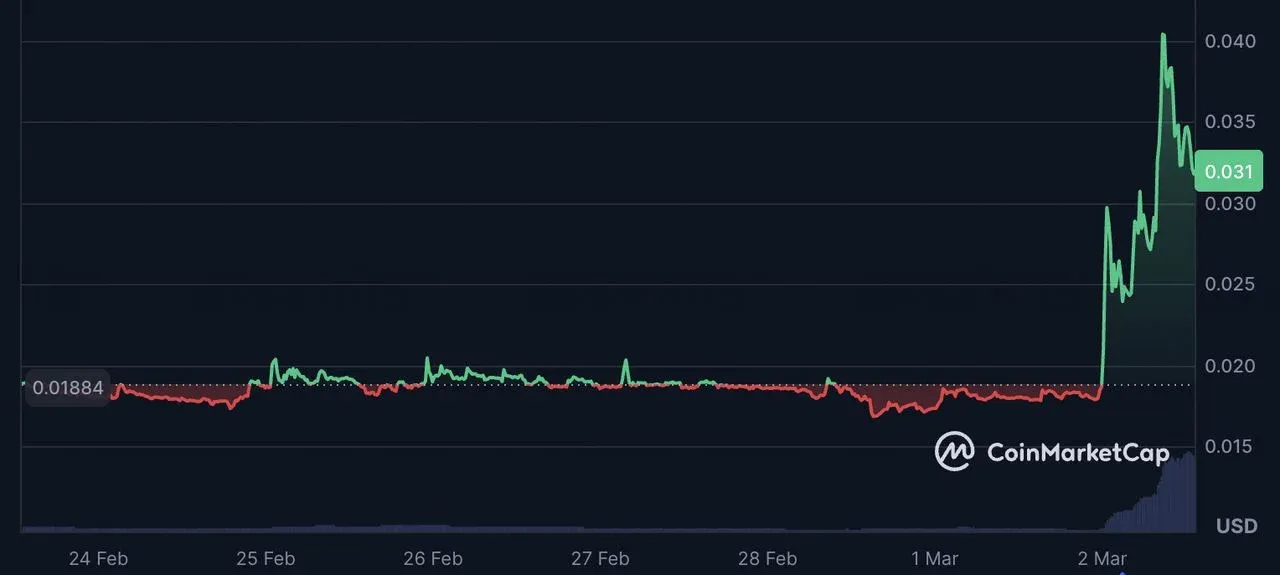
In early March 2026, $PERP posted a gain of over 94 % within a 24‑hour window, with a single‑day increase of 75 %, markedly diverging from the broader cryptocurrency market trend. Although Bitcoin showed a slight negative correlation with the overall market cap, PERP managed to retake its 7‑day and 30‑day simple moving averages thanks to technical breakthroughs, demonstrating a high‑beta profile in the decentralized perpetual futures (Perp DEX) space. The surge in trading volume during this period provides contextual background for the protocol mechanisms and token functions discussed later.
---
What Is Perpetual Protocol (PERP) and How Does It Operate?
Perpetual Protocol is one of the pioneering decentralized perpetual exchanges (Perp DEXes), aiming to bring the efficient experience of centralized exchanges onto the transparent, on‑chain environment of the Ethereum ecosystem. Since its launch in 2019, the protocol has evolved from an initial virtual Automated Market Maker (vAMM) design to a concentrated liquidity model running on Optimism Layer 2, offering permissionless, 24/7 leveraged trading.
Core Technological Pillars
- vAMM and Concentrated Liquidity
The early v1 version centered on a vAMM. Version 2 (codenamed *Curie*) switched to a Uniswap v3‑style concentrated liquidity model, allowing liquidity providers (LPs) to allocate capital within specific price ranges, dramatically improving capital efficiency and reducing slippage.
- Smart Liquidity Framework (v3)
The latest v3 release adopts a modular architecture that decouples the execution layer from the liquidity layer, facilitating rapid onboarding of new assets and yield strategies while further enhancing scalability.
- Optimism Infrastructure
Leveraging Optimism L2, transaction confirmations are near‑instantaneous, and gas costs are roughly a hundred times lower than on Ethereum mainnet. This cost advantage makes high‑frequency leveraged trading feasible on‑chain.
Through these design choices, the protocol achieves a market‑neutral structure: every long position is matched by a short position or a liquidity provider acting as the counter‑party. The funding‑rate mechanism balances longs and shorts, keeping perpetual contract prices tightly aligned with the underlying index spot price.
---
Functional Positioning of the PERP Token
PERP, the native token of the protocol, combines utility and governance features with the goal of aligning the interests of traders, stakers, and developers.
- Governance Rights: Holders can vote within the Perpetual Protocol DAO on key parameters such as new market listings, fee structures, and treasury allocations.
- Staking & Yield (Lazy River 2.0): Users who lock PERP receive vePERP or delegated‑governance PERP, earning a share of the protocol’s trading fees paid in USDC—often described in DeFi circles as “real yield.”
- Incentive Program (Pool Party): LPs who provide concentrated liquidity to high‑volume trading pairs collect standard protocol fees and receive additional PERP rewards.
- Risk Buffer: If the insurance fund is depleted during extreme events, the protocol can mint and sell PERP to replenish capital, safeguarding solvency.
---
Key Differences Compared With Centralized Exchanges (CEX)
| Feature | Centralized Exchange (CEX) | Perpetual Protocol (PERP) |
|---------|---------------------------|---------------------------|
| Fund Custody | Custodial (exchange holds private keys) | Non‑custodial (users retain their own keys) |
| Order Matching | Central Limit Order Book (CLOB) | vAMM / Concentrated Liquidity |
| Transparency | Black‑box internal databases | Fully on‑chain and auditable |
| KYC Requirements | Mandatory | Permissionless |
| Fee Structure | Variable fees often with hidden spreads | Transparent gas + protocol fee (quoted in USDC) |
| Settlement | Internal ledger | On‑chain settlement on Optimism L2 |
Centralized platforms rely on proprietary matching engines and require users to deposit assets into the exchange’s custody. PERP, by contrast, uses an on‑chain clearinghouse and a smart liquidity framework that enable users to manage assets independently, enjoy transparent settlement, and access up to 10× leverage.
---
How PERP Differs From Other Perpetual DEXes
Projects such as dYdX and Hyperliquid have migrated to bespoke high‑performance chains or custom L1 solutions, employing off‑chain matching or sub‑second consensus mechanisms. Perpetual Protocol remains rooted in the Ethereum ecosystem, leveraging Optimism’s L2 smart‑liquidity framework to balance capital efficiency with genuine yield models.
- Composability: Built on the Ethereum DeFi stack, the protocol can seamlessly integrate with yield vaults, reward cards (e.g., the upcoming Wilde engine), and other ecosystem components.
- Revenue Distribution: Lazy River 2.0 allocates a portion of fees directly in USDC to vePERP stakers, creating a mathematical link between platform volume and token‑holder returns.
- Competitive Focus: Rivals tend to emphasize extreme leverage (e.g., 1,000×) or cross‑chain stock perpetual contracts, often deploying on non‑Ethereum networks such as BNB Chain.
---
Three Critical Considerations Before Trading PERP
- Technical Momentum vs. Fundamentals
The recent price rally is driven primarily by technical factors. While Perp Labs is developing the Wilde engine and the Nekodex mobile app, no major announcements are expected in the short term. Price swings appear to stem from liquidity tightening, which could produce equally sharp downside moves.
- Version Migration & Liquidity Shifts
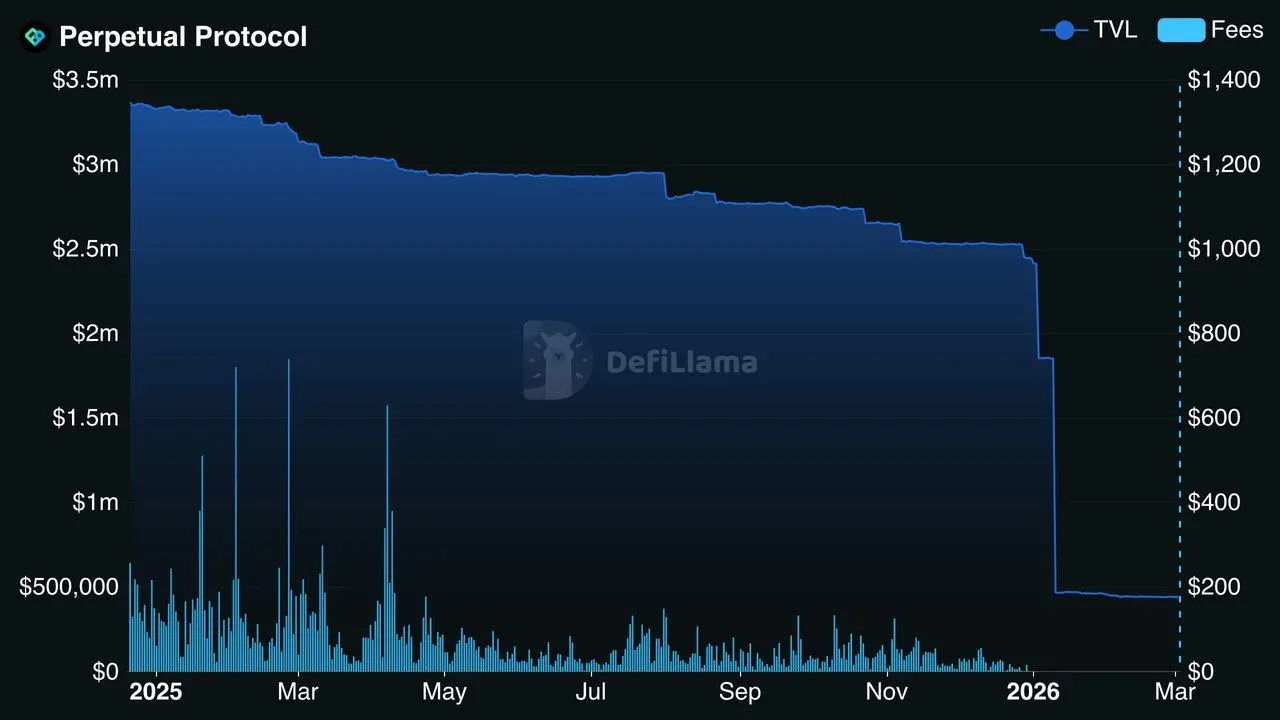
As of March 2026, Perp Labs is transitioning from v2 (*Curie*) to the v3 smart‑liquidity framework. During the migration window, total value locked (TVL) may experience a temporary dip. Traders should monitor the size of the USDC insurance fund on Optimism and the activity of TVL‑bearing positions. A pronounced pull‑back could magnify slippage for large orders and increase the impact of whale trades.
- Real‑Yield Competitiveness & Ecosystem Moat
PERP’s long‑term value is tightly linked to the adoption rate of Nekodex and Wilde reward cards. Compared with competitors operating on dedicated application‑specific chains, PERP’s reliance on Optimism L2 introduces a layer of ecosystem risk. Investors should assess whether Lazy River 2.0’s vePERP yields remain above the industry average; a decline could trigger token‑selling pressure.
---
Conclusion: Does Perpetual Protocol Represent the Future of On‑Chain Perpetual Trading?
Perpetual Protocol continues to be a core player in the decentralized derivatives arena. Its multi‑year track record of secure operations and the shift toward a smart‑liquidity architecture suggest sustainable growth potential. With the rollout of the Wilde reward engine, the Nekodex mobile interface, and other product expansions, the project is evolving from a pure trading venue into a broader DeFi utility platform.
Nevertheless, the recent price action is largely speculative, lacking a clear fundamental catalyst. The protocol’s performance on Optimism, the stability of its TVL, and the actual yield delivered to vePERP holders will determine whether it can maintain an edge amid fierce cross‑chain competition.
Risk Disclosure: Perpetual contracts inherently carry high‑leverage risk, including the possibility of losing the entire invested capital. The recent volatility of $PERP also underscores the need for caution regarding liquidity stress and rapid price reversals.
---
This article has provided an in‑depth analysis of the Perpetual Protocol (PERP) token, covering its definition, operational mechanics, and utility. For further information on PERP, you may consult previous Bitaigen (比特根) articles or continue browsing the related content below. Thank you for your continued interest and support of Bitaigen (比特根)!
*Note*: In many jurisdictions, gains from cryptocurrency trading may be subject to tax. Participants should consult local tax regulations and consider reporting requirements, such as using SEPA/SWIFT for fiat withdrawals where applicable. U.S. residents should conduct trades on Binance.US rather than the global Binance platform.
💡 Register on Binance with referral code B2345 for the maximum trading fee discount. See Binance complete guide.



