
 Bitaigen Research
 We examine Seeker (SKR) from three perspectives—technology, ecosystem, and commercial implementation—providing an in‑depth analysis of its positioning and competitive advantages within the Solana Mobile ecosystem. By combining market trends, we offer a rational forecast of its future trajectory. Read on to help you assess whether this mobile token can disrupt traditional giants in the mobile payments arena.
Current Overview of SKR
- Current price: $0.04000 USD *(US users should trade on Binance.US; all fiat values are expressed in USD and can be transferred via SEPA or SWIFT)*
- 24‑hour change: ‑4.58%
- Market cap: roughly $400 million USD
- Circulating supply: 3 billion tokens (30 % of the total 10 billion supply)
---
Project Background and Issuance Details
Seeker (ticker SKR) officially launched on January 21, 2026. On the same day, more than 100,000 Seeker smartphone owners who had completed KYC received 1.82 billion tokens via an airdrop. The initial offering price was set at $0.06 USD, but rapid cash‑out by airdrop recipients pushed the price down to $0.04 USD.
Despite the price dip, the first quarter showed solid on‑chain activity: transaction count exceeded 9 million, cumulative trading volume reached $2.6 billion USD, and 265 active decentralized applications (dApps) were recorded.
Solana Mobile had already validated this business model before issuing the token, contrasting sharply with many projects that hype first and deliver later, thereby providing a noteworthy example.
---
SKR Basic Information
| Item | Details |
|---|---|
| **Token symbol** | SKR |
| **Chain** | Solana |
| **Contract address** | To be announced around the TGE |
| **Total supply** | 10 000 000 000 SKR |
| **Circulating supply** | 30 % (3 billion) released around the TGE |
| **Primary uses** | Governance, staking, access to the Seeker mobile dApp store |
| **Airdrop allocation** | 30 % directly distributed to Seeker users and ecosystem participants |
| **Launch date** | January 2026 (Token Generation Event) |
| **Listing plan** | CandyDrop will debut on **Phemex**; official trading pairs will be announced after the TGE via the project’s channels |
---
What Is Seeker (SKR)?
SKR is the native governance and utility token of the Solana Mobile ecosystem, built around the Seeker Web3 smartphone. It breaks the traditional model where a single platform controls app store listings and revenue sharing, introducing a token‑based layer that lets users, developers, and hardware operators jointly participate in app vetting, device incentives, and ecosystem governance.
Key Features
- Mobile‑first coordination token: SKR ties together the Seeker device, its app marketplace, and the underlying infrastructure, allowing the token’s value to directly reflect mobile usage on Solana.
- Guardian‑driven governance model: Holders can delegate voting power to Guardians—professional operators responsible for device verification and app management—who enforce ecosystem rules on‑chain.
- Decentralized app curation: An SKR‑based incentive system determines which apps receive verification, recommendation, and rewards, reducing reliance on centralized ranking algorithms.
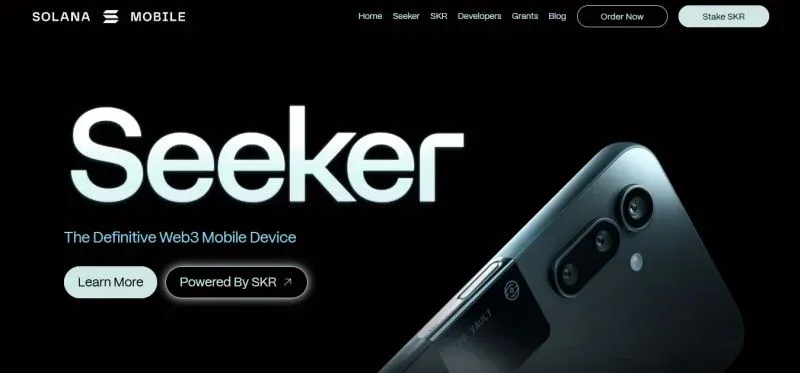
- Deep hardware integration: The Seeker phone embeds a Seed Vault wallet, a Seeker ID, and a device‑minted Genesis Token, tightly linking token rewards with hardware identity.
- Native Solana advantages: Leveraging Solana’s high‑throughput, low‑fee network, SKR integrates seamlessly with the broader DeFi and infrastructure ecosystem.
---
Core Value of the Tokenomics
SKR is not merely a speculative asset; it delivers practical utility through three core functions:
- Governance rights – Holders can take part in Seeker ecosystem decisions or delegate authority to Guardians.
- Staking incentives – Annual percentage yields (APY) can reach up to 28 %, with inflation decreasing each year (10 % in year 1, then a 25 % reduction annually until stabilizing around 2 %). The staking mechanism is expected to taper off before 2027.
- dApp gateway – Token holders gain direct entry to the Seeker mobile dApp store, unlocking exclusive applications and services.
The Guardian framework distinguishes SKR from typical governance tokens. Infrastructure firms such as Anza, Helius Labs, and Jito serve as Guardians, shaping ecosystem policy and receiving delegated votes from token holders, thereby introducing stronger accountability within the DAO structure.
---
Synergy Between Hardware and Token
Most crypto tokens provide “functionality” only on‑chain, whereas SKR extends utility to a physical device held by the user. If Solana Mobile captures 1 % of the global smartphone market, SKR could become a cornerstone of a multi‑billion‑dollar mobile economy. Conversely, if device sales remain below 250,000 units, the token’s value would likely be dominated by speculative dynamics.
The first quarter’s performance already demonstrated the model’s feasibility; the ongoing second quarter (now officially underway) will be the critical window for testing scalability.
---
2026 Price Range Forecast
| Period | Target price | Primary drivers | Risk level |
|---|---|---|---|
| **Q1** | **$0.050 USD** | Airdrop cash‑out, start of Q2, staking adoption | High |
| **Q2** | **$0.075 USD** | Breakpoint conference, Coinbase listing, device‑sales uplift | Medium |
| **Q3** | **$0.095 USD** | Utility validation, partner expansion, dApp growth | Medium |
| **Q4** | **$0.120 USD** | Full‑year hardware review, governance maturity | Low‑Medium |
- Optimistic (bull) year‑end price: $0.22 USD (≈ +450 %)
- Baseline scenario year‑end price: $0.12 USD (≈ +200 %)
- Pessimistic (bear) year‑end price: $0.055 USD (≈ +38 %)
Q1 – Post‑airdrop volatility ($0.028 – $0.085)
- Scenario: Approximately 100,908 airdrop recipients decide to hold or sell within 90 days.
- Upside: Second‑quarter dApps demonstrate unique value; Guardian delegation surpasses 40 % of circulating supply.
- Downside: If price falls below $0.035 and user activity lags expectations, further sell‑offs may ensue.
- Monitoring metric: Daily staking deposits → ≥ 50 million tokens considered healthy; ≤ 20 million signals waning interest.
Q2 – Key breakthroughs ($0.035 – $0.12)
- Events: Solana’s annual Breakpoint summit, Coinbase onboarding, device‑verification feature upgrade.
- Upside: Quarterly trading volume exceeds $3 billion USD, over 50 exclusive mobile dApps launch, device sales top 200,000 units.
- Downside: Developer attrition or ineffective Guardians, coupled with hardware sales below 175,000 units, could suppress price.
- Monitoring metric: Daily active users → ≥ 150,000 validates momentum; ≤ 80,000 flags risk.
Q3 – Utility test ($0.045 – $0.18)
- Focus: Market assessment of whether SKR is core infrastructure or a niche experiment. Newly unlocked token supply may create short‑term price pressure.
- Upside: Cumulative devices surpass 300,000, dApp count exceeds 400, partnership with telecom operators announced, staking APY steadies above 18 %.
- Downside: Staking yields drop below 12 %, major Guardians exit, or a competitor releases a superior crypto‑enabled phone, leading to price weakness.
- Monitoring metric: Average daily transaction volume per device → rising indicates a healthy economy; falling suggests diminishing user engagement.
Q4 – Hardware market judgment ($0.055 – $0.22)
- Outlook: Full‑year device sales will determine SKR’s long‑term viability. Team token lock‑ups are slated for a cliff release in January 2027.
- Upside: Cumulative devices exceed 500,000, annual trading volume tops $5 billion USD, active developers > 200, and capital deployment is evident.
- Downside: Device sales below 250,000, dApp numbers recede, team token sell‑pressure rises, or the broader crypto environment remains bearish, all of which could depress price.
- Monitoring metric: Device sales during holiday periods and year‑end developer retention rates.
---
Trading Strategy and Position Sizing
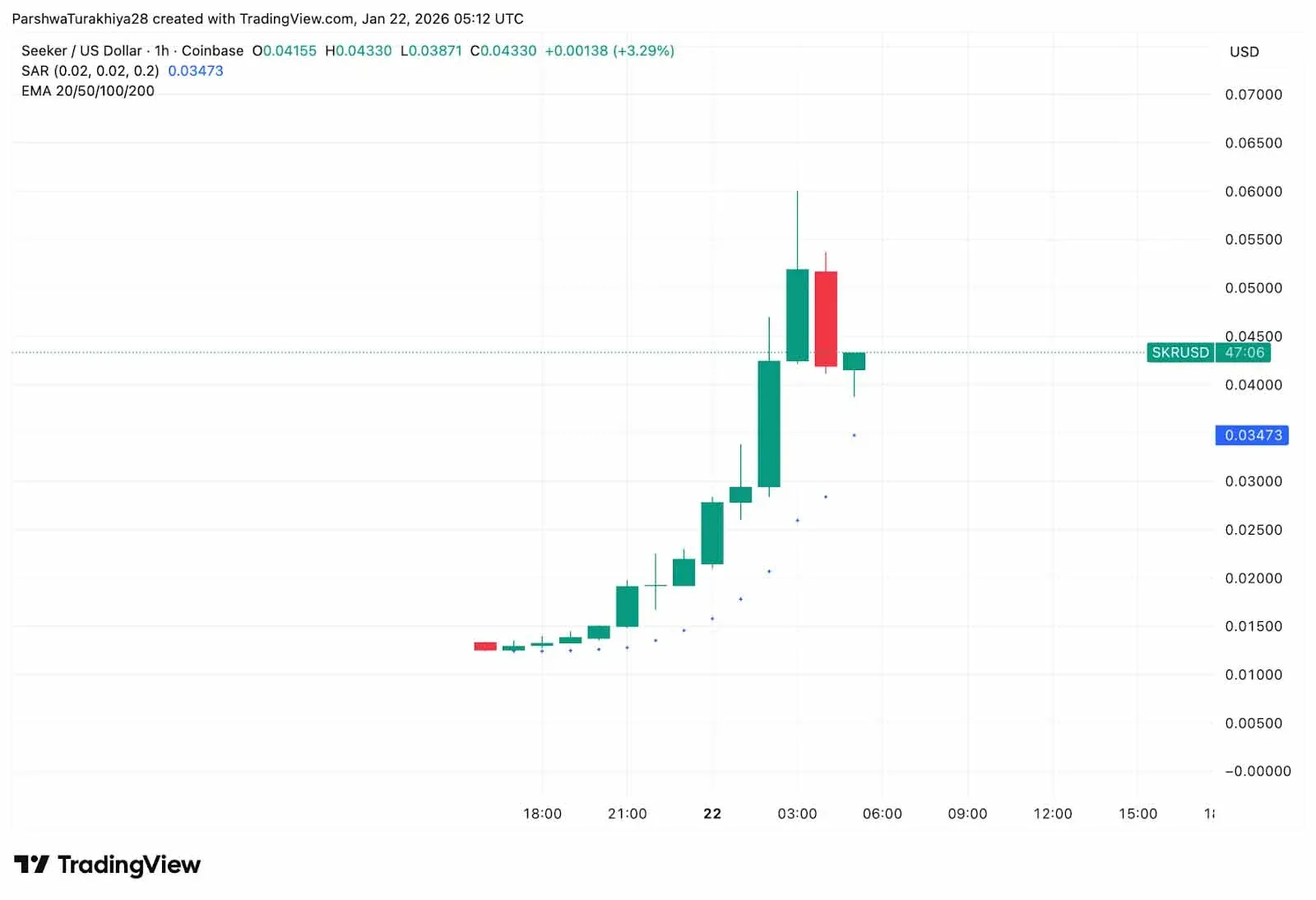
- Entry range: $0.035 – $0.045 USD during the airdrop fallout period.
- First target: $0.075 USD (aligned with second‑quarter upside).
- Second target: $0.12 USD (baseline year‑end scenario).
- Stop‑loss: Below $0.028 USD invalidates the thesis.
- Position sizing: Allocate 1‑2 % of the overall portfolio per trade, as the project remains in an infrastructure‑building phase; maintain a cautious risk appetite.
- Staking approach: If you plan to hold for over six months and have confidence in the project’s outlook, consider staking to capture roughly 28 % APY. Short‑term traders should avoid locking tokens to sidestep potential yield pull‑backs.
---
Main Risk Factors
- Hardware reliance: Earlier crypto‑phone projects such as Saga failed to achieve scale; Seeker faces a similar uncertainty.
- Token unlock pressure: Approximately 25 % of the growth allocation will be released in batches over 18 months, while 15 % of the team’s holdings will undergo a steep 12‑month unlock, potentially creating sell pressure.
- Competitive landscape: Apple and Google dominate the mobile ecosystem in the near term; only a markedly superior user experience can carve out meaningful market share.
- Staking yield decline: The attractive 28 % APY draws speculative capital; if yields fall into the 10‑15 % range, a sizable exit could occur.
---
This article provides a systematic overview of the Seeker (SKR) 2026 price outlook and its prospective role within the Solana mobile ecosystem. For deeper SKR price analysis, you can consult previous Bitaigen (比特根) thematic pieces or continue reading the related content below. We appreciate your continued attention and support for Bitaigen (比特根)!
Related Reading
- Seeker (SKR) Review: Solana Mobile Web3 Token Analysis
- SKR Token 2026 Holding Value: Solana Mobile Analysis
- Snowball (XUEQIU) Token Analysis on BSC Smart Contract
💡 Register on Binance with referral code B2345 for the maximum trading fee discount. See Binance complete guide.
⚠️ Risk Disclaimer: Crypto prices are highly volatile. This is not investment advice.



