
 Bitaigen Research
 Bitcoin has been the focus of media attention ever since its inception, with new developments appearing almost every day. Consequently, misunderstandings and rumors surrounding its journey have proliferated. This article aims to clarify seven common misconceptions, helping readers discern which statements hold up and which need to be re‑examined. While revealing the factual truth, we also remind everyone to stay rational and recognize the inherent risks.
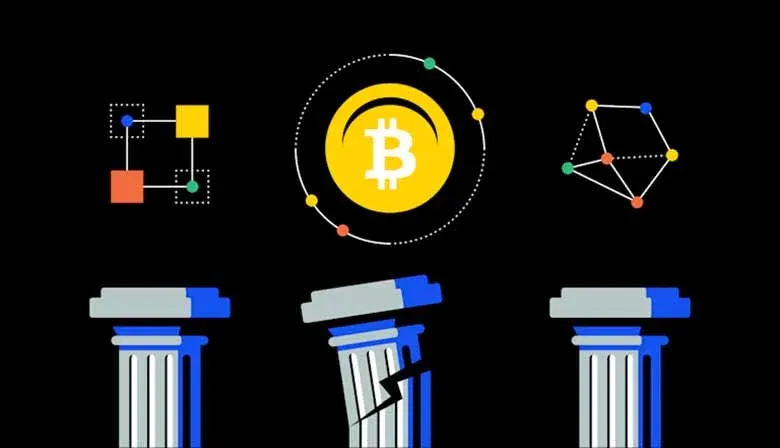
In this article we systematically examine the seven most common Bitcoin misconceptions, uncover the underlying logic, and help readers separate rumor from fact while taking a rational view of risks and opportunities. By comparing data and research, you will gain a more comprehensive understanding; continue reading to dive into the key points of each misconception.
Misconception Seven: Bitcoin Is Harmful to the Environment
Mining does indeed require a large amount of electricity, but its environmental impact is not one‑dimensional. When Bitcoin’s energy consumption is compared with that of the global financial system as a whole, the latter’s energy demand proves far larger. The following points provide perspective:
- A recent report from New York‑based Ark Investment Management concludes that, overall, Bitcoin’s energy efficiency surpasses that of traditional banking operations and gold mining.
- Renewable sources such as wind, hydro and solar now account for more than 20 % of the electricity used for mining, and in some regions the share approaches 70 %.
- Research from the University of Cambridge similarly indicates that Bitcoin’s negative environmental effects remain relatively modest at present.
- Because miners’ profitability is directly tied to electricity costs, they tend to seek cheaper, cleaner power, which in turn encourages further development of renewable‑energy technologies.
Misconception Four: Bitcoin Will Eventually Be Overtaken by Competitors
As the first digital currency to achieve widespread adoption, Bitcoin enjoys a significant first‑mover advantage. Although countless new tokens have emerged, none to date have managed to threaten its market‑dominance position.
- Over the past decade, thousands of competing coins have been launched, yet Bitcoin still commands roughly 60 % of total market capitalization, remaining at the top of the rankings.
- Bitcoin’s decentralised nature means the network is maintained by miners and nodes around the world, making it difficult for any single entity to control its operation.
- When protocol upgrades are required, the community employs a consensus‑driven fork mechanism. Changes only take effect after gaining support from a majority of nodes. The 2017 Segregated Witness (SegWit) upgrade is a successful example of a soft fork.
- If disagreements arise, developers can initiate a hard fork that creates a new chain, such as Bitcoin Cash. To date, no fork has matched the original chain in scale or influence.
Misconception Three: Bitcoin Has No Real Value
Value does not have to be backed by a physical asset; fiat currencies also lack tangible backing. Bitcoin’s core value lies in its inherent scarcity and network utility.
- The total supply is hard‑capped at 21 million coins, and the “halving” event that occurs roughly every four years cuts block rewards in half, further limiting new issuance.
- This supply‑side constraint gives Bitcoin an upward price pressure over the long term, rising from less than one US cent at inception to over USD 66,000 by mid‑April 2024.
- Network security depends on the hash power contributed by miners worldwide. “Mining” is essentially the process of performing massive calculations to verify transactions and maintain the ledger, with miners rewarded in newly minted bitcoins.
Misconception One: Bitcoin Is a Bubble
Labeling Bitcoin outright as a “bubble” often overlooks the process of technological innovation and market maturation. A bubble is defined as an asset price that diverges dramatically from fundamentals and eventually collapses, whereas Bitcoin’s trajectory resembles the growth curve of a new technology.
- In the past 12 years, Bitcoin has experienced multiple price cycles; each trough has been followed by a new all‑time high, mirroring the boom‑bust pattern of the late‑1990s internet bubble.
- Some large‑scale investors view Bitcoin’s volatility as typical for an emerging market, believing that price swings will gradually narrow and the asset will settle into relative stability. When that will happen can only be determined by time.
Misconception Two: Bitcoin Has No Practical Use
Bitcoin’s functionality has expanded far beyond the original payment experiment, gradually permeating institutional asset allocation and value‑storage strategies.
- Companies such as Tesla, Square and MicroStrategy have added hundreds of millions to billions of USD worth of Bitcoin to their balance sheets as a hedge against inflation risk.
- Compared with heavy physical gold, Bitcoin can be transferred instantly over a digital network, dramatically improving the efficiency of cross‑border payments.
- Although Bitcoin once gained notoriety for use on darknet markets, each time a major illicit marketplace shuts down the price of Bitcoin tends to experience a short‑term rally, indicating demand that is not limited to illegal activities.
- Statistics from 2019 show that only 2.1 % of Bitcoin transactions were linked to criminal activity, and because all transactions are recorded on a public blockchain, regulators actually find it easier to trace suspicious behaviour.
Misconception Five: Investing in Bitcoin Is Gambling
Volatility is the norm for emerging assets, but equating it with casino gambling is inaccurate. Since the creation of the genesis block in 2010, Bitcoin’s total market cap has exceeded USD 1.3 trillion and has shown a long‑term upward trend.
- Investors typically allocate capital based on their belief in Bitcoin’s scarcity and network effects, a fundamentally different structure from a casino where the house always wins.
- To smooth short‑term fluctuations, many adopt a dollar‑cost‑averaging (DCA) strategy, investing a fixed amount at regular intervals regardless of market conditions.
- Bloomberg research indicates that recent Bitcoin volatility has fallen below the levels seen during the 2017 bull market, a development attributed to institutional inflows and the mainstreaming of crypto assets.
- In early 2024, the United States approved a spot Bitcoin ETF, offering investors a regulated investment vehicle and further reducing the purely speculative character of the asset.
Misconception Six: Bitcoin Is Not Secure
The Bitcoin network itself has never suffered a successful attack; its security derives from open‑source code and the massive hash power supporting it.
- Most security incidents actually occur on third‑party platforms such as exchanges and wallet services—for example, the Mt. Gox theft and Ledger data breaches—rather than indicating a flaw in the underlying protocol.
- Since its launch in 2009, the Bitcoin core protocol has maintained an operational uptime of 99.9 %, consistently delivering high availability.
- Thousands of mining rigs are distributed across more than 100 countries, forming a decentralised hash‑power network that mitigates the risk of a single point of failure.
---
The above sections systematically dismantle the most common Bitcoin misconceptions. For further details, feel free to search for Bitaigen’s (比特根) previous special reports or continue reading the related content below. We hope you gain a more comprehensive and objective understanding of Bitcoin.
💡 Register on Binance with referral code B2345 for the maximum trading fee discount. See Binance complete guide.



