
 Bitaigen Research
 In the wave of digital transformation, blockchain technology is quietly reshaping how transactions are carried out, and smart contracts—one of its core applications—have moved from concept to real‑world deployment. To help beginners grasp the essence quickly, this article examines smart contracts from multiple angles: definition, advantages, risks, and differences from traditional agreements. By the end, you’ll have a clear understanding before stepping into DeFi or NFT spaces.
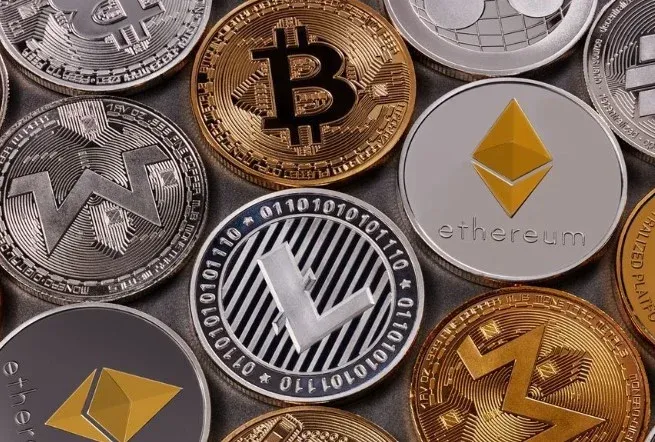
The Bitaigen editorial team has carefully compiled the core concepts, technical benefits, and potential risks of smart contracts, and contrasted them with the execution mechanisms of traditional contracts. Through charts and case studies, this article offers a practical cognitive framework for newcomers entering DeFi, NFT, and related fields. It is worth a thorough read.
Data Comparison
The table below provides a side‑by‑side view of smart contracts versus traditional contracts across key metrics. Data sources include industry reports such as Chainalysis 2023 and Certik’s security statistics.
| Dimension | Smart Contract | Traditional Contract | Main Advantages / Disadvantages |
|-----------|----------------|----------------------|----------------------------------|
| Execution Speed | Completes in seconds to minutes | May take days or even months | Smart contracts are suited for real‑time settlement |
| Cost | Gas fees roughly $0.01–$1 | Legal fees, arbitration costs often run into thousands of USD | Costs are dramatically lower, though fees rise during network congestion |
| Trust Model | Relies on cryptography and the immutability of code | Relies on courts, banks, and other institutions | Code transparency reduces fraud risk |
| Mutability | Immutable after deployment | Negotiable, can be terminated | Immutability improves security but also makes error correction difficult |
| Applicable Scenarios | Digital assets, DeFi, NFTs, automated insurance, etc. | Real‑estate sales, employment contracts, divorce settlements, etc. | Smart contracts fit standardized, quantifiable transactions |
| Risk Sources | Code vulnerabilities (losses exceeded $3 billion in 2022) | Human fraud, legal disputes | Both carry risk; smart contracts can be audited, traditional contracts enjoy legal protection |
Note for U.S. readers: When dealing with fiat on‑ramps, use Binance.US (or another U.S.-compliant exchange) rather than the global Binance platform. Transactions involving fiat can be processed via SEPA/SWIFT for cross‑border transfers. Crypto gains may be taxable in your local jurisdiction; consult a tax professional for guidance.
What Is a Smart Contract?
The concept of a smart contract was first introduced by computer scientist Nick Szabo in 1994, but it only entered mainstream awareness with the rise of blockchain—particularly the Ethereum platform. At its core, a smart contract is a piece of program code stored on a blockchain. After the terms are coded, the contract automatically executes the prescribed actions once predefined trigger conditions are met.
Example: Imagine you and a friend agree, “If tomorrow is sunny, I will transfer $100 to you.” In a conventional setting, this would require a paper agreement, a verbal promise, or a third‑party monitor. Written as a smart contract, the logic could look like:
```solidity
if (weatherAPI.isSunny()) {
transfer(100, myAddress, friendAddress);
}
```
Once deployed, the code cannot be altered. When the weather API reports “sunny,” the contract automatically performs the transfer—no human intervention needed.
The cornerstone property of smart contracts is decentralization: execution depends on consensus among many network nodes rather than a single authority. The blockchain’s public ledger allows every participant to audit the execution process, ensuring transparency and irreversibility.
Today, platforms such as Ethereum, Solana, Binance Smart Chain, and others provide runtime environments for smart contracts. Ethereum is the most popular due to its support for the Solidity language; by the end of 2023, it had more than millions of contracts deployed, covering NFTs, gaming, finance, and many other use cases.
It is important to note that smart contracts can only handle quantifiable logic (e.g., “if balance > $1,000 then transfer”), and they cannot evaluate subjective conditions such as “whether the service was satisfactory.” This limitation is a fundamental distinction from traditional agreements.
Smart Contracts vs. Traditional Contracts
Traditional contracts usually exist as paper or electronic documents signed by the parties involved, and their enforcement depends on the judicial system or third‑party institutions (lawyers, banks). Smart contracts embed the contractual terms into code, enabling automated execution. Below are four key dimensions of comparison:
- Execution Method
- *Traditional*: Requires notarization, bank processing, legal counsel, etc.; execution may be delayed for months.
- *Smart*: Code runs on the blockchain; once conditions are met, execution is immediate—typically seconds to minutes.
- Trust Mechanism
- *Traditional*: Trust derives from legal frameworks and the perceived fairness of institutions.
- *Smart*: Trust is minimized; it hinges on cryptographic algorithms and a public ledger that anyone can verify.
- Cost & Efficiency
- *Traditional*: High intermediary costs (legal fees, arbitration) and cross‑border transactions can cost several thousand USD and take weeks.
- *Smart*: Only gas fees are required, ranging from a few cents to a few dollars. During network congestion, fees can spike—for example, Ethereum’s peak in 2021 saw single‑transaction costs rise to tens of USD.
- Mutability
- *Traditional*: Parties can renegotiate, amend, or terminate the contract.
- *Smart*: Once deployed, the contract is immutable; bugs must be addressed via contract upgrades or migration to a new address.
- Scope of Application
- *Traditional*: Suited for scenarios involving subjective judgment or complex legal relationships (e.g., divorce settlements, employment contracts).
- *Smart*: Better for standardized, digitizable activities such as token swaps, automated insurance payouts, and loan settlements.
Developing and deploying smart contracts demands a certain level of programming expertise, and gas fees during peak periods can become a bottleneck for widespread adoption.
Can Smart Contracts Have Vulnerabilities?
Any system built on code can contain defects, and smart contracts are no exception. Common security issues include:
- Reentrancy Attack: An attacker repeatedly calls a function before the contract finishes updating its state, allowing multiple withdrawals of the same funds. The infamous DAO hack (2016) exploited this flaw, resulting in the theft of roughly $50 million worth of Ether and prompting Ethereum’s hard fork that created Ethereum Classic (ETC).
- Integer Overflow/Underflow: Arithmetic operations exceed the language’s numeric limits, potentially creating phantom balances and enabling unlimited withdrawals.
- Missing Access Controls: Contracts that fail to rigorously verify the caller’s identity may allow anyone to modify critical state variables.
- External Data Risks: Reliance on oracles and other off‑chain data sources can be dangerous; if the data is tampered with, the contract’s behavior follows suit.
In 2022, security firm Certik reported that vulnerabilities caused direct economic losses exceeding $3 billion, with DeFi projects—due to the large amounts of capital they manage—being the primary targets.
Mitigation Strategies
- Code Audits – Engage reputable audit firms (e.g., Trail of Bits, OpenZeppelin) for comprehensive reviews.
- Use Trusted Libraries – Adopt battle‑tested templates from OpenZeppelin or similar repositories instead of reinventing common functionality.
- Testnet Validation – Conduct extensive unit and integration testing on test networks such as Ropsten or Goerli before mainnet deployment.
- Bug‑Bounty Programs – Offer rewards to white‑hat hackers for discovering and responsibly disclosing vulnerabilities.
- User Self‑Protection – Regular users should prefer projects that have passed audits, store assets in hardware wallets, and enable multi‑signature controls to reduce theft risk.
On the technical front, formal verification—using mathematical proofs to verify code correctness—is maturing. Moreover, Ethereum’s upcoming Dencun upgrade (expected in 2024) includes features aimed at enhancing contract security.
Frequently Asked Questions
- Do I need programming skills to use smart contracts?
Ordinary users do not need to write code; they can interact with existing decentralized applications (e.g., Uniswap) through user‑friendly interfaces. If you wish to develop your own contracts, you’ll need to learn languages such as Solidity; free resources like CryptoZombies provide an entry point.
- Can smart contracts be applied to everyday life?
Real‑world use cases already exist: flight‑delay insurance, supply‑chain payments, automated rent collection, and more. Future possibilities include voting systems, property registration, and other mass‑adoption scenarios.
- Are they safer than traditional contracts?
Transparency and immutability are strengths, yet code bugs remain a risk. Traditional contracts benefit from legal recourse. Both approaches have pros and cons; hybrid models (code execution backed by legal agreements) are common.
- Who is liable if a contract contains a bug?
Responsibility typically falls on the developer or the project team; decentralized networks themselves do not provide compensation. Some projects maintain insurance funds (e.g., Aave) to reimburse affected users.
- Do smart contracts really get hacked?
Attack likelihood correlates directly with code quality. In 2023, roughly 70 % of attacks targeted unaudited contracts, highlighting the importance of audits.
- What exactly is a gas fee?
Gas measures the computational resources required to execute a contract. Fees are paid to miners (or validators) on the underlying blockchain. On Ethereum, a simple token transfer costs about 0.001 ETH (a few cents), while complex operations can cost several dollars. Layer‑2 solutions like Optimism or Arbitrum can reduce fees by an order of magnitude.
- Will smart contracts replace traditional contracts entirely?
A complete replacement is unlikely, but smart contracts are poised to dominate digital‑first transactions. A McKinsey report projects that the market for smart‑contract‑related services could reach trillions of USD by 2030.
Conclusion
Smart contracts are a pivotal component of blockchain technology. By embedding contractual terms into immutable code, they enable automatic, transparent, and border‑less business processes. Compared with traditional contracts, they eliminate intermediaries and lower costs, yet they also introduce immutability and code‑related risks.
For newcomers, the key takeaway is to recognize that smart contracts excel in quantifiable, digitizable transactions. When using them, prioritize projects that have undergone thorough audits and employ hardware wallets or multi‑signature safeguards. As formal verification, zero‑knowledge proofs, and AI‑assisted development mature, the security and reliability of smart contracts are expected to improve continuously.
If you’re intrigued by the blockchain ecosystem, start with an introductory Ethereum tutorial and experience firsthand the “code‑is‑the‑contract” paradigm.
*(End of article)*
💡 Register on Binance with referral code B2345 for the maximum trading fee discount. See Binance complete guide.



