
 Bitaigen Research
 1. In‑Depth Analysis: The Decoupling Crisis USDe Experienced and the Market Test It Endured
From October 10 to 11, 2025, macro‑level factors such as adjustments to U.S. tariffs on China triggered a sharp shock across the crypto market. Bitcoin (BTC) plunged from the $121,300 range to around $105,000 within a short span, while major assets such as ETH and SOL fell between 15 % and 30 %. The volatility hit over a weekend when liquidity was thin, sparking a cascade of leveraged liquidations.
Against this backdrop, the synthetic‑dollar stablecoin USDe, issued by Ethena Labs, displayed a pronounced decoupling on the Binance exchange.
1. Concrete Manifestation of the Price Divergence
During the extreme market swing, USDe’s on‑exchange price on Binance briefly touched $0.65, a 35 % drop from its $1 peg. The price recovered around noon on October 11 and re‑aligned with the 1:1 target, but the episode sparked a broad discussion about the stability of synthetic stablecoins.
2. Deep‑Rooted Causes Behind the Decoupling
Ethena Labs later clarified that the incident was not a systemic protocol failure but a typical “exchange‑level price dislocation.” The drivers included:
- Liquidity depletion and widened spreads – The turmoil forced market makers to shrink positions; scarce buy orders meant that even modest sell pressure could cause sharp price moves.
- Cross‑margin liquidation mechanism – In certain Binance products, USDe is accepted as collateral. When a market‑wide sell‑off triggered forced liquidations, the system automatically sold USDe to replenish margin, creating a mechanical sell pressure.
- Linked‑asset contagion – Assets such as BNSOL and wBETH experienced abnormal behavior simultaneously, further weakening the collateral framework.
- Arbitrage pathways blocked – Although a discount arbitrage opportunity existed, exchange congestion and risk‑control limits during the extreme swing slowed the market’s natural correction.
In response, Binance activated a compensation program, reimbursing users who suffered abnormal liquidations due to the decoupling.
2. What Is USDe? Unveiling the Mechanics of a Synthetic Dollar
USDe is a synthetic‑dollar protocol built on Ethereum by Ethena Labs. It differs fundamentally from conventional fiat‑backed stablecoins such as USDC.
1. Core Definition and Issuance Background
Ethena Labs was founded by Guy Young in 2023 with the goal of creating a censorship‑resistant, crypto‑native reserve asset that operates outside the traditional banking system. The concept of USDe draws inspiration from the “long‑spot + short‑futures” hedge model presented by BitMEX founder Arthur Hayes in his essay *Dust on Crust*, which he publicly endorsed.
2. Stability Mechanism: Delta‑Neutral Hedging
Unlike USDC, which relies on bank deposits and Treasury reserves, USDe maintains its peg through a Delta‑Neutral strategy:
- Spot side – Users lock up assets such as BTC or ETH as collateral.
- Derivatives side – The protocol opens an equivalent short position in perpetual futures markets.
- Result – When the underlying asset price rises, the short futures lose value while the spot collateral gains; when the price falls, the short futures profit offsets the spot loss. This continuous hedge keeps USDe’s theoretical value anchored near $1.
3. Key Comparisons Between USDe and USDC
| Dimension | USDe (Ethena Labs) | USDC (Circle) |
| :--- | :--- | :--- |
| Launch Year | 2024 | 2018 |
| Market‑Cap (approx.) | $8.41 B (Nov 2025 data) | $61.21 B |
| Stability Mechanism | Delta‑Neutral Hedging – uses short contracts to offset collateral volatility | Full‑Reserve Fiat – 1:1 cash and U.S. Treasury backing |
| Transparency | On‑chain protocol code is public; custodial layer handled by third‑party custodians | Monthly audited reports by an accounting firm |
For detailed risk disclosures and custody architecture, refer to the official documentation:
Tax note: Crypto gains, including any profits realized from USDe or related derivatives, may be taxable in your jurisdiction. Consult a local tax professional to ensure compliance.
3. The Ethena Protocol Ecosystem: ENA Token and Yield Generation
Ethena is more than a issuance tool; it forms a full‑stack DeFi ecosystem with governance and multi‑layer reward structures.
1. Functions of the ENA Governance Token
ENA is the native token of the protocol. Holders can stake ENA to participate in decentralized governance, influencing decisions such as:
- Asset parameter adjustments – Adding new collateral types, modifying margin caps, selecting custodial partners.
- Ecosystem treasury management – Determining how protocol revenues are allocated and which partners are integrated.
- Fee toggles – Voting on whether protocol earnings should be distributed to ENA stakers.
2. sUSDe: The “Internet Bond” for Passive Yield
USDe itself does not generate interest, but users can lock USDe to receive sUSDe. The yield on sUSDe originates from two sources:
- Rewards earned on the underlying collateral (e.g., staking ETH).
- Funding rates collected from the delta‑neutral futures positions.
Because the entire yield‑generation process is automated on‑chain, sUSDe is often dubbed an “Internet Bond.”
4. How to Invest in USDe on Binance
As the exchange with the deepest global liquidity, Binance offers straightforward pathways for trading and earning on USDe. (U.S. residents should use Binance.US instead of the global platform.)
1. Preliminary Steps
Before any transaction, users need to:
- Create and verify an account – Complete Binance registration and pass identity verification (KYC).
- Deposit funds – Use C2C or on‑chain deposits (e.g., USDT) via SEPA, SWIFT, or other fiat gateways.
- *(Reference tutorial: 2026 Binance Registration, App Download, and USDT Deposit Guide)*
2. Specific Investment Routes
- Route 1: Capital‑Protected Savings
In the Binance app, go to Finance → Savings, search for USDe, and purchase or deposit USDe to earn daily rewards while preserving principal.
- Route 2: Time‑Limited Promotional Campaigns
According to market information from February 2026, Binance frequently runs incentive programs for USDe. Example: holding at least 0.01 USDe for a continuous 24‑hour period may qualify for a 7 % annualised return, paid out daily.
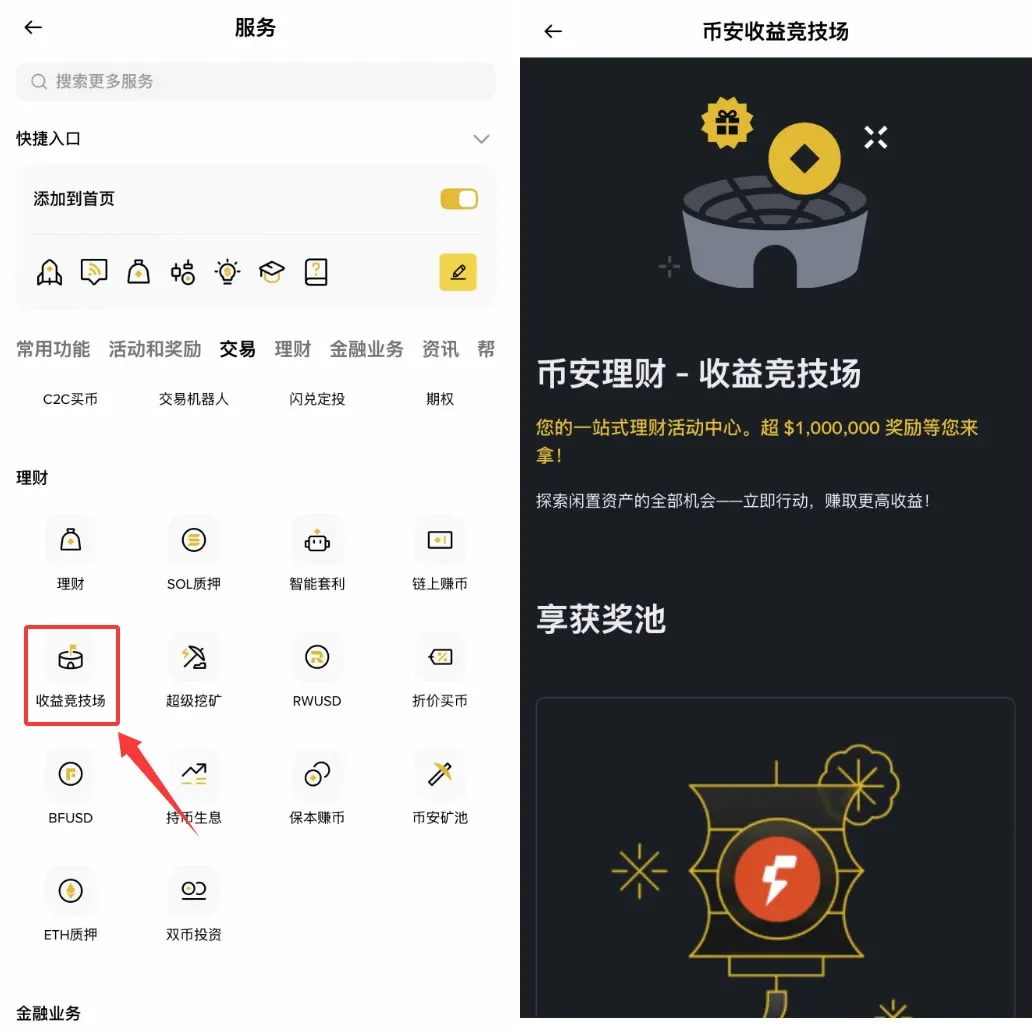
Beyond these, Binance also offers dual‑currency investments, on‑chain yield products, and other financial instruments, with maximum reward caps up to $5,888.
5. USDe Risk Matrix and Self‑Protection Strategies
Even with an elegant design, investors must acknowledge the inherent risks:
- Funding‑Rate Risk – Prolonged bearish market conditions can push funding rates negative, forcing the protocol to pay fees to keep short positions open, which may erode the reserve fund and reduce sUSDe yields.
- Custody & Counterparty Risk – The protocol relies on third‑party custodians such as Copper and Ceffu, as well as centralized exchanges. Security breaches or insolvency at any of these entities could jeopardise assets.
- Liquidity Risk – In extreme volatility, futures market depth may thin, preventing timely adjustments of hedge positions.
- Smart‑Contract Risk – As with any on‑chain protocol, code vulnerabilities are a universal concern for DeFi projects.
How Can Users Mitigate These Risks?
- Diversify holdings – Avoid concentrating all capital in a single stablecoin or product.
- Monitor protocol metrics – Regularly review Ethena’s dashboard for reserve‑fund adequacy and funding‑rate trends.
- Set prudent leverage levels – If using USDe as collateral, keep sufficient margin buffers to survive short‑term decoupling events and avoid cascading liquidations.
6. Summary and Outlook
Ethena’s USDe introduces an innovative dollar‑pegged asset that operates independently of the traditional banking system. Its delta‑neutral hedging delivers price stability while also creating distinct yield opportunities. The 2025 decoupling episode, however, underscores that no financial instrument is free of risk.
For investors, grasping the underlying hedge logic and the boundaries of risk is a prerequisite for sound asset allocation. Should you decide to explore USDe, beginning with the savings or promotional products on major platforms such as Binance (or Binance.US for U.S. users) can provide a low‑friction entry point.
*Note: When registering on Binance, using the referral code “B2345” grants extra newcomer benefits.*
This concludes the comprehensive analysis of the USDe stablecoin. For more cutting‑edge crypto news and beginner guides, stay tuned to Bitaigen’s (比特根) reports.
💡 Register on Binance with referral code B2345 for the maximum trading fee discount. See Binance complete guide.



