
 Bitaigen Research
 What you need to know first when stepping into the world of cryptocurrencies is usually not Bitcoin, but USDT. It functions like the “US dollar” of the digital financial system, and almost every token trade requires first converting fiat into USDT – essentially the essential “ticket” for on‑chain transactions.
In this article we systematically outline the concept of USDT, its technical underpinnings, and common purchasing pitfalls, and we provide a complete workflow from platform selection to asset protection. Practical examples help newcomers reduce risk when transacting on‑chain and quickly master the key points for safely acquiring USDT. If you want to dive deeper, keep reading.
4. Summary
USDT acts as a “stabilizer” in the crypto market, offering a reliable bridge between fiat and on‑chain assets. To obtain USDT safely, the core points are: choose a reputable exchange, complete identity verification, enable multi‑factor security, trade only with platform‑verified merchants, and keep transaction records properly. By following these principles you can enter the digital‑asset ecosystem smoothly while lowering risk. For a more comprehensive guide to Tether, stay tuned to Bitaigen’s upcoming articles.
1. What is the stablecoin USDT (Tether)?
USDT was launched by Tether Limited in 2014. It is a centralized, fiat‑backed stablecoin whose goal is 1 USDT ≈ 1 US dollar, providing traders with a relatively price‑stable medium of exchange and store of value.
1. Core definition
USDT (full name Tether, Chinese name “泰达币”) follows a centralized issuance model, backed by dollars and other assets held by the company, and is intended to give the crypto market a trading tool that is not subject to extreme volatility.
2. Operating mechanism
- In theory, for every USDT issued, Tether must hold an equivalent $1 in its bank accounts as reserve.
- Since 2019 the reserve structure has been upgraded to a mixed model of “US dollars + other assets + receivables”. As of 2023, publicly disclosed reserve reports show total company assets exceeding $86.3 billion.
- Holders can submit redemption requests via the official Tether website to exchange 1 USDT for 1 USD, subject to minimum limits and identity verification.
3. Main on‑chain versions (network types)
USDT is deployed on several blockchains; the versions are not interchangeable, so always confirm that the selected network matches before transferring.
| Network | Characteristics | Typical use case |
|---|---|---|
| **TRC‑20** (Tron) | Extremely low fees, fast settlement | Small‑value daily payments, smart contracts |
| **ERC‑20** (Ethereum) | Richest ecosystem, high compatibility | DeFi, NFT trading |
| **BEP‑20** (Binance Smart Chain) | Low fees, quick confirmations | Binance ecosystem, DApps |
| **Omni** (Bitcoin) | First USDT issuance chain, high security | Large‑value transfers, long‑term holding |
4. Core value and potential risks
Core value
- Price stability: Provides a hedge benchmark when the broader crypto market swings wildly.
- Abundant liquidity: Globally the highest trading volume; virtually every exchange lists USDT pairs.
- Convenient trading: Operates 24/7, enabling fast cross‑border transfers with relatively low costs.
- Bridging function: Most exchanges require users to buy USDT first before swapping to other tokens.
Potential risks
- Centralization risk: Issuance and freezing powers reside solely with Tether, exposing users to single‑point failures or regulatory pressure.
- Reserve transparency controversy: Although the company releases periodic audit‑style reports, the completeness of independent third‑party audits remains debated.
- Compliance risk: Certain jurisdictions impose restrictions or outright bans on USDT usage.
- “Black U” risk: Acquiring USDT linked to illicit activity could lead to account freezes or asset loss.
2. How to purchase USDT safely? (Step‑by‑step “nanny‑level” tutorial)
Below we use OKX as an example to demonstrate the full process from registration to completing your first USDT purchase.
1. Registration and security setup
- Download the OKX app: Install it via the official link (registration portal).
- Complete KYC: Follow the platform’s instructions to submit identity documents; after real‑name verification you can unlock deposits and trading.
- Boost account security: In “Security Settings” enable a login password, Google Authenticator or SMS verification, and any other available multi‑factor options.
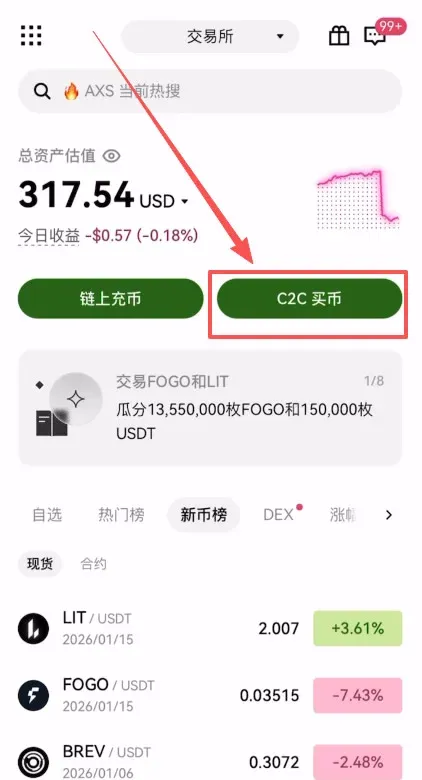
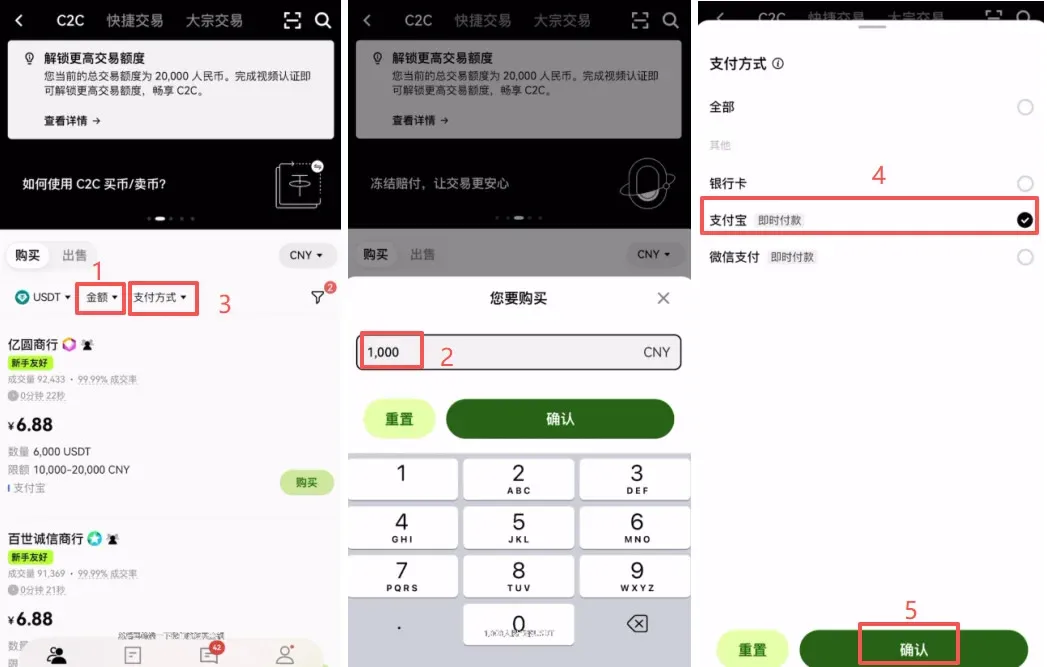
After opening the app, go to the home screen and tap “C2C Buy Crypto” to enter the peer‑to‑peer (OTC) trading page.
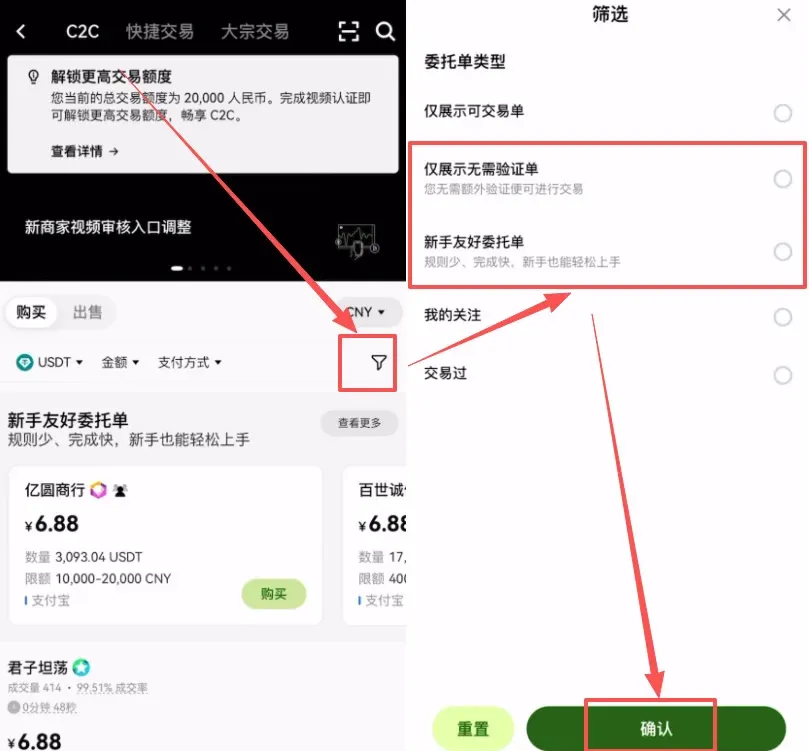
Key filter: Tap the funnel icon in the upper‑right corner to open the filter panel, check “Show only offers that do not require additional verification” to skip a second identity check; also enable “Beginner‑friendly orders” for a smoother transaction experience.
2. Set trade amount and payment method
In the filter page continue configuring:
- Amount: Enter the amount you wish to purchase in USD (e.g., $150).
- Payment channel: Choose your preferred method – PayPal, bank transfer (SEPA/SWIFT), or other supported options.
The system will automatically list merchants that meet the criteria.
3. How to pick a reliable merchant
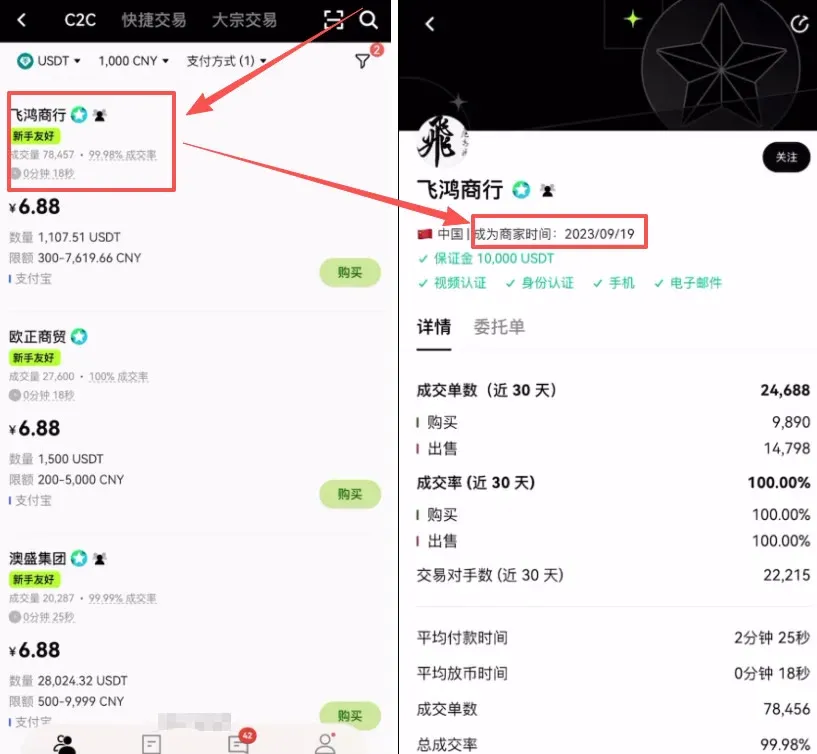
Safety outweighs price. When selecting a merchant, consider:
- Order completion rate & trade volume: Higher numbers indicate an active, trustworthy seller.
- Registration age: Click the merchant’s profile to see how long they have been on the platform; prefer merchants with over six months of activity.
- Funding source: Longer‑standing merchants usually have more stable liquidity, reducing risk.
4. Place order, pay, and confirm
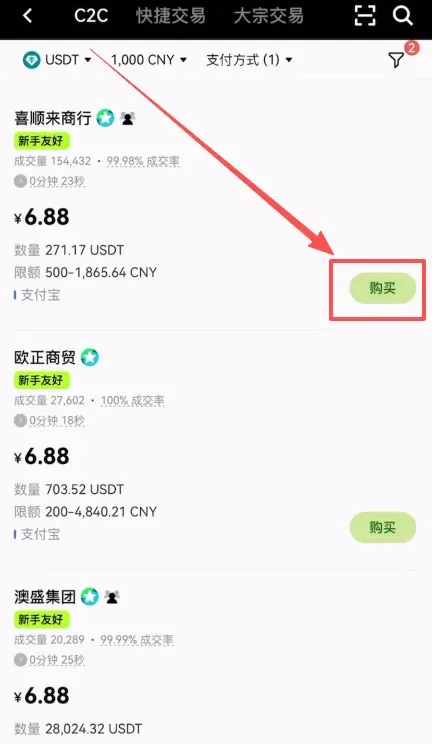
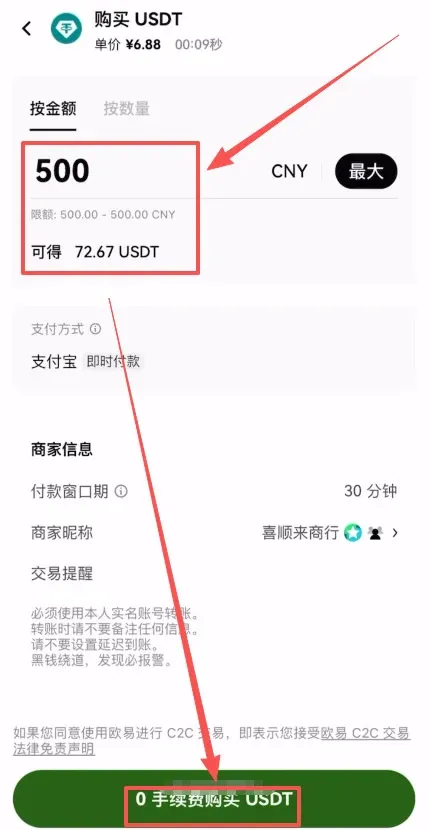
- Place order: Click “Buy” on the merchant’s card, enter the purchase amount and select “0 % fee purchase”.
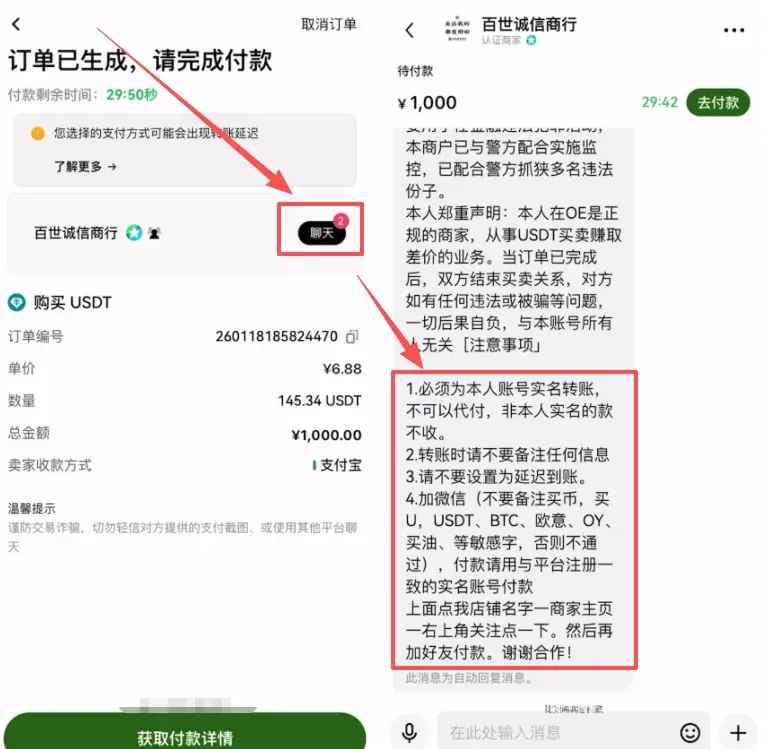
- Verify details: In the order detail page open the chat window and read the seller’s payment instructions carefully (e.g., real‑name payment required, no extra notes in the transfer memo).
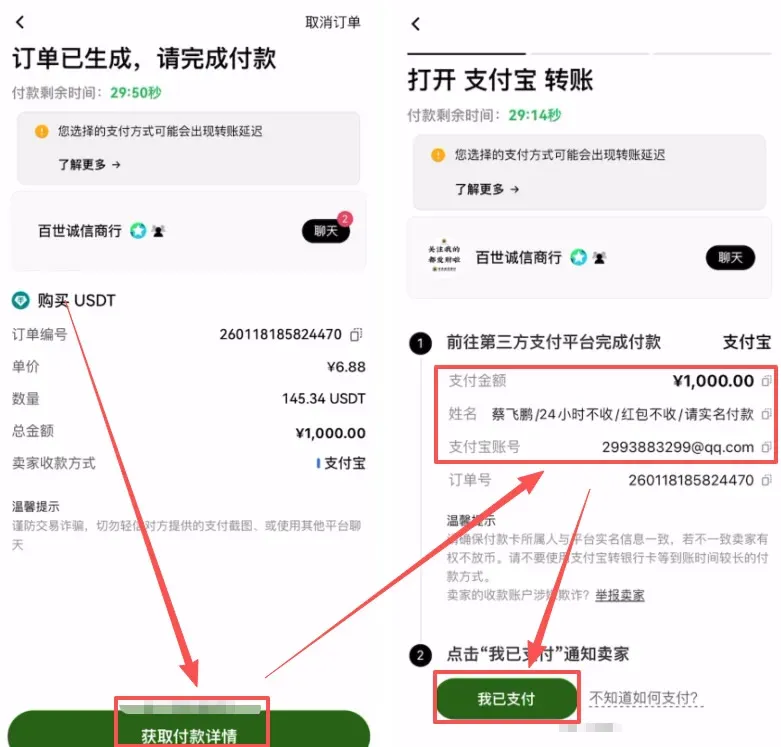
- Transfer funds: Tap “Get payment details”, copy the seller’s PayPal or bank account number. You must now leave the exchange app, switch to your chosen payment app, and complete the transfer.
- Confirm payment: After a successful transfer, immediately return to the OKX app and tap “I have paid” to notify the seller. Once the seller verifies receipt, the USDT will be released and the trade is complete.
5. Fee‑rebate promotion
If you are registering on OKX for the first time, use the official referral link (register here) to enjoy a 20 % fee rebate. Over time this rebate can noticeably lower cumulative costs; new users are encouraged to take advantage of it. *(U.S. residents should use Binance.US instead of the global Binance platform.)*
3. Ten essential “avoid‑the‑pitfalls” tips for buying USDT safely (must‑read)
- Never trade off‑platform: Conduct transactions only within the exchange’s OTC zone; the platform‑escrow protects you from “pay‑but‑no‑delivery” scams.
- Use real‑name payment methods: Transfer funds from your own verified bank account, PayPal, or similar service; never use someone else’s account to avoid frozen funds.
- Watch for abnormal quotes: In the USD market a reasonable USDT price typically ranges between $0.99–$1.01 (subject to FX fluctuations). Prices far outside this band are likely fraudulent.
- Do not click external links: Keep all communication inside the built‑in chat; reject any QR codes or URLs supplied by the merchant.
- Keep records: Save screenshots of the transfer, order details, and chat logs for at least three months for future reference.
- Limit single‑order size: Beginners should keep each purchase under $5,000 to reduce the chance of triggering bank anti‑fraud safeguards.
- Avoid “black‑U” USDT: Prefer the exchange’s “quick‑trade” area or merchants that have been verified, as their USDT sources are more trustworthy.
- Steer clear of commission‑for‑referral schemes: Any offer promising a commission for buying USDT on behalf of others is almost always a scam.
- Withdraw promptly: Do not keep large amounts of USDT on an exchange for long periods; transfer them to a personal wallet for better security.
- Stay informed on regulations: Understand the virtual‑asset rules in your jurisdiction and comply with local laws to avoid legal issues.
Related Reading
- USAT vs USDT 2026: Which Tether Stablecoin Is Right for You?
- Stablecoin Safety Analysis: USDC, USDT, EURC & USDe Compared
- TRON公链详解:低费高速USDT转账与TRX投资指南
💡 Register on Binance with referral code B2345 for the maximum trading fee discount. See Binance complete guide.



