
 Bitaigen Research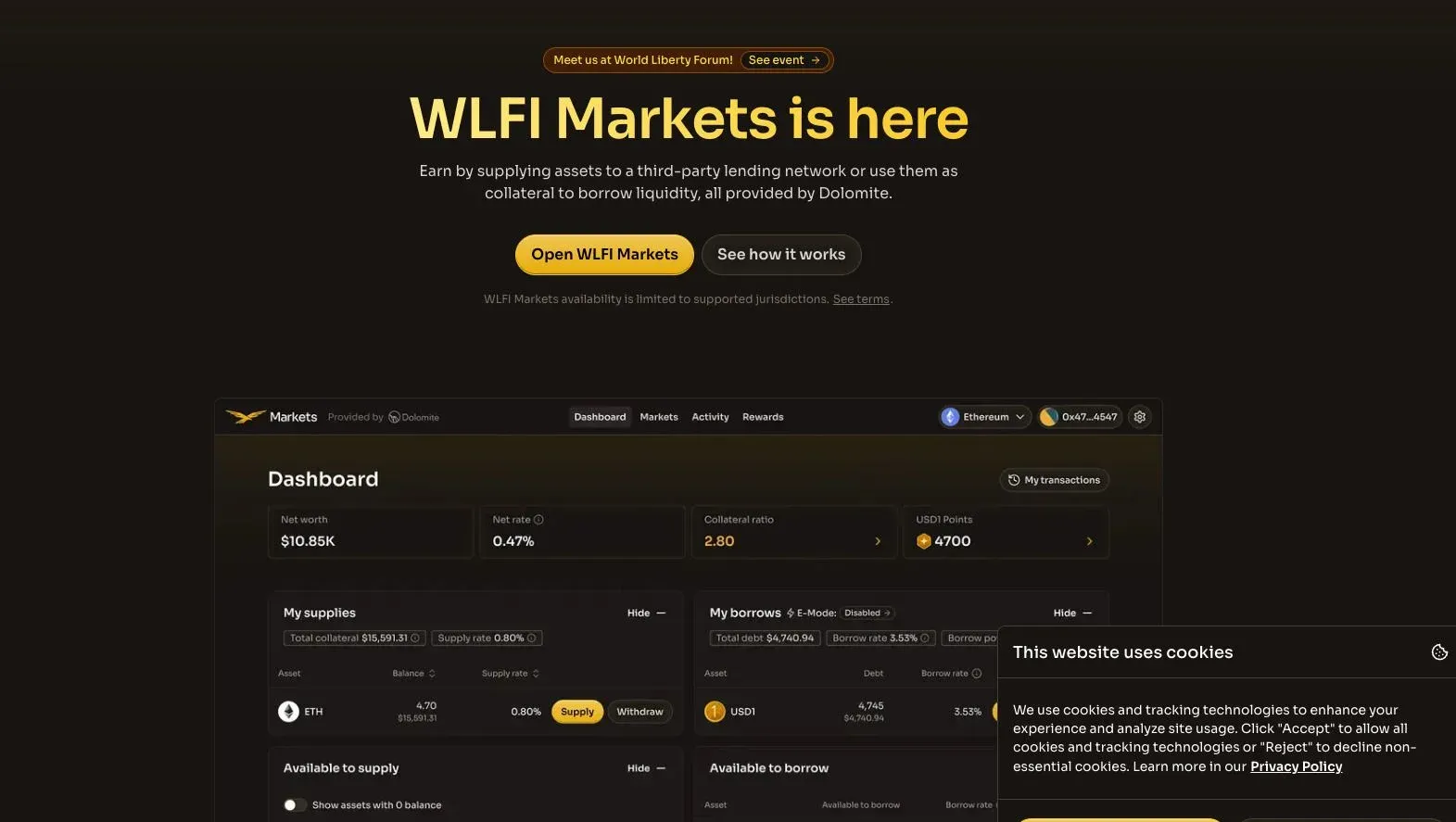
From the perspectives of technology, governance, and asset backing, we deeply dissect the design logic and ecosystem role of the WLFI token, provide acquisition routes and mid‑to‑long‑term trend analysis, and help you make a more rational judgment after understanding the full picture of the project. In addition, we compare its interconnection with traditional finance, clarifying potential risks and compliance considerations.
Project Overview — What is World Liberty Financial and How Does It Operate
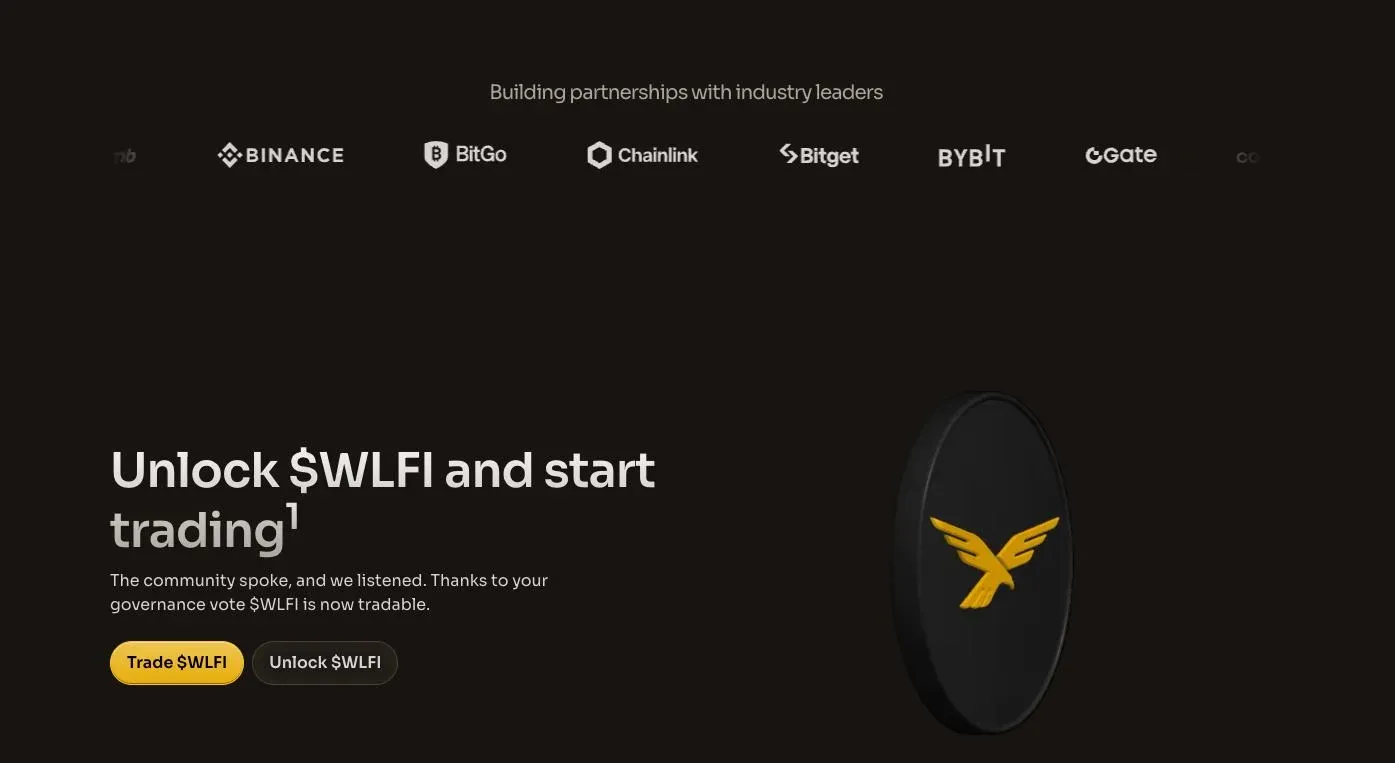
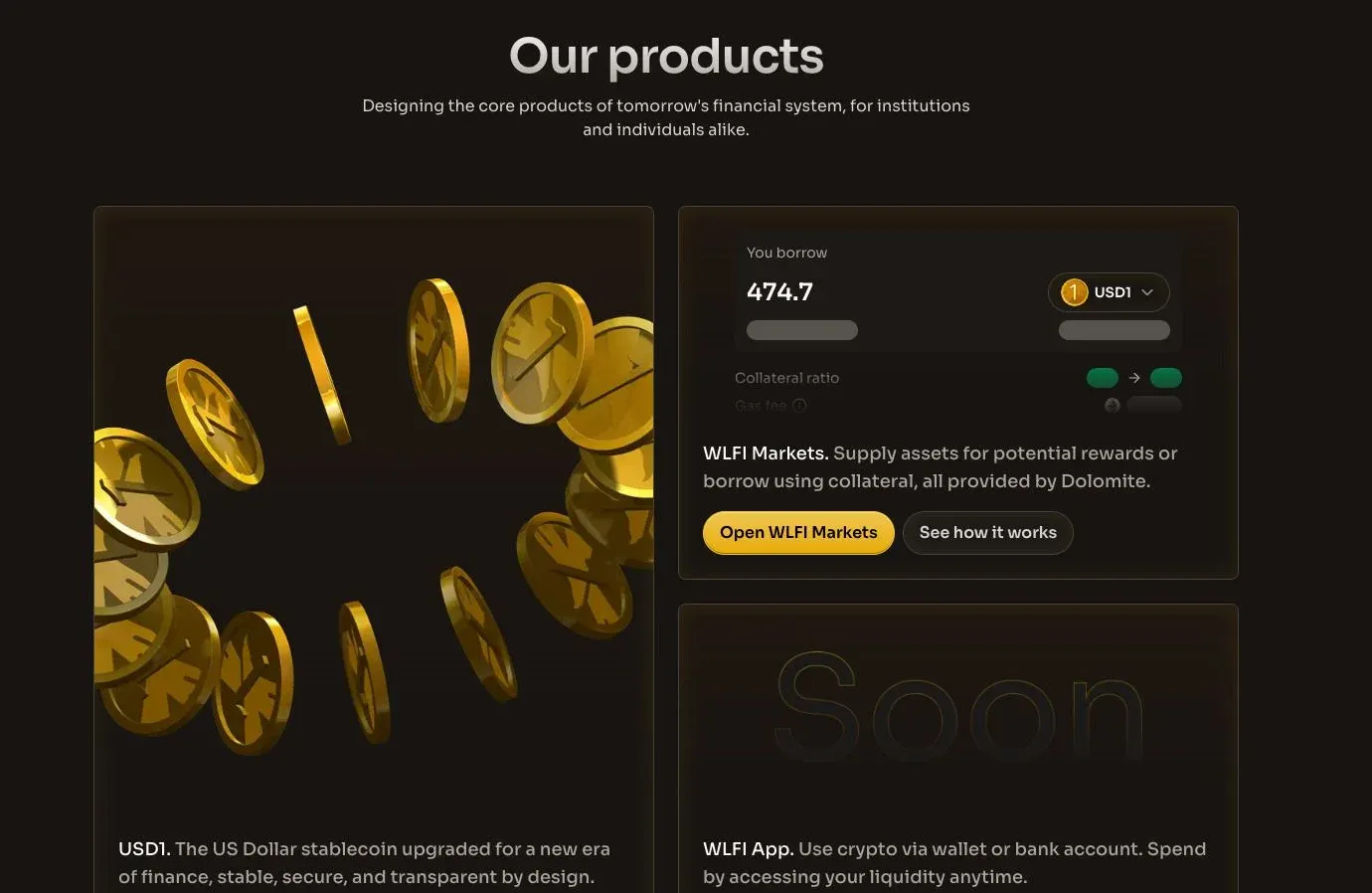
World Liberty Financial launched in 2024 and offers two core tokens: USD1, a dollar‑pegged stablecoin fully backed by U.S. short‑term Treasury securities, bank deposits and other cash‑equivalent assets, and WLFI, a governance token for the protocol. The protocol is developed by World Liberty Financial, Inc.; the parent company WLF Holdco LLC receives net revenue, and DT Marks DEFI LLC holds a large allocation of WLFI. The founding team includes Zachary Folkman, Chase Herro, Alex Witkoff, Zach Witkoff, and members of the Trump family—Donald Trump and his relatives can profit from token sales and protocol earnings.
The system runs on the Ethereum mainnet and expands USD1 and WLFI to other ecosystems through multi‑chain deployment (BNB Chain, Solana). USD1’s reserves are managed by regulated custodians such as BitGo, ensuring transparency of fiat backing. WLFI holders possess voting rights on protocol upgrades, risk parameters, incentive schemes, and treasury allocations.
Key Features
- USD1 fiat‑backed stablecoin: Fully reserved, 1:1 anchored to the U.S. dollar, backed by short‑term U.S. Treasuries, bank deposits and other cash equivalents, designed for cross‑chain use.
- WLFI governance token: Grants holders voting power over protocol upgrades, risk parameters, incentive structures, and treasury management; it is a utility/governance asset and does not directly provide profit or equity.
- Deflationary buy‑back and burn: A portion of protocol revenue is used to repurchase and burn WLFI; more than 53 million tokens have been destroyed to date, aiming to enhance long‑term value.
- Massive on‑chain treasury: Including protocol treasury and strategic holders, controlling tens of billions of WLFI (e.g., ALT5 Sigma holds roughly 7.28 billion), used for liquidity provision and ecosystem incentives.
- Multi‑chain deployment: WLFI and USD1 are usable on Ethereum, BNB Chain, and Solana, increasing accessibility for users across ecosystems while maintaining unified governance.
- Political brand association: Direct collaboration with the Trump family gives the project a unique market narrative that attracts attention but may also trigger regulatory scrutiny.
Token Economics — The Role of WLFI
WLFI’s maximum supply is fixed at 100 billion tokens, of which approximately 27.24 billion are in circulation; the remainder is locked or allocated to the treasury and strategic holders. At the current trading price of $0.163‑$0.17, the circulating market cap is roughly $4.4‑$4.5 billion, and the fully‑diluted valuation (FDV) approaches $16.4 billion, indicating potential supply pressure from future unlocks. The treasury holds about 7.28‑7.3 billion WLFI (≈7‑8 % of total supply), available for liquidity, buy‑backs, and ecosystem programs.
WLFI’s core function is governance: token holders can propose and vote on protocol parameters, integration targets, and treasury distribution on the governance forum. The whitepaper explicitly states that WLFI does not provide dividends nor any claim on the issuer’s assets; its value derives from market expectations of protocol success, buy‑back plans, and governance influence.
Initial token distribution includes roughly 25 % sold to the public (about 20 % of total supply at an FDV of ≈$1.5 billion), about 22.5 % (22.5 billion tokens) allocated to DT Marks DEFI LLC, and another ~20 % reserved for the treasury. Early investors’ unlock schedule begins with a one‑time release of ~5 % (of their holdings, representing 20 % of the total allocation), with subsequent releases governed by proposals. This structure means that while buy‑backs exert a deflationary effect, large‑scale internal unlocks could still generate significant selling pressure.
Market Position and Competitive Advantages
World Liberty Financial competes in the DeFi stablecoin space against other large governance tokens. Its differentiation lies in:
- Deep ties to the Trump family; after token sales, affiliated entities receive roughly 75 % of net profits and share stablecoin earnings.
- A dual‑token model (USD1 + WLFI) that explicitly claims to expand the dollar’s global influence through stablecoin usage.
- A sizable treasury and buy‑back‑burn mechanism that provides long‑term value support for WLFI and collateral for external treasuries (e.g., ALT5).
Although its initial market cap placed it within the top 40 and its daily trading volume approaches $100 million, the project still faces competition from more mature DeFi governance tokens and stablecoin projects with less political baggage. If protocol revenue growth fails to justify the high valuation, the sustainability of operations could be challenged.
Main Risks
- Regulatory and political risk: Close association with the Trump family may invite stricter regulatory scrutiny, potentially affecting business operations or market access.
- Token unlock and FDV overhang: Only about 27 % of supply is circulating; large future unlocks of locked or internally held tokens could create notable sell‑off pressure.
- Economic benefit concentration: Trump‑linked entities and WLF Holdco LLC capture most net revenue, which may misalign incentives for small‑scale holders.
- Stablecoin reserve risk: USD1 relies on regulated custodians’ Treasury and deposit reserves; any decoupling or regulatory intervention could erode trust.
- Smart‑contract and multi‑chain risk: Cross‑chain deployment and multi‑platform integration increase the likelihood of contract bugs, bridge vulnerabilities, and integration errors.
- Market‑cycle risk: WLFI’s valuation is highly sensitive to overall DeFi sentiment, interest‑rate environments, and risk appetite; prolonged bear markets or specific shocks could depress valuation multiples.
Notable Adoption and Ecosystem Metrics
- Market data: Trading price around $0.16‑$0.17, market cap $4.4‑$4.5 billion, FDV ≈$16.4 billion, 24‑hour volume ≈$100 million, ranking within the top 40.
- Supply structure: Circulating ≈27 billion WLFI versus locked/unlocked allocations, treasury holding ≈7.28 billion and its activity level.
- USD1 key metrics: Total supply, reserve size, and usage on Ethereum, BNB Chain, Solana, including settlement volume and institutional adoption statements.
- Governance activity: Number of voters, proposals, and quorum statistics on the governance forum, reflecting the degree of decentralization.
- Partnerships and integrations: ALT5 Sigma’s treasury strategy, connections with major lending protocols, and listings on leading exchanges.
Monitoring these data points helps assess whether WLFI’s valuation is driven by genuine business revenue and adoption or primarily by speculation and political branding.
WLFI Price Analysis and 2026‑2030 Forecast
Current WLFI trades between $0.163‑$0.17, with a 24‑hour range of roughly $0.156‑$0.167, and daily volume between $97 million and $220 million. The all‑time high of about $0.26 was reached in September 2025; the present price is therefore discounted 35‑50 % from that peak. Recent price action shows double‑digit fluctuations, reflecting the impact of project news and overall market sentiment.
Views on WLFI are polarized: supporters highlight the massive treasury, USD1 design, and political brand exposure; critics worry about the high FDV, concentrated earnings, and political controversy. Macro factors (interest rates, demand for dollar‑stablecoins, DeFi governance‑token preferences) together with the project’s own revenue growth and buy‑back execution will directly influence future valuation.
Scenario Assumptions
Forecasts revolve around three key variables:
- Adoption rate of USD1 and the fee revenue it generates
- WLFI governance participation and the execution strength of treasury strategies
- Regulatory and political developments in the United States and other jurisdictions
Conservative scenario: USD1 adoption progresses slowly, regulatory pressure intensifies, internal holder unlocks trigger sell‑offs, and buy‑backs only partially offset dilution, leading to a valuation below the current FDV.
Base‑case scenario: USD1 captures a respectable but non‑dominant share of the dollar‑stablecoin market, governance remains active, buy‑backs and burns steadily reduce circulating supply, and the regulatory environment, while complex, stays manageable.
Optimistic scenario: USD1 becomes a leading multi‑chain dollar stablecoin, governance is widely used, protocol revenue continuously climbs and strong buy‑backs compress supply, and the political brand boosts visibility without provoking major regulatory barriers.
These scenarios are illustrative; actual outcomes may shift rapidly due to legal, technical, or political events.
Forecast Table (Illustrative; Not Financial Advice)
Starting from the current price of roughly $0.16‑$0.17 and a circulating market cap of $4.4‑$4.5 billion, the following ranges show possible price outcomes under each scenario:
Year | Conservative | Base‑case | Optimistic
--- | --- | --- | ---
2026 | $0.08 – $0.22 | $0.15 – $0.35 | $0.25 – $0.55
2027 | $0.06 – $0.24 | $0.18 – $0.45 | $0.30 – $0.70
2028 | $0.05 – $0.26 | $0.20 – $0.55 | $0.35 – $0.85
2029 | $0.05 – $0.28 | $0.22 – $0.60 | $0.40 – $1.00
2030 | $0.05 – $0.30 | $0.25 – $0.70 | $0.45 – $1.20
If regulatory or political risks dominate, trading multiples could shrink; if USD1 and the protocol achieve large‑scale adoption and buy‑backs effectively offset supply expansion, prices could rise markedly.
Drivers Explained
- Conservative: Regulatory uncertainty, political backlash, or competition from other stablecoins curb USD1 growth; internal holder unlocks outpace market demand, keeping WLFI in its current or lower range.
- Base‑case: USD1 becomes a widely used dollar stablecoin, generating steady fee income that funds ongoing buy‑backs; governance participation improves, and despite regulatory headwinds, overall valuation climbs in line with revenue and treasury growth.
- Optimistic: World Liberty Financial achieves massive institutional adoption of USD1, on‑chain lending, and treasury products; WLFI becomes a core governance asset in the DeFi ecosystem. The political brand raises exposure and enables strategic partnerships, strong buy‑backs compress circulating supply, and price ranges shift upward.
Where Can You Buy WLFI?
WLFI is listed on 221 cryptocurrency exchanges. The most active platforms include Binance, OKX, Bybit, Gate.io, and Bitget. Below are six recommended platforms with basic information and usage guidance.
Note for U.S. users: Binance.com is not available in the United States. U.S. residents should use Binance.US or another regulated U.S. exchange to access similar services.
1. Binance (Global)
Binance is a leading exchange with over 250 million users worldwide, offering spot, margin, futures and other trading modes, with leverage up to 125×. The platform serves more than 180 countries and regions, lists over 600 digital assets, and consistently ranks among the highest in daily trading volume.
- Official registration link: <https://accounts.binance.com/register?ref=B2345>
- Official download page: <https://www.bitaigen.com/binance/download>
2. OKX
Founded in 2013 and headquartered in Singapore, OKX provides spot, derivatives, Web3 wallet, C2C and other full‑chain products. The platform employs multi‑signature, offline cold‑wallet security, serves roughly 50 million users, and holds regulatory licenses in several jurisdictions.
- Official registration link: <https://www.okx.com/zh-hans/join/B2345>
- Official download page: <https://www.bitaigen.com/binance/download>
3. Bybit
Bybit was created by Ben Zhou in 2018 and is based in Dubai. It supports spot trading with up to 10× leverage and perpetual contracts with up to 100× leverage. The exchange lists more than 1,650 digital assets, offers cold storage and two‑factor authentication, and provides copy‑trading, staking and lending features.
- Official registration link: <https://accounts.binance.com/register?ref=B2345>
- Official download page: <https://www.bitaigen.com/binance/download>
4. HTX (formerly Huobi)
HTX, originally founded as Huobi in 2013 and later rebranded, has accumulated over 47 million registered users globally, with daily trading volume exceeding $1 billion. The platform offers spot, derivatives, staking and other diversified services, continuously investing in security and compliance.
- Official registration link: <https://accounts.binance.com/register?ref=B2345>
- Official download page: <https://www.bitaigen.com/binance/download>
5. Gate.io
Gate.io was launched in 2013, supporting more than 3,400 crypto assets. It provides margin trading with up to 20× leverage, futures contracts with up to 100× leverage, as well as staking and lending services. Daily trading volume exceeds $13 billion, and the user base spans over 20 million worldwide.
- Official registration link: <https://www.gate.io/register?ref=YOURCODE> (replace with your referral code)
- Official download page: <https://www.gate.io/download>
6. Bitget
Bitget is a global platform focused on digital‑asset derivatives. Its founding team has backgrounds in traditional finance and blockchain. The exchange offers spot, futures, and copy‑trading features, aiming to provide users with a secure and innovative trading experience.
- Official registration link: <https://www.bitget.org/zh-CN/referral/register?clacCode=NTBZAG9J>
- Official download page: <https://www.bitget.com/download>
How to Purchase WLFI
The following walkthrough uses OKX as an example, illustrating the complete process from registration to trade execution.
- Create an OKX account
Use the link below to register and enjoy a permanent 20 % fee discount.
- Registration link: <https://www.okx.com/zh-hans/join/B2345>
- App download: <https://www.bitaigen.com/binance/download>
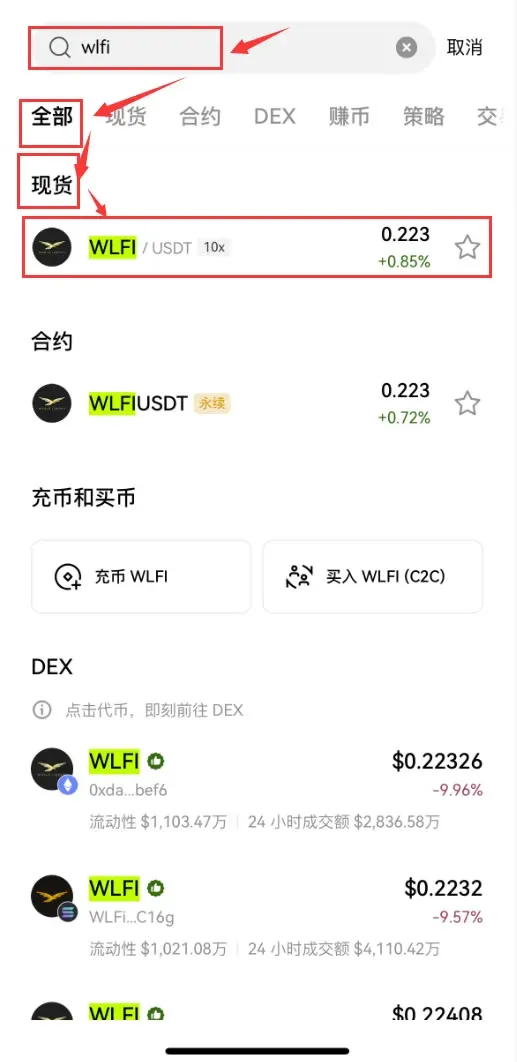
- Open the OKX app and go to the “Market” page’s search bar
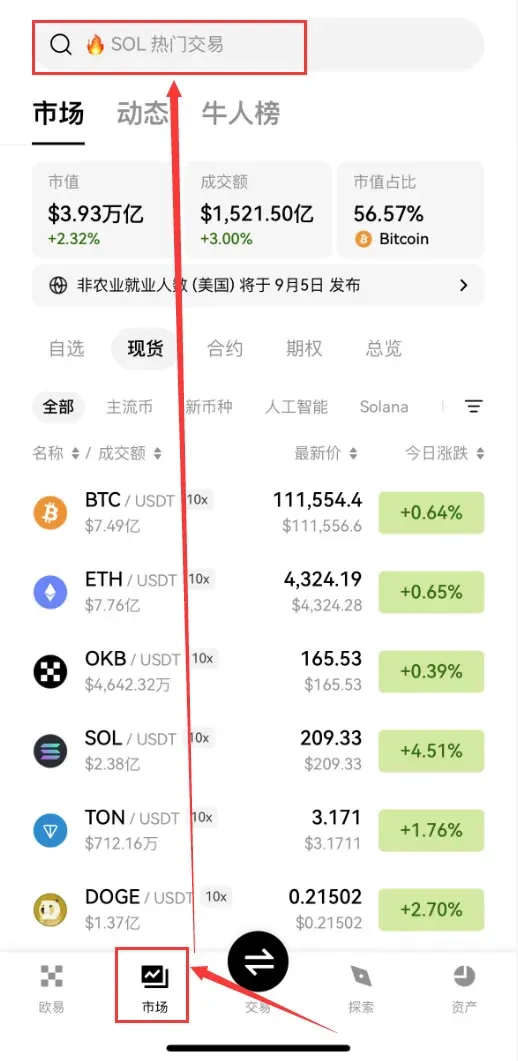
- Type “WLFI” and select the “WLFI/USDT” spot pair from the dropdown
- Choose an appropriate buy price and click “Trade”
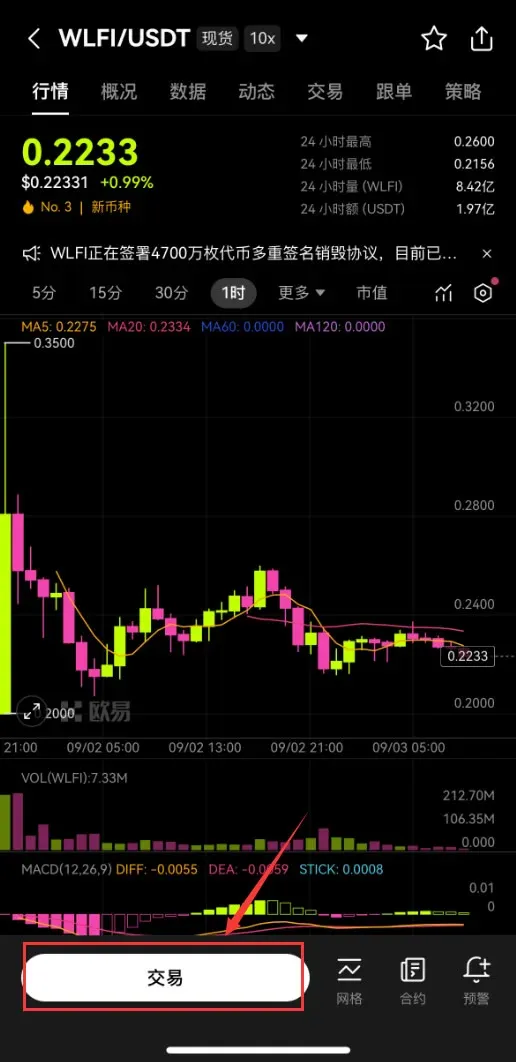
- **In the pop‑up order window, select “Limit Order”, fill in
Related Reading
- WLFI Buy‑Back Impact on DeFi Supply, Demand & Sentiment
- WLFI Coin 2026 Price Prediction: Whale Bets Millions
- FLOKI 2025‑2030 Price Forecast & Investment Outlook
💡 Register on Binance with referral code B2345 for the maximum trading fee discount. See Binance complete guide.



