
 Bitaigen Research
 How to Choose a Crypto Debit Card? A Comparison of Six Crypto‑Linked Cards: Spending, Rewards, Limits, and User Experience
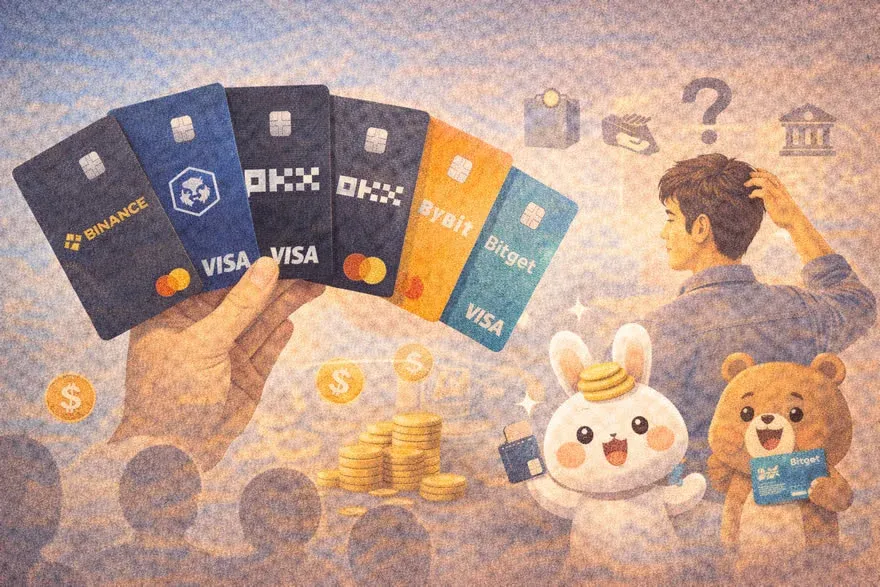
In this guide we have compiled the most widely‑available crypto debit cards on the market, comparing them across dimensions such as spending experience, cashback mechanisms, and usage restrictions. Real‑world feedback from testers is also included, so readers can quickly determine which card best matches their personal needs. Continue reading to learn each card’s strengths, potential drawbacks, and how they fit into a global financial context.
Special Feature
First, let us introduce GGBear
GGBear:
Entered the crypto space in 2021 through early NFT projects, then turned to on‑chain technology and non‑custodial solutions. His research focuses on DeFi, Real‑World Asset tokenisation (RWA), and the practical implementation of decentralised finance cards.
How did you first encounter a U Card?
GGBear:
The earliest card I heard about was the metal card launched by Crypto.com. At the time the only requirement was to stake roughly 300 USDT (or its equivalent in CRO) on the exchange. It felt futuristic – the assets sitting in my wallet could be used directly for point‑of‑sale purchases without first converting the crypto into fiat.
Why do you consider a U Card a must‑have tool?
GGBear:
- Deep‑holder convenience: I prefer not to move funds out of my exchange or wallet frequently. Using the USDT that is already on‑chain to pay for everyday goods saves multiple conversion fees.
- Web3 professional: Salary paid in crypto can be spent or withdrawn instantly, bypassing the slow and paperwork‑heavy processes of traditional banks.
- Tax and liquidity flexibility: When spending abroad, the outflow is not counted as taxable income in many jurisdictions, making tax reporting more flexible compared with wiring a large sum back to a local bank account.
Cards Tested So Far
Below are six crypto‑linked cards that I and fellow tester Leo have used. They are grouped into two categories: cards issued by centralized exchanges and cards issued by on‑chain, non‑custodial protocols.
1. Cards Issued by Centralised Exchanges
| Card | Main Advantages | Costs to Watch |
|------|----------------|----------------|
| Crypto.com Card | High compliance, low barrier for a metal card (≈ 15,000 NTD worth of CRO) | Uses a “double‑layer” FX conversion (USDT → SGD → TWD), making the process a bit cumbersome |
| Bybit Card | 10 % cash‑back in the first month (capped at USD 100), then a baseline 2 % reward | Points‑to‑cash conversion is not intuitive; higher rewards require maintaining a certain spend level |
| Pionex Card | Fast application, supports both VISA and Mastercard; funds earn 5 % interest while idle | A 1 % card‑usage fee cancels out the 1 % cashback, leaving only the underlying FX spread as a net loss (“negative reward”) |
2. Cards Issued by On‑Chain, Non‑Custodial Protocols
| Card | Main Advantages | Costs to Watch |
|------|----------------|----------------|
| Avalanche Card | No card‑issuance fee, no shipping fee, and settlement incurs almost no spread (sometimes even better than market rates) | Still in Beta; no cash‑back or introductory promotions yet |
| Bitget Wallet Card | All fiat‑to‑crypto conversion fees incurred during a purchase are returned in USDC | Currently only a virtual card is offered; no physical card. Funds can be spent but not withdrawn from the card balance |
| ether.fi Cash Card | Standard card gives 3 % cash‑back; assets are automatically routed into DeFi to generate yield; the MEXC‑co‑branded version tops out at 4 % | English‑only UI, web‑only (no Android app yet); a physical card requires a 40 USDT deposit |
Key Comparison Points for the Six Crypto Debit Cards
| Card | Issuance Model | Highlights | Drawbacks / Costs |
|------|----------------|------------|-------------------|
| Crypto.com Card | Centralised exchange | High compliance, easy metal‑card acquisition | Double‑layer FX conversion makes fees and steps more complex |
| Bybit Card | Centralised exchange | 10 % high‑return cash‑back for the first month | Points conversion is opaque; higher cash‑back only after meeting spend thresholds |
| Pionex Card | Centralised exchange | Quick onboarding, VISA/Mastercard support, 5 % idle‑balance interest | 1 % transaction fee offsets 1 % cashback, plus residual FX spread |
| Avalanche Card | On‑chain self‑custody | No issuance fee, virtually zero spread | Beta version, no cash‑back or newcomer incentives |
| Bitget Wallet Card | On‑chain self‑custody | All transaction fees reimbursed in USDC | No physical card; stored value can be spent but not withdrawn |
| ether.fi Cash Card | On‑chain self‑custody | 3 %–4 % high cash‑back, assets auto‑deployed to DeFi for yield | English‑only, web‑only, physical card requires a 40 USDT security deposit |
Real‑World Experience: Which Cards Earn the Highest Recommendation?
- First Place: ether.fi Cash Card
Both GGBear and Leo gave this card a 4.5 / 5 rating. It is non‑custodial, requires no large stake to unlock a 3 %–4 % cash‑back, and the entry barrier is low while the benefit package is rich.
- Second Place (personal preference)
- GGBear leans toward the Avalanche Card because it completely waives issuance fees and eliminates spread, aligning with his emphasis on self‑custody security.
- Leo recommends the Pionex Card, calling it the “most straightforward” starter card. It can even be used without any purchases – simply deposit crypto into the card and earn a 5 % interest rate, giving a hybrid savings‑plus‑spending experience.
Extra Costs When Spending Abroad and Common Decline Scenarios
Feedback from GGBear:
Except for the Avalanche Card and the Bitget Wallet Card, all other cards generate some overseas processing fee or FX spread when used for cross‑border payments. In practice, the following situations tend to trigger a decline:
- Paying taxes or utility bills to Taiwanese government agencies – these only accept locally‑issued bank credit cards.
- Payments at the four major convenience‑store chains or via LINE Pay – most only accept cards issued by domestic banks; a U Card linked to LINE Pay will be rejected. The workaround is to add the card to Apple Pay or Google Pay and complete the transaction through those mobile‑wallet channels.
Starter‑Card Advice for New Users
- GGBear’s tip: Start with the ether.fi Cash Card because of its high cash‑back rate and the fact that it does not demand a large stake. By contrast, the Crypto.com Card’s entry threshold and cash‑back advantage are modest, so it can be postponed.
- Leo’s tip: Choose the Pionex Card as the first card. Its interface is intuitive, no on‑chain interaction is required, and the 5 % idle‑balance interest lets newcomers quickly feel the benefit of a crypto debit card. On‑chain, self‑custodial cards involve private keys, seed phrases, and gas fees; if you are unfamiliar with these concepts, the learning curve can feel like “jumping into a high‑level raid” and may lead to mistakes.
Closing Remarks and Risk Disclaimer
- Custodial cards (exchange‑issued): Keep an eye on the issuing platform’s operational health, whether it maintains a 100 % reserve, and any possible withdrawal limits or insolvency risk.
- Non‑custodial cards (on‑chain protocols): Although you hold the private keys, smart‑contract vulnerabilities still exist. Verify that the contract code is open‑source and that there are no admin privileges that allow the project team to alter the contract at will.
Important note: Crypto‑related gains may be taxable in your jurisdiction. Please consult a local tax professional to understand your reporting obligations.
- Before using any financial card, read the official fee schedule and terms of service carefully to avoid unexpected charges caused by overlooked details.
This article constitutes a full compilation of “How to Choose a Crypto Debit Card? Six Crypto‑Linked Cards Compared: Spending, Rewards, Limits, and User Experience.” For more granular comparison tables and step‑by‑step testing tutorials, follow Bitaigen (比特根) for future posts.
💡 Register on Binance with referral code B2345 for the maximum trading fee discount. See Binance complete guide.



