 Bitaigen Research
 We systematically analyze the core concepts, technical principles, and ecosystem design of the idOS ($IDOS) token in this article, emphasizing its practical functions in data security, staking incentives, and governance. We also outline the token distribution mechanism and future roadmap to help readers interested in decentralized identity networks quickly grasp the big picture. Continue reading for detailed information.
$IDOS Token Overview
Basic Information
- Token Name: idOS Token
- Ticker: $IDOS
- Type: Utility token
- Total Supply: 1,000,000,000 $IDOS
- Contract Address: To be announced
Main Functions
- Network Security & Staking: Holding and staking $IDOS allows participants to take part in network security incentives and receive corresponding rewards.
- Data Access Fees: Applications must pay $IDOS when reading or writing user data, creating a data buy‑back and burn mechanism.
- Community Incentives: Airdrops, referrals, and early‑user rewards are all distributed in $IDOS.
- Governance (future phase): Token holders will be able to vote on network parameters, the ecosystem fund, and development direction.
- Ecosystem Expansion: Supports partners, marketing initiatives, and broad adoption of the idOS network.
Listing & Liquidity
- Listing Date: To be determined
- Confirmed Centralized Exchanges: To be determined
- Pre‑market Reference Price (Whale Market): To be determined
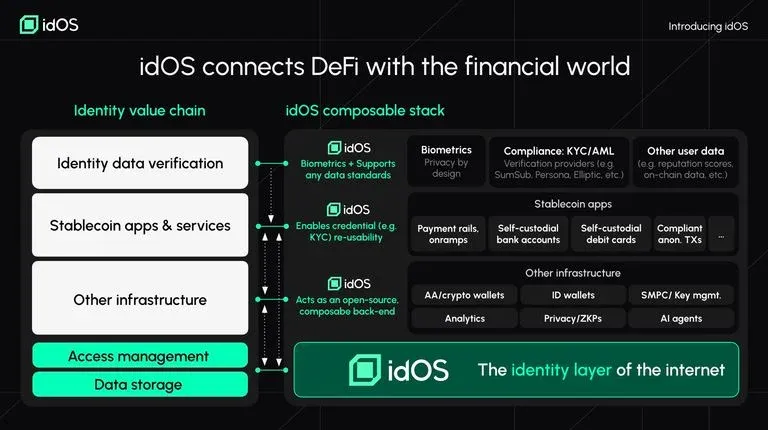
Token Economics & Allocation
| Category | Share |
|---|---|
| Community | 41.3% |
| Team & Advisors | 10.9% |
| Partner Development | 7.6% |
| Contributors | 10.4% |
| Risk/Angel Investors | 8.1% |
| Listing & Liquidity Reserve | 9.5% |
| Treasury | 12.2% |
Funding Overview
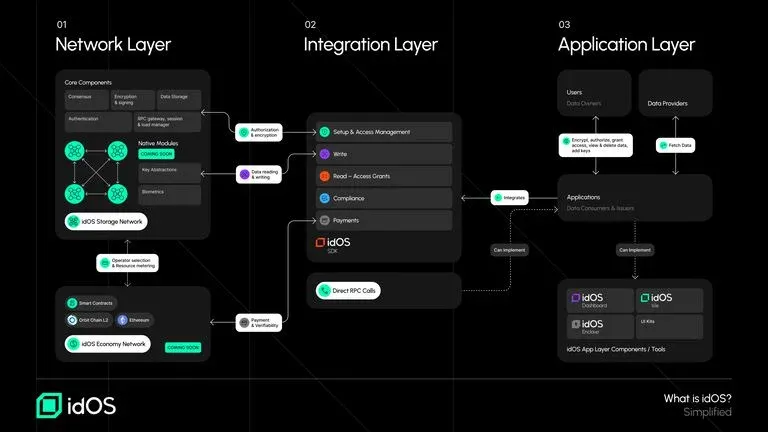
idOS has raised a cumulative $4.5 million USD from institutions such as Fabric Ventures, Circle, the Arbitrum Foundation, Ripple, and others.
Core Concepts of idOS
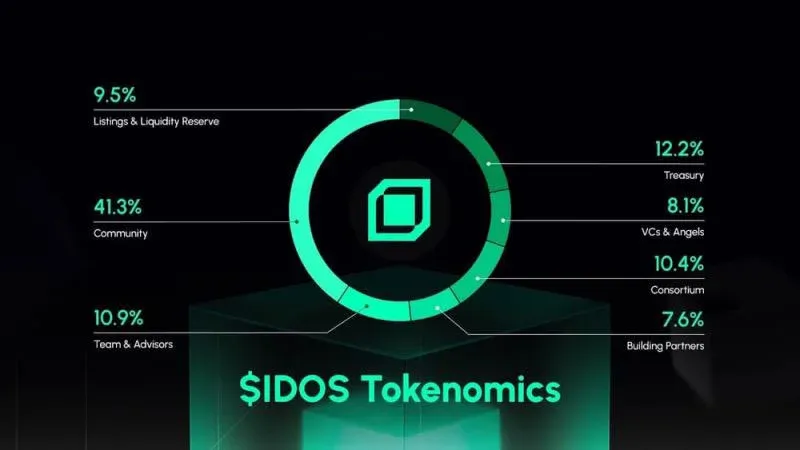
idOS aims to give users a decentralized, portable, and self‑governed identity asset. In a Web3 environment, a user’s KYC information, personal profile, and other data are no longer locked to a single platform; instead, they are stored in encrypted form on a distributed network, and the user can authorize cross‑chain or cross‑application access at will.
Key Pain Points Addressed
- Data Silos – Traditional centralized services trap information, making reuse across different contexts difficult.
- Repeated KYC – Multiple identity verifications raise costs and increase risk.
- Lack of Data Ownership – Users may own assets but do not have full control over their personal data.
- Missing Standards – Finance, on‑chain “new banks,” and similar sectors lack a unified identity verification framework.
- Privacy‑Compliance‑Decentralization Tension – idOS provides a technical framework that balances all three.
By solving these issues, identity information can escape closed platforms and flow freely throughout the Web3 ecosystem.
How It Works
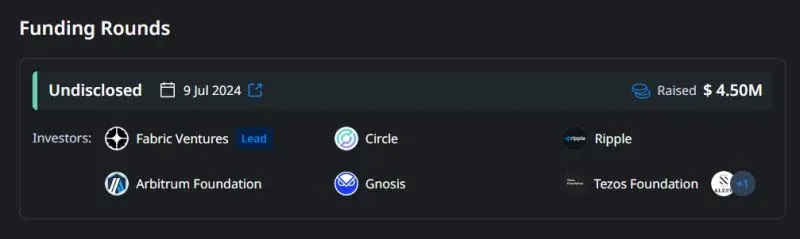
idOS combines encrypted storage, decentralized access control, and an on‑chain data economics layer to deliver transparent and secure identity management. A typical workflow looks like this:
- The user writes encrypted personal data and KYC records to the idOS storage network.
- An application requests only the specific fields it needs; the system presents a permission request to the user.
- The user independently approves or denies the request; once authorized, the application can retrieve only the encrypted data slice that was granted.
- The raw information always remains off‑chain; external parties cannot read or reconstruct it directly.
This mechanism guarantees that sensitive information never leaves the network in an unencrypted state and eliminates the risk of external reconstruction.
Architectural Layers
- Storage Network (L1) – Stores users’ encrypted identity data.
- Economic Network (Arbitration Track) – Records on‑chain data usage, provides statistics, and distributes incentives.
- SDK – Supplies developers with easy‑to‑integrate identity and permission tools.
System Components & Technical Implementation
Storage Network Nodes
Core nodes run on Kwil (a distributed database platform) with idOS‑specific extensions. Nodes follow a unified protocol to ensure data consistency and are managed by the idOS Association through AWS VPC peering or WireGuard/Tailscale connections.
KGW (Kwil Gateway)
A load‑balancing and RPC gateway that sits in front of the nodes, storing access credentials (cookies) so users do not need to sign each individual read request.
Future Evolution
- Introduce TSS‑MPC encryption and decentralized biometric authentication.
- Implement on‑chain data‑economics metering via smart contracts, paired with the SDK to provide usage‑based billing for applications.
- The permission system will gradually shift toward a permissionless, sharded scaling model once regulatory requirements are satisfied.
Key Advantages
- End‑to‑End Encryption – Prevents unauthorized access and complies with global privacy regulations.
- SDK Integration – Simplifies credential onboarding and sharing for applications.
- Cross‑Chain Expansion – Supports solutions like Arbitrum Orbit, accelerating stable‑coin use‑cases.
Participant Roles
| Role | Description |
|---|---|
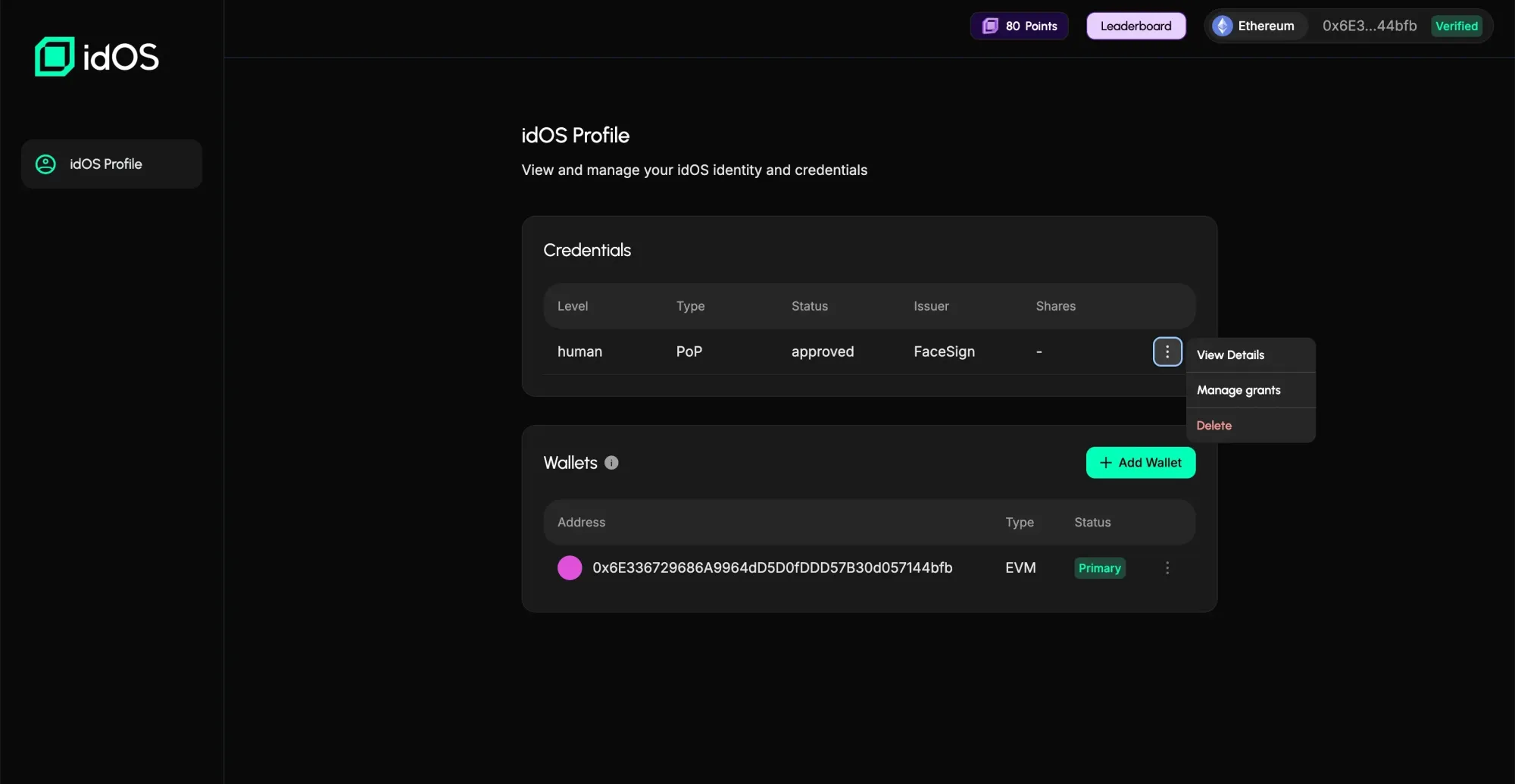
| **Data Owner (User)** | Authenticates via an EVM‑compatible or NEAR‑compatible wallet and uses the idOS Enclave to encrypt/decrypt data locally. |
| **Issuing Institution** | Entities authorized to issue digital credentials, such as banks, insurers, universities, hospitals, or government agencies. |
| **Data Consumer** | Applications or services (e.g., DeFi platforms, digital banks) that may access credentials only after obtaining user consent. |
| **Node Operator** | Maintains the storage network, provides data access, and earns incentives through staking. |
| **Regulatory Authority** | Provides the legal framework for data protection; idOS aims to meet compliance requirements across jurisdictions. |
| **Compliance Officer** | Oversees compliance between issuing institutions and consumers, safeguarding user rights. |
| **idOS Alliance** | A coalition of blockchain projects that co‑build and operate idOS, supply seed funding, and participate in governance. |
Design Highlights
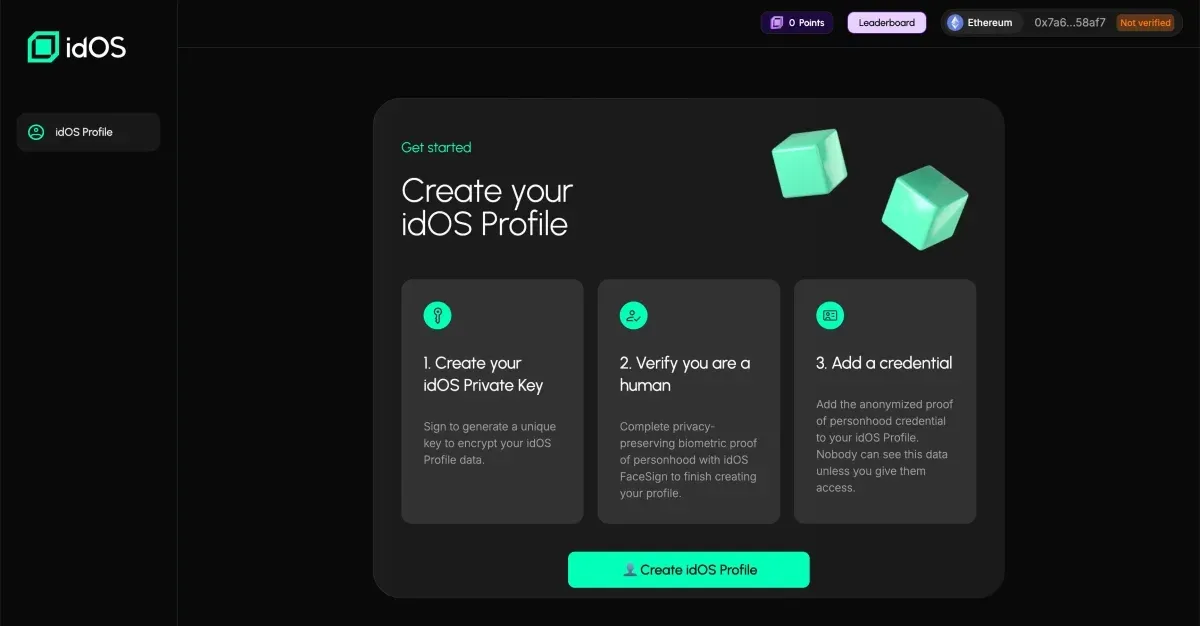
- One‑time KYC, universal usage – Credentials are encrypted and stored in the idOS Enclave; a single verification enables reuse across multiple chains and applications.
- Privacy‑First – Credentials stay encrypted at all times and are only decrypted with explicit user consent.
- High Compatibility – Bridges traditional finance and blockchain systems for seamless integration.
- Anti‑Fraud Governance – Combines biometric verification to ensure each user’s uniqueness and curb fake accounts.
Alliance members include Arbitrum, Circle, Ripple, NEAR, Starknet, Tezos, Radix, Aleph Zero, and Partisia Blockchain, all actively participating in governance and technical development.
Technology Partners
- Kwil – Underlying distributed database.
- Resonance – Provides full‑stack security audits.
- MetaPool – Supplies node infrastructure and staking mechanisms.
- EUCI and other compliance collaborators – Offer default identity compliance solutions.
Real‑World Use Cases
- Digital Banks & Wallets – Users open an account once; the credential stored in the idOS Enclave can be reused on any platform.
- Financial Modules – Banks, debit‑card providers, and investment platforms can directly read authorized credentials, reducing compliance overhead.
- On‑Chain Integration for Traditional Institutions – Banks, FinTech firms, and centralized exchanges embed idOS to put compliant credentials on‑chain, delivering higher‑grade financial services.
idOS positions itself as the “data settlement layer” for blockchain, helping new users complete identity registration quickly and enabling scalable user acquisition.
Benefits Overview
- No need to repeatedly submit sensitive documents.
- Portable identity accelerates on‑chain transactions.
- Extensible to insurance, healthcare, education, and other non‑financial sectors.
- SDK is straightforward, encouraging developers to build new apps on top of idOS.
Roadmap & Team
The project has not yet released a complete roadmap; further details will be disclosed through official channels. Whale Market will update the information as soon as it becomes available.
Core Team
- Julian Leitrov – Co‑Founder & CEO
- Julio Santos – Co‑Founder
- Luis Bada Alvarez – Co‑Founder
Conclusion
idOS offers a decentralized identity framework that stresses privacy protection, data ownership, and cross‑chain compatibility. With encrypted permissions, portable identities, and a multi‑chain design, it is positioned to become a strong candidate for a universal identity standard as the Web3 and stable‑coin ecosystems continue to expand.
Frequently Asked Questions
Q1: Is idOS suitable for users who are just entering Web3?
Yes. After completing a single KYC, the verification can be reused across multiple dApps without any additional technical steps.
Q2: Does the data still reside on centralized servers?
All information is encrypted and stored on a decentralized network, and the user retains full control.
Q3: What types of applications can integrate idOS?
Stable‑coin projects, fintech platforms, on‑chain “new banks,” and any dApp that requires identity verification can integrate via the SDK.
Q4: What advantages does idOS give to project teams?
Reusable identity data reduces KYC costs, improves user conversion rates, and speeds up onboarding.
Q5: Does the platform support multi‑chain deployment?
idOS is chain‑agnostic and works with major public blockchains and wallets.
Q6: What is the current market price of $IDOS?
The token has not been officially listed yet; early participants can trade during the pre‑market phase on Whale Market.
Q7: How can I acquire $IDOS before the official listing?
Use Whale Market’s collateral settlement mechanism to buy or sell $IDOS ahead of the Token Generation Event (TGE), ensuring transparent and secure transactions.
*Note: Cryptocurrency transactions may be subject to tax in your local jurisdiction. Users should consult a tax professional regarding potential tax obligations.*
*For U.S. residents, trading on Binance.US is required; the global Binance platform is not available to U.S. users.*
For more information about idOS ($IDOS), follow Bitaigen and its subsequent coverage.
Related Reading
- idOS Decentralized Identity Framework: Cross‑Chain Compatibility & Token Model E
- RESOLV Coin Explained: Design, Benefits & Tokenomics
- Decred (DCR) Review: Community‑Driven Crypto with Sustainable Governance
💡 Register on Binance with referral code B2345 for the maximum trading fee discount. See Binance complete guide.



