
 Bitaigen Research
 Introduction to Layer 1
When we talk about Layer 1, we refer to the foundational networks such as Bitcoin, the BNB Chain, or Ethereum and their underlying infrastructure. A Layer 1 blockchain can validate transactions and reach consensus without relying on any other network. As Bitcoin has shown, improving the scalability of a Layer 1 network is notoriously difficult. To address this limitation, developers have built Layer 2 protocols that sit on top of Layer 1 networks, inheriting their security and consensus. Bitcoin’s Lightning Network is a classic example of a Layer 2 solution. Many investors are curious to know: Which cryptocurrencies are considered Layer 1? Below, we provide a comprehensive overview of the most prominent Layer 1 tokens.
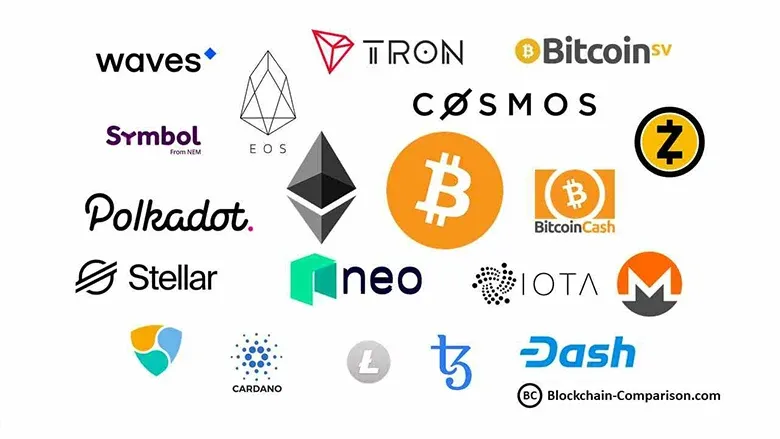
In this article we systematically review the most closely‑watched Layer 1 projects on the market, explain their technical positioning and ecosystem advantages, and compare the core characteristics of main chains such as Bitcoin, Ethereum, and BNB Chain. The goal is to help readers quickly capture key information. Subsequent sections will dive deeper into each chain’s innovative highlights and development trends—stay tuned.
Which Coins Are Classified as Layer 1?
- ETH
Ethereum is an open‑source, public blockchain platform that supports smart contracts. Its native token, Ether (ETH), executes peer‑to‑peer contracts via the decentralized Ethereum Virtual Machine (EVM).
- BNB
Binance Coin (BNB) is issued by Binance and was originally launched as a token on the Ethereum blockchain. The total supply is capped at 200 million coins. Every quarter, Binance destroys a portion of BNB proportional to the season’s trading volume; the burn records are published immediately, and users can verify them on a block explorer to ensure transparency.
Note for U.S. users: Binance US operates a separate, regulated platform for American customers. U.S. residents should use Binance US rather than the global Binance exchange.
- SOL
Solana was founded at the end of 2017 by engineers formerly at Qualcomm, Intel, and Dropbox. It uses a single‑chain Delegated Proof‑of‑Stake (DPoS) consensus. Its core scaling innovation is Proof of History (PoH), a distributed clock that provides a verifiable timestamp, solving the problem of a lack of a unified trustworthy time source while preserving decentralization and security.
ADA is the native token of the Cardano network. Cardano is not only a cryptocurrency but also a technology platform capable of running a wide range of global financial applications. The platform employs a layered architecture that simplifies maintenance and upgrades, and it introduces new features via soft forks.
The Polkadot community voted on and executed a 100‑for‑1 split of the DOT token. Polkadot aims to build a fully decentralized internet where users retain complete control over their identity and data, free from any central authority.
- LUNA
Terra is an algorithmic stablecoin platform that runs on a Tendermint‑based Proof‑of‑Stake blockchain. The native token LUNA is used to mint TerraSDR stablecoins, maintain price stability, and govern the network. Users can swap LUNA for TerraSDR and vice‑versa.
Avalanche (AVAX), formerly known as Ava/AVA, is an open‑source platform designed to support highly decentralized applications, novel financial primitives, and interoperable blockchains. Its breakthrough consensus protocol can finalize transactions in under one second, is compatible with Ethereum development tools, and enables millions of full nodes.
- ALGO
Algorand was co‑founded by MIT professor and Gödel/Turing Award winner Silvio Micali. In its seed round the project raised USD 4 million from prominent venture firms such as Pillar and Union Square Ventures.
- TRX
TRON (TRX) pursues the mission of decentralizing the internet by providing the underlying infrastructure for a decentralized web. The TRON protocol is one of the world’s largest blockchain‑based operating systems for decentralized applications, offering high throughput, scalability, and reliability for DApps.
The above list gives a clear picture of the most popular Layer 1 tokens. Scalability remains a key bottleneck for global cryptocurrency adoption. As demand grows, pressure on blockchain protocols to scale intensifies. Because both Layer 1 and Layer 2 solutions have inherent limitations, future approaches may focus on protocols that simultaneously achieve security, decentralization, and scalability. Layer 1 projects aim to become the technical foundations that define the cryptocurrency category, directly contributing to the development of open‑source protocols.
Global Top‑10 Spot Cryptocurrency Exchanges (Comprehensive)
*CoinMarketCap* rankings as of 22 April 2025 evaluate exchanges based on traffic, liquidity, trading volume, and confidence in the reported volume’s legitimacy.
Top Spot Cryptocurrency Exchanges
1. Binance
Binance offers a multilingual app split into Standard and Advanced versions. The Standard interface is clean and displays only basic functions, while the Advanced version supports futures, options, margin trading, and other professional tools for experienced traders.
2. Bybit
The Bybit app provides one‑click access to the decentralized Web 3 ecosystem, supporting DeFi, NFTs, and dApps. It offers real‑time price alerts so users can act promptly when a preset level is reached. Through its asset‑management suite, investors can build diversified portfolios, stake BTC, ETH, or USDT with zero fees to earn yields, or engage in dual‑currency investments for variable returns.
3. Coinbase
Coinbase Global, Inc. was founded in 2012 in San Francisco, USA, and serves U.S. customers as a regulated cryptocurrency trading and investment platform. Users can buy, sell, convert, and store digital assets through an intuitive interface that includes trading, a digital wallet, and PayPal withdrawals. For power users, Coinbase Pro (gradually merged into the “Advanced Trading” section of the main app in June 2022) offers lower fees and professional charting tools. The company was co‑founded by former Airbnb engineer Brian Armstrong and ex‑Goldman Sachs trader Fred Ehrsam.
4. Upbit
Upbit is South Korea’s largest cryptocurrency exchange by volume, headquartered in Seoul. Since late 2018 it has expanded into Southeast Asia, establishing branches in Singapore, Indonesia, and Thailand. Founder Song Chi‑Hyung also serves as CEO of Dunamu, one of Korea’s wealthiest individuals. Upbit integrates with KakaoTalk’s Kakao Stock platform for trading, but it does not serve U.S. users or jurisdictions under sanctions.
5. OKX
The OKX app supports 22 languages and lets users switch to a Web 3 wallet without additional downloads. The “Discover” page provides market data, copy‑trading, and other features. Its financial suite includes borrowing, lending, and “Jumpstart” products; users can select projects that match their risk appetite, but must remain aware of associated risks.
6. Bitget
Bitget’s app is available in 13 languages and mirrors the functionality of its web platform. The “Innovation” section highlights newly listed trading pairs, and the app supports spot, futures, grid, and copy‑trading. Users can earn passive income through Bitget’s wealth‑management products and perform instant token swaps via the “One‑Click Flash Exchange.”
7. MEXC
Founded in 2018, MEXC uses high‑performance matching technology and serves roughly 10 million users across more than 170 countries. The platform complies with multiple regional regulations and offers localized language support. Its matching engine processes approximately 1.4 million orders per second, with servers distributed globally to ensure data security and integrity.
8. Gate.io App
Gate.io provides iOS and Android clients that let users view market data, trade, and manage accounts and assets. The app includes price‑alert functionality, notifying users instantly when a coin reaches a predefined threshold.
9. KuCoin
KuCoin holds assets of roughly $18.6 million, offers 449 trading pairs, and records a 24‑hour turnover of about $219 million. Since its 2017 launch, it has served over 5 million users in 207 countries and territories, providing spot, fiat, futures, Pool‑X, lending, and other services. The company is headquartered in the Seychelles, offers 24/7 multilingual support, and maintains local communities in several jurisdictions.
10. Crypto.com
Crypto.com was founded in Hong Kong in 2016 and launched its exchange three years later. Its headquarters are now in Singapore, and it serves more than 90 countries with over 50 million users. The founding team includes Kris Marszalek, Gary Or, Rafael Melo, and Bobby Bao. The ecosystem includes a mobile app, Visa cards, wallet, Earn, Pay, NFT marketplace, Credit, and more. The exchange supports spot, margin, and derivatives trading, offers a DeFi wallet, and runs the Crypto.org Chain powered by its native CRO token.
---
Tax Disclaimer: Crypto‑related gains may be taxable in your jurisdiction. Users should consult local tax professionals to understand their obligations under applicable laws.
---
*This concludes the article “Which Coins Are Layer 1? A Survey of Popular Layer 1 Tokens.” For more related content, you can search the archives of Bitaigen (比特根) or continue reading the linked articles below. Thank you for following and supporting Bitaigen!*
💡 Register on Binance with referral code B2345 for the maximum trading fee discount. See Binance complete guide.



