
 Bitaigen Research
 On March 12, a digital artwork by the artist Beeple sold for US $69.34 million at a Christie’s auction, making him the living artist with the highest‑priced work after Jeff Koons and David Hockney.
NFT (Non‑fungible Token) is a unique, indivisible and non‑interchangeable digital asset recorded on a blockchain, used to identify artworks, in‑game items and other one‑of‑a‑kind content.
The sale catapulted a concept that had previously been popular only within crypto circles into the mainstream, turning it into a hot topic across the art world and beyond.
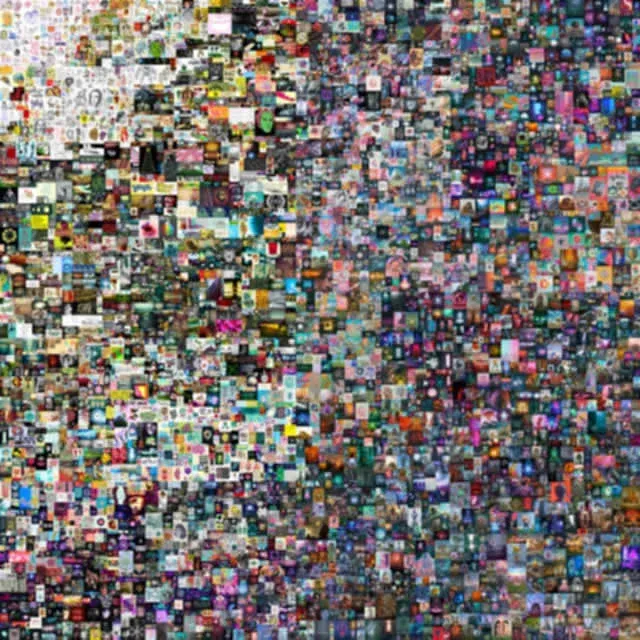
Beeple’s record‑breaking NFT
According to investigations, the buyer was the founder of a well‑known NFT fund that had already acquired twenty of Beeple’s pieces and issued corresponding tokens. During the auction, the price of those tokens jumped more than 150 %, and based on the fund’s shareholding the expected profit exceeds US $70 million—a clear case of both fame and fortune.
Christie’s accepted Ethereum as payment for this sale, putting NFTs and other crypto assets back in the spotlight of mainstream finance. (U.S. users wishing to purchase crypto should use Binance.US rather than the global Binance platform.) So, what exactly is an NFT?
From the perspective of the Bitaigen editorial team, we outline the core concepts, technical foundations, and real‑world value of NFTs in art, gaming and other sectors. Through case studies we help readers quickly grasp the distinctive attributes of these digital assets, their potential future applications, and the logic and opportunities that lie behind them.
What Is an NFT?
NFT stands for Non‑fungible Token, the counterpart of FT (Fungible Token). A non‑fungible token possesses a unique identifier, cannot be interchanged with another token, and cannot be divided.
- Fungible tokens (such as Bitcoin or Ethereum) are mutually interchangeable; one unit holds the same value as any other unit.
- Non‑fungible tokens are more like concert tickets—each ticket carries its own seat number, cannot replace another ticket, and cannot be split into a fraction of a ticket.
Therefore, an NFT is akin to a ticket that must be used as a whole; its uniqueness endows it with a special value in the digital realm. What can NFTs actually do?
Value and Use Cases of NFTs
The internet allows information to travel instantly across the globe, but what spreads is usually a copy, while the original is hard to verify.
- Unique identity verification: NFTs assign a singular blockchain identifier to text, images, video and other digital content, guaranteeing which copy is the “original.”
- Decentralized trading: Leveraging the immutable nature of blockchains, NFTs can be bought and sold without intermediaries, solving the internet’s classic “double‑spend” problem.
Because blockchain adds a value layer to the internet, it is often dubbed the “value internet,” and NFTs are the sparkling gems on that chain.
Primary Use Cases
| Use case | Typical example | Description |
|---|---|---|
| **Digital art** | Christie’s auction of Beeple’s piece | The NFT represents the artwork itself; transferring the token transfers ownership. |
| **Crypto gaming assets** | CryptoKitties, Axie Infinity | In‑game items are tokenized as NFTs, making each item unique and freely tradable. |
| **Collectibles** | NBA Top Shot video highlights | Sports or entertainment moments are minted as NFTs for fans to collect. |
| **Physical‑asset certificates** | Physical artworks, real‑estate | NFTs act as online proof of ownership, requiring a trusted third party for arbitration. |
| **Internet assets such as domain names** | ENS (Ethereum Name Service) | Domain names are bound to NFTs, enabling decentralized management and trade. |
| **Future potential areas** | Financial derivatives, personal identity data | The uniqueness and indivisibility of NFTs allow broader digitization of assets. |
Summary
NFTs, one of the hottest recent innovations, have moved beyond niche communities into the public eye. While debates about artistic merit and market speculation continue, the underlying technology introduces new possibilities for making digital assets unique and enabling decentralized transactions. As the ecosystem matures, the true value of NFTs is likely to become clearer over time.
If you want to learn more about NFTs, feel free to follow Bitaigen (比特根) and its related专题文章!
*Note: Gains from buying, selling or trading NFTs may be subject to tax in your local jurisdiction; consult a tax professional for advice.*
💡 Register on Binance with referral code B2345 for the maximum trading fee discount. See Binance complete guide.



