
 Bitaigen Research
 We approach the topic from a liquidity perspective, dissecting the trading activity and capital flows in the global crypto market during the Spring Festival period. Through heat maps and historical volatility cases, we help you assess whether to maintain positions or adjust strategies over the holidays. Keep reading to see how the crypto space keeps operating around the clock even during traditional holidays.
Capital Heat Map: Where Did Liquidity Go During the Spring Festival?
When discussing “Does the crypto market close for the Spring Festival?”, the destination of capital is a key reference point. The heat map provides an intuitive view of the distribution of global trading volume.
- Bitcoin: Binance’s trading volume reached $16.71 billion, ranking first.
- Ethereum: Also dominated by Binance, with a trading volume of $13.19 billion.
Even though Asian markets enter a holiday, core liquidity remains concentrated on Binance. Because Asian investors (e.g., on OKX, Gate) reduce their trading appetite during the Spring Festival, Western platforms (such as Coinbase) often gain pricing dominance during the early‑morning hours of Asia. Historical data shows that major Western players tend to initiate volatility operations during the night when Asian markets are closed. Therefore, while the answer to “Does the crypto market close for the Spring Festival?” is no, the strategic focus should shift toward Western trading sessions. Binance’s high volume ensures that positions can be entered or exited at any time during the holiday, avoiding the capital freezes typical of traditional stock exchanges.

365‑Day‑Open: In‑Depth Answer to “Does the Crypto Market Close for the Spring Festival?”
Unlike traditional exchanges such as the NYSE or SSE, the trading network for crypto assets is global and decentralized, operating 24 hours a day on blockchains. Whether it is the New Year’s Eve bell or the first day of the lunar calendar, Bitcoin, Ethereum, and other major chains continue to produce and confirm blocks without interruption.
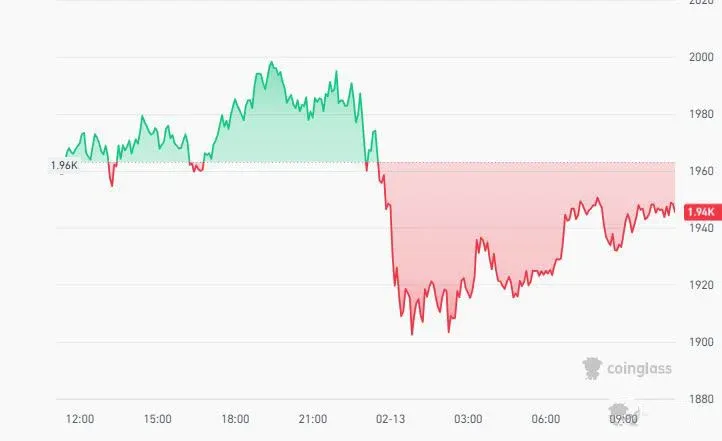
However, continuous operation does not imply a flat market. Opening the Coinglass real‑time dashboard shows the current BTC price at $66,564.6 and the ETH price at $1,949.35. During the Spring Festival, trading activity in Asian regions (especially China, South Korea, Vietnam) declines, leading to a noticeable compression of liquidity in those time slots. Thinner liquidity makes order books appear sparse and amplifies the price impact of relatively small capital. In the past, “surprise” moves have frequently occurred—major players exploiting the shallow depth window to quickly push prices up or down while participants are busy with family gatherings. Consequently, what truly matters is not whether the market “closes,” but how to manage risk in a “low‑liquidity‑high‑volatility” environment.
Bitcoin Institutional Position at 1.32×: Ignoring the “Does the Crypto Market Close for the Spring Festival?” Question
The proportion of institutional (or “main‑net”) positions is an important barometer of pre‑holiday sentiment. If institutions adopt a cautious stance toward the uncertainty of the Spring Festival, they often unwind positions ahead of time. Recent Binance data, however, display the opposite trend.
- Long‑Short Ratio (Positions): 1.321 (top‑tier traders)
- Long‑Short Ratio (Accounts): 2.2658
A net long ratio of 1.321 indicates that institutions maintain roughly 1.32 times the amount of long exposure before the holiday, showing no reduction due to the “market closure” myth. At the same time, retail accounts display a long‑short ratio as high as 2.2658, suggesting that a large number of small‑scale investors are also betting on holiday market moves. The alignment between institutions and retail participants makes a quiet market during the Spring Festival unlikely. For the average trader, mirroring the institutional positioning trend could potentially yield more stable outcomes after the holiday.

Ethereum Holds Firm at 1.45×: Disrupting the “Does the Crypto Market Close for the Spring Festival?” Calm
Compared with Bitcoin’s relatively steady stance, Ethereum’s institutional players exhibit a more aggressive posture. Coinglass data reveal that Binance’s top‑tier traders hold an ETH long‑short ratio of 1.4595. Although ETH has fallen 41.36 % over the past 30 days, sliding to around $1,950, institutions have not withdrawn; instead, they sustain a higher long exposure.
On the retail side, ETH’s account long‑short ratio stands at 2.5613, reflecting a pronounced bullish sentiment. Such a high retail concentration during the liquidity‑thin Spring Festival window can be exploited by institutions for rapid volatility moves, creating “New Year’s Eve scares” or “First‑day celebrations.” The 1.45‑times institutional holding essentially bets on a post‑holiday ecosystem rebound while waiting for leveraged retail positions to be forced into liquidation.
Liquidation Risk Alert: Traps Around the “Does the Crypto Market Close for the Spring Festival?” Question
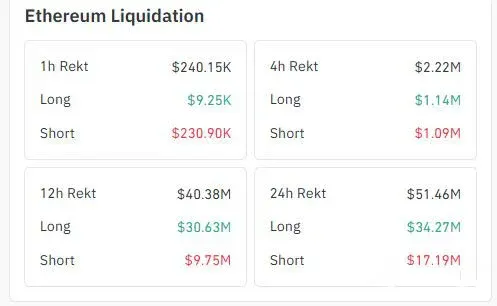
The market never shuts down, but risk is ever‑present. Liquidation figures are a key metric for assessing pre‑holiday leverage exposure. In the most recent 24‑hour window:
- Bitcoin: Total liquidations $110 million (longs $82.55 million)
- Ethereum: Total liquidations $51.46 million (longs $34.27 million)
These numbers indicate that, in the days leading up to the Spring Festival, long positions have already undergone a fairly aggressive unwind. While some leveraged positions have been cleared, the reduced liquidity environment can cause the same amount of capital to generate larger price swings. For newcomers still pondering “Does the crypto market close for the Spring Festival?”, the prudent approach is to close most futures contracts and keep a moderate spot exposure, thereby avoiding high‑leverage confrontations with institutional liquidity harvesters during the holiday.
Practical Playbook: How to Potentially Profit While the Market Stays Open During the Spring Festival
Synthesizing the analysis above, the answer remains the market does not close, which presents both risk and opportunity. For the unique Spring Festival window, the following operational ideas may be considered:
- New‑Year’s Eve Spike Capture: Institutions often generate short‑term panic during the lowest‑liquidity moments. Placing low‑price limit orders near $64,000 BTC or $1,850 ETH could position a trader to “catch the spike” if a rapid move occurs.
- Trend‑Following Allocation: Given the 1.32× Bitcoin and 1.45× Ethereum institutional ratios, maintaining roughly 70 % of a portfolio in spot assets may align with prevailing market bias, while avoiding a completely flat stance.
- Focus on Western Sessions: During the Spring Festival, volatility tends to peak in European and North American trading hours, especially after the U.S. stock market opens. Monitoring these periods can provide clearer signals.
- Grid Trading Automation: In a likely ranging market, deploying a grid‑trading bot can automate buy‑sell cycles, reducing the need for constant manual oversight and allowing the system to “work for you” throughout the holiday.
In 2026, the crypto ecosystem continues to run 24 hours a day, and capital flows do not pause. By understanding the “low‑liquidity‑high‑volatility” dynamic, participants can aim to capture an extra “red envelope” during the holiday.
For more in‑depth analysis on whether the crypto market closes for the Spring Festival, follow Bitaigen (比特根) and its related series of articles.
*Note: Users in the United States should use Binance.US rather than the global Binance platform. Fiat deposits and withdrawals are typically processed via SEPA, SWIFT, or other standard banking channels and are denominated in USD unless otherwise specified. Crypto gains may be taxable in your local jurisdiction; please consult a tax professional for personalized advice.*
💡 Register on Binance with referral code B2345 for the maximum trading fee discount. See Binance complete guide.



