
 Bitaigen Research
Cryptocurrency investors today often increase the yield on their holdings by staking, without having to sell the underlying digital assets. The concept of staking is similar to depositing money into a savings account at a bank.
The difference is that a bank lends your funds to borrowers and shares the interest with you; when you stake a cryptocurrency, you are actually locking the asset in the blockchain network, helping to secure the network and earning rewards for your contribution.
Staking can also be compared with mining, but it requires far fewer resources. By keeping assets in a crypto wallet, you support the security and functionality of the blockchain. Even if you only want to earn staking rewards, you need to understand how it works and the mechanisms behind it.
In this article we systematically outline the core principles of crypto staking, its reward mechanisms, and the associated risks, and we compare major platforms to help investors make more informed choices between safety and yield. If you want to earn extra returns without selling your assets, keep reading.
How Does Staking Work?
You can “stake” a portion of the cryptocurrency you hold and receive a proportional reward over a defined period, provided the coin supports staking (the most common ones today include Ethereum, Tezos, Cosmos, Solana, and Cardano). During the staking period, the blockchain will use your assets for the specified time window and generate rewards.
Proof of Stake (PoS) is a consensus mechanism that relies on staking to ensure transaction security and finality, without the need for third‑party processors or payment intermediaries. Choosing to stake is essentially participating in that process.
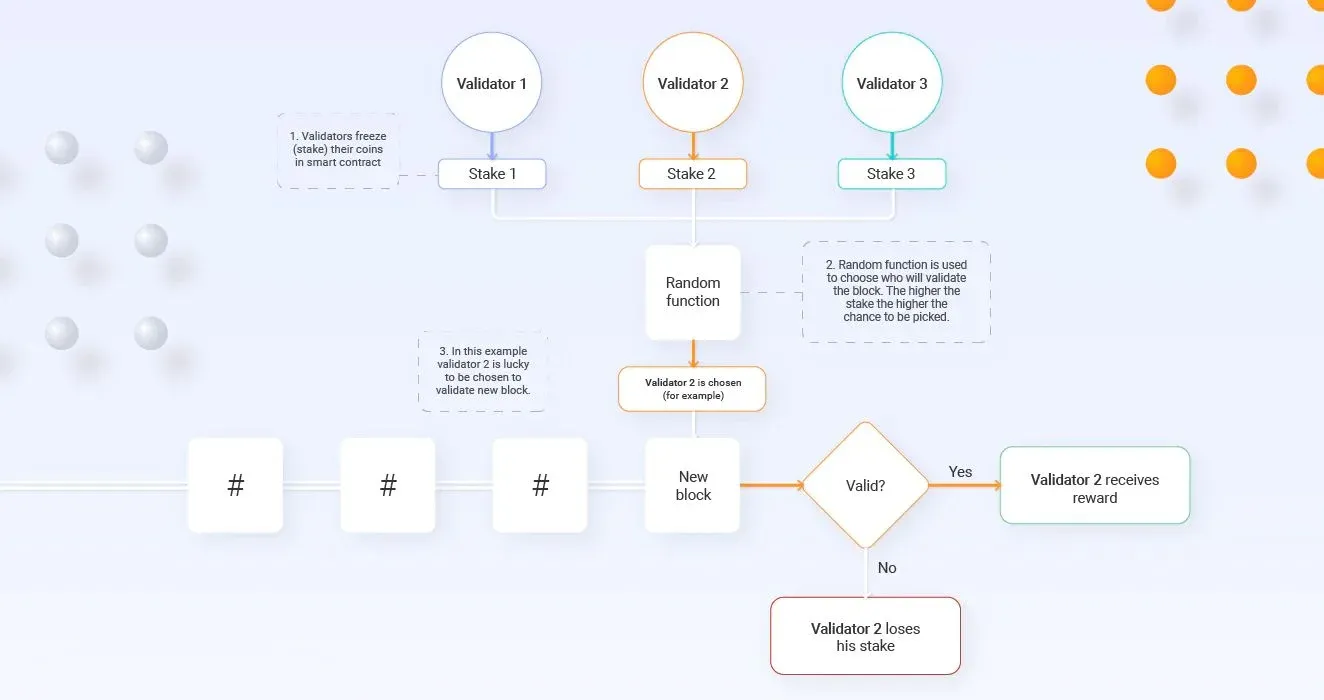
Through PoS, a blockchain can maintain a reasonable degree of decentralisation while achieving significantly lower energy consumption—an outcome that is theoretically feasible.
Benefits of Staking
1. Generate Additional Income
Staking enables asset diversification and reduces transaction costs on the blockchain. For investors seeking extra income, it is a relatively efficient method. Many people increase their net worth by holding and staking crypto assets, then reinvest the earned rewards into other tokens.
2. Convenient Exchange Staking
Staking crypto on an exchange is extremely convenient. The three most reliable exchanges that offer staking services are KuCoin, Binance, and Coinbase; most other exchanges also provide similar functionality.
*Note for U.S. users: you must use Binance.US rather than the global Binance platform.*
3. Lower Energy Consumption
Compared with traditional mining, staking requires far less computational power, which dramatically reduces energy usage. The introduction of PoS mechanisms contributes to the sustainability of the crypto sector and avoids the negative environmental impact of large‑scale energy waste.
4. Cold Staking Is Secure and Reliable
Staking from an offline wallet is called “cold staking.” It can be performed with a hardware wallet or an air‑gapped software wallet. Networks that support cold staking allow users to lock assets while offline, ensuring security. Keep in mind that once you withdraw the assets from cold storage, the rewards stop immediately.
Users with high security requirements who also wish to support the network while protecting their holdings often prefer cold staking.
How to Stake Cryptocurrency
Staking may look complicated at first, but once you master the steps it becomes straightforward. Follow the workflow below:
1. Acquire a PoS Coin
To stake, you need to hold a coin that uses a Proof‑of‑Stake validator, such as Polkadot (DOT), Ethereum (ETH), Solana (SOL), Cardano (ADA), and others.
2. Transfer the Coins to a Blockchain Wallet
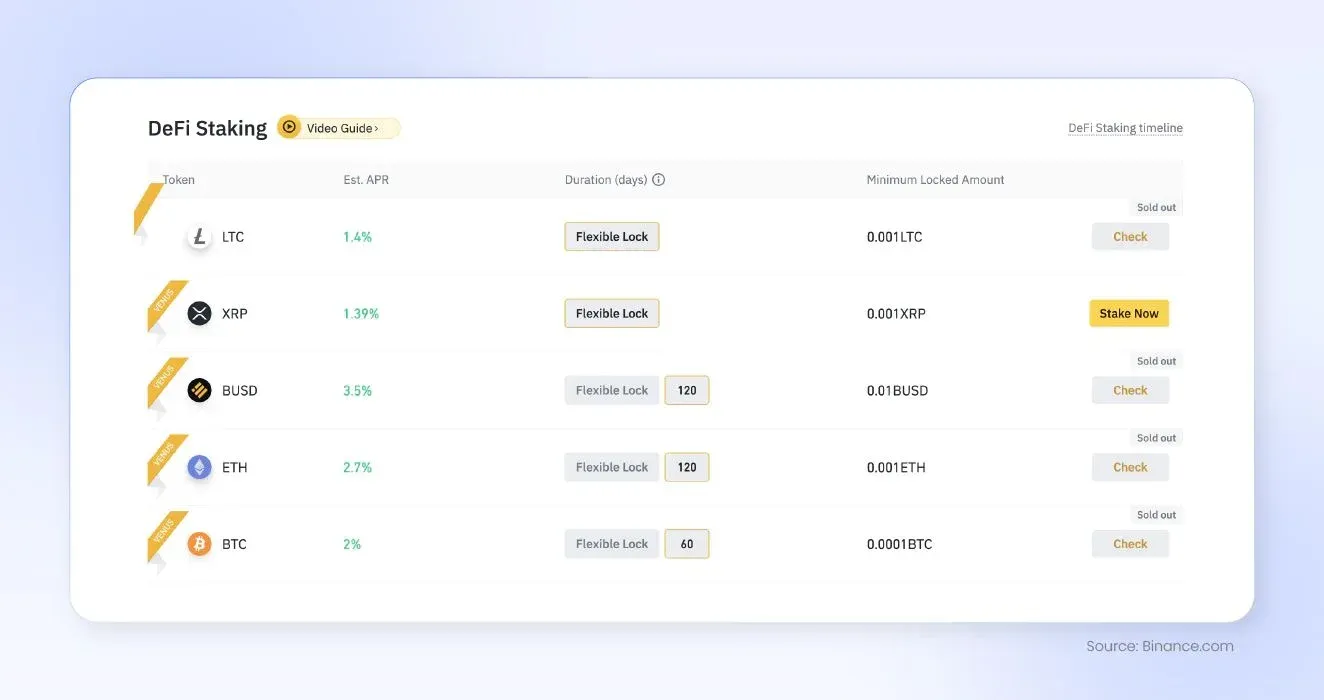
Most exchanges provide staking packages that let you stake directly on the platform, or you can withdraw the assets to a personal wallet. After downloading or purchasing a hardware wallet, open the wallet and select “Deposit” for the relevant coin; the software will generate a receiving address. Then, on the exchange, choose “Withdraw,” copy the wallet address, and complete the transfer.
3. Join a Staking Pool
A staking pool aggregates assets from multiple investors to increase the probability of being selected to validate blocks. When choosing a pool, consider the following factors:
- Fees: Most pools charge a reward fee of 2 %–5 %, varying by coin.
- Reliability: Prioritise pools with stable servers and good reputations to avoid downtime that could erode earnings.
- Size: Very small pools have a low chance of being chosen, but if they are, the individual reward can be larger; very large pools may suffer diminishing returns due to reward caps. Medium‑sized pools often strike a balanced compromise.
How Staking Rewards Are Calculated
Reward calculation formulas differ across blockchains, and there is no universal equation. Common influencing factors include:
- Inflation rate
- Amount of tokens the validator has staked
- Staking duration
- Total amount of tokens staked across the network
- Other on‑chain parameters
Some networks allocate a fixed percentage of newly minted tokens as rewards to compensate for inflation. Validators can use these parameters to estimate their own yields. For many participants, regular, predictable rewards are more attractive than random block‑by‑block payouts, and they help draw additional participants.
Risks Involved in Staking
Although staking is a passive‑income strategy, several risks still need attention:
- Price Volatility: Crypto assets are highly volatile; a sharp price decline can outweigh the interest earned, resulting in a net loss of principal.
- Lock‑up Restrictions: Certain staked tokens are inaccessible during the lock‑up period, limiting liquidity if you need funds quickly.
- Withdrawal Delays: Some platforms enforce an unlocking period of at least 7 days, which may prevent immediate access to funds in emergencies. Choose services that support fast withdrawals or adjustable lock‑up periods when possible.
What Is Proof of Stake (PoS)?
If you are familiar with Bitcoin’s Proof of Work (PoW), you can contrast it with Proof of Stake (PoS). PoW rewards miners who solve complex mathematical puzzles to earn the right to append a new block; it demands high computational cost and energy consumption.
PoS, by contrast, selects validators based on the amount of tokens they lock up (their “stake”). The probability of being chosen is positively correlated with the size of the stake. Consensus is achieved without massive computing resources, improving energy efficiency.
When Ethereum upgraded to Ethereum 2.0, it transitioned from PoW to PoS, primarily to lower energy usage and improve scalability.
Delegated Proof of Stake (DPoS)
Daniel Larimer introduced Delegated Proof of Stake (DPoS) in 2014, initially for BitShares and later adopted by projects such as Steem and EOS.
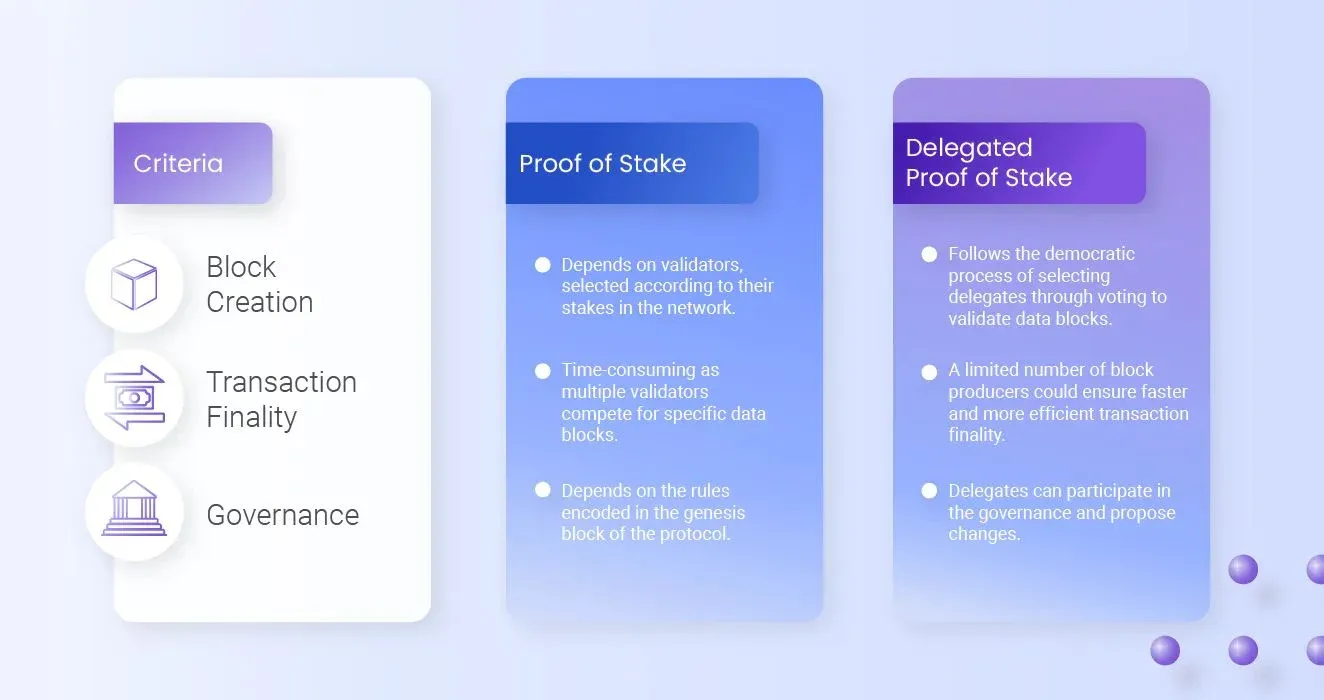
DPoS lets token holders vote for representatives (sometimes called “witnesses”) who produce blocks on their behalf. Voting power is tied to the amount of tokens held, and elected representatives share a portion of block rewards with their delegators.
Because DPoS reaches consensus with a relatively small set of validator nodes, it boosts network throughput, albeit at the cost of reduced decentralisation.
Differences Between PoS, PoW, and DPoS
- PoW: Relies on hash‑power competition; high energy consumption.
- PoS: Based on token staking; high energy efficiency.
- DPoS: Adds a voting‑delegation layer on top of PoS, further improving efficiency while potentially sacrificing decentralisation.
Blockchains Using PoW
More than a hundred projects employ PoW; the most famous is Bitcoin. Other examples include Bitcoin Cash, Dogecoin, Monero, Litecoin, Ethereum Classic, Dash, and many others.
Blockchains Using PoS
Projects that have adopted PoS are gaining traction because of technical and economic advantages. Notable examples include Ethereum 2.0, BNB, Flow, Akash (AKT), Tezos, Near, and various decentralized gaming platforms.
Blockchains Using DPoS
Well‑known networks that utilise DPoS are EOS, TRON, and Cosmos.
1. EOS
Block producers in EOS act as representatives. After users stake EOS, they can vote for up to 30 candidates; the top 21 become active block producers. Each producer must meet a minimum hardware requirement of 8 GB RAM.
2. TRON
TRON’s Super Representatives (SRs) obtain voting rights by staking TRX. Elections occur every 24 hours, selecting 5 SRs from the top 27 applicants.
3. Cosmos
Cosmos refers to its validators simply as “validators.” Currently, 100 validators confirm transactions, with a roadmap to expand to 300 validators to enhance decentralisation.
Recommended Staking Platforms
The platforms listed below excel in staking functionality, asset variety, and user experience. Choose according to your personal requirements.
1. Binance (Global)
Binance is the world’s largest exchange by trading volume and offers staking for over 100 tokens. Staking options are split into “locked” and “flexible” modes; locked periods are typically 10 days, 15 days, or 30 days, while flexible staking yields slightly lower returns but allows immediate withdrawal. The platform also supports DeFi staking, removing the need for you to manage an on‑chain wallet yourself.
*U.S. residents should use Binance.US, which offers a comparable staking suite under U.S. regulatory constraints.*
2. OKX
OKX serves more than 20 million users and provides staking for over 340 coins. Annualised yields can reach up to 70 %, with typical lock‑up periods ranging from 15 to 120 days; some assets also support non‑locked “flexible” staking. Ethereum 2.0 staking on OKX yields roughly 4.09 % APY.
3. Kraken
Kraken ranks among the top four exchanges on CoinMarketCap and offers staking for 12 crypto assets. Rewards are distributed weekly or more frequently, and the platform does not charge staking or unlocking fees. Both on‑chain and, where permitted, off‑chain staking services are available.
4. DeFi Swap
DeFi Swap is a newer platform focused on decentralized exchange and yield farming. It offers four staking terms—30, 90, 180, and 365 days—with annualised returns between 30 % and 75 %. Users can purchase DeFi tokens with stablecoins to capture higher yields.
5. KuCoin
KuCoin supports both flexible (no fixed lock‑up) and fixed‑term staking. Flexible staking generally yields lower returns, while fixed terms provide higher rates. For example, Polkadot (DOT) has a redemption period of 28 days; most other coins have a lock‑up of roughly one week.
6. Bybit
Bybit offers flexible staking and term‑bond staking, covering major assets such as BTC, ETH, USDT, SOL, DOT, and others. Flexible staking accrues daily returns automatically, though reinvestment must be performed manually. The platform’s APY is competitive within the industry.
Conclusion
Staking gives users who wish to support blockchain security a diversified way to earn yields and is a relatively simple method of growing assets. As entry barriers continue to fall, more participants can join the ecosystem. Nevertheless, staking still carries risks such as price volatility and lock‑up constraints; always conduct your own research (DYOR) and use reputable wallets (e.g., Trust Wallet) to minimise exposure to smart‑contract vulnerabilities.
*Please note that cryptocurrency gains may be taxable in your jurisdiction; consult a tax professional for guidance.*
This concludes the article. For deeper coverage of crypto staking, you can search past Bitaigen articles or follow the related links below. Thank you for supporting Bitaigen!
💡 Register on Binance with referral code B2345 for the maximum trading fee discount. See Binance complete guide.



