
 Bitaigen Research
 In this article we systematically outline the core mechanisms of hard forks, dissect their multiple effects on token value, community ecosystem, and technological evolution, and alert users to potential security risks during the upgrade process. Our goal is to help readers comprehensively assess the pros and cons of hard forks; subsequent sections will provide practical implementation points, so please continue reading.
3. What Impact Do Hard Forks Have on Cryptocurrencies?
Hard forks often trigger a chain reaction within the blockchain ecosystem: they can give birth to brand‑new tokens, granting existing holders additional assets, while also causing sharp price volatility and even creating fissures within the community. Users must upgrade their client software during a fork; if the upgrade is mishandled or the user falls for a phishing site, asset security can be jeopardized. Nevertheless, hard forks remain an effective way to address critical technical challenges such as scalability and performance improvements.
1. Direct Impact on the Coin
- After the fork, the original chain and the new chain operate independently, preserving identical historical records. Users who held tokens on the old chain typically receive an equal amount of tokens on the new chain (e.g., Bitcoin holders automatically received BCH when Bitcoin Cash forked).
- The market‑cap trajectory of the two tokens depends on how the market perceives each technical roadmap; the new coin may surge quickly, or the original coin may be sold off.
2. Shock to the Market and Community
- Hard forks usually stem from fundamental disagreements over the direction of protocol upgrades, polarizing developers, miners, and regular users into opposing camps.
- This division often sparks speculative frenzy before and after the fork, leading to dramatic price swings. Inexperienced users who are unclear about the correct procedures can easily lose assets by clicking malicious links or misconfiguring their wallets.
3. Significance for the Technical Ecosystem
- By introducing non‑backward‑compatible, substantial changes (such as altering the consensus mechanism or increasing transaction throughput), hard forks provide experimental ground for blockchains to explore multiple development paths.
- New protocol implementations frequently furnish better support for emerging applications like DeFi and NFTs, driving an overall upgrade of the ecosystem.
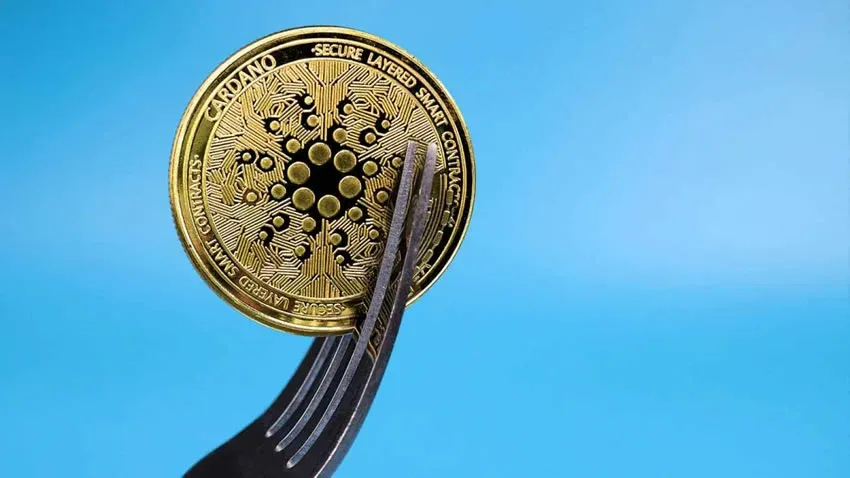
2. Are Hard Forks Good or Bad for Cryptocurrencies?
The outcome of a hard fork cannot be summed up as simply good or bad. It may inject fresh vitality into the network and boost performance, yet it can also introduce uncertainty through community fragmentation. For token holders, a fork usually means “free” receipt of an equal amount of the new coin (for example, BTC holders received BCH when Bitcoin Cash forked), but the market price of the new coin often diverges significantly from the original, so the overall value of a portfolio does not necessarily increase.
A hard fork can be likened to a road split: one path continues under the old rules, the other heads toward a brand‑new direction. If a vulnerability that blocks transactions appears in the original chain’s code, developers can modify the rules and enforce them, creating two parallel chains. Holders retain the same quantity of tokens on both chains, but the monetary value of each chain’s token may differ markedly.
Illustrative example: suppose you own 100 tokens each worth €1. After the fork you still hold those 100 original‑chain tokens and additionally receive 100 new‑chain tokens. If the new‑chain token trades at only €0.05 each, the extra value you effectively gain is €5, not the €100 you might have expected.
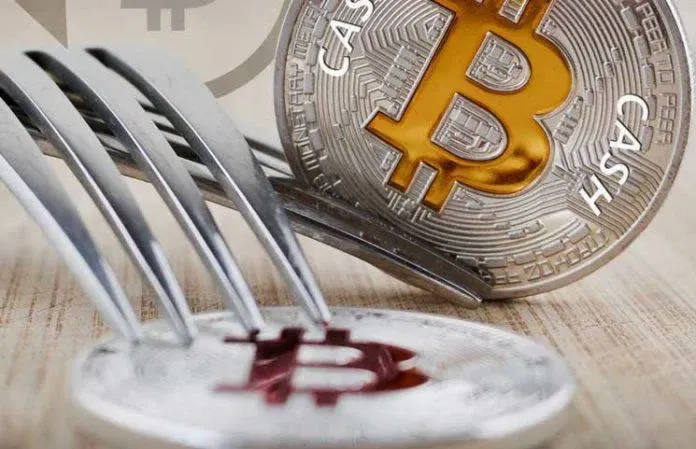
1. What Is a Hard Fork?
A hard fork is a software upgrade that is not compatible with previous versions. When the new rules conflict with those of existing nodes, only nodes running the latest software can communicate with each other. At that point the blockchain naturally splits into two independent networks:
- New chain: follows a completely new protocol; all participants must upgrade to continue validating blocks.
- Old chain: continues using the original rules; nodes that do not upgrade remain on this chain.
Before the fork, all nodes share a single chain’s history; after the fork, each chain generates its own blocks and transactions independently. Because the historical data is identical, anyone holding tokens before the fork will own the same amount of tokens on both chains afterward. For instance, if you held 5 BTC at block 600,000, after the fork you can use those 5 BTC on the original chain at block 600,001 and you will have a corresponding 5 BTC on the new chain, provided your private key remains unchanged and you retain control of the assets.
Typical cases include Bitcoin Cash, which split from Bitcoin in 2017 over block‑size debates, and Ethereum Classic, which emerged after the DAO hack was rolled back on the Ethereum network.
Core Features of Hard Forks
- Implement a non‑backward‑compatible upgrade approach;
- Result in a permanent split, forming two unrelated chains;
- Require network‑wide consensus and large‑scale software updates;
- Enable major protocol‑level changes;
- Allow token holders to possess assets on both chains after the fork.
4. How to Mitigate Hard Fork Risks?
Although a hard fork is fundamentally an irreversible technical decision, robust governance and proactive preparation can substantially reduce the uncertainty it brings. Common risk‑control measures include:
1. Community Participation and Information Transparency
Development teams publish progress in real time via social platforms, forums, and other channels, building open communication lines so every member can understand proposal details and join discussions. Transparent information helps surface potential disagreements before the fork, allowing early mediation and lowering the probability of a chain‑splitting split.
2. Decentralized Governance Structures
On‑chain governance tools (e.g., DAOs, governance tokens) grant community members voting rights, enabling protocol updates to achieve consensus among a broader set of stakeholders. Greater participation stabilizes the network and reduces the chance of hard‑fork risk caused by unilateral decisions.
3. Comprehensive Testnet Validation
Before deploying to mainnet, developers run multiple simulated upgrades on testnets to evaluate how the new code performs under realistic network conditions. Repeated verification and public disclosure of test results assure the upgrade’s reliability and help avoid accidental forks due to code defects.
4. Emergency Plans and Rapid Response
Project teams devise contingency procedures for possible disputes or technical failures, including alternative solutions and dispute‑resolution mechanisms. Even if the community cannot reach immediate agreement, these plans help the network recover quickly, preventing broader asset loss after a fork.
Summary
Hard forks are pivotal moments in blockchain evolution, combining innovative drive with governance challenges. They can fix security bugs and improve network performance, yet they may also cause community rifts, market volatility, and security hazards. Post‑fork token performance varies dramatically, depending on the quality of the technical implementation, the level of community support, and market acceptance. A deep understanding of how hard forks work, their potential impacts, and appropriate risk‑mitigation strategies is essential for developers, investors, and everyday users making rational decisions in decentralized networks.
Note on Taxes: Crypto gains may be taxable in your jurisdiction. Users should consult local tax authorities or a qualified professional to determine any reporting obligations. For fiat transactions, consider using USD via SEPA/SWIFT where applicable, and U.S. residents must use Binance.US rather than the global Binance platform.
This concludes the comprehensive analysis of “What Is a Hard Fork? Are Hard Forks Good or Bad for Cryptocurrencies? What Are Their Real Impacts?” For more beginner guides, please follow Bitaigen’s other articles.
💡 Register on Binance with referral code B2345 for the maximum trading fee discount. See Binance complete guide.



