
 Bitaigen Research
 Our Bitaigen editorial team has carefully organized the core concepts and technical characteristics of NFTs to help readers quickly clarify the logic behind “non‑fungibility” and, through examples, understand how the ERC‑721 standard brings unique assets onto the blockchain. If you want to grasp the basic framework of NFTs and their real‑world use cases, keep reading for a systematic beginner’s guide.
If you’ve been hanging out in the crypto community for a while, you’ve certainly heard of non‑fungible tokens (NFTs).
A non‑fungible token (NFT) is a unique digital asset on a blockchain that represents ownership of scarce items such as artwork, collectibles, and more, featuring non‑interchangeability and programmability.
Non‑Fungible Token (NFT)
NFT stands for Non‑Fungible Token. In Chinese it is translated as “非同质化代币”. It is a type of cryptocurrency specifically used to denote ownership of scarce digital goods like art pieces and collectibles.
What “non‑fungible” Means
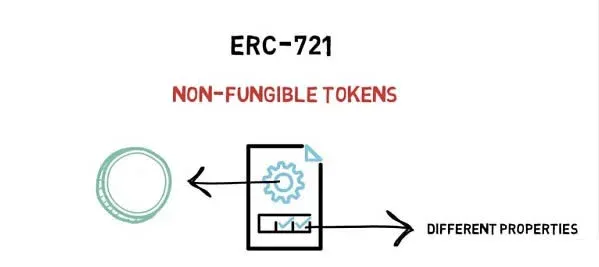
In economics, fungibility means that each unit of a good can be exchanged for any other unit without distinction. By contrast, a non‑fungible asset is unique; each instance cannot be swapped for another.
Example:
Main Technical Standards
- ERC‑721: The universal standard for creating non‑fungible tokens. It allows smart contracts to define unique tokens with distinct attributes. The earliest high‑profile implementation was CryptoKitties, a game where users could collect and breed virtual cats.
- ERC‑1155: Introduced by Enjin, this standard supports “semi‑fungible” tokens, allowing a single contract to manage multiple asset types (e.g., 20 “Swords”, 30 “Guns”) distinguished by IDs.
Common Application Platforms
- Digital art marketplaces: Rarible, SuperRare, OpenSea, etc.
- Domain name services: Ethereum Naming Service (.eth) and Unstoppable Domains (.crypto) both use NFTs to represent scarce domain names.
Note for U.S. users: When accessing these platforms, you should use Binance.US (the U.S.-compliant exchange) rather than the global Binance platform.
Financial‑Sector Extensions
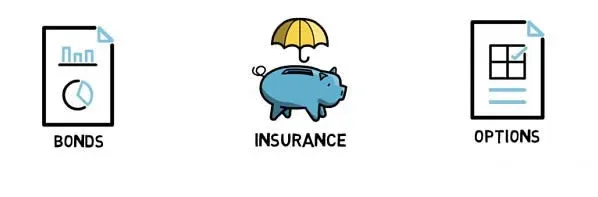
NFTs can also serve as collateral or be embedded in complex financial products such as insurance, bonds, and options. Yearn Finance’s Yinsure mints each insurance contract as an NFT, allowing holders to trade them freely on secondary markets like Rarible. Recently, Rarible introduced its governance token RARI, rewarding users who create, buy, or sell NFTs on the platform with liquidity‑mining incentives, further blending DeFi concepts.
Characteristics of Non‑Fungible Tokens (NFTs)
- Standardization: All NFTs include basic functions such as ownership registration and transfer, enabling developers to reuse these standards when building their own tokens.
- Interoperability: Because blockchains are publicly accessible, any application that supports smart contracts can read and interact with NFTs.
- Liquidity: Leveraging mature cryptocurrency markets, NFTs can be quickly converted into fiat (via SEPA/SWIFT transfers in USD) or other digital assets.
- Immutability: The tamper‑proof nature of blockchains ensures that ownership records are permanently stored, changing only through legitimate transfers.
- Programmability: Smart contracts can embed complex logic into NFTs, such as royalties, leasing, or tiered permissions.
NFT Standards and Metadata
- ERC‑721: The original standard for non‑fungible assets; developers can inherit implementations from the OpenZeppelin library for rapid development.
- ERC‑1155: Allows a single contract to manage multiple asset types, improving transaction efficiency.
Metadata describes the unique attributes of an individual NFT. In CryptoKitties, for instance, each cat’s color, pattern, and name are stored as metadata, typically in JSON format. Metadata storage options include:
- On‑chain storage: Writing metadata directly to the blockchain offers the highest security but is limited by the storage costs of networks like Ethereum.
- Off‑chain storage: Metadata is kept on centralized servers (e.g., AWS) or decentralized networks (e.g., IPFS) and linked via the contract’s `tokenURI` field.
Typical NFT Use Cases
- Collectibles: CryptoKitties pioneered NFT collectibles, followed by projects such as Axie Infinity and NBA Top Shot that have further expanded the market.
- Gaming assets: In blockchain games, items, characters, and skins can be minted as NFTs, enabling cross‑game portability and real‑world value transfer.
- Digital certificates: NFT‑based diplomas, professional credentials, and other certifications are non‑transferable and tamper‑proof, enhancing trustworthiness.
As technology evolves, more NFT standards and innovative applications emerge, with the boundaries of what can be realized limited only by developers’ imagination.
Summary
Current monthly NFT trading volume has surpassed USD 6 million, with cumulative volume exceeding USD 100 million, making NFTs one of the fastest‑growing segments in the crypto space. From the early days of CryptoKitties to today’s financial derivatives, NFTs demonstrate extensive potential.
This concludes the full analysis of “What is a Non‑Fungible Token (NFT)? Features of Non‑Fungible Tokens (NFT).” For additional blockchain and NFT resources, please explore other articles by Bitaigen.
*Disclaimer: Cryptocurrency gains may be subject to tax in your local jurisdiction; please consult a tax professional for advice.*
💡 Register on Binance with referral code B2345 for the maximum trading fee discount. See Binance complete guide.



