
 Bitaigen Research
 Blockchain scams mainly consist of seven common tactics: token issuance for fundraising, promises of high returns, exaggerated decentralization, fake whitepapers, celebrity endorsements, mining hardware schemes, and WeChat token collection.
Cryptocurrencies are virtual assets that rely on the internet and employ multiple layers of cryptographic protection. However, because many users lack sufficient security awareness, they remain attractive targets for fraudsters. The following sections dissect the seven typical blockchain scams and reveal their true nature, helping readers stay vigilant.
In this article we catalogue the most frequent fraudulent methods in the blockchain space, break down the logic behind each scheme, and expose the reality behind the hype. By examining real‑world examples and offering practical recommendations, you will be better equipped to spot potential traps and protect your digital assets.
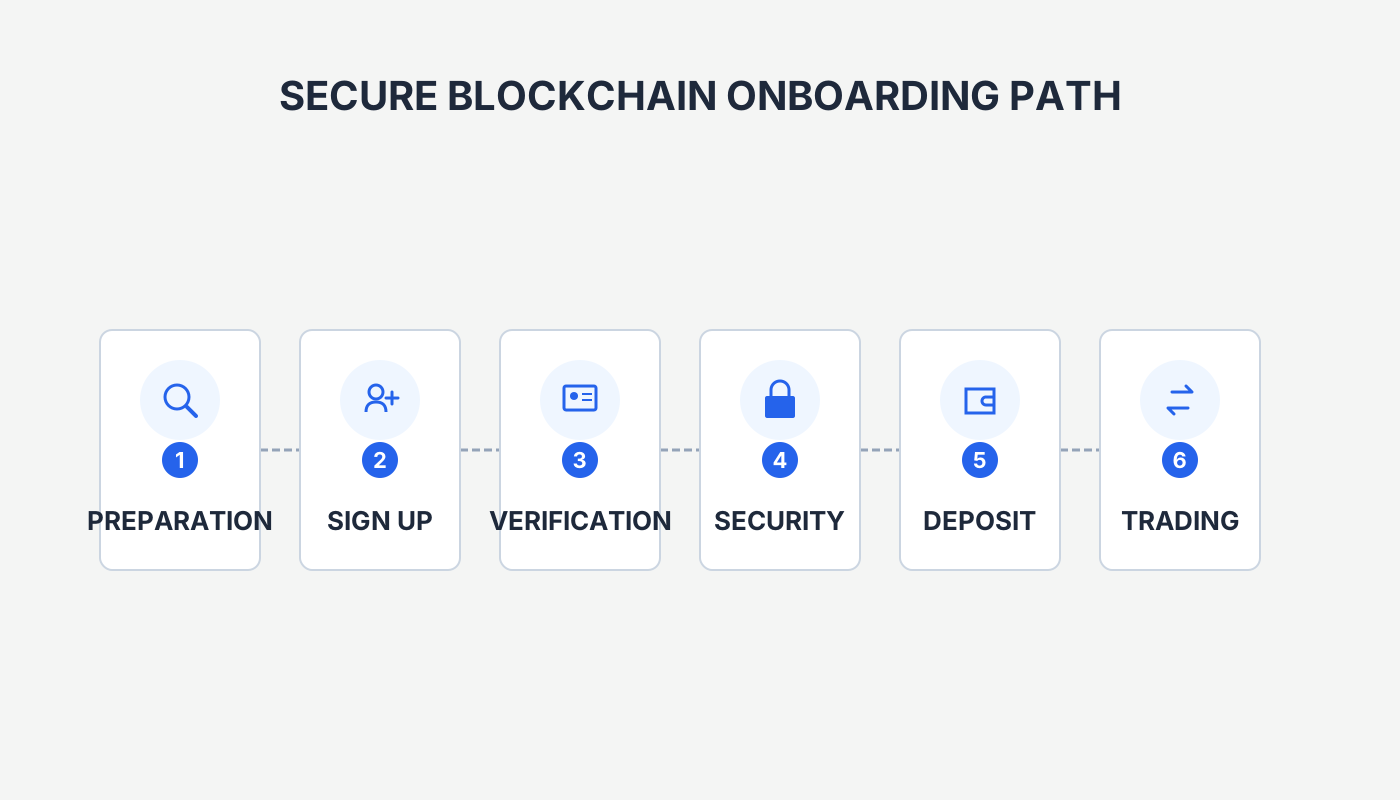
Be Aware of the Seven Common Blockchain Scams
Scam #1: “Blockchain Is Just a Token‑Issuing Money‑Making Machine”
Fraudulent pattern
Promoters describe blockchain as the “last train to financial freedom,” claiming that missing out on Bitcoin means you’ll miss an even bigger opportunity with the next “XXX‑coin.” They urge investors to buy their token directly, promising rapid wealth accumulation.
Reality
Blockchain is an underlying technology; token issuance is merely one of many possible applications of that technology. Equating the two is a classic bait‑and‑switch. The majority of projects that focus solely on issuing or trading tokens lack a legitimate, compliant business model and therefore carry a high risk of illegal fundraising.
Scam #2: “Buy Tokens for Astronomical Returns”
Fraudulent pattern
Scammers repeatedly shout “10,000‑times growth!” and overstate the potential of a new token, pushing users to purchase the coin on a dedicated website without any independent verification.
Reality
Whether the scheme masquerades as a copy‑cat Bitcoin (a “shitcoin”) or a polished ICO, the core promise is the same: “get rich quickly.” If such extraordinary returns were truly attainable, a small group of insiders would have already profited silently, leaving ordinary investors with little to no chance of success.
Scam #3: “Decentralization Solves Everything”
Fraudulent pattern
The narrative claims that decentralization can completely eliminate banks, regulators, and any “central” authority, implying that anyone can act freely and “change the world.”
Reality
Decentralization is indeed a key characteristic of many blockchain networks, but achieving consensus often sacrifices network efficiency. At present there is no perfect solution that is both fully decentralized and highly performant, and not every use‑case benefits from decentralization. Overstating its universal applicability is misleading.
Scam #4: “A Whitepaper Means a Real‑World Product”
Fraudulent pattern
Project teams release lengthy English whitepapers that list the founders’ overseas degrees, awards, and supposedly mature technologies, hoping to win trust through impressive credentials.
Reality
A quick online search can reveal that many listed qualifications are fabricated. Blockchain technology is still in an early stage, and real‑world deployment faces numerous technical and regulatory hurdles. Claiming that a project is already operational based solely on a whitepaper constitutes false advertising.
Scam #5: “Celebrity Endorsements Guarantee Success”
Fraudulent pattern
Projects showcase endorsements from well‑known investors or industry “big‑shots,” asserting that the venture will inevitably succeed because of its “strong backing,” and invite users to verify the endorsements themselves.
Reality
Celebrity backing is often used as a “front” by projects that lack substance. In several documented cases, the public figure was never actually involved and was merely “photobombed” for publicity. Relying purely on a star’s name should never replace thorough due diligence.
Scam #6: “Buy a Mining Rig and Earn Passive Income”
Fraudulent pattern
Scammers sell purportedly “high‑efficiency mining rigs,” promising that once purchased the device will automatically mine tokens, and that profits will appear once the token’s price rises.
Reality
Mining requires substantial electricity and hardware investment, and profitability is highly sensitive to token price volatility. In recent years, some schemes have sold mining equipment as a way to sidestep ICO regulations, effectively operating as a “pseudo‑ICO” and constituting illegal fundraising.
Scam #7: “WeChat Token Transfers”
Fraudulent pattern
Fraudsters cultivate a trustworthy image within a WeChat friend circle, ask victims to first transfer a token to a specified address, and then disappear, moving on to the next target.
Reality
Token addresses are not linked to real‑world identities, making it extremely difficult to trace the funds after a loss. Since cryptocurrencies are not legal tender, law‑enforcement agencies often lack clear jurisdiction, resulting in high costs and low success rates for victims seeking restitution.
Summary and Reminder
Blockchain technology itself is not a “magic bullet,” but its technical complexity and steep learning curve make it fertile ground for malicious actors. When confronted with opaque jargon and grandiose promises of wealth, ordinary investors should keep a safe distance and treat any claim of high returns with healthy skepticism. Remember: profit and risk always travel together; rational assessment and cautious investing are the most effective defenses against blockchain fraud.
Note on taxation: Gains from cryptocurrency transactions may be subject to tax in your local jurisdiction. It is advisable to consult a qualified tax professional to understand your obligations, especially when converting crypto to fiat via USD, SEPA, or SWIFT transfers. Users in the United States should use Binance.US rather than the global Binance platform for compliance reasons.
For more information about blockchain risks, feel free to explore additional articles published by Bitaigen (比特根).
Related Reading
- Top Blockchain Scams: How to Spot Fake Tokens & Fraudulent Schemes
- Ledger Wallet Review: Security, Cross‑Chain & Usability
- Top 10 Crypto Exchange Apps 2026: Rankings & Security
💡 Register on Binance with referral code B2345 for the maximum trading fee discount. See Binance complete guide.



