
 Bitaigen Research
 The cryptocurrency industry has introduced Total Value Locked (TVL) to address the lack of a unified metric for evaluating DeFi platforms. TVL is used to assess a platform’s scale, liquidity, and project value. The metric is denominated in USD, providing a clear view of the total value of assets that users have locked in a given protocol.

From an industry perspective, we systematically explain the concept and origin of Total Value Locked (TVL), and dissect the deep‑seated effects that a growing lock‑up size has on liquidity, user trust, and project security. By analysing the key mechanisms, readers can build a more complete evaluation framework for DeFi projects. The following sections are worth a careful read.
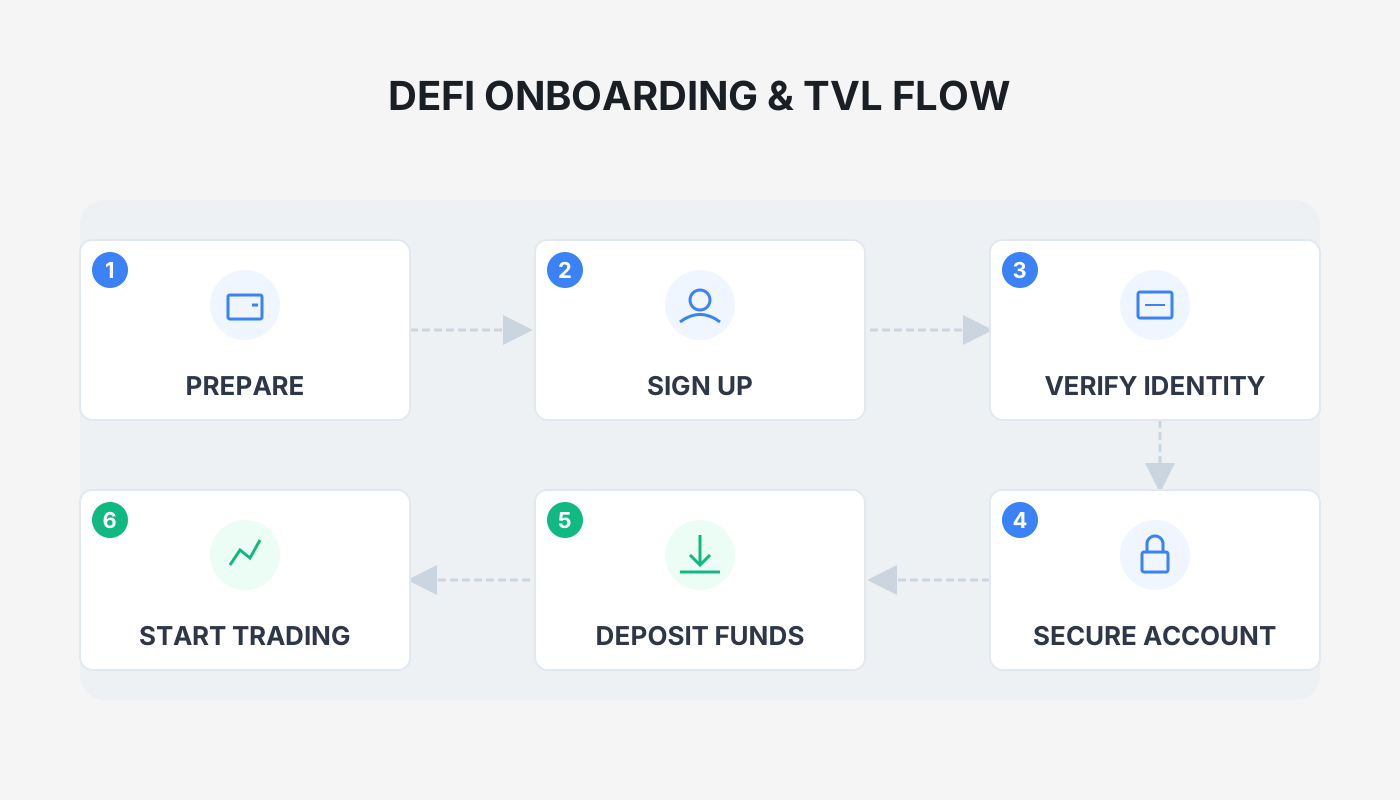
What Does Total Value Locked (TVL) Mean?
Total Value Locked (TVL) refers to the aggregate value of all assets that users have deposited into a decentralized finance (DeFi) platform or protocol. It measures the total amount of digital assets employed to provide liquidity, enable lending, mining, and other functions, typically expressed in USD or another fiat currency (e.g., via SEPA or SWIFT transfers for fiat on‑ramps).
Fluctuations in TVL directly mirror the size and activity level of the DeFi ecosystem. When users allocate more assets to liquidity pools or lending contracts, TVL rises; conversely, price volatility or asset withdrawals cause TVL to decline. Therefore, when using TVL to assess a project, it should be combined with other on‑chain metrics such as active user counts and trading volume for a holistic analysis.
What Are the Consequences of a Large TVL?
A substantial increase in TVL generates multiple effects, the most notable being:
- Enhanced Liquidity
- Higher TVL supplies ample liquidity, narrows bid‑ask spreads, and improves trade execution efficiency.
- Greater User Attraction
- Large lock‑up amounts are often perceived as a trust signal, drawing new retail users and institutional investors.
- Deeper Lending Markets
- For protocols that offer lending, a rising TVL means more capital is available for borrowers, which can lower interest rates and improve the overall borrowing experience.
- Reduced Price Volatility
- Sufficient liquidity helps absorb large buy or sell orders, dampening sharp price swings of the underlying assets.
- Increased Platform Revenue
- Transaction fees, liquidity‑provider rewards, and other income streams tend to correlate positively with TVL, boosting the platform’s economic sustainability.
At the same time, TVL growth comes with inherent risks:
- Higher Smart‑Contract Attack Surface: The more assets locked, the greater the potential payoff for attackers, making any security vulnerability potentially catastrophic.
- Dependence on Market Sentiment: A high TVL does not guarantee long‑term project success; it remains vulnerable to overall crypto market cycles, regulatory developments, and the quality of project governance.
The Practical Value and Limitations of TVL
TVL offers investors and participants a straightforward indicator of a DeFi platform’s scale and user engagement, useful for:
- Horizontal Comparison: benchmarking asset size across similar projects.
- Trend Analysis: monitoring a platform’s growth or contraction over time.
However, TVL data can be misinterpreted, especially in cross‑chain environments or when assets are counted multiple times. In recent years, data‑aggregation services such as DefiLlama have refined their calculation algorithms, delivering more accurate on‑chain TVL figures. As the market matures and rationality returns, TVL is expected to play an even larger role in gauging project health.
Note for U.S. readers: When converting fiat to crypto or vice‑versa, U.S. users should use Binance.US (the U.S.-regulated branch) rather than the global Binance platform.
Tax reminder: Crypto gains may be taxable in your jurisdiction; consult local tax regulations or a professional advisor for guidance.
Related Reading
- XRPL EVM: Ethereum-Compatible Sidechain for DeFi, NFTs
- Cryptocurrency Yield Farming Guide: Maximize DeFi Returns
- CELO Explained: Crypto Basics, Mechanism & How to Buy
💡 Register on Binance with referral code B2345 for the maximum trading fee discount. See Binance complete guide.



