
 Bitaigen Research
 Bitcoin Restaking in 2025: A Comprehensive Overview
The following content focuses on the Bitcoin restaking ecosystem that is attracting significant attention in 2025. It dissects the operational principles, core protocols, and key considerations for participation. We begin with the industry significance, then explain the concept itself, compare it with Ethereum restaking, and finally list seven leading projects while providing practical guides and risk warnings.
In this article we systematically outline the core mechanisms and ecosystem layout of Bitcoin restaking, analyze its importance for improving BTC capital efficiency, and contrast it with similar solutions on Ethereum. Through hands‑on instructions and risk alerts, readers can quickly grasp the most‑watched top‑tier protocols, master the participation essentials, and embark on a new path to secure yields.
Why Is Bitcoin Restaking So Important in 2025?
Bitcoin is shifting from a pure store of value toward a productive asset that can also provide security. Through restaking, BTC holders can supply “security collateral” to emerging services such as Rollups, oracles, and data‑availability layers without selling or moving their assets, thereby earning additional returns on top of price appreciation. Data from August 2025 shows that the locked‑in value of non‑custodial BTC staking is approaching US $6 billion, making it one of the fastest‑growing Bitcoin applications and highlighting strong market demand for higher BTC capital efficiency.
For developers, restaking offers plug‑and‑play security resources. Projects no longer need to issue their own tokens or build validator networks; they can simply “rent” Bitcoin’s security. The BOB Hybrid L2 has already integrated this mechanism, and data from DeFiLlama indicates that related protocols have seen TVL growth of more than 4,400 % within a single year. The combination of security and yield makes restaking the most practically valuable innovation direction in today’s Web3 ecosystem.
What Is Bitcoin Restaking and How Does It Work?
Bitcoin restaking is a technique that allows holders to keep complete control over their BTC while locking it in a self‑custodial timelock contract, thereby providing security guarantees to other blockchain services. Traditionally, unless sold or lent, Bitcoin sits idle in a wallet or exchange and generates little to no revenue. Restaking leverages timelocks and cryptographic proofs to export BTC’s economic weight to services such as Rollups, oracle networks, or data‑availability layers, rewarding the holder with extra incentives.
Unlike proof‑of‑stake (PoS) chains such as Ethereum, BTC itself does not rely on staking. Protocols like Babylon, BounceBit, and Pell Network employ entirely new designs that let Bitcoin remain in its native form while acting as security collateral for other networks, without being wrapped into WBTC or bridged across chains. This “security‑rental” model transforms Bitcoin into a productive asset, enabling holders to earn returns while supporting decentralized services, all while preserving self‑custody.
How Does BTC Restaking Differ from ETH Restaking?
Ethereum restaking, exemplified by EigenLayer, uses ETH or liquid‑staking tokens (e.g., stETH) to secure “Active Validator Services (AVS).” Participants must lock tokens in smart contracts, exposing them to more complex slashing mechanisms and validator‑configuration management.
Bitcoin restaking follows a completely different implementation path. The core distinctions are three‑fold:
- Self‑custody as a prerequisite: Bitcoin remains on the Bitcoin chain under a timelock and never moves into an Ethereum contract.
- No bridging or wrapping: It avoids the use of anchored assets like WBTC, thereby reducing counter‑party risk associated with cross‑chain bridges.
- Security‑rental model: Networks “rent” Bitcoin’s security, whereas Ethereum restaking expands validator duties via software modules.
In short, ETH restaking layers additional yields on top of an existing staking method, while BTC restaking unlocks new security functions for Bitcoin without altering its underlying consensus.
The 7 Most Popular BTC Restaking Protocols You Should Know in 2025
The following seven projects have established notable ecosystem influence in 2025, each employing a unique technical route to offer BTC holders distinct yield and security options.
1. Babylon (BABY): The Cornerstone of the Space
Babylon is currently the largest and most mature Bitcoin restaking protocol. Users can lock BTC directly from personal wallets into a time‑based vault, providing security to the Bitcoin Security Network (BSN). As of September 2025, the platform has locked over 56,000 BTC (≈ US $6.2 billion) and supports multi‑staking, allowing a single position to serve multiple networks simultaneously. Babylon’s deep integration with projects such as BOB Hybrid L2 makes it a key layer for delivering “Bitcoin finality.”
On the security front, Babylon has undergone audits by Coinspect, Zellic, and Cantina, and it hosts more than 250 finality providers. Users complete three steps—stake, provide security, harvest rewards—all while retaining their private keys, reflecting a high degree of decentralization and auditability.
2. Solv Protocol (SolvBTC): Reserve Tokens and Yield Channels
Solv centers on SolvBTC, a 1:1 Bitcoin‑backed token that brings BTC liquidity to DeFi, CeFi, and traditional finance. By August 2025 the protocol’s on‑chain BTC reserve exceeded 9,100 BTC (over US $1 billion), and it offers products such as xSolvBTC and BTC+, enabling instant redemption and multi‑strategy investment. Solv’s token has been integrated into Babylon, Core, and other projects, allowing users to restake while preserving asset transparency and liquidity.
Institutionally, Solv has secured backing from OKX Ventures, Blockchain Capital, and others, positioning itself as a “universal Bitcoin” solution comparable to ETFs or treasury assets. For retail users, SolvBTC functions similarly to a liquid‑staking token (LST), usable in trading, lending, and yield‑earning scenarios.
3. BounceBit (BB): Native BTC Restaking L1 with Dual‑Token Security
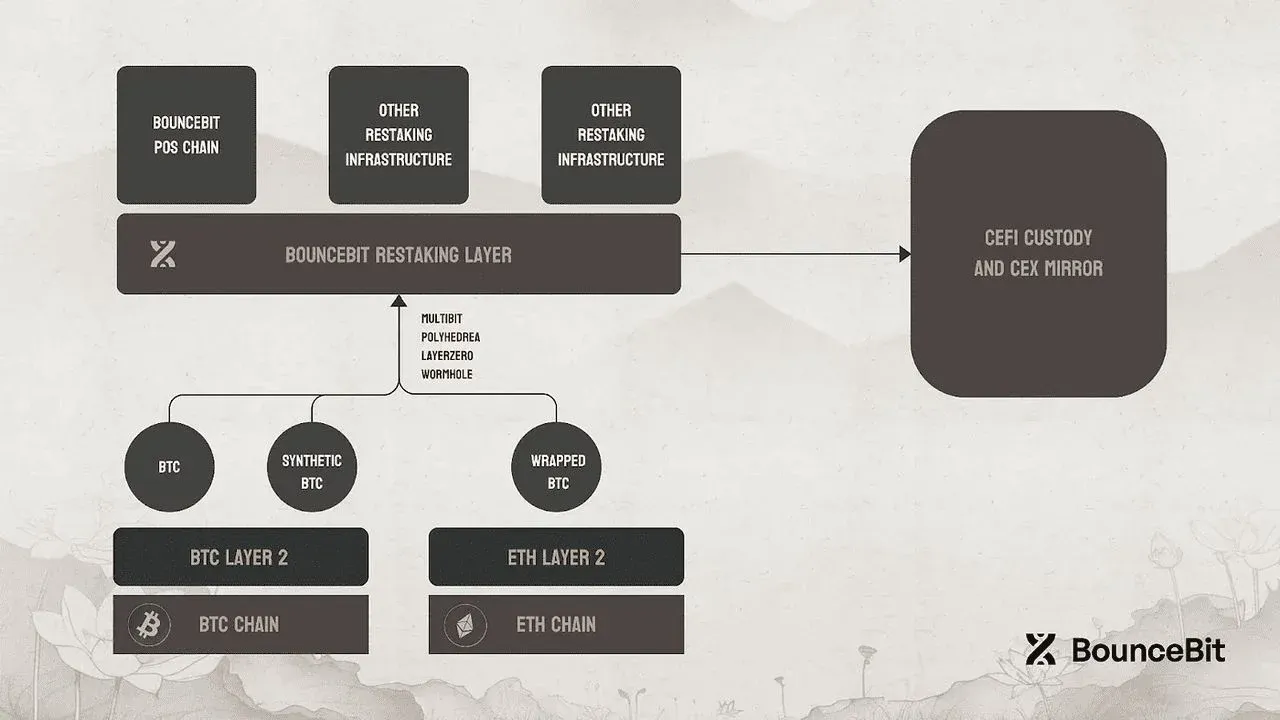
BounceBit secures its EVM‑compatible Layer 1 by requiring both native BTC and the BB token to be staked together. Users do not need to wrap BTC; they simply collaborate with custodians like Ceffu to delegate BTC and BB simultaneously, receiving network rewards. This design introduces a “CeDeFi” hybrid model that blends centralized‑finance treasury‑bond strategies with on‑chain restaking yields, opening institution‑grade profit strategies to retail participants.
The platform also offers RWA yields, dual‑token structured products, and the BounceClub aggregator. With regulatory licences and multi‑layer custody, BounceBit bridges CeFi and DeFi, allowing Bitcoin to play a larger role in network consensus.
4. Lorenzo Protocol (BANK): Bitcoin Liquidity Finance Layer
Lorenzo merges Bitcoin restaking with a liquidity abstraction layer, issuing two token types: stBTC (a liquid‑staking token linked to Babylon yields) and enzoBTC (a 1:1 wrapped BTC standard). These instruments let users trade on‑chain funds, structured‑yield products, and secondary‑market restaking receipts, enabling scenario‑driven CeFi strategies.
By mid‑2025 Lorenzo’s TVL approached US $550 million, with roughly 5,000 BTC staked. The platform integrates custodial services from Ceffu, Safe, Cobo, and collaborates with Chainlink and LayerZero to secure cross‑chain transfers. For institutions, Lorenzo supplies compliant asset‑management solutions; for advanced users, it offers deep liquidity restaking and strategy execution tools.
5. Pell Network (PELL): Full‑Chain BTC Restaking and DVS Hub
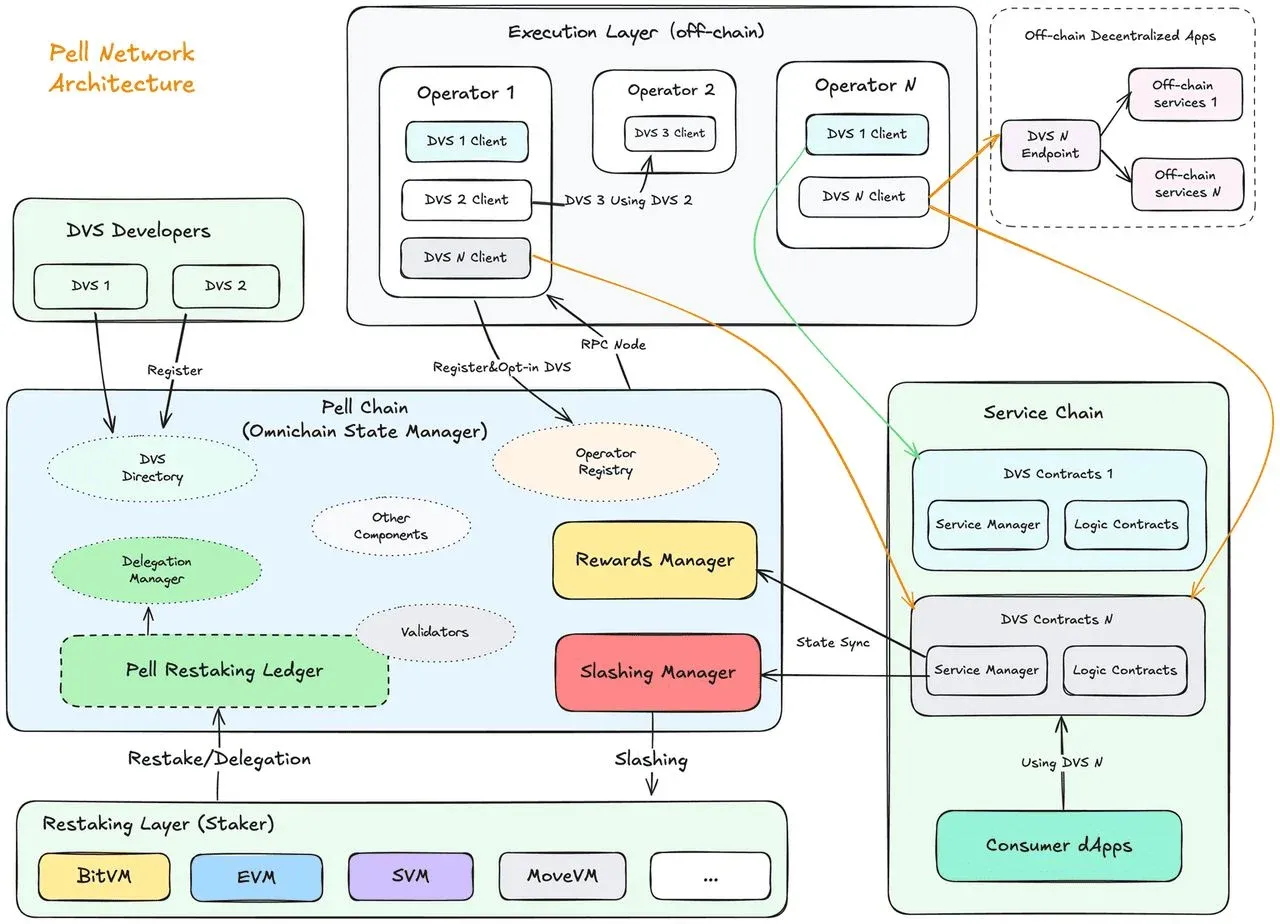
Pell positions itself as the first full‑chain Bitcoin restaking platform, building a Decentralized Validation Service (DVS/AVS) layer that supports oracles, data‑availability, AI computation, and cross‑chain bridges. In 2025 the total value of its restaking tokens surpassed US $530 million, with over 500,000 users. Pell’s all‑chain framework lets new protocols rent BTC as a security guarantee, lowering the cost of building their own validator sets and raising overall decentralization.
Integrations with Babylon, Rootstock, ZKsync Era, and others make Pell a pivotal hub in the emerging BTCFi space, enabling Bitcoin’s security to be reused across a broader set of decentralized applications.
6. b14g: No‑Slashing Dual‑Staking Design
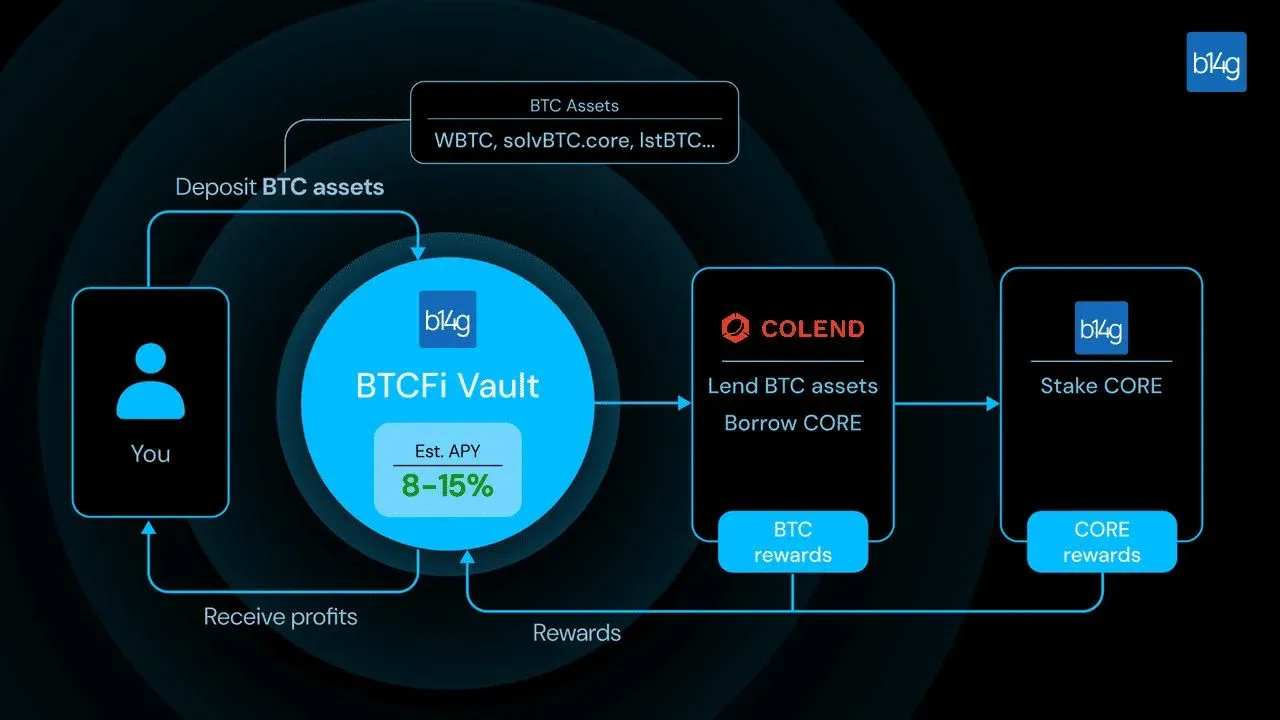
b14g introduces a dual‑staking model that requires users to lock both BTC and the protocol’s native token to provide network security. Unlike traditional restaking that pays rewards via newly issued tokens, b14g’s native token participates directly in the security mechanism, curbing token‑supply inflation and immediate sell‑offs. BTC remains in the user’s wallet under a non‑custodial timelock, eliminating bridge or slashing risk—ideal for stakers seeking a stable environment.
The protocol offers a plug‑and‑play modular framework; issuers can tailor security requirements to their tokenomics. Currently, BTC accounts for under 0.3 % of the total stake. b14g estimates that if Bitcoin’s staking ratio approached Ethereum’s 28 %, dual‑staking could unlock roughly US $5 trillion of latent value.
7. Chakra: Cross‑Chain Settlement Leveraging Restaked BTC
Chakra employs a cross‑chain PoS architecture and a shared‑security layer, bridging native BTC and its derivative assets to more than 20 chains. By mid‑2025 the platform’s TVL exceeded US $120 million, with over 50,000 active users. Through Merkle‑Root voting and optimized validator roles, Chakra can settle cross‑chain transfers within seconds, achieving highly efficient BTC liquidity migration.
The protocol addresses the interoperability challenge of restaked BTC, opening broader horizons for both LST (Liquid Staking Tokens) and LRT (Liquid Restaking Tokens) markets, allowing applications to share Bitcoin’s security without building their own validator sets.
How to Restake BTC: Step‑by‑Step Guide
The following instructions are based on Babylon, the market’s most mature trustless Bitcoin restaking protocol, and are designed to help beginners get started quickly.
1. Acquire BTC
Purchase Bitcoin on a spot market. For fiat deposits, use USD via SEPA or SWIFT; U.S. residents should employ Binance.US rather than the global Binance platform.
2. Prepare a Wallet
Set up a self‑custodial Bitcoin wallet for the timelock and download a Cosmos‑compatible wallet (e.g., Keplr) to interact with Babylon.
3. Open the Babylon Staking Dashboard
Visit Babylon’s official site, click “Staking Interface,” and connect both your Bitcoin wallet and Cosmos wallet, ensuring your BTC is on the mainnet.
4. Choose a Finality Provider
Select a trusted finality provider (FP) or use a liquid BTC LST such as Lombard’s LBTC. Decide which network you wish to secure and which reward path you prefer.
5. Timelock and Register the Stake
Enter the amount of BTC you wish to lock, confirm the lock‑up period, then sign and broadcast the timelock transaction from your Bitcoin wallet. Afterwards, complete the staking registration on Babylon Genesis so the system recognizes your position.
6. Delegate and Monitor
If prompted, delegate voting power to the chosen FP. You can then monitor holdings, rewards, and any multi‑staking status in real time via the dashboard.
7. Unbond / Withdraw
When you need to retrieve your BTC, use the dashboard’s “Unbond” function to initiate the unlock. Pay attention to the protocol‑specified waiting period to ensure the funds become spendable after unlocking.
If you prefer custodial or institutional routes, providers such as Hex Trust, stakefish, and Kiln offer fully integrated guides for Babylon. Always verify the authenticity of official links before proceeding.
What Are the Risks of Restaking Bitcoin (BTC)?
Although restaking offers extra yield and shared security, it remains experimental infrastructure, and its risk profile differs from simply holding Bitcoin or staking ETH. Before participating, carefully assess the following aspects:
- Penalty and Slashing Models: Some protocols (e.g., Babylon) impose fines for validator misbehavior or breach of service‑level agreements. While Bitcoin itself cannot be directly slashed, violating protocol terms may result in locked BTC or monetary penalties. Understanding each platform’s penalty rules is essential.
- Smart‑Contract and Bridge Risks: Even “trustless” systems rely on new contract layers, cryptographic proofs, or cross‑chain relays. Code bugs, governance exploits, or bridge failures could lead to partial or total loss of assets. Prioritize projects that have completed third‑party audits and diversify across multiple protocols to mitigate single‑point risk.
- LST/LRT Liquidity and Decoupling Risks: Liquid staking tokens such as stBTC or SolvBTC may diverge from the underlying BTC price during extreme market conditions, making redemption difficult. Before committing, check redemption pathways, withdrawal caps, and the depth of secondary‑market liquidity.
Tax Note: Crypto gains, including those earned from Bitcoin restaking, may be taxable in your jurisdiction. Consult a tax professional to understand applicable reporting requirements.
Summary
Bitcoin restaking is moving from concept to concrete implementation. In 2025, Babylon remains the central hub, while Solv, BounceBit, Lorenzo, Pell, b14g, and Chakra provide diversified yield, liquidity, and security‑sharing solutions. Participants should thoroughly review each protocol’s custody model, penalty mechanisms, audit reports, and TVL trends before allocating capital, and employ diversification to reduce concentration risk.
Remember that restaking is a rapidly evolving field; platform TVL, integration progress, and security posture can change at any time. Rely on official documentation and trusted data sources such as DeFiLlama for up‑to‑date information, treat restaking as an experimental activity with upside potential rather than a guaranteed income product, and only commit BTC you can afford to lose.
This concludes the full overview of “What Is Bitcoin Restaking? The Top Bitcoin Restaking Protocols Worth Watching in 2025.” For deeper analyses, search for previous Bitaigen (比特根) articles or continue exploring the related content below. Thank you for your interest and support!
💡 Register on Binance with referral code B2345 for the maximum trading fee discount. See Binance complete guide.



