
 Bitaigen Research
In today’s rapidly evolving blockchain landscape, grasping the distinction between the base network (Layer 1) and its overlay scaling solutions (Layer 2) is valuable for both developers and end‑users. Layer 1 supplies a secure, decentralized foundation, while Layer 2 builds on that foundation by handling transactions off‑chain or applying other optimizations to boost throughput and lower fees. The following sections systematically examine the concepts, functionalities, advantages, and limitations of the two‑layer architecture, helping readers understand how to choose the most suitable approach for different use cases.
In this article we outline the core differences between blockchain Layer 1 and Layer 2, deeply analyze each’s security, decentralization, and scaling mechanisms, and discuss the trade‑offs they present in real‑world applications. By providing a structured comparison, we aim to assist developers and users in quickly pinpointing the most appropriate technical path. Subsequent sections will offer more detailed case studies and implementation pointers, so a careful read is recommended.
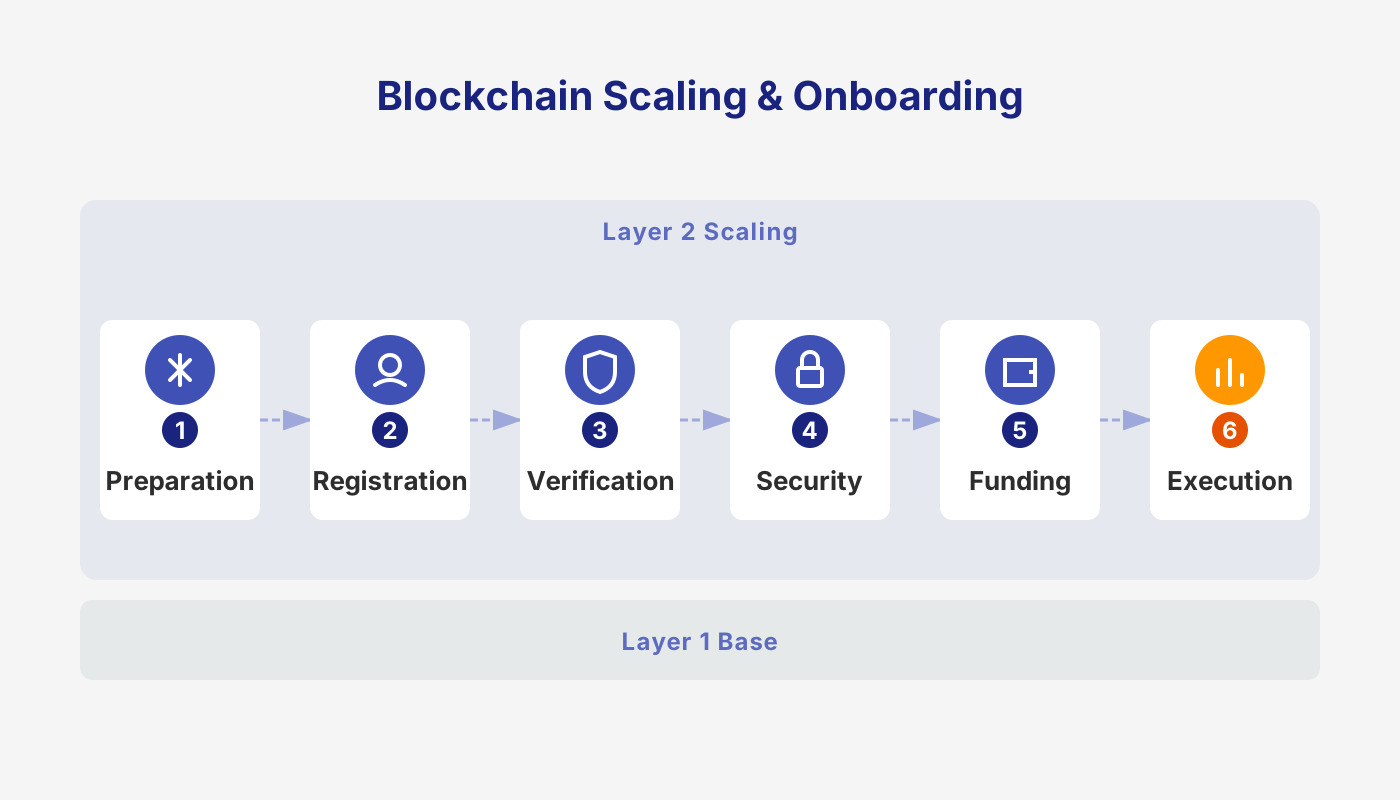
2. Overview of Layer 2 Solutions
Layer 2 consists of additional protocols or frameworks that sit atop a main chain, aiming to alleviate the scaling bottlenecks of Layer 1. They typically move the majority of transactions off‑chain, periodically committing aggregated results back to the main chain to achieve faster confirmations and reduced costs. While this design improves usability, it also alters the security model, requiring a balance between decentralization and efficiency.
- Enables faster transaction processing outside the main chain
- Significantly reduces fees through aggregation or compression techniques
- Offers a flexible architecture that can be tailored to various business requirements
- May involve some trade‑offs in security or decentralization
- Interacts with Layer 1 for final settlement and security verification
1. Fundamental Characteristics of Layer 1 Blockchains
As the bedrock of the blockchain ecosystem, Layer 1 directly handles transaction validation, recording, and permanent data storage. Through decentralized consensus mechanisms, it guarantees network security and censorship resistance, and supports the deployment of smart contracts and decentralized applications (dApps). However, when network load spikes, throughput and fees often become limiting factors.
- Operates independently, without reliance on other network layers
- All transactions are processed on the main chain itself
- Provides high security and decentralization guarantees via low‑level consensus
- May experience congestion and fee spikes during peak periods
- Supplies the foundational environment for decentralized applications
3. Core Differences Between Layer 1 and Layer 2
The two layers occupy distinct roles: Layer 1 is the underlying protocol focused on security and decentralization; Layer 2 is an augmentation that emphasizes scalability and cost efficiency. Clearly understanding this division helps project teams decide whether to interact directly with the main chain or to leverage a Layer 2 solution for a smoother user experience.
- Layer 1 is the main chain itself; Layer 2 is built on top of it
- Transactions are completed on Layer 1, whereas Layer 2 may initially process them off‑chain
- Security and decentralization are the core of Layer 1; Layer 2 concentrates on increasing throughput and lowering fees
- During high‑traffic periods, Layer 1 transaction speed can be constrained, while Layer 2 offers faster, cheaper channels
- Layer 2 enhances, rather than replaces, the capabilities of Layer 1
4. Advantages and Limitations of Layer 1
The greatest strength of a base chain lies in its robust security model and decentralization, which make every record immutable—ideal for value storage and critical business infrastructure. Yet, the design of consensus algorithms limits scalability, often leading to congestion and fee surges when transaction volume peaks.
- Leverages decentralized consensus to achieve a high level of security protection
- Transaction records are immutable, ensuring system trustworthiness
- Provides a reliable platform for smart contracts and dApps
- Scalability is constrained, potentially resulting in network congestion
- Transaction fees tend to rise significantly during peak usage
5. Advantages and Limitations of Layer 2
Layer 2 solutions perform most computation and transaction handling off‑chain, dramatically increasing the number of transactions processed per second and driving fees down, making them well‑suited for high‑frequency interaction scenarios. However, off‑chain operations introduce additional security considerations and increase the complexity of integration with the main chain, requiring developers to conduct thorough risk assessments.
- Greatly improves scalability, capable of handling thousands of transactions per second
- Lower costs make blockchain adoption more accessible
- Flexible architecture allows customization for diverse business models
- Off‑chain transactions may introduce extra security risks
- The interfacing and settlement process with the main chain is relatively complex
Conclusion
In summary, Layer 1 and Layer 2 play complementary roles within the blockchain ecosystem: the former offers a secure, decentralized foundation, while the latter builds on that foundation to deliver efficient, low‑cost scaling. Understanding the characteristics and trade‑offs of each layer helps developers select the technology stack that best aligns with their business requirements. As blockchain use cases continue to diversify, this layered approach will remain a key driver of the industry’s ongoing evolution.
This article concludes here. For deeper analyses of blockchain layering, you can search for Bitaigen (比特根) to explore previous posts or continue browsing the related links below. We appreciate your continued interest and support for Bitaigen (比特根)!
Localization note: When converting cryptocurrency proceeds to fiat, use USD and process transfers via SEPA or SWIFT where applicable. Residents of the United States should use Binance.US rather than the global Binance platform. Crypto gains may be taxable under local jurisdiction; please consult a qualified tax professional for guidance.
Related Reading
- Top 10 Blockchain Exchange Apps: Best Security, Fees & Features 2026
- Top 10 Virtual Currency Trading Platforms in 2025
- Succinct (PROVE): Decentralized ZKP Network on Ethereum
💡 Register on Binance with referral code B2345 for the maximum trading fee discount. See Binance complete guide.



