
 Bitaigen Research
 In the Ethereum ecosystem, tokens represent a variety of digital assets. One of the most important Ethereum tokens is ERC‑20, which has become a technical standard. This article provides a detailed overview of ERC‑20’s definition, advantages, and limitations, and lists other common Ethereum standards to help you quickly grasp the fundamentals.
ERC‑20 is the technical standard on Ethereum for issuing interchangeable tokens; other standards include ERC‑721, ERC‑1400, ERC‑223, ERC‑777, and so on.
In this article we outline the core concepts of ERC‑20 and its role within the Ethereum ecosystem, and we compare it with other common standards such as ERC‑721 and ERC‑1400. By breaking down the technology clearly, readers can quickly understand the basic rules for token issuance and the direction for choosing a standard. Subsequent sections will delve deeper into the strengths and drawbacks of each standard, making a thorough read worthwhile.
What Is ERC‑20?
ERC‑20 (Ethereum Request for Comment 20) is the 20th proposal number put forward by the Ethereum community. The proposal enumerates the functions and events that must be adhered to when creating, transferring, and using tokens at a specific contract address, forming the most widely used token protocol today.
ERC‑20 tokens are digital assets that can be freely issued on the Ethereum network. Typical examples include the stablecoin Tether (USDT) – pegged to USD – and the oracle service Chainlink (LINK). Anyone, from individuals to enterprises, can write a smart contract that follows the standard and issue a token compliant with ERC‑20, commonly used for project financing, voting‑right allocation, and similar scenarios.
Why Create an ERC‑20 Token?
Ethereum allows users to create their own tokens, but in the early days there was no unified interaction rule, making interoperability between different tokens difficult. To solve this problem, the community defined the ERC‑20 rule set at the smart‑contract level. All tokens published on the network must implement these interfaces, ensuring:
- Compatibility between tokens
- Plug‑and‑play support for wallets, exchanges, and other applications
- Lower technical barriers for cross‑project collaboration
Other blockchains have also adopted the specification; for example, Binance Smart Chain’s BEP‑20 is a reimplementation based on ERC‑20 (US users should use Binance.US rather than the global Binance platform).
Core Functions of the ERC‑20 Standard
An ERC‑20 contract must implement the following key functions and events:
| Function/Event | Description |
|---|---|
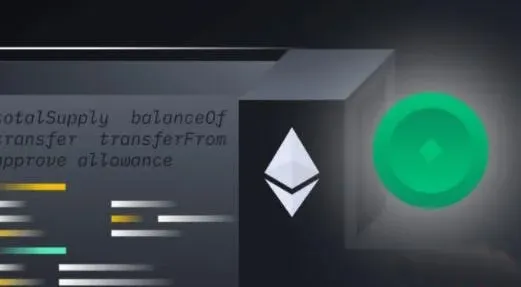
| `totalSupply()` | Returns the total supply of the token |
| `balanceOf(address account)` | Queries the balance of a specific address |
| `transfer(address recipient, uint256 amount)` | Moves tokens from the caller to the target address |
| `transferFrom(address sender, address recipient, uint256 amount)` | Executes a transfer on behalf of the sender (requires prior approval) |
| `approve(address spender, uint256 amount)` | Grants a specific address permission to spend a certain amount of tokens |
| `allowance(address owner, address spender)` | Queries the amount that has been approved for spending |
| `Transfer` (event) | Logs each transfer operation |
| `Approval` (event) | Logs approval information |
These interfaces enable external applications (such as wallets and decentralized exchanges) to uniformly read and interact with any ERC‑20 token.
Advantages of ERC‑20 Tokens
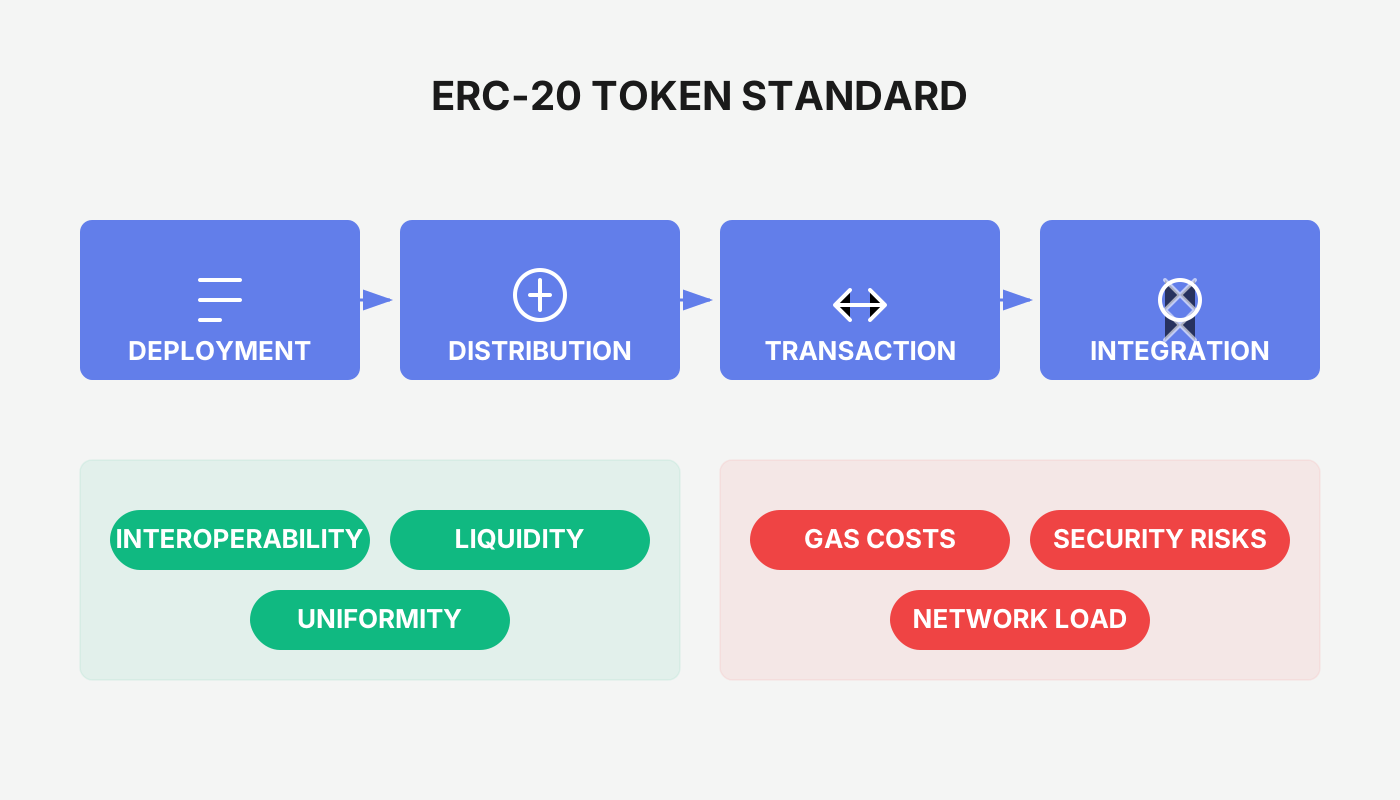
- Easy Deployment
Smart contracts written in Solidity or Vyper can quickly issue ERC‑20 tokens, lowering the entry barrier.
- Highly Customizable
Developers can add business logic on top of the standard functions, such as automatic gas reimbursement, freeze/unfreeze mechanisms, or centralized minting.
- Unified Blueprint
The standard provides a complete interface definition, avoiding the need to build from scratch and improving development efficiency.
- Standardized Interaction
A single protocol lets wallets and exchanges support all ERC‑20 tokens at once, enhancing user experience.
- Liquidity Boost
The large number of projects built on ERC‑20 creates an ecosystem network that encourages token circulation on exchanges and DeFi platforms.
- Broad Compatibility
Major exchanges and wallets have built‑in ERC‑20 support, generally requiring no extra integration work.
- Anti‑Counterfeit Mechanism
All transfers must go through the `approve` and `transferFrom` authorization flow, facilitating audits and preventing duplicate issuance.
Limitations of ERC‑20 Tokens
| Issue | Explanation |
|---|---|
| **Network Instability** | Ethereum is transitioning from Proof‑of‑Work to Proof‑of‑Stake (ETH 2.0), which may cause on‑chain fluctuations during the migration. |
| **High Gas Fees** | Every transaction requires gas; costs rise sharply when the network is congested. |
| **Transfer Errors** | Sending tokens to a contract address that lacks a proper receiving function can lock the assets permanently. |
| **Transaction Delays** | Blockchain throughput is limited; network congestion slows confirmation times. |
| **Irreversibility** | Mistaken or stolen transfers cannot be recovered, so users must verify addresses carefully. |
| **Low Entry Barrier** | Anyone can issue a token, leading to a proliferation of low‑quality or fraudulent projects. |
Other Ethereum Token Standards
Beyond ERC‑20, Ethereum defines several other standards to meet different needs:
- ERC‑721: Non‑fungible token (NFT) standard; each token is unique and is widely used for digital art, collectibles, etc.
- ERC‑1400: Standard for security‑type tokens, incorporating KYC and compliance controls.
- ERC‑223: Improves transfer safety by preventing tokens from being sent to contracts that cannot handle them.
- ERC‑777: Maintains backward compatibility while reducing transaction costs and adding richer hook functions.
Outlook for ERC‑20
Although ERC‑20 remains the dominant token standard, its inherent shortcomings have spurred the development of improvements such as ERC‑223 and ERC‑777. With the rollout of Ethereum scaling solutions (e.g., sharding, Rollup), gas costs and transaction latency are expected to drop further. In the future, ERC‑20 may continue to coexist as a foundational protocol, or it could gradually be supplanted by more efficient standards.
This completes the full analysis of “What is ERC‑20? What other Ethereum standards exist?” For deeper technical details on ERC‑20, please follow additional articles from Bitaigen (比特根).
Related Reading
- Understanding ERC20: Definition, Implementation, and Its Role in Ethereum DeFi
- ERC20 Guide: Standards, Gas & Secure Token Storage
- Ethereum: Vitalik Buterin, Smart Contracts & ERC Standards
💡 Register on Binance with referral code B2345 for the maximum trading fee discount. See Binance complete guide.



