
 Bitaigen Research
 We have discovered that the latest version of MetaMask is fully compatible with EIP‑1559. This article examines the core changes of the new miner fee mechanism from a user’s perspective and demonstrates how to flexibly adjust the priority fee within the wallet, helping you make more informed choices between transaction speed and cost. For detailed steps and the underlying principles, keep reading.
MetaMask “Fox” Wallet Now Supports EIP‑1559 – A Quick Guide to the New Miner GAS Fees
In the most recent release, MetaMask continues to provide a real‑time priority fee recommendation, assisting users in finding a suitable balance between transaction speed and expense. If a transaction is especially urgent, users can click Edit on the transaction page to manually tweak this value, as shown below.
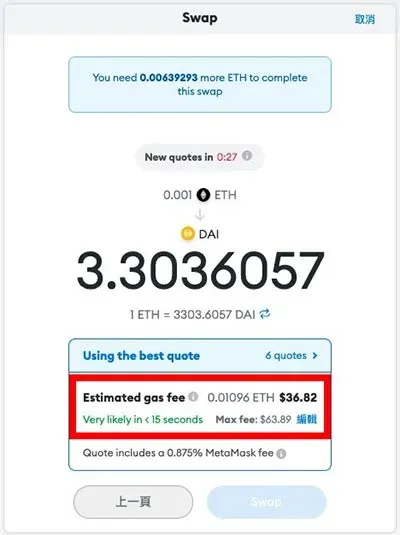
After clicking Edit, the following window appears for further configuration.
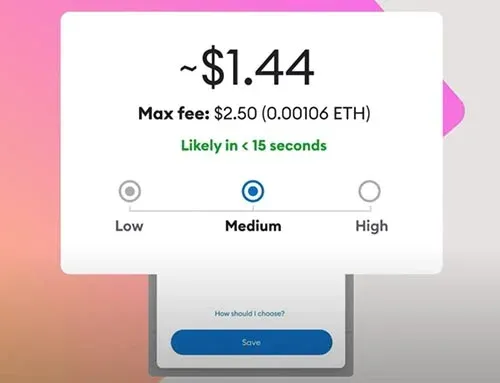
---
Recommended Priority Fee vs. Manual Adjustment
MetaMask’s browser‑extension version now includes a priority‑fee suggestion that syncs with on‑chain conditions. If the default recommendation does not meet your needs, expand Advanced options to reveal three adjustable parameters:
- Max priority fee – the highest tip you are willing to pay miners, expressed in GWEI.
- Max fee – the sum of the base fee and the priority fee.
- Gas Limit – the maximum amount of gas a single transaction may consume, used to guard against excessive consumption caused by contract vulnerabilities.
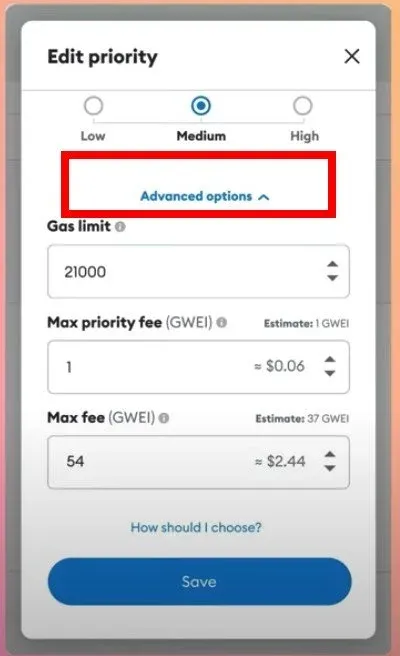
In practice, the highest possible transaction cost is Gas Limit × Max fee, illustrated below:
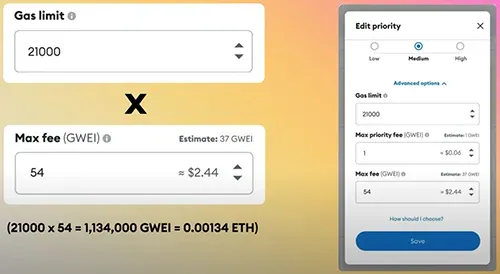
It is important to note that Max fee corresponds to the Gas Price used in the legacy fee model. The 21,000 gas shown in the diagram is the minimum requirement for a standard transfer. Under the old calculation, total cost equals Gas Price × Gas Limit; treating Max fee as the per‑unit price and Gas Limit as the maximum number of execution units yields an equivalent understanding.
---
Overview of the EIP‑1559 Fee Structure
EIP‑1559 splits an Ethereum transaction’s cost into two components: Base fee and Priority fee. The base fee is the mandatory minimum that every transaction must pay; it is burned (removed from circulation) when the block is finalized. The priority fee is a voluntary “tip” paid to miners to increase the likelihood that the transaction will be included promptly.
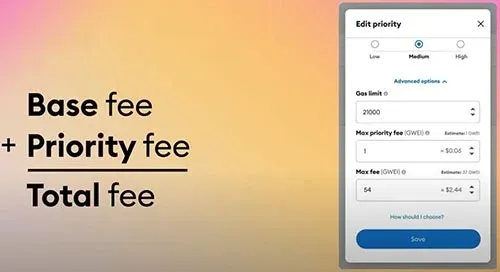
After EIP‑1559 activation, the protocol automatically adjusts the Base fee according to current demand and block capacity. Users of MetaMask mainly need to focus on setting an appropriate Priority fee.
---
How Network Conditions Influence the Priority Fee
When the blockchain is relatively idle, transactions are likely to be included quickly regardless of the tip size. The figure below visualizes three priority‑fee levels—high (green), medium (yellow), and low (red)—and their typical inclusion outcomes.

During periods of congestion, low‑priority (red) transactions may be ignored by miners and have to wait for subsequent blocks. In such cases, the medium‑ and low‑priority (yellow and red) transactions are delayed, as illustrated here:
---
The Role of Gas Limit
Gas Limit defines the maximum amount of gas a single transaction may consume. This ceiling protects against runaway execution when a smart contract contains bugs or malicious code. If you set the limit too high, any unused gas is refunded after the transaction completes. Conversely, a limit that is too low may cause the transaction to run out of gas and fail.
---
Summary
The sections above have explained MetaMask’s support for EIP‑1559, clarified the concept of the priority fee, and demonstrated how fees behave under different network conditions. For further guides on downloading and using the “Fox” wallet, stay tuned to upcoming articles from Bitaigen (比特根).
Additional notes for a global audience:
- When converting crypto proceeds to fiat, you may use USD transfers via SEPA or SWIFT, depending on your jurisdiction.
- U.S. residents should access Binance services through Binance.US rather than the global Binance platform.
- Crypto gains can be taxable in many countries; please consult a local tax professional to ensure compliance with your region’s regulations.
💡 Register on Binance with referral code B2345 for the maximum trading fee discount. See Binance complete guide.



