
 Bitaigen Research
As the blockchain ecosystem continues to evolve, the number of independent networks keeps growing. Ethereum, Solana, Sui and many other blockchains each offer distinct advantages, but they naturally do not speak the same language. The lack of communication between blockchains creates friction for developers and users, limiting how cross‑chain applications operate and how easily assets or data can move from one chain to another.
Hyperlane (HYPER) is a cross‑chain messaging layer protocol that enables permissionless, secure communication across more than 140 blockchains, with its native token HYPER used for staking, validator election, and network incentives.
In this article we outline the core principles of the Hyperlane cross‑chain protocol, dissect the role of the HYPER token in secure messaging, validator incentives, and network governance, and help readers quickly grasp its technical strengths and ecosystem outlook. Subsequent sections will dive deeper into implementation details and real‑world use cases, making it a worthwhile read.
What is Hyperlane (HYPER)?
Hyperlane (short‑hand HYPER) is a cross‑chain interoperability protocol founded in 2022 by Jon Kol, Asa Oines and Nam Chu Hoai. It aims to solve the communication problem between blockchain networks. Hyperlane allows smart contracts to send messages, trigger functions, and move data across chains—not just transfer tokens—thereby supporting decentralized applications (DApps) that operate across multiple ecosystems.
- Permissionless: Developers can deploy the protocol on more than 140 chains—including Arbitrum, Solana, Cosmos‑SDK‑based chains, and others—without any additional approvals.
- Modular design: Supports interoperability between Layer 1, Layer 2, and purpose‑built application chains, offering flexibility for project expansion.
- Interchain Security Module (ISM): A customizable smart‑contract component that verifies the source and authenticity of cross‑chain messages, satisfying varying security requirements.
How Hyperlane Works
Hyperlane splits cross‑chain communication into two major components—Transport and Security—giving developers fine‑grained control.
1. Mailbox contract
Every chain that supports Hyperlane deploys a Mailbox contract, which acts as the entry and exit point for messages.
- dispatch: A contract on Chain A calls this function to send a message; the message is immediately written into a Merkle tree, producing a verifiable proof.
- process: The Mailbox on Chain B calls this function to finalize delivery and forwards the message to the appropriate application contract.
2. Relayer
A Relayer is an off‑chain service that monitors Mailboxes and forwards newly created messages.
- Captures messages generated on the source chain and gathers metadata (including validator signatures).
- Sends the message to the destination chain’s Mailbox.
- The Relayer itself performs no trusted verification; anyone can run one, preserving the network’s decentralization.
3. Interchain Security Module (ISM)
The ISM (Interchain Security Module) validates the authenticity of cross‑chain messages through smart contracts.
- Checks whether a message received on the destination chain truly originated from the claimed source chain.
- Developers may choose the default ISM, a pre‑configured customizable version, or write their own bespoke ISM to match the security posture of their project.
4. Validators
Validators monitor Mailboxes on each chain and sign the Merkle roots, providing cryptographic proof of message validity.
- Each application can decide which validator set to use, supporting a single trusted party or a multi‑signature decentralized arrangement.
5. Interchain Gas Paymaster (IGP)
Cross‑chain messages consume gas on both the source and destination chains. The IGP (Interchain Gas Paymaster) contract lets users pre‑pay gas on the source chain; those funds are later used to cover execution costs on the destination chain, improving user experience and ensuring Relayers can forward messages promptly.
6. Warp Routes
Warp Routes are Hyperlane’s built‑in token bridge solution, supporting the cross‑chain transfer of ERC‑20 tokens, NFTs, and native assets.
- The asset on the source chain is locked, and a corresponding wrapped token is minted on the destination chain.
- When returning, the wrapped token is burned and the original asset is unlocked.
- This process also relies on Hyperlane’s messaging and ISM verification, maintaining a consistent security model.
What Is the HYPER Token Economy?
HYPER is the native token of the Hyperlane protocol and fulfills core functions such as staking, validator election, and network incentives. The token is issued on Ethereum, BNB Chain, Arbitrum, Base, and Optimism, with a maximum supply of 1 billion tokens and a planned 25‑year linear release schedule. At launch, 177.7 million tokens were in circulation.
- Staking and liquid staking: Users can stake HYPER into the Symbiotic vault and receive stHYPER, a token representing their share of the staking pool. The longer HYPER is staked, the higher the HyperStreak bonus multiplier. Unstaking requires a waiting period of roughly 30–60 days.
- Validator rewards: Validators earn commissions proportional to the amount of HYPER they have staked, drawing revenue from the staking pool.
- Slashing mechanism: Validators that submit invalid or malicious data have a portion of their staked HYPER confiscated, preserving the integrity of cross‑chain messages.
- Network rewards: Stakers, validators, and message senders all receive periodic rewards, encouraging long‑term participation and boosting protocol security.
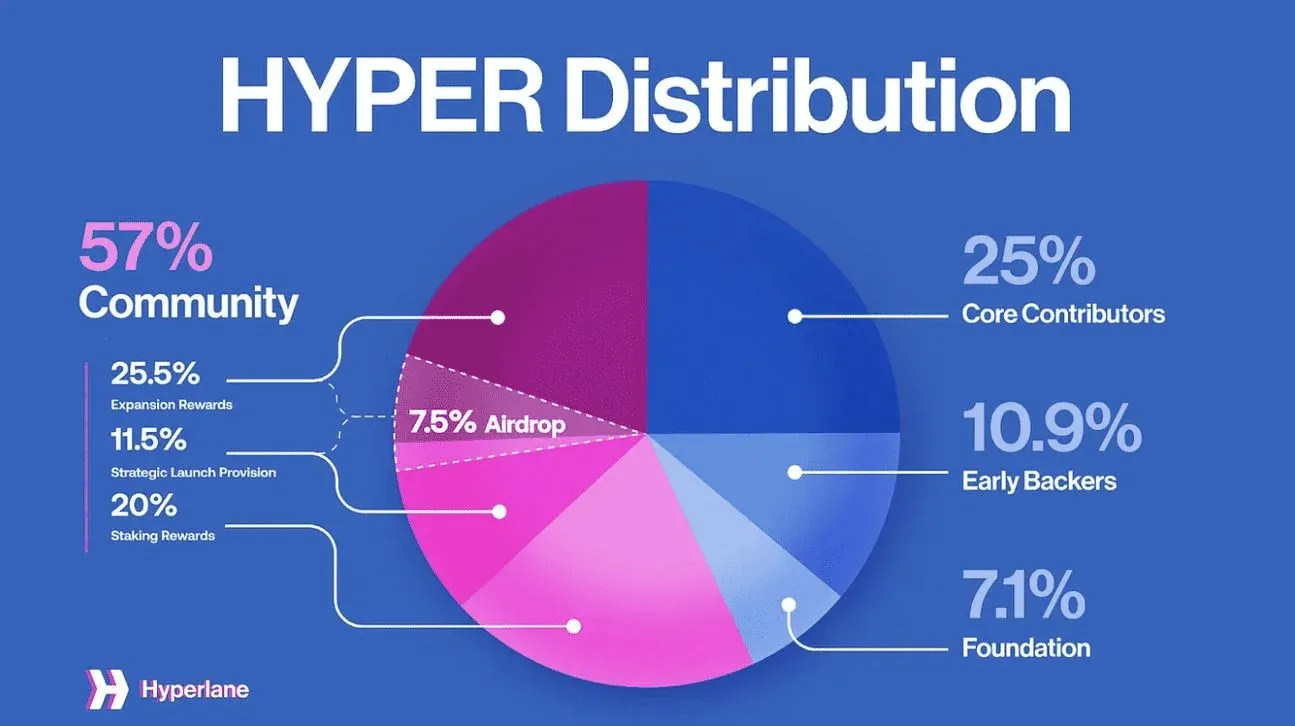
Hyperlane (HYPER) Token Distribution
*(The original distribution chart or textual description is retained here unchanged.)*
Is Hyperlane Secure?
Hyperlane employs ISM to implement a flexible security model that lets projects configure their own verification layers.
- Composable security modules: Simple applications can use the default ISM, while more complex scenarios may introduce multi‑signature or validator‑signature layers for additional protection.
- Penalty system: Validators that sign invalid messages face partial slashing of their staked HYPER, incentivizing honest behavior.
- Decentralized participation: Both Relayers and validators can be run by anyone; the network’s security depends on broad community involvement rather than a single point of trust.
Why Does HYPER Have Long‑Term Potential?
- Core cross‑chain asset: Cross‑chain communication is a cornerstone of blockchain interoperability, and Hyperlane’s permissionless, modular design offers high scalability.
- Robust incentive structure: Stakers, governance participants, and liquidity providers can earn HYPER rewards by taking part in the ecosystem, driving activity.
- Broad ecosystem integration: As more mainstream chains connect to Hyperlane, the application space for DeFi, NFTs, DAOs, and other use cases continues to expand.
- Potential deflationary mechanisms: Future implementation of fee‑back‑buy‑and‑burn schemes could further enhance the token’s long‑term value.
How to Purchase HYPER Tokens
- New users can follow this tutorial to download and register on the Binance app.
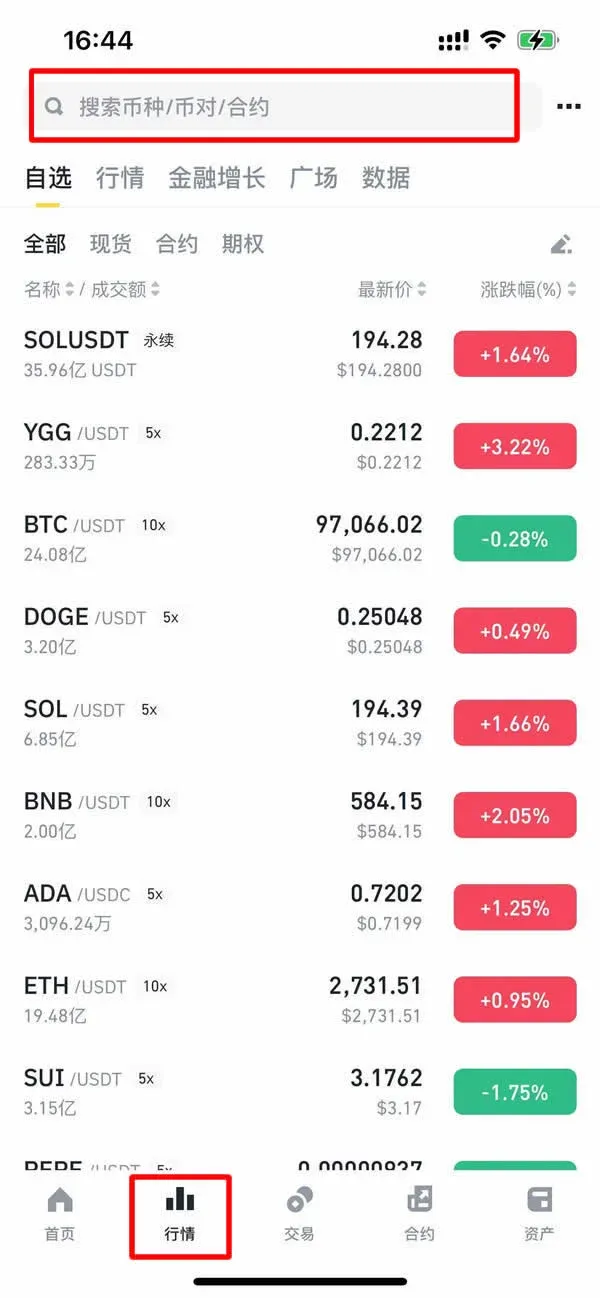
- After registration, open the Binance app (official download: https://www.binance.com/en/download). U.S. residents must use Binance.US (https://www.binance.us) instead of the global platform. Tap the Markets tab and use the search bar at the top.
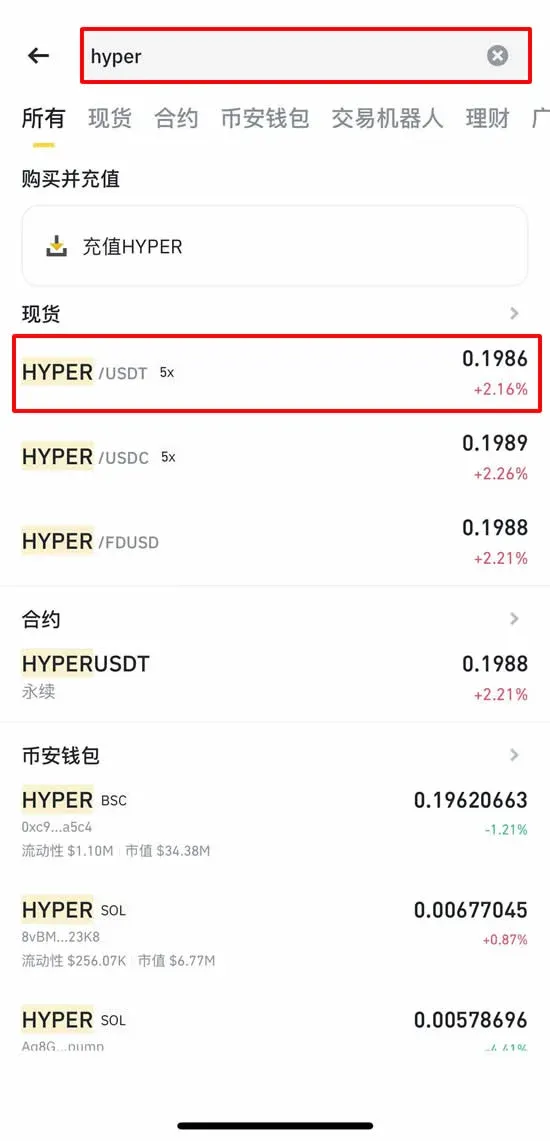
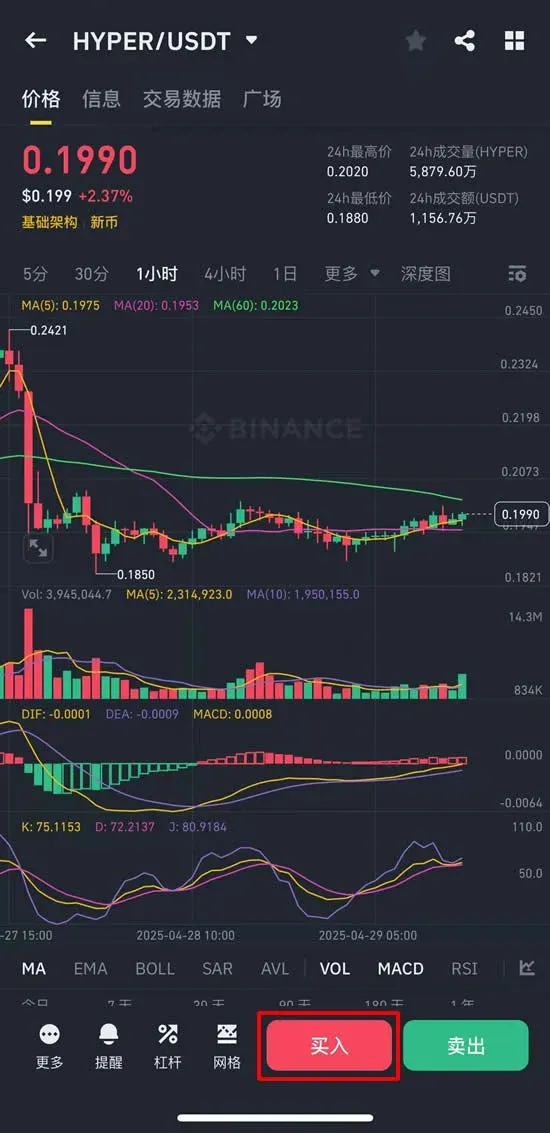
- Type HYPER (or BERA, the token’s former ticker). In the dropdown list, select HYPER/USDT (or BERA/USDT) and tap to open the trading page.
- Press the Buy button.
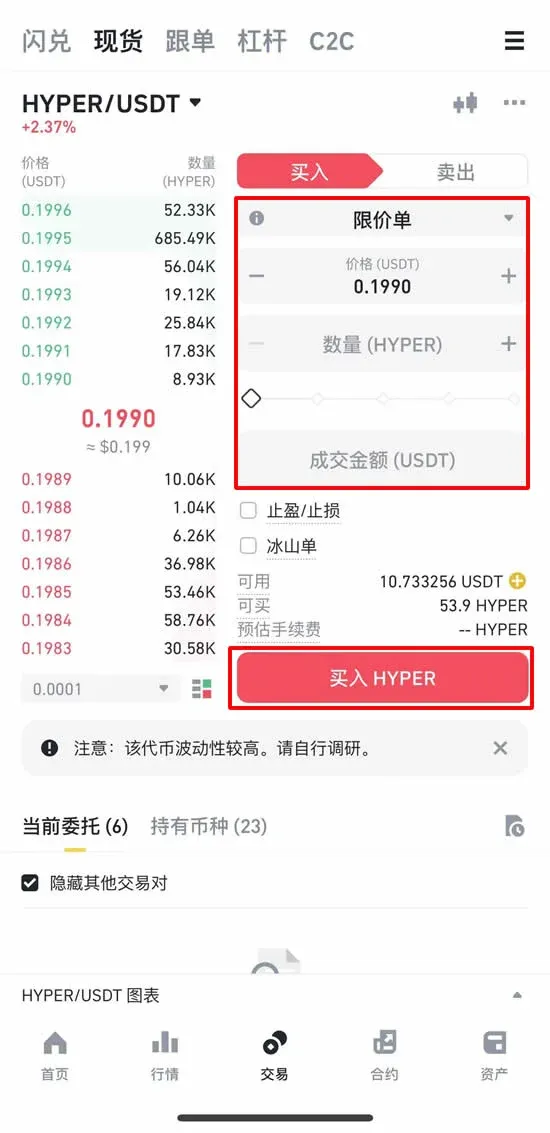
- Choose Limit Order → set the Price → enter the Quantity → confirm the Amount and finally click Buy HYPER.
Conclusion
Hyperlane introduces a flexible, open‑source solution for cross‑chain communication, enabling not only token transfers but also the carriage of data, commands, and real‑time interactive messages. Its modular architecture, permissionless deployment, and customizable security layer make it a valuable tool for developers operating in a multi‑chain environment.
As the blockchain landscape becomes increasingly complex, the demand for seamless cross‑chain infrastructure grows ever more urgent. Hyperlane meets this demand with an accessible and adaptable interoperability solution; the technology is ready, and the choice now lies with builders.
This article ends here. For a more comprehensive view of the HYPER token, please search for previous Bitaigen articles or continue reading the related links below. Thank you for supporting Bitaigen!
Related Reading
💡 Register on Binance with referral code B2345 for the maximum trading fee discount. See Binance complete guide.



