
 Bitaigen Research
Lobster is a Chinese‑language meme‑coin deployed on the BNB Smart Chain that went viral in the Chinese crypto community in March 2026. After being listed on several exchanges, its market capitalization briefly topped USD 10 million within a few days, posting a single‑day price surge of more than 190 % and becoming one of the most talked‑about Chinese meme‑coins in the first quarter of 2026.
Following the wave of Chinese meme‑coins that erupted in January 2026, projects such as “Wo Ta Ma Lai Le”, “Snowball”, and “Lao Zi” appeared. Lobster continued the cultural‑themed, community‑driven speculative model on the BNB chain. The token was launched via Four.meme, received its initial liquidity on PancakeSwap, and later expanded to centralized exchanges, illustrating the typical issuance path for BNB‑chain meme‑coins.
In this analysis we dissect Lobster from three angles—technology, community, and issuance model—to help readers understand the underlying mechanics, acquisition channels, and the potential risks and opportunities that may arise in 2026. The article provides practical step‑by‑step guidance and an independent value assessment, making it worth a careful read. By combining on‑chain data with community sentiment, we examine liquidity placement, marketing tactics, and we flag regulatory and market‑volatility considerations. These perspectives enable readers to form a more comprehensive view of whether to include this token in their asset allocation.
What is the Chinese meme‑coin Lobster?
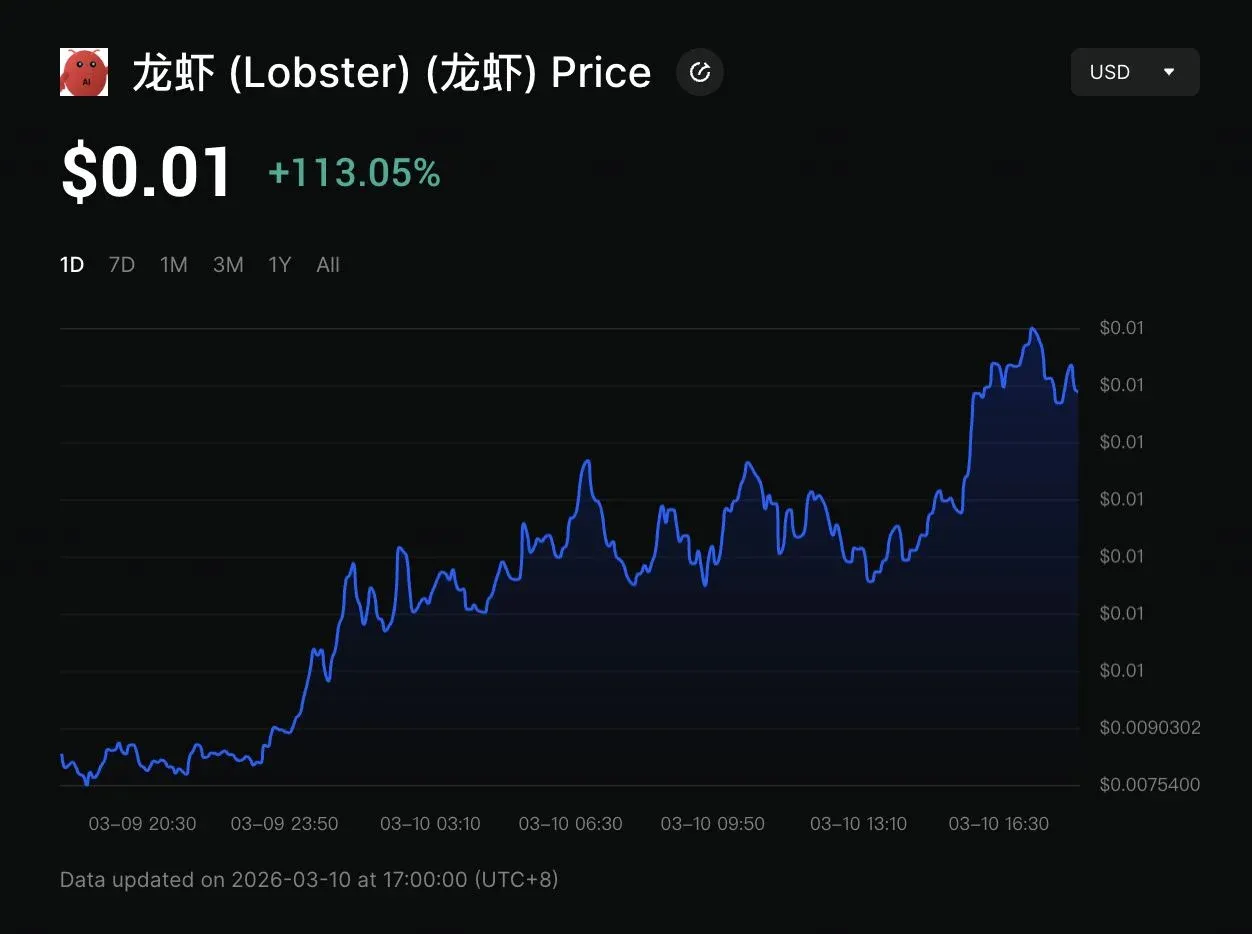
Lobster contract address: `0xeccbb861c0dda7efd964010085488b69317e4444`
Lobster is a Chinese‑language meme‑coin that lives on the BNB Chain and follows the standard fungible‑token model. It carries no utility, governance rights, or protocol‑level features. The token first attracted attention on the Four.meme platform—an entry point commonly used for launching Chinese meme‑coins on BNB—and subsequently saw most of its trading activity on decentralized exchanges such as PancakeSwap, where low fees and fast settlement are the norm.
The name derives from the “lobster” meme that is linked to the OpenClaw AI‑agent trend. As the phrase “养龙虾” (literally “raising lobsters”) gained popularity on Chinese internet forums to describe individual digital workers who run AI agents locally, the meme quickly resonated within both tech and crypto circles.
Mapping this cultural moment onto the blockchain, Lobster began to draw market attention in early March 2026. Within the first few hours of March 2 it surged roughly 150 %; according to GMGN data, its market cap briefly crossed USD 10 million by March 9, with a single‑day increase exceeding 190 %.
What is OpenClaw? How the “raising lobster” AI‑agent craze fueled the Lobster token
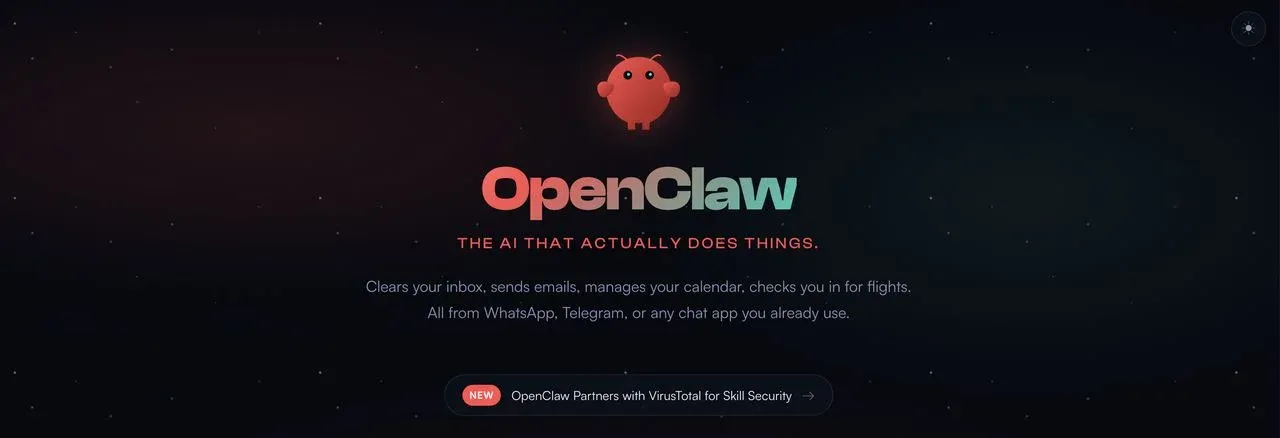
OpenClaw is an open‑source AI‑agent project that exploded in popularity in China from late 2025 through early 2026. Unlike traditional chatbots that only answer questions, OpenClaw can autonomously operate a user’s computer—drafting emails, processing spreadsheets, browsing the web, managing calendars, and even sending messages on platforms such as WeChat and DingTalk.
Its red lobster logo led Chinese users to affectionately nickname it “龙虾 (Lóngxiā)”. The phrase “养龙虾 (Yǎng Lóngxiā)”, meaning “raising a lobster,” became slang for installing and running OpenClaw as a personal AI‑assistant. Within a few months the project’s GitHub repository amassed over 250 k stars, ranking among the fastest‑growing open‑source projects of the period.
The buzz quickly spilled from developer forums into mainstream social media—Weibo, Xiaohongshu, Douyin, and others—all featuring discussions of the “working‑for‑you” AI shift. This cultural moment, often described as the transition from “talking AI” to “AI that works for you,” supplied the narrative backdrop for the emergence of the Lobster meme‑coin.
What is Four.meme? The leading launchpad for Chinese meme‑coins behind Lobster
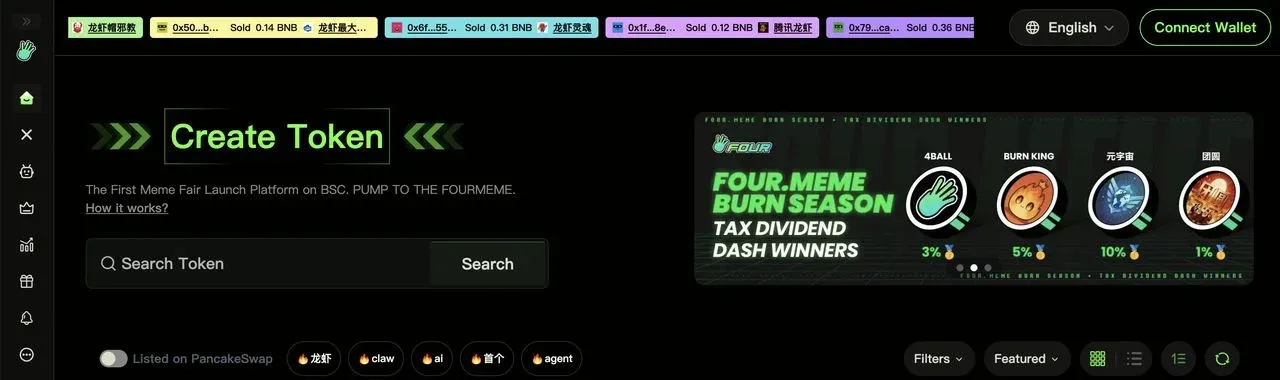
Four.meme is a BNB‑chain‑based meme‑coin launch platform where users can deploy and discover new tokens through a unified interface. The site displays contract addresses, total supplies, and early trading metrics, helping traders in the Chinese crypto community spot fresh projects quickly.
Lobster was listed on Four.meme right from the start, making it one of the platform’s early‑stage highlighted tokens. This exposure helped the token gather initial attention before its liquidity migrated to PancakeSwap and other DEXs, and later to centralized exchanges. Four.meme itself does not dictate a token’s performance; it simply provides early visibility and distribution channels, reflecting the typical issuance pathway for Chinese meme‑coins on BNB in 2026.
The Rise of Chinese Meme‑Coins on the BNB Chain
Chinese meme‑coins have become a recognizable sub‑category within the broader crypto market. Their core drivers are culture‑specific naming, internet humor, and rapid retail participation, rather than technical roadmaps or protocol utility. The segment first exploded in October 2025, a period traders dubbed the BNB Meme Season, with tokens such as “Binance Life”, “Hakimi”, and others pushing the total market cap of Chinese meme‑coins to a peak of USD 490 million.
A second wave emerged in January 2026, featuring projects like “Wo Ta Ma Lai Le”, “Snowball”, and “Lao Zi.” By mid‑January the sector’s market cap stabilized around USD 337 million, indicating that Chinese meme‑coins have evolved into a repeatable market cycle rather than a one‑off phenomenon. The BNB Chain remains the primary arena due to its low transaction fees and fast settlement, and launch platforms such as Four.meme have compressed the time from concept to on‑chain trading to just a few hours.
Lobster Token Economics
Lobster was issued via Four.meme using the standard meme‑coin template on the BNB Chain. The total supply is fixed at 1 billion tokens, all minted at deployment, meaning there is no inflation, staking reward, or secondary minting.
The contract follows a basic ERC‑20‑like design (BEP‑20 on BNB) and does not grant any governance or protocol functionality. As with most meme‑coins, the majority of the supply entered public liquidity pools and the open market at launch.
The project does not disclose a team, an ecosystem fund, or a developer reserve, nor does it implement a burn mechanism or transaction tax. Consequently, the token price is entirely dictated by the circulating supply and market demand.
How to Purchase the Chinese Meme‑Coin Lobster on PancakeSwap
Lobster currently trades primarily on decentralized exchanges, with PancakeSwap (the leading DEX on BNB) offering the most straightforward acquisition route. You will need a self‑custody wallet and some BNB to cover both the token swap and the associated gas fees.
Step 1: Set Up a BNB‑Chain Wallet
Download a Web3 wallet such as MetaMask or Trust Wallet and create a new account. If you use MetaMask, manually add the BNB Chain network (Chain ID 56) and securely store your seed phrase.
Step 2: Fund Your Wallet with BNB
Purchase BNB on a centralized exchange. For users in the United States, use Binance.US; users elsewhere can use the global Binance platform or any exchange that supports SEPA, SWIFT, or other fiat‑on‑ramp methods. After buying BNB, withdraw it via the BEP‑20 network to your personal wallet; the tokens will be used for the swap and to pay gas.
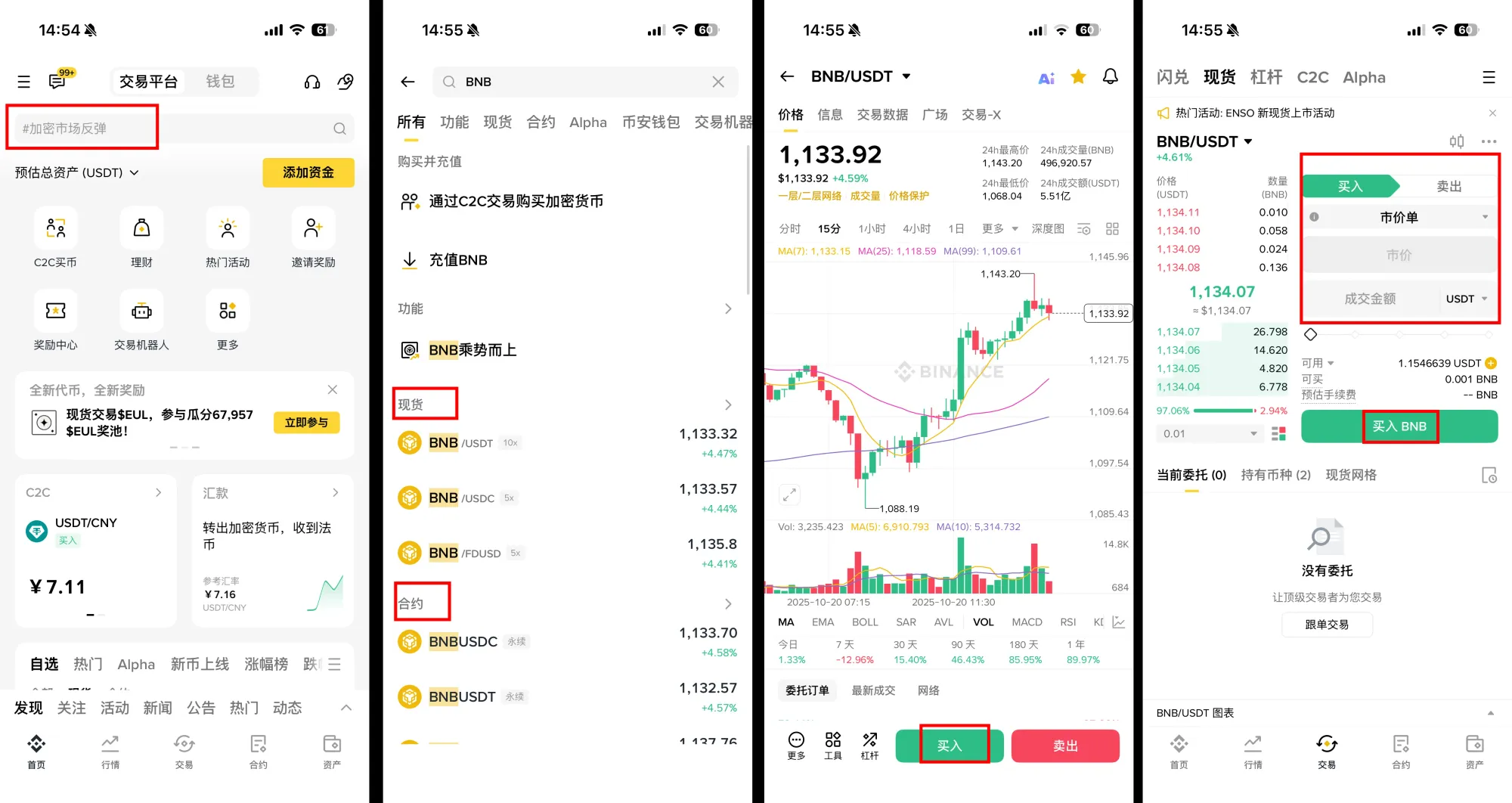
Example (Binance) workflow (official link):
- Open the Binance app and search for “BNB.”
- Choose Spot or Futures trading; a market order is recommended for speed.
- Enter the amount you wish to purchase, confirm, and complete the transaction.
Step 3: Connect to PancakeSwap
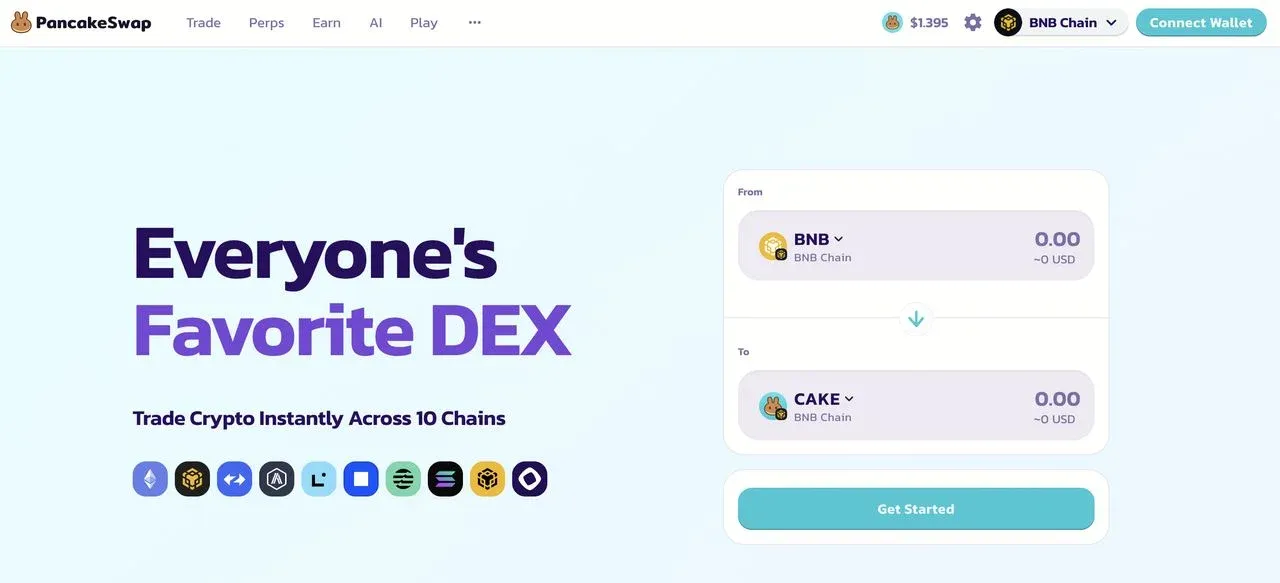
Visit the official PancakeSwap website, click “Connect Wallet,” select the wallet you created, and confirm the connection. Ensure the network selector shows BNB Chain.
Step 4: Swap BNB for Lobster
In the swap interface, set BNB as the input token. Paste the Lobster contract address `0xeccbb861c0dda7efd964010085488b69317e4444` into the output field. Verify the address on BSCScan to avoid phishing scams, then approve the transaction in your wallet.
Step 5: Confirm Your Token Balance
After the swap succeeds, Lobster tokens will appear in your wallet’s asset list. If they do not show automatically, manually add the token by entering the contract address, token name, and decimal precision.
Five Key Risks to Consider Before Investing in Lobster
As with most meme‑coins, Lobster’s value is driven primarily by community hype and speculative trading, lacking substantive utility. Keep the following structural risks in mind:
- Narrative Dependence – Lobster’s popularity is tightly coupled to the OpenClaw/“raising lobster” meme. A decline in that cultural wave or the emergence of a new meme could cause demand to evaporate quickly.
- Absence of On‑Chain Demand Mechanics – Unlike some meme‑coins that embed buy‑backs, burns, or transaction taxes, Lobster has no built‑in demand‑creation feature; price relies solely on market sentiment.
- Extreme Volatility – BNB‑chain meme‑coins often experience sharp price swings; the same conditions that enabled a 190 % daily surge can also trigger rapid corrections.
- Contract & Scam Risks – Always double‑check the contract address before swapping. Similar‑looking names can lead to fraudulent contracts and loss of funds.
- Liquidity & Exit Risks – Early liquidity is typically concentrated in a few wallets. Large holders dumping their positions may trigger steep price drops, and low liquidity can cause significant slippage when trying to exit.
Tax note: Crypto gains may be taxable in your jurisdiction. Consult a qualified tax professional to understand your obligations under local law.
Conclusion: Is Lobster Worth Investing in 2026?
Lobster illustrates how cultural narratives and internet memes can be rapidly transformed into on‑chain speculation. Issued through the Four.meme framework on the BNB Chain, the token has a simple structure—a fixed supply of 1 billion tokens with no embedded utility or protocol value. Its market activity is predominantly driven by community attention, trading enthusiasm, and short‑term narrative cycles rather than long‑term fundamentals.
For investors, Lobster should be regarded as a high‑risk speculative asset rather than a technology‑focused, long‑term holding. The token gained swift attention during the peak of the OpenClaw/“raising lobster” craze, but future price movements will depend on whether that narrative continues to capture market imagination. Participants are advised to evaluate volatility carefully and avoid committing funds beyond what they can comfortably lose.
That concludes the overview of “What is Lobster (Lobster) Chinese meme‑coin? How to buy? Is it worth investing in 2026?” For a more comprehensive collection of Lobster‑related articles, you can search the archives of Bitaigen (比特根) or follow the related links below. Thank you for supporting Bitaigen!
---
💡 Register on Binance with referral code B2345 for the maximum trading fee discount. See Binance complete guide.



