
 Bitaigen Research
 A Comprehensive Overview of MegaETH Real‑Time Ethereum
MegaETH is a layer‑2 (L2) scaling solution for Ethereum, referred to as “real‑time Ethereum,” capable of sub‑millisecond latency and processing more than 100,000 transactions per second (TPS) on a single chain, while maintaining security through a decentralized node‑role architecture.
We approach the topic from both technical and ecosystem perspectives, providing an in‑depth analysis of the upcoming MegaETH real‑time Ethereum solution. The article outlines its innovative role‑separation mechanism, decentralized security model, and differences from mainstream L2s, helping readers quickly grasp the core value of the project. If you want to understand how it balances high performance with security, keep reading.
Project Overview
MegaETH is an upcoming L2 project led by Dragonfly Capital, with participation from industry leaders such as Vitalik Buterin, Joe Lubin, Hasu, Cobie, and Sreeram Kannan. The project has closed a $20 million seed round, giving it a valuation of over $100 million. *All fiat values are expressed in USD; transfers can be made via SEPA or SWIFT where applicable. US residents should use Binance.US for any related token purchases.*

What Makes MegaETH Special
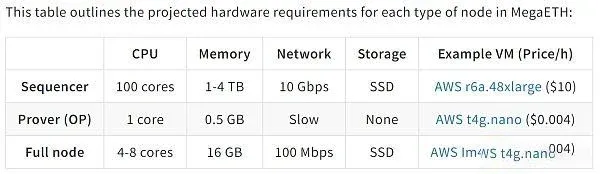
- Balancing high performance with decentralization: MegaETH decouples transaction processing from full nodes and defines three infrastructure roles—sequencers, provers, and full nodes. This role separation allows more flexible hardware requirements for nodes, while security is provided through existing decentralized networks such as EigenLayer.
- Transaction verification mechanism: Sequencers are responsible for ordering and executing transactions, and they broadcast state diffs to full nodes via a peer‑to‑peer network. Full nodes do not re‑execute the transactions; instead, they indirectly verify block integrity using proofs such as zk‑proofs supplied by provers.
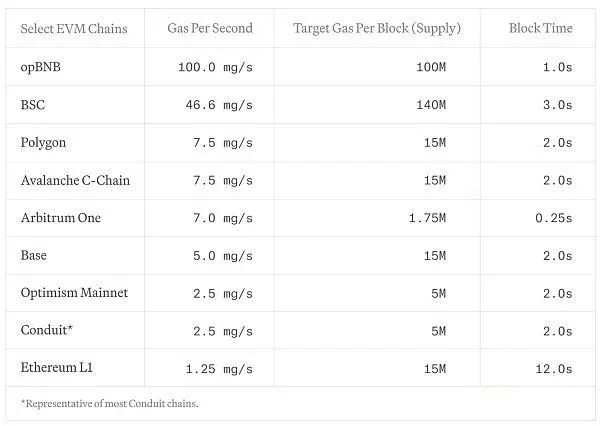
- Benchmarking competitors: The current highest‑performance L2 (e.g., opBNB) aims for 100 M Gas per second but in practice can only process roughly 650 Uniswap swaps per second, with blockage times often exceeding 1 second, making it unsuitable for high‑frequency trading and other real‑time use cases.
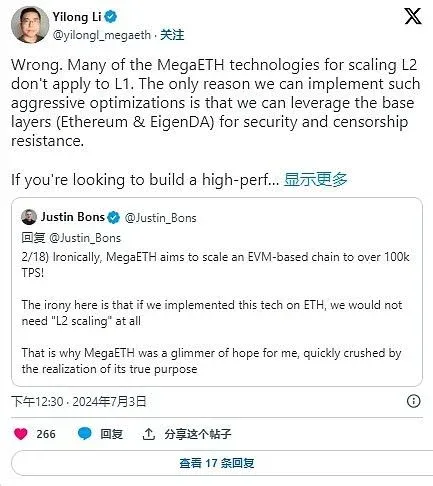
- Breaking parallelization bottlenecks: Traditional blockchains increase throughput via parallelization, but state dependencies between transactions limit the gains. MegaETH restructures the entire architecture rather than applying point‑solutions, aiming to approach the theoretical performance ceiling of decentralized blockchains.
Technical Innovations
| Technology | Function | Expected Improvement |
|---|---|---|
| **In‑memory computation** | Sequencers store the entire state in RAM | State‑access speed increases by roughly 1,000× |
| **Just‑In‑Time (JIT) compiler** | Compiles smart contracts into native machine instructions | Performance of compute‑intensive tasks improves by about 100× |
| **New state Trie** | Builds an EVM‑compatible Merkle‑Patricia Trie (MPT) from scratch | Disk I/O drops dramatically, supporting terabyte‑scale state data |
| **Efficient peer‑to‑peer protocol** | Propagates state diffs with low latency to full nodes | Ensures full nodes achieve maximal sync rates even with moderate network connectivity |
- In‑memory computation: Sequencers use RAM instead of solid‑state drives (SSD) to store state, making read and write operations significantly faster than traditional approaches.
- JIT compilation: Smart contracts are transformed into CPU‑native machine code before execution, reducing interpretation layers and boosting execution efficiency.
- New state Trie: While preserving EVM compatibility, the redesigned Trie cuts down disk reads/writes, making it suitable for large‑scale state storage.
- Peer‑to‑peer protocol: Tailored for 100,000 transactions per second, this network layer ensures state updates are rapidly disseminated with minimal latency.
Comparison with Existing L2s
- opBNB: Target 100 M Gas/s, actual ~650 transactions/s, blockage time > 1 s.
- MegaETH: Target 100 k TPS, sub‑millisecond latency, employing in‑memory computation and JIT compilation to achieve higher real‑time performance.
Decentralized Security Model
MegaETH does not build a self‑contained security layer; instead, it outsources security and censorship‑resistance to established decentralized networks such as the Ethereum mainnet and EigenLayer. The specialized roles of sequencers, provers, and full nodes ensure that even if block production trends toward centralization, the overall system retains decentralized security guarantees.
Conclusion
MegaETH leverages innovations such as in‑memory computation, JIT compilation, and a new state Trie to deliver a substantial performance uplift over contemporary EVM implementations, and it is expected to drive broader adoption of L2 solutions in real‑world business scenarios. Its security model relies on mature decentralized networks like Ethereum and EigenLayer, balancing the dual demands of high performance and decentralization.
This concludes the detailed introduction to MegaETH Real‑Time Ethereum compiled by the Bitaigen editorial team. Thank you for reading!
Related Reading
- MegaETH Testnet: Join, Earn Airdrops & Assess Value
- Top 8 MegaETH Mainnet dApps to Watch in 2024
- MegaETH (MEGA) Token Review: Ultra‑Fast Layer 2 Scaling on Ethereum
💡 Register on Binance with referral code B2345 for the maximum trading fee discount. See Binance complete guide.



