
 Bitaigen Research
 After the milestone token burn carried out by OKX in August, OKB is not destroyed on a fixed annual schedule; instead, the token is repurchased and burned on a quarterly basis, and the platform may also execute one‑off large‑scale burns when it records profits or reaches special milestones.
Starting from OKX’s governance framework, we outline the rhythm of OKB repurchases and burns, analyze how platform profits are turned into token scarcity, and explain whether the burn schedule is fixed, what triggers a burn, and the potential impact on supply‑and‑demand dynamics. The article also highlights key moments in OKB’s value evolution and later presents its historical price‑appreciation trajectory, making it worth a careful read. We will additionally compare the burn models of other industry tokens so you can develop a more complete investment perspective.
Does OKB Get Burned Every Year?
OKB is indeed burned on a regular basis, but the process is not a strict yearly routine. Its burn mechanism is tightly linked to the operating performance of the OKX exchange, converting platform profits into token scarcity through a combination of repurchase and permanent destruction.
- August 2025, OKX carried out a massive token‑burn operation that anchored the theoretical total supply of OKB at 21 million units, establishing a “capped total supply with ongoing deflation” strategy.
- After the burn, the circulating supply kept shrinking, creating a natural price floor as long‑term demand continued to rise.
Core Concepts
- What is a burn?: Sending OKB to an inaccessible “black‑hole address” so that the tokens disappear forever.
- Purpose: Reduce total supply, increase scarcity, potentially lift value, and curb inflation.
- Execution method: OKX typically conducts quarterly repurchase‑and‑burn cycles, adjusting the cadence according to market conditions and its own financial results.
Major Events
| Date | Event | Impact |
|---|---|---|
| 2020 | Burned 700 million non‑circulating **OKB** | Sharp drop in total supply |
| August 2025 | One‑off burn of 65.26 million tokens, locking the supply ceiling at 21 million | Price surged |
| 2019‑present | Multiple quarterly burns | Continuous deflation |
Effects on OKB
- Price appreciation: Supply contraction is the primary driver, creating a supply shock.
- Value uplift: Greater scarcity delivers long‑term value for holders.
Summary
The burn of OKB is a core mechanism by which OKX manages its native token. By actively controlling supply, the exchange typically generates a positive influence on token value when demand remains supportive, reflecting a common deflationary strategy in the crypto space.
How Often Is OKB Burned?
The frequency of OKB burns is strictly tied to OKX’s quarterly operating results. The platform allocates 30 % of the spot‑trading fee revenue earned each quarter to repurchase OKB on the secondary market, then sends the acquired tokens to a black‑hole address for permanent destruction—effectively a “once‑per‑quarter” routine.
- Ongoing supply contraction boosts scarcity, helping to underpin the price.
- Transparent burn data enhances investors’ confidence in the platform’s profitability and its willingness to return value to the community.
This model resembles the BNB burn logic and serves both price‑stimulating and market‑sentiment‑adjusting functions.
Are OKB Repurchases Made on the Open Market?
Yes. Every OKB repurchase is executed on the public secondary market. OKX diverts funds from its operating profit, buys OKB on exchanges, and then transfers the purchased tokens to an unrecoverable “black‑hole address,” where they are permanently destroyed.
The process is fully transparent; all burn transactions can be inspected on any blockchain explorer.
OKB Rise Timeline: From Platform Token to X Layer Core Fuel
Each major market rally is usually backed by a cascade of positive catalysts. The OKB surge in August 2025 was the result of several converging factors.
March 2025: OKX Ecosystem Expansion Lays the Foundation for OKB
OKX quietly began building DeFi and cross‑chain capabilities. Although price movement was modest at the time, these developments planted the seeds for later upside.
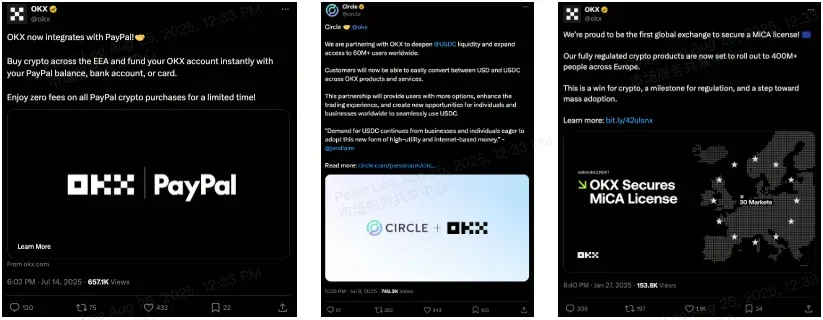
July 2025: Partnerships and Regulatory Wins Boost OKB Confidence
- Partnership with PayPal makes buying crypto easier for European users.
- Collaboration with Circle enables direct USD ↔ USDC conversion.
- Obtained MiCA compliance certification in the EU, raising regulatory trust.
These initiatives significantly broadened OKB’s accessibility.
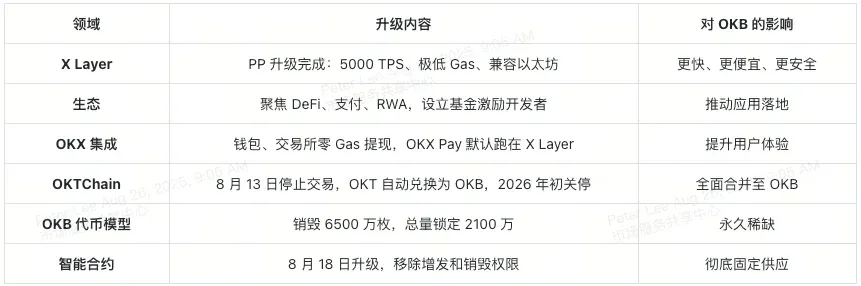
5 August 2025: X Layer Upgrade – OKB Becomes Gas
OKX completed the “PP upgrade.” X Layer, built on Polygon technology, delivered performance improvements:
- Roughly 5,000 TPS
- Near‑zero transaction fees
- OKB designated as the sole gas token
This marked the transition of OKB from a discount‑voucher‑style platform token to a true on‑chain fuel.
13 August 2025: Super‑Burn Locks Supply at 21 million
A one‑off destruction of more than 65 million OKB permanently capped the total supply at 21 million, giving the token both “Bitcoin‑style scarcity” and “Ethereum‑style gas utility.”
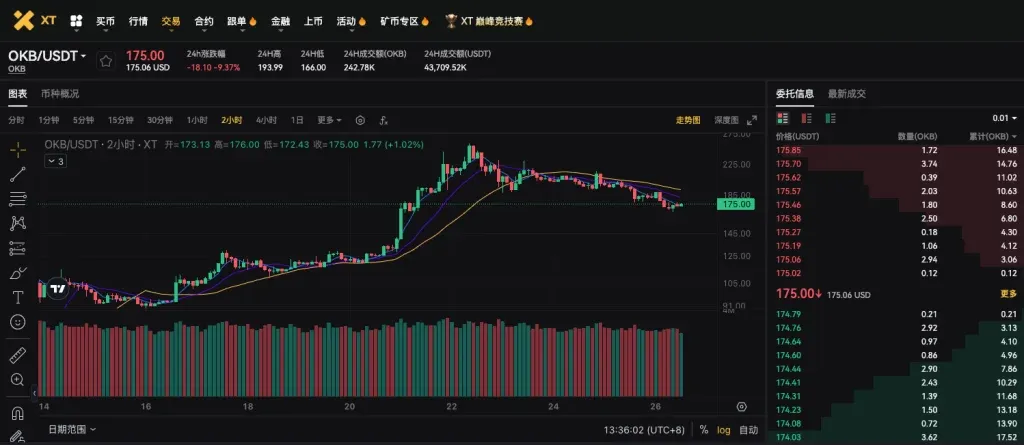
21‑22 August 2025: Market Explosion
- Spot and derivatives trading volume surged dramatically.
- OKB price broke $200, peaking at $258.
- Turnover briefly outpaced both BTC and ETH.
Afterward, the OKB/USDT pair became the most liquid market on the platform.
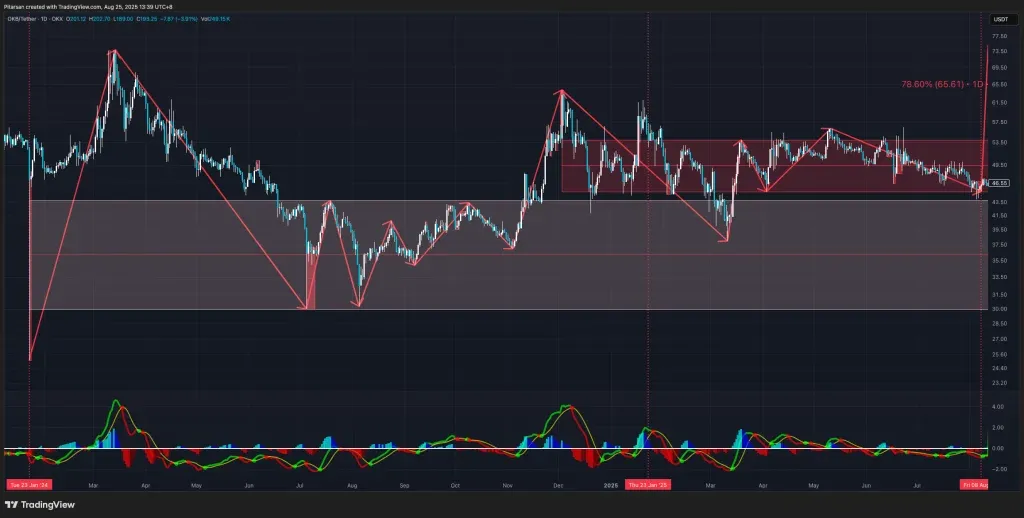
Price‑Action Analysis: OKB/USDT Explodes Across Exchanges
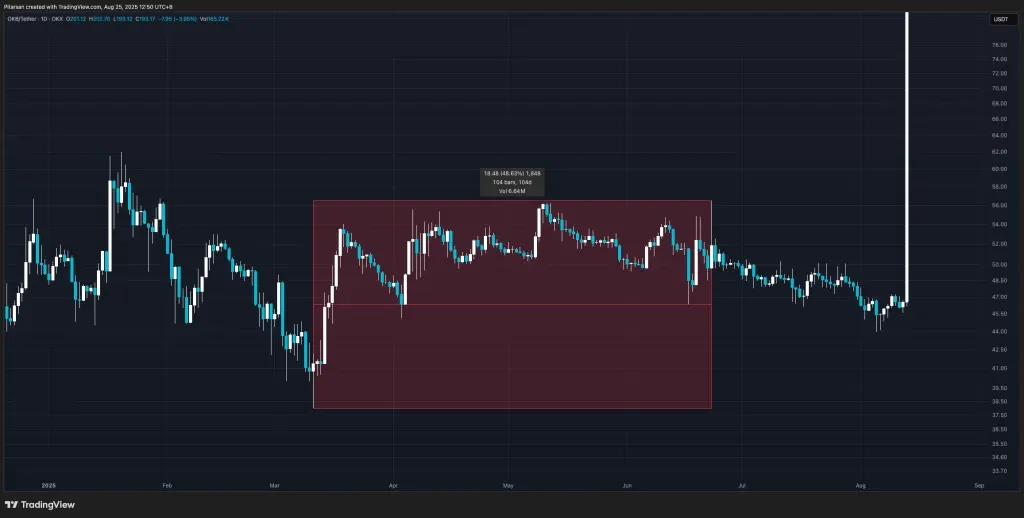
For several months, OKB traded in a narrow $40‑$50 band before the dramatic surge in August.
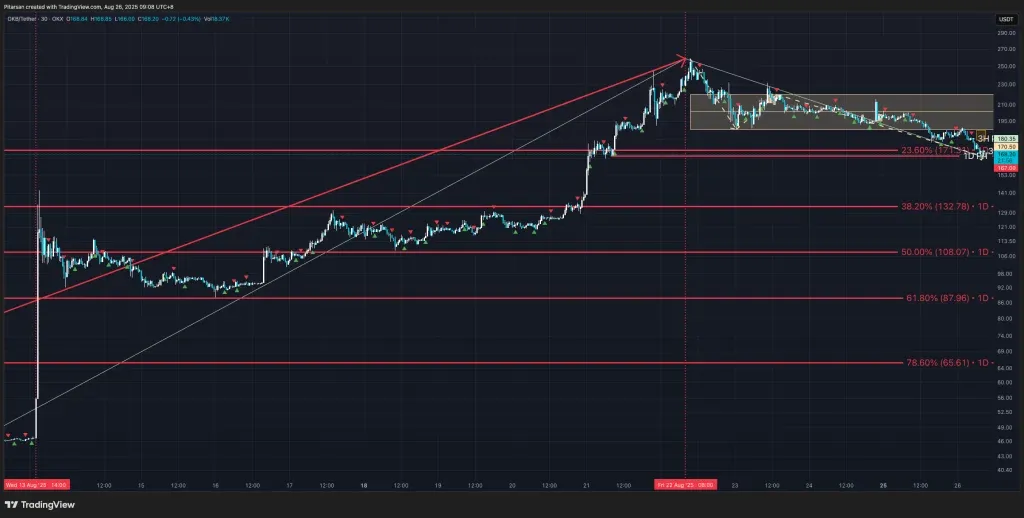
Trigger: August 13 OKX Announcement
Following the announcement, OKB/USDT jumped from $47 to $126 within a few hours, a single‑day increase of roughly 170 %.
Up‑trend Phase: Breaking Key Levels
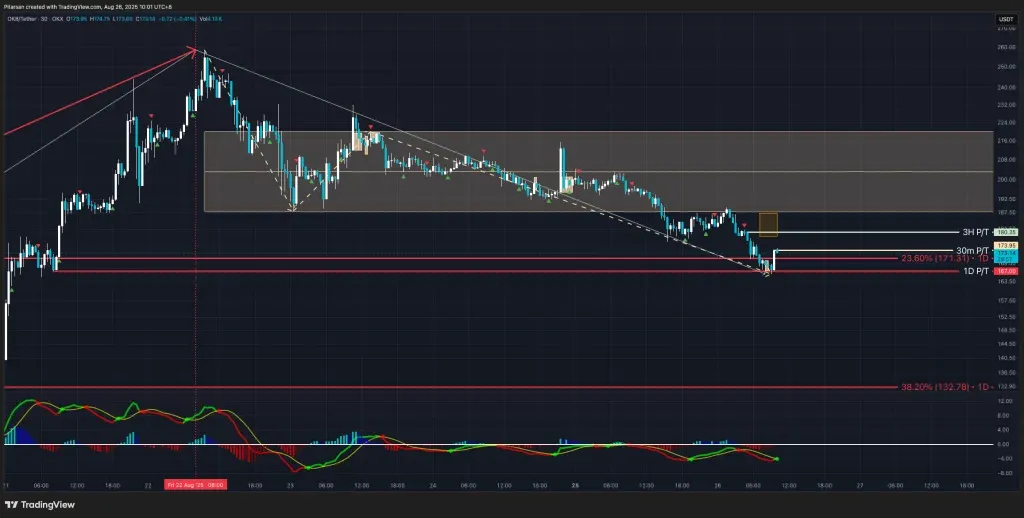
- 21 August: breached the $200 milestone.
- 22 August: set a new high of $258.
This represented a comprehensive re‑valuation of the platform token.
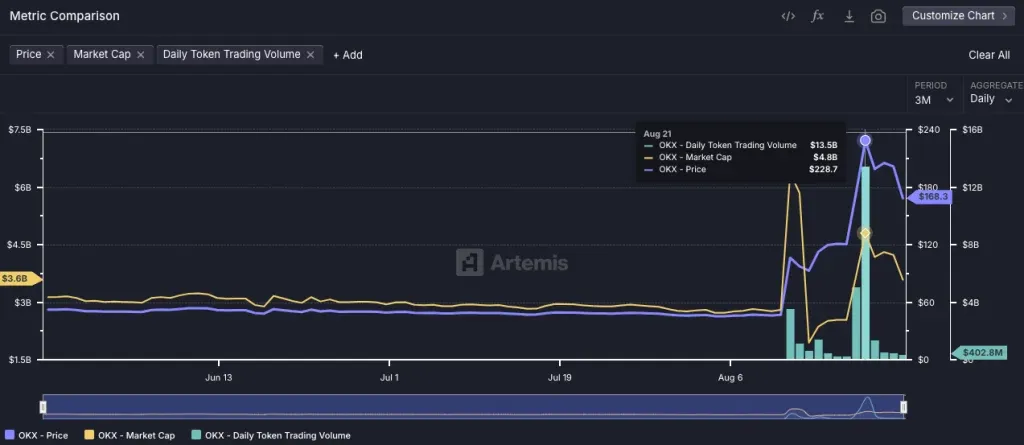
Spot & Futures: Heat Index Off the Charts
- 21 August daily spot volume topped $13 billion, briefly surpassing BTC and ETH.
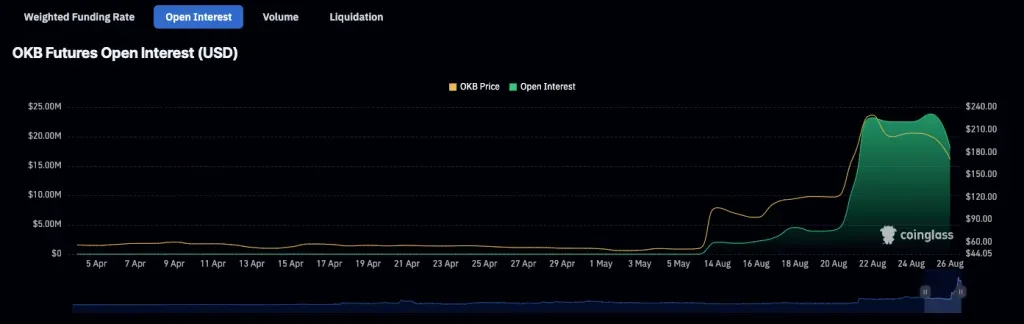
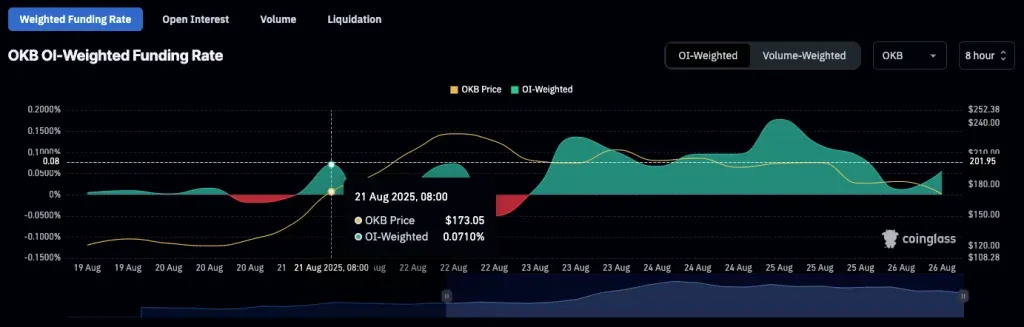
- Futures open‑interest doubled within 24 hours, funding rates turned positive, and long‑side premium widened.
These metrics signaled strong market confidence in further upside.
Consolidation Phase: Healthy Pull‑back
After the rally, OKB settled back into the $170‑$200 range, holding a key support level at the 23.6 % daily Fibonacci retracement and displaying a healthy consolidation pattern.
Takeaway: Lessons From a Platform‑Token Rally
The OKB episode shows that a single token can deviate sharply from the broader market. The combination of supply‑mechanism adjustments and ecosystem upgrades ignited the rally, reminding investors that explosive moves often stem from multiple converging factors and are typically followed by a digestion period.
New Utility for OKB: How X Layer Reinforces OKX’s Ecosystem Value
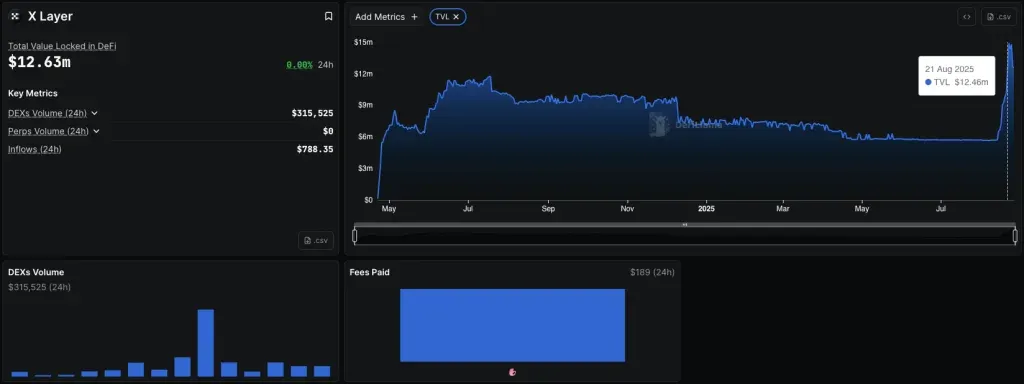
Scarcity forms part of OKB’s appeal, but true long‑term sustainability depends on utility. In 2025, OKB graduated from a fee‑discount voucher to the sole gas token of a second‑layer network.
Changes Brought by X Layer
- Approximately 5,000 transactions per second.
- Transaction fees are virtually zero.
- Highly compatible with Ethereum, allowing developers to integrate seamlessly.
Key focus areas include DeFi, global payments, and Real‑World Asset (RWA) tokenization—sectors expected to drive future growth.
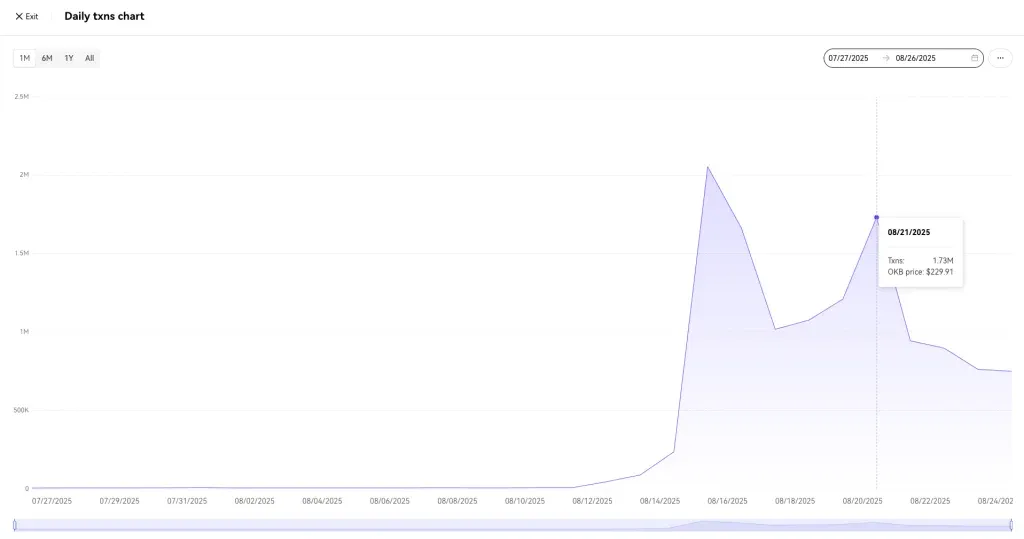
OKB as the Sole Gas Token: Core Transaction Logic
- Every transfer on X Layer.
- Each smart‑contract call.
- Execution of any dApp.
All of these actions consume OKB, directly tying token value to on‑chain activity.
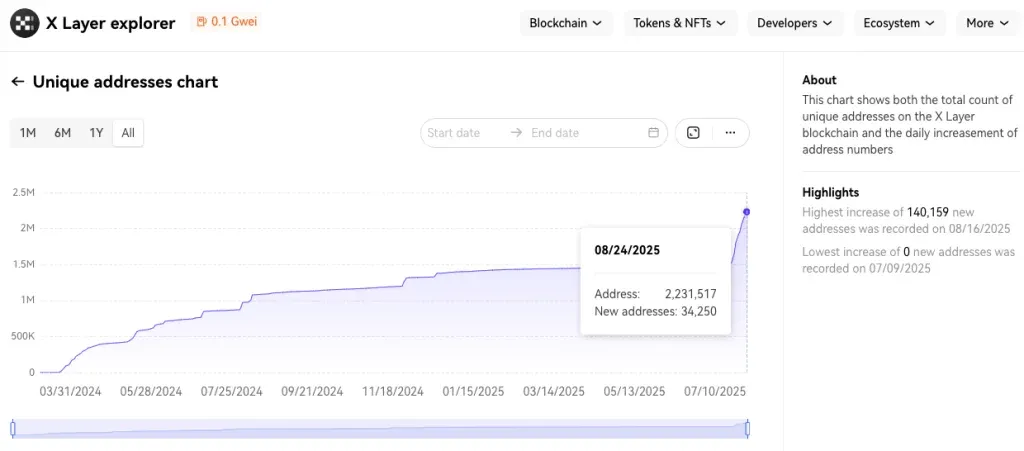
By the end of August 2025, more than 90 % of the total OKB supply had migrated to X Layer, with the number of on‑chain addresses exceeding 2 million, and hundreds of thousands of those addresses holding OKB.
User Considerations: Uncertainty Around X Layer Adoption
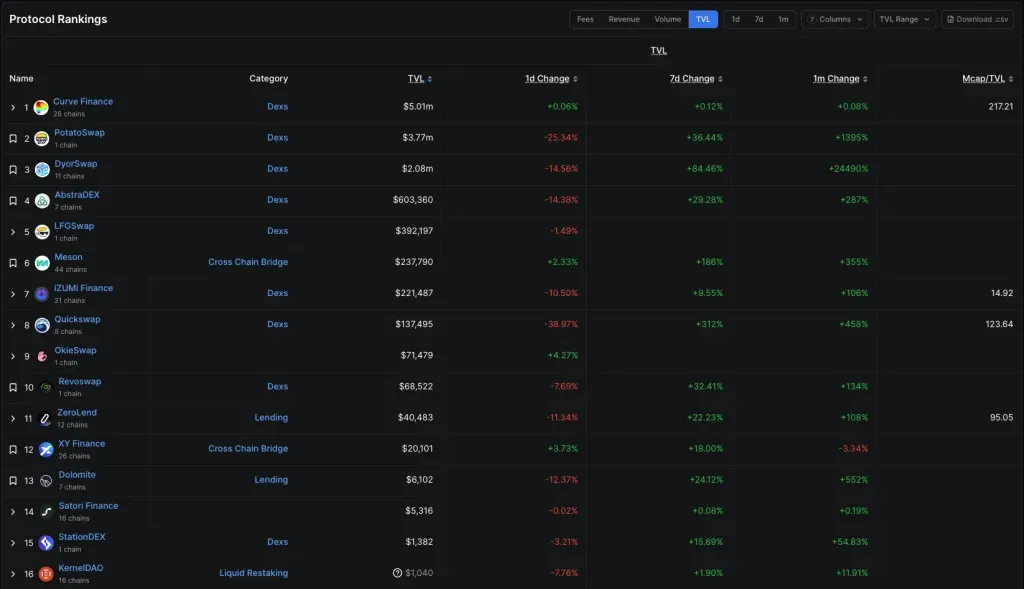
- Will developers prioritize X Layer over other L2 solutions?
- Can DeFi and RWA projects sustain continuous on‑chain activity?
- Does the blend of scarcity and utility provide a durable valuation foundation?
Answers remain open, but it is clear that OKB is no longer a vanilla platform token; it now underpins an entire blockchain’s operational fuel.
Summary
The OKB burn mechanism is not a rigid annual calendar; it is dynamically linked to OKX’s real‑time profitability and strategic market moves. Through flexible quarterly repurchase‑and‑burn cycles and occasional large‑scale one‑off burns, the platform can precisely adjust circulating supply at critical junctures, thereby enhancing token value. With the supply now capped at 21 million and the X Layer ecosystem providing genuine on‑chain utility, OKB has evolved from a simple platform incentive token into an asset that functions as the native gas for a dedicated layer‑2 chain—bringing both potential upside and inherent uncertainties.
The article answered the questions “Does OKB get burned every year?”, “How often is OKB burned?” and outlined the key milestones of OKB’s explosive price run. For deeper analysis, please follow additional pieces on Bitaigen (比特根).
Note for U.S. readers: Access to OKX’s global services is not available in the United States; U.S. users should use Binance.US or other compliant platforms for trading.
Tax disclaimer: Crypto‑related gains may be taxable in your jurisdiction. Consult a qualified tax professional to understand your local obligations.
Related Reading
- What Is a Stablecoin? Principles, Types, and Functions Explained
- OKB Price Surge After Massive Token Burn: Short‑Term Rally to $200?
- OKB vs BNB: Key Differences, Burn Mechanisms & Investment Insights
💡 Register on Binance with referral code B2345 for the maximum trading fee discount. See Binance complete guide.



