
 Bitaigen Research
 We conduct an in‑depth analysis of the safety characteristics of USDC, USDT, EURC and USDe from four perspectives: regulatory compliance, liquidity, asset backing and governance. The article helps investors clarify the risk focus of different stablecoins and decide which products better suit long‑term holding needs. Subsequent sections will compare their technical implementations and compliance pathways in detail, so a careful read is worthwhile.
What Is a Stablecoin?
In the crypto‑asset ecosystem, stablecoins attract considerable attention because they are pegged to a relatively stable value.
The safest stablecoins in 2025 are USDC, USDT, EURC and USDe, each excelling in regulatory compliance, liquidity, asset backing or governance structure.
A stablecoin is a cryptocurrency that maintains a relatively stable value by being linked to a fiat asset such as the US dollar. Unlike highly volatile tokens, stablecoins give users predictable purchasing power, which makes them valuable for payments, transfers and decentralized finance (DeFi) applications.
Although stablecoins have a wide range of uses, they still face regulatory scrutiny, liquidity risk, and challenges related to reserve transparency and custodial centralisation. Decoupling events and dependence on traditional banking partners have also raised doubts about their long‑term robustness.
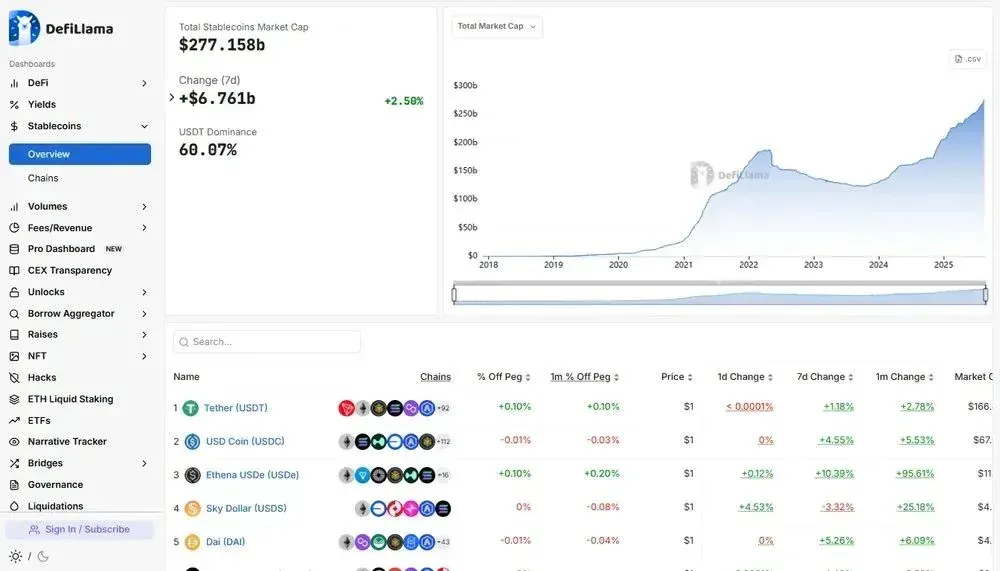
As of 2025, the stablecoin market capitalisation has reached USD 277 billion, representing 7.04 % of total crypto market value—about USD 100 billion more than in 2024. Last year, USDT’s market share fell from 69 % to 60 %, while regulatory victories in the EU and the United States helped USDC’s share rise to 24.43 %.
How Do Stablecoins Work?
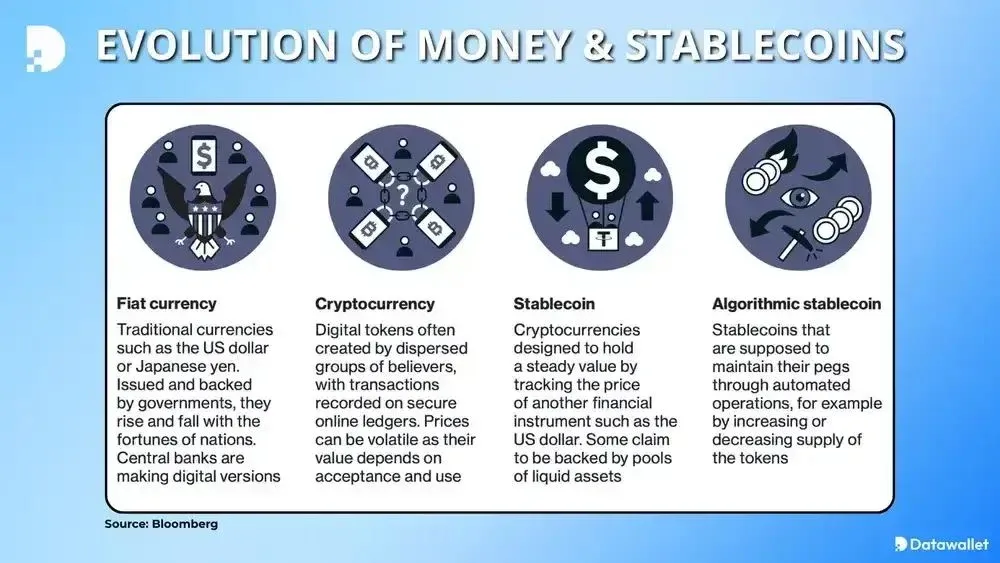
Stablecoins achieve price stability by anchoring their value to external assets, most commonly government‑issued fiat currencies. Implementation models include cash‑reserve collateralisation, crypto‑asset collateralisation, algorithmic adjustments and hybrid solutions.
Main types at a glance:
- Fiat‑collateralised: Backed by fiat reserves that guarantee each token can be redeemed at the preset value.
- Crypto‑collateralised: Uses other cryptocurrencies as over‑collateralisation to absorb volatility and maintain the peg.
- Algorithmic: Smart contracts automatically adjust supply to balance demand and keep the price stable.
- Hybrid: Combines several mechanisms to provide redundancy and boost credibility.
- Gold‑backed: Anchors the token to gold reserves, leveraging the historic store‑of‑value property of the metal.
How to Assess the Safety of a Stablecoin
When evaluating stablecoin safety, we apply a framework based on four dimensions: smart‑contract audit, regulatory compliance, reserve transparency and historical stress‑testing.
Key assessment points:
- Regulatory compliance – The token should operate under a clear legal framework (e.g., the EU’s MiCA regulation and the United States’ GENIUS Act) and obtain the relevant licences.
- Reserve transparency – Backing reserves (such as Circle’s reserves) must be subject to regular, verifiable audits to protect users’ redemption rights.
- Liquidity adequacy – Strong banking partnerships, ample reserves and active trading volume are essential to prevent liquidity crises.
- Technical security – Resilient smart contracts, reliable custodial solutions and robust risk‑control mechanisms reduce vulnerability to exploits.
- Market reputation – A long‑standing track record, regulatory wins and community trust serve as supplementary reliability indicators.
Which Stablecoin Is the Safest?
We screened the top 40 stablecoins on DefiLlama and CoinMarketCap, scoring them on moat strength, product‑market fit and regional dominance. We also considered network preferences and the usage of each token as collateral for perpetual futures on major exchanges. The result is the identification of the four safest fiat‑pegged stablecoins for 2025.
Comparison Table of the Four Safest Stablecoins
| Stablecoin | Circulating Supply | Supporting Assets | Regulatory Status | Main Advantages |
|---|---|---|---|---|
| **USDC** | **$67.53 B** | Cash + US Treasury bonds | Compliant with MiCA & GENIUS | Most regulated, most transparent |
| **USDT** | **$166 B** | US Treasury bonds, gold, Bitcoin | Offshore, under investigation | Largest liquidity footprint |
| **USDe** | **$11.31 B** | ETH, BTC, SOL + RWA | Decentralised governance | Synthetic, scalable, censorship‑resistant |
| **EURC** | **€196.43 M** | Euro deposits + bonds | Compliant with MiCA (French EMI licence) | Preferred Euro‑denominated option |
1. USDC (USD Coin)
USDC is issued by Circle, with a circulating supply of USD 67.53 billion and cumulative on‑chain transaction volume of $26 trillion, indicating extremely high institutional adoption. Its regulatory moat includes full compliance with MiCA through a French EMI licence, making it the first stablecoin to achieve trans‑Atlantic regulatory alignment.
- Multi‑chain issuance – Native on 23 blockchains, with dominant positions on Solana and Base.
- Liquidity bridging – Uses Circle’s CCTP protocol to provide cross‑chain liquidity.
- Institutional endorsement – Selected as the preferred collateral by permanent‑trade platforms such as Binance (U.S. users must use Binance.US instead of the global Binance) and Hyperliquid, granting deep liquidity and preferential market‑making fees.
- Payments integration – Partnerships with Coinbase, Visa, Stripe and others enable consumer‑facing payments and enterprise‑grade transaction flows.
2. USDT (Tether)
USDT remains the largest stablecoin by market size, with $81.3 billion circulating on Tron and $69.3 billion on Ethereum. Its moat stems from a decade of operation, a global liquidity advantage and first‑mover status on exchanges.
- Asset portfolio – As of H1 2024, holdings include $97.6 billion in US Treasury bonds, gold and Bitcoin.
- Profit performance – Generated $5.2 billion in profit during the first half of 2024.
- Market position – Despite regulatory investigations, USDT continues to be the top collateral for both centralized exchanges (CEX) and DeFi protocols, preserving an unshakable liquidity edge.
3. USDe (Ethena USD)
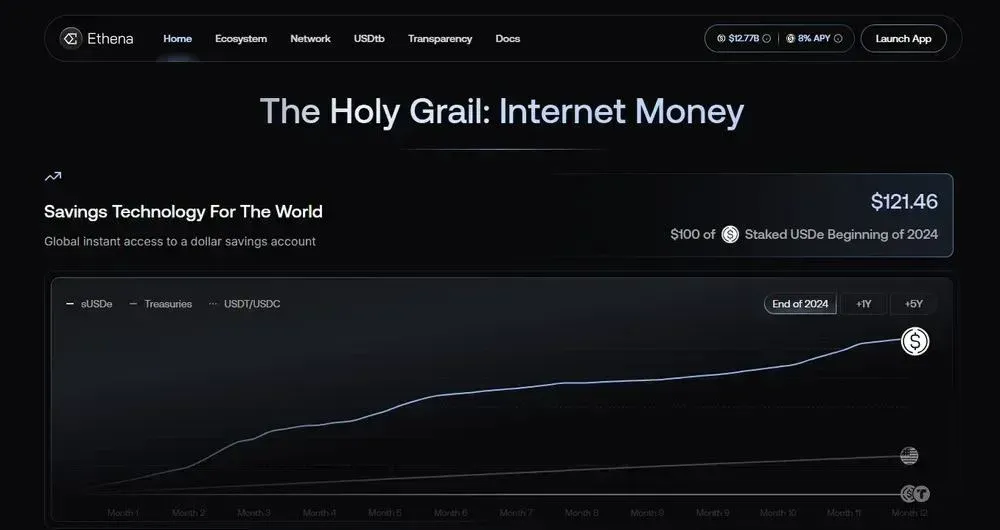
USDe is a synthetic USD launched by Ethena, employing a delta‑neutral design that relies on ETH, liquid assets and perpetual markets for hedging, achieving on‑chain censorship resistance.
- Fully on‑chain – First stablecoin issued without any traditional banking infrastructure.
- Revenue sources – Sustainable economics are built from perpetual funding spreads, systematic investment returns and tokenised RWA rewards.
- Institutional backing – BlackRock’s BUIDL (tokenised US Treasury fund) supplies institutional‑grade collateral, linking Ethena to traditional finance (TradFi) infrastructure.
4. EURC (Euro Coin)
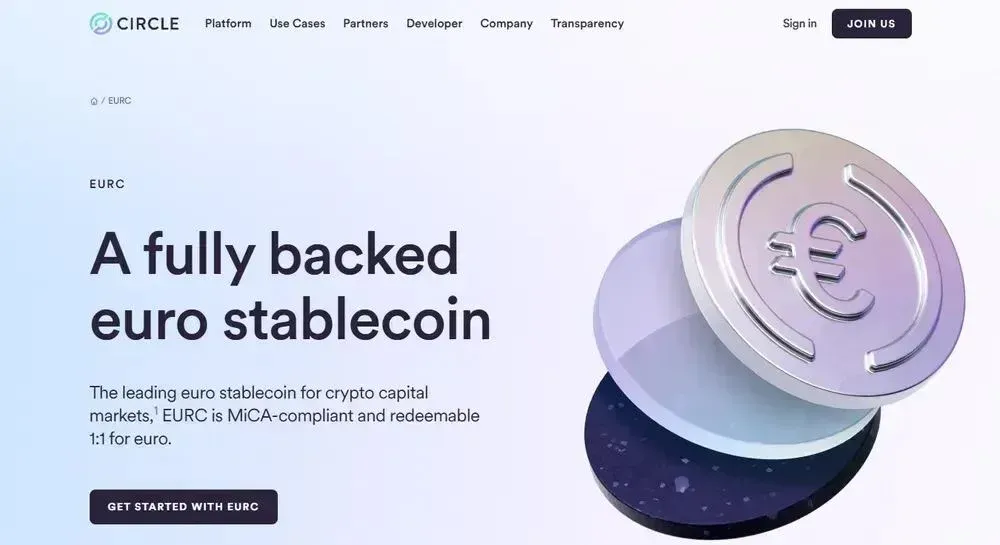
EURC, issued by Circle, is currently the leading Euro‑denominated stablecoin, with a circulating supply of €196.43 million and full compliance with MiCA regulations.
- Multi‑chain deployment – Available on Ethereum, Solana, Avalanche, Base and Stellar.
- Euro liquidity – Provides Euro liquidity to both DeFi and institutional markets, widely used for FX trading and Euro‑priced payments.
- Cross‑currency swap – Circle Mint enables seamless EUR⇄USD swaps, reinforcing its regional dominance.
What Is the Safest Decentralised Stablecoin?
The safest decentralised stablecoin does not rely on regulatory endorsement; instead it focuses on on‑chain collateral, governance design and peg stability. Evaluation should consider scalability, censorship resistance and the ability to preserve value under market stress.
Key decentralised competitors:
- USDS – The successor to MakerDAO’s DAI within the Sky ecosystem, maintaining over‑collateralisation and introducing Sky’s savings rate and SkyLink bridge.
- FRAX – Keeps 100 % external collateral, using AMO sub‑protocols and RWA, with yield mechanisms tied to an IORB model.
- GHO – Aave’s over‑collateralised issuance model, with parameters set by the Aave DAO and revenue flowing directly to the protocol.
- Dollar – Native to Tron, collateralised by TRX and USDT, combining community governance and lending to achieve issuance and reward distribution.

Stablecoin Risks
Under scale‑up or extreme market conditions, stablecoins can expose the following major risks:
- Concentration risk – Dominance by a few issuers magnifies systemic vulnerability.
- Exchange dependence – Liquidity heavily tied to centralised exchanges can be disrupted by outages or sanctions.
- Bridge vulnerabilities – Cross‑chain bridges have historically suffered multi‑billion‑dollar hacks.
- Governance capture – Token‑based voting may be hijacked by large holders or insiders, skewing risk parameters.
- RWA counterparty risk – Tokenised sovereign bonds and funds inherit traditional custodial and legal risks.
- Market fragmentation – Regional stablecoins (e.g., EURC, offshore USDT) split liquidity pools, reducing capital efficiency.
- Smart‑contract fragility – Even top‑tier audits cannot eliminate the possibility of edge‑case or economic attacks.
Tax note: Gains from buying, selling or using stablecoins may be taxable in your jurisdiction. Consult a local tax professional for guidance.
Recent and Upcoming Stablecoins in 2025
The 2025 stablecoin landscape is turning into an intense arms race, with both traditional fintech firms and crypto projects launching new tokens.
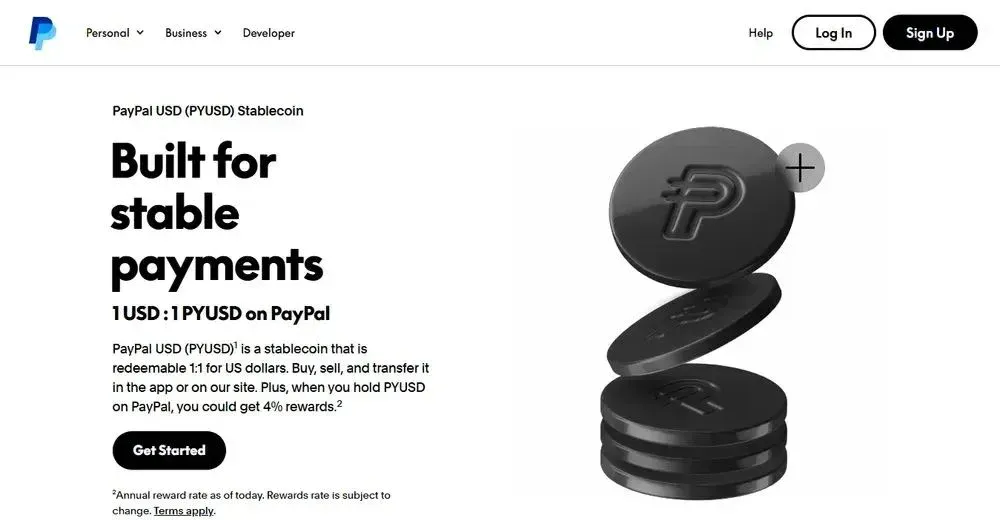
- PayPal USD (PYUSD) – Integrated directly into PayPal and Venmo, backed by deposits and Treasury support.
- Ripple USD (RLUSD) – Issued on Ethereum and XRPL, focusing on cross‑border settlement and corporate financing.
- World Liberty Financial – Releases a 1 USD multi‑chain settlement asset via BitGo Trust, though it faces political scrutiny.
- Asian rollout – Japan plans to approve JPYC as the first Yen‑pegged stablecoin; Russia, after freezing USDT, is exploring a Ruble alternative; China is piloting related projects in Hong Kong.
Final Thoughts
In the global quest to hedge against volatility and banking risk, USDC has proven to be the most trustworthy option, thanks to transparent reserves and backing from regulators. Washington’s GENIUS Act and Brussels’ MiCA provide the clearest regulatory frameworks for dollar‑ and euro‑pegged stablecoins, with Circle playing a standard‑setting role.
While new projects such as PayPal USD and Ripple USD continue to emerge, the market has not yet shown a decisive split; Tether and Circle‑issued USDT and USDC still command over 85 % of total stablecoin liquidity and trading volume.
This article outlines the safest stablecoins of 2025 and their distinctions. For more details, you can search for earlier articles by Bitaigen (比特根) or continue browsing the related links below. Thank you for your continued interest and support!
Related Reading
- Understanding Stablecoin De‑peg: USDe, UST & Other Cases
- USDe Stablecoin Slides 35% Off Peg on Binance
- TRON公链详解:低费高速USDT转账与TRX投资指南
💡 Register on Binance with referral code B2345 for the maximum trading fee discount. See Binance complete guide.



