
 Bitaigen Research
 In this article we outline the technical principles, ecosystem layout, and regulatory developments of XRP, helping readers clarify its unique advantages and potential risks in cross‑border payments. By comparing it with other mainstream cryptocurrencies, you can more objectively assess whether XRP fits your investment preferences; the detailed content is worth a careful read.
XRP is the native token of the Ripple network, used for fast, low‑fee cross‑border payments and currency exchanges on that network. Whether it is worth buying depends on individual risk tolerance and one’s assessment of its technology and ecosystem.
Bitcoin’s surge has driven the rise and development of the entire crypto sector. Today, Bitcoin has been around for more than a decade and has spawned a large number of similar virtual digital currencies.
Overview of XRP
XRP is a virtual digital currency issued by a private company and has become one of the mainstream tokens. Like Bitcoin, XRP possesses decentralization and cryptographic security, but its network architecture, transaction fees, and cross‑currency exchange mechanisms differ markedly from other digital assets.
- Issuer: Ripple Labs (formerly OpenCoin)
- Total supply: 100 billion XRP (fixed, no inflation)
- Network role: The sole universal currency of the Ripple network, freely circulable within the system
In the Ripple network, other fiat currencies (e.g., CNY, USD) can only be withdrawn within their respective gateways; to move funds across gateways they must first be converted into the issuing gateway’s native token. XRP does not have this restriction and can be used directly between any gateways, giving it true universality.
Key Historical Milestones
- 2018‑01‑01: XRP’s price surged nearly 56 % in one week, and its market cap briefly overtook Ethereum, becoming the second‑largest cryptocurrency.
- 2017: China Central Television released a list of 350 organizations suspected of operating pyramid‑like financing schemes, some of which were linked to XRP‑related projects.
- 2020‑08: Ripple ranked 23rd on the “2020 Hurun Global Unicorn List” for Suzhou High‑Tech Zone, with a market valuation of roughly ¥70 billion RMB.
- 2023‑07: A Southern District of New York judge ruled that XRP “is not necessarily a security on its face,” after which the price jumped more than 30 % in the short term.
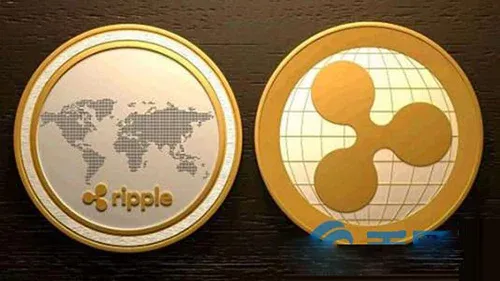
Origin of XRP
In 2004, Ryan Fugger released the first implementation of Ripple, aiming to build a decentralized system that allowed anyone to create their own currency. The system represented value in the network as “debts,” with every transaction reflected as a change in account balances—much like the clearing process used by traditional banks.
- Clearing principle: Banks settle in batches overnight, offsetting mutual receivables and payables so that the actual transferred amount is far smaller than the total wire‑transfer volume.
- P2P credit: Users can act as lending conduits within the network, enabling peer‑to‑peer capital flow.
The early Ripple project relied on a single founder, and its user base was limited to a circle of acquaintances because establishing a trust chain required pre‑existing social relationships.
Supply and Minimum Unit
- Total amount: 100 billion XRP (fixed)
- Minimum unit: one drop, where 1 XRP = 1 000 000 drops
After the initial issuance, no additional XRP are created. Transaction fees consume a minuscule amount of XRP (about $0.00001), which serves to deter spam attacks; the burned fee is permanently removed from circulation, causing the total supply to decline extremely slowly.
Core Characteristics
- Very low transaction cost: each transaction costs less than $0.01.
- Anonymity: no email address, name, or other personal data is required.
- Security: transactions behave like cash transfers and incur no extra fees after settlement.
- Reliability: transactions are final and irreversible, so merchants do not face cancellation risk.
Functional Overview
- Two‑way flow of fiat and virtual currencies
- Multi‑currency P2P exchange and payment
- P2P network credit
- Personal network clearing
Technical Advantages
Both Ripple and Bitcoin use a public ledger, but Ripple’s consensus mechanism allows all nodes to update the ledger within 3‑5 seconds without a centralized data‑exchange hub. By contrast, Bitcoin’s confirmation time averages around 40 minutes, highlighting a significant speed gap.
Similarities with Bitcoin
- Both are open‑source projects built on peer‑to‑peer networks for direct transfers.
- Both employ the same underlying cryptographic techniques.
- Transactions are irreversible, providing anti‑fraud properties.
- Both support multi‑signature authentication.
- Anyone can run a node.
Differences from Bitcoin
| Aspect | Ripple (XRP) | Bitcoin |
|---|---|---|
| Supported assets | Native XRP + many fiat currencies (USD, EUR, etc.) and future plans for virtual assets | Native BTC only |
| Exchange rate calculation | Automatic cross‑currency conversion | User must exchange on an external exchange |
| Confirmation time | 3‑5 seconds | Approximately 40 minutes |
| Client storage | Does not download the full blockchain, only recent ledgers | Must sync the entire blockchain |
| Mining mechanism | No mining; supply is fixed | New coins are created via Proof‑of‑Work mining |
| Supply dynamics | Fixed total; tiny amount burned per transaction | Fixed total; no burning from normal transactions |
Revenue Model
XRP acts as the bridge currency of the Ripple network, and gateways must hold a certain amount of XRP to guarantee network security. Gateways purchase relatively modest quantities of XRP; in 2015 the price was roughly $0.004 per token. Because each transaction destroys a minute fraction of XRP, the theoretical supply gradually decreases. If network usage rises, demand could increase, potentially providing upward price pressure.
- Ripple Labs holdings: about 77 billion XRP, valued at roughly $3 billion using the 2015 price of $0.004.
- Distribution plan: intends to donate 55 billion XRP to ecosystem participants and retain 22 billion XRP.
To date, the world’s first and only bank that has formally integrated Ripple’s protocol is Germany’s Fidor Bank, which is actively exploring digital‑currency use cases. Although early pilots exist, convincing more traditional banks to adopt the technology remains a substantial hurdle.
Development Timeline
- 2004: Ryan Fugger publishes the first Ripple version, implementing decentralized debt accounting.
- 2004‑2012: The project runs in a small circle, constrained by the trust‑chain model.
- 2012‑present: Ripple Labs commercializes the project, launches XRP as the native token, and pushes cross‑border payment use cases.
- 2023‑07: A U.S. court rules that XRP is not necessarily a security, leading to a short‑term market gain of over 30 %.
Outlook for 2024
Positive Developments
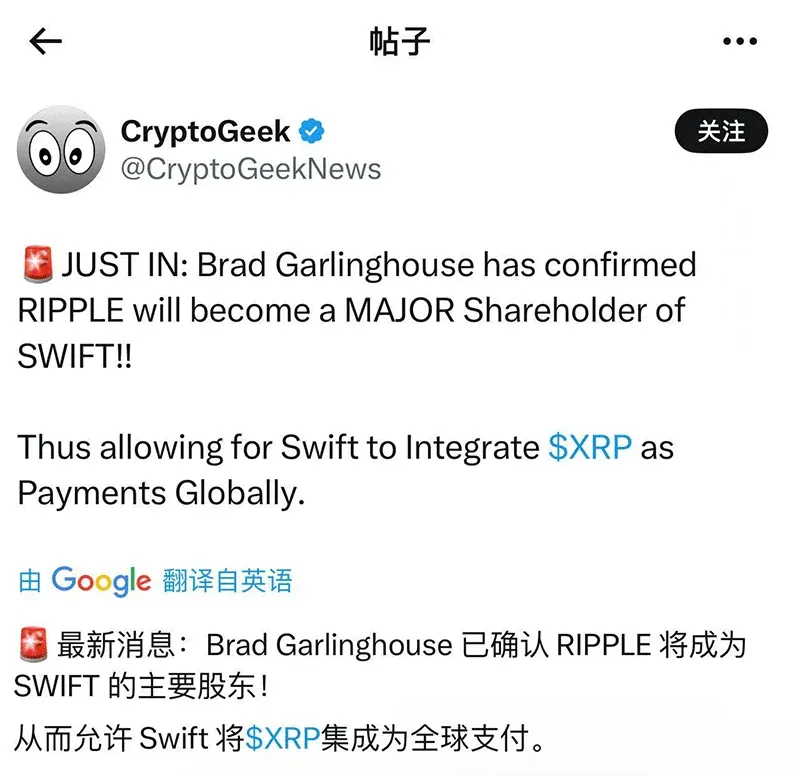
- Brad Garlinghouse confirmed that Ripple will become a major shareholder of SWIFT, planning to integrate $XRP into the global payments network.
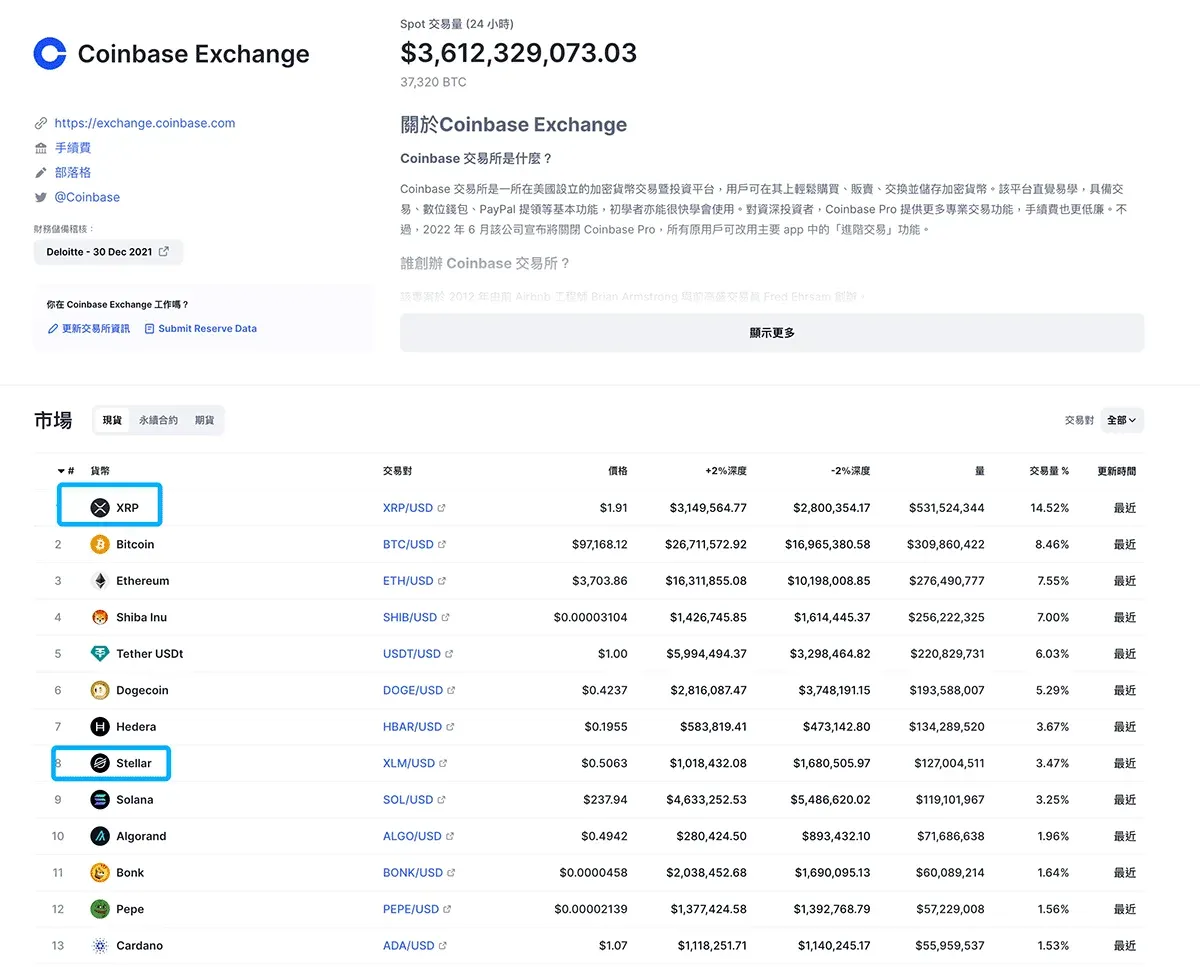
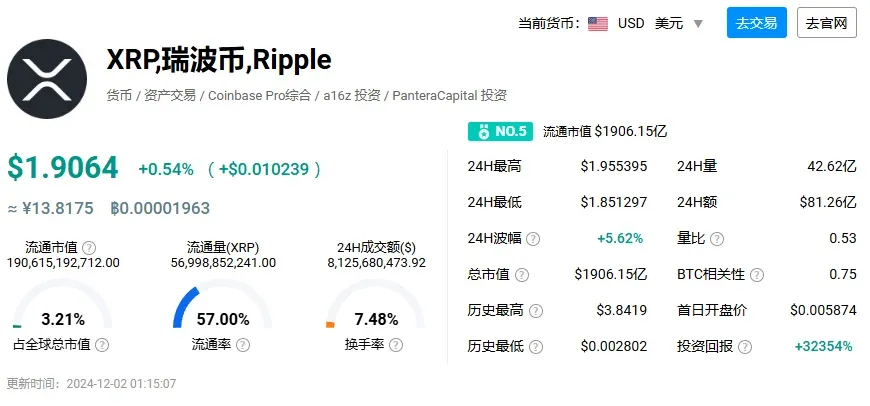
- 2024‑12‑02 marks a major milestone (details to be updated).
World Bank Assessment
On 23 April 2023, the World Bank’s *Migration and Development Brief* reported that remittance flows from low‑ and middle‑income countries reached a record $466 billion, with fees averaging 9.05 %. High fees are largely due to the opacity and monopoly of traditional financial intermediaries, leaving vulnerable populations with limited access to affordable services.
To address this pain point, XRP leverages blockchain technology to provide low‑cost, fast cross‑border payments, aiming to lower financial barriers. Its core advantages are:
- No mining: there are no miners, mining pools, or mining equipment.
- Payment‑focused design: the protocol is built solely for transfers and payments, avoiding the speculative attributes seen in Bitcoin and similar assets.
Summary
XRP is the native token of the Ripple network, offering low fees, sub‑second settlement, and built‑in cross‑currency exchange. Whether it is worth acquiring should be evaluated against your personal risk tolerance, understanding of the Ripple ecosystem, and the relevance of cross‑border payment needs.
The above constitutes a detailed analysis of “What is XRP? Should you consider buying Ripple’s XRP?” For more Bitcoin and blockchain news, please follow the other articles from Bitaigen.
*Note: Crypto transactions may be taxable in your jurisdiction; consult a tax professional for guidance. U.S. residents should use Binance.US rather than the global Binance platform.*
Related Reading
- Crypto Investment Paths & Quantitative Trading Software
- Trump Crypto Policies & Free Cloud Mining Risks
- Best Cloud‑Hashrate Mining Platforms for Bitcoin
💡 Register on Binance with referral code B2345 for the maximum trading fee discount. See Binance complete guide.



