
 Bitaigen Research
 In terms of overall security, OKX and Binance both employ industry‑leading protection measures, but when considering compliance, technology, and asset safeguarding together, Binance’s security rating is slightly higher than OKX’s.
In this article we systematically review the security frameworks of OKX and Binance across three dimensions: compliance, technical protection, and asset protection. By deeply comparing the two platforms’ risk‑control measures, cold‑wallet architecture, and emergency fund mechanisms, we help readers clearly understand each exchange’s strengths and potential risks. If you want to know which exchange is more trustworthy, keep reading.
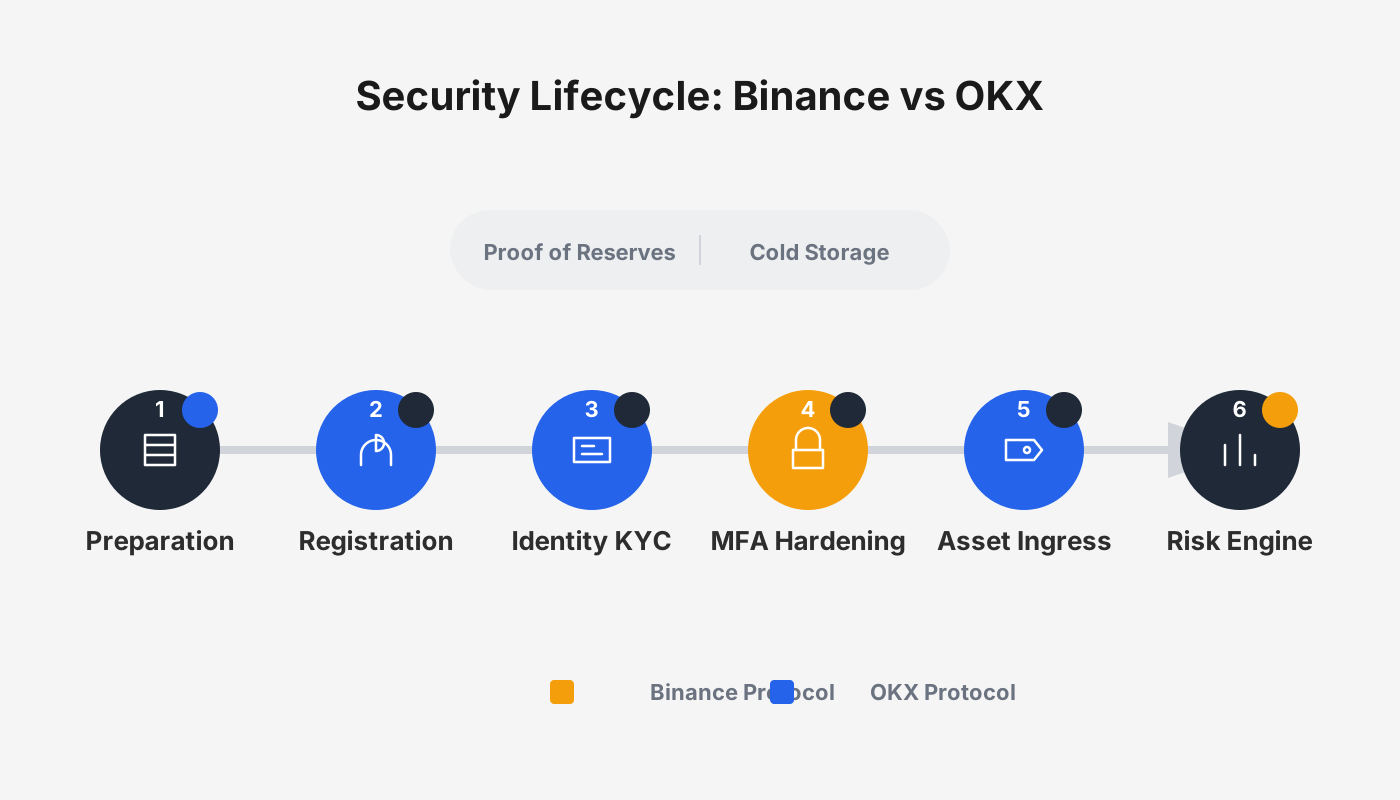
OKX vs. Binance Security Comparison
Both OKX and Binance place user‑fund safety at the top of their priorities, though they use different mechanisms and implementations. Both platforms have a 10/10 trust score on CoinGecko.
- OKX: To date, there have been no publicly reported hacking incidents. The platform safeguards assets through reserve proofs, cold wallets, multi‑signature custody, and its own insurance fund, and it publishes a monthly 1:1 reserve‑ratio report to demonstrate that user deposits are fully backed by on‑chain assets.
- Binance: In 2019 the exchange suffered a hack that resulted in roughly $40 million being stolen. Binance fully compensated affected users via the SAFU (Secure Asset Fund for Users) and subsequently reinforced cold storage, reserve proofs, mandatory 2FA, withdrawal‑address whitelisting, and real‑time threat monitoring.
In‑Depth Comparison of Platform Strength and Risk‑Control Mechanisms
Platform Background and Compliance
- Binance was founded in 2017 by Changpeng Zhao (CZ), who leveraged early industry experience to expand the platform to more than 200 countries. Binance has obtained financial‑service licenses in several EU members such as France, Italy, and Spain, and holds VASP licences in tightly regulated jurisdictions like Singapore and Japan. It has also passed the U.S. Treasury’s OFAC compliance checks, reducing money‑laundering and illicit‑trade risks.
- OKX (formerly OKEx) was also launched in 2017 and is backed by the OK Group. In 2021 it received Class 1 (trading) and Class 4 (securities opinion) licences from the Hong Kong Securities and Futures Commission (SFC), and it holds partial licences in regions such as Turkey and Canada. However, its global compliance coverage is weaker than Binance’s, especially in core Western markets where licences are still pending. Consequently, Binance enjoys a baseline compliance advantage.
Technical Security
Both exchanges employ industry‑standard hot‑wallet/cold‑wallet segregation (approximately 95 % of assets stored offline), multi‑signature (Multi‑Sig) controls, and SSL‑encrypted transmission, but there are noteworthy differences in the details:
| Item | Binance | OKX |
|---|---|---|
| **Cold‑wallet Management** | Multi‑sig cold wallets + distributed storage; requires 3‑of‑5 or 5‑of‑7 signatures to move funds | Uses hot‑/cold‑wallet separation; some users have reported occasional small‑withdrawal delays, likely tied to hot‑wallet liquidity management |
| **Security Audits** | Invests over **$100 million** annually; partners with SlowMist, Chainalysis, etc.; runs a bug‑bounty program with rewards up to **$1 million** | Audits are less frequent; fewer public vulnerability reports than Binance |
| **Risk‑Control System** | AI‑driven real‑time monitoring of abnormal trades; intercepted more than **12,000** phishing attempts in 2023 | Primarily rule‑engine based; response speed to novel attack vectors is somewhat slower |
Asset Protection
- SAFU Fund Size: Binance’s SAFU assets exceeded $1 billion (Q1 2024 data), providing coverage for extreme loss scenarios; OKX’s SAFU pool is around $300 million, sufficient for routine risks but under greater strain during severe market turbulence.
- Compensation Process: Binance promises full compensation from SAFU for losses caused by platform theft, typically completing payouts within 7 days. OKX requires a post‑incident investigation and liability determination; its process is more complex, and it applies stricter criteria when the loss is attributed to “user error” (e.g., private‑key leakage).
Historical Security Incidents
- Binance: In 2019 hackers stole about 7,000 BTC (≈ $40 million). Binance reimbursed users in full from SAFU and upgraded security with mandatory 2FA, IP whitelisting, and other measures. No major incidents have been reported since.
- OKX: In 2020 the exchange paused withdrawals for a month due to a “private‑key custodian dispute,” exposing the potential risk of centralized key management. In 2023 an API vulnerability led to abnormal trading on certain accounts.
Overall, Binance holds a modest edge in compliance credentials, technical architecture, asset protection, and historical performance, making it a suitable choice for institutions or holders of large balances who demand the highest security standards. Nevertheless, remember that no exchange is absolutely secure; security is also a matter of user habits. Enable 2FA, avoid public Wi‑Fi, reject suspicious links, and store core holdings in a personal cold wallet.
Focus Areas of OKX and Binance Regarding Security
| Dimension | Binance | OKX |
|---|---|---|
| **Compliance & Licences** | Global footprint; comprehensive licences across the EU, Middle East, etc.; operates SAFU insurance fund | Holds licences in 12 jurisdictions (e.g., NYDFS BitLicense, FSA), but lacks a legal licence in mainland China |
| **Security Technology** | Cold storage + multi‑sig wallets + AAA‑grade risk‑control system; a few isolated asset‑loss incidents reported between 2022‑2024 | SSL/TLS encryption, cold‑wallet storage, risk‑reserve mechanism; no publicly disclosed hacking incidents to date |
| **Customer Loss Compensation** | Some losses labeled “user‑assumed risk,” transparency of payout mechanism limited | Previously covered a large‑scale “pin‑explosion” bug with a full‑refund of tens of millions of dollars |
| **Fund Safeguarding** | Highest liquidity; must monitor multi‑jurisdictional regulatory pressure | Publishes risk‑reserve address; risk controls are stricter in Asian markets |
OKX vs. Binance: Which Is Safer?
Both OKX and Binance rank among the world’s leading exchanges, and neither has experienced a large‑scale theft in recent years. Their security frameworks are mature. Binance enjoys a stronger global compliance network and larger asset‑protection fund, while OKX shines in rapid technical response and regulatory compliance within Asian markets. Users should weigh their own needs, regional restrictions, and the importance they place on regulatory coverage when deciding.
How to Choose?
- Prioritize Compliance: Lean toward Binance (more comprehensive worldwide licences).
- Emphasize Compensation & Asian Market: Lean toward OKX (faster technical‑bug response).
- Mind Regional Restrictions: Binance imposes limits on U.S. residents—U.S. users must use Binance.US instead of the global platform. OKX holds no legal licence for mainland China.
How to Register on Binance in Mainland China?
Binance currently allows mainland‑China users to register using an email address or mobile phone number. Pay attention to the following points:
- Email Registration – You can use QQ, 163, Outlook, Gmail, or any other mailbox.
- Mobile‑Number Registration – The country code must be +86; if it does not appear automatically, manually search for and select China.
- IP Requirement – Registration must be performed from a mainland‑China IP address; attempts from other regions may fail.
After completing registration, you will need to pass KYC (Know‑Your‑Customer) verification and enable two‑factor authentication (2FA) and other security settings.
Selecting Residence During Registration
- Residence – It is recommended to select “Taiwan.”
- Nationality – Choose “China” during identity verification.
- Process – Use the web portal, enter a +86 phone number or an overseas email, submit authentic personal information, upload a photo of your ID, complete KYC, and then set up 2FA.
Preparations Before Registering
| Item | Description |
|---|---|
| **Email or Phone Number** | Used for login and verification; choose a strong password (mix of upper‑/lower‑case letters, numbers, special characters). |
| **ID / Driver’s License / Passport** | Required for KYC; corporate accounts also need a business licence and related documents. |
| **Secure Network Environment** | Avoid public Wi‑Fi; preferably use a personal network with up‑to‑date firewall and antivirus software. |
Quick Binance Account Registration Steps
- Enter Registration Details
- Input a frequently used email or phone number that can receive verification codes.
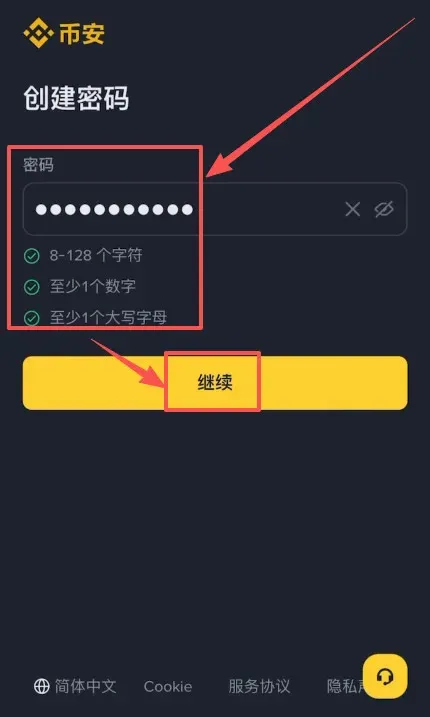
- Set a strong password that meets the requirements (≥ 8 characters, includes numbers and uppercase letters).
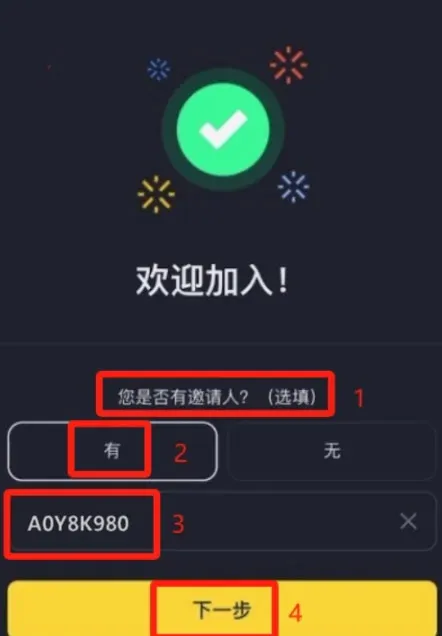
- If you have a referral code B2345, enter it to obtain a fee discount.
- Account Security & Optimization
- Change your password periodically and bind 2FA to protect the account from theft.
Click “Register” on the official website (use the link below) to complete the steps:
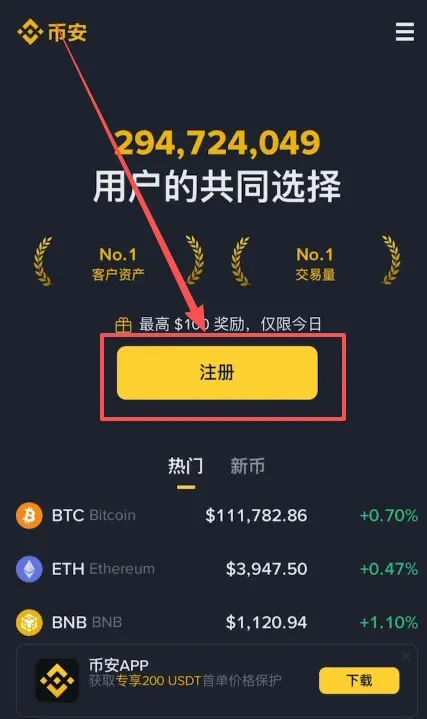
Binance supports registration via email or mobile number, and mainland‑China phone numbers (+86) are accepted.
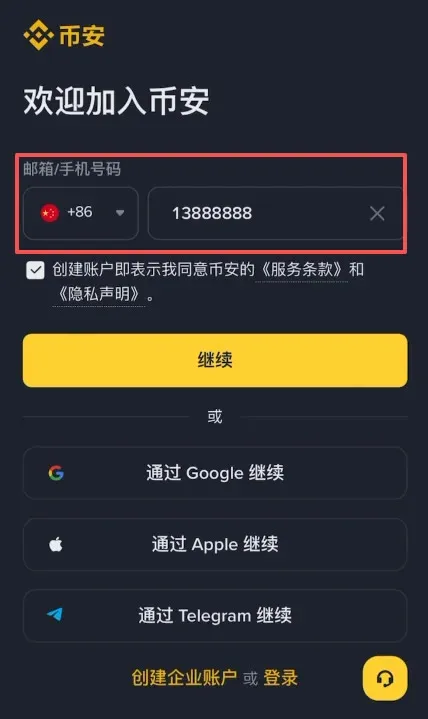
The screenshots below demonstrate an email‑based registration; overseas email services such as Outlook or Gmail are recommended, though domestic services like QQ and 163 also work.
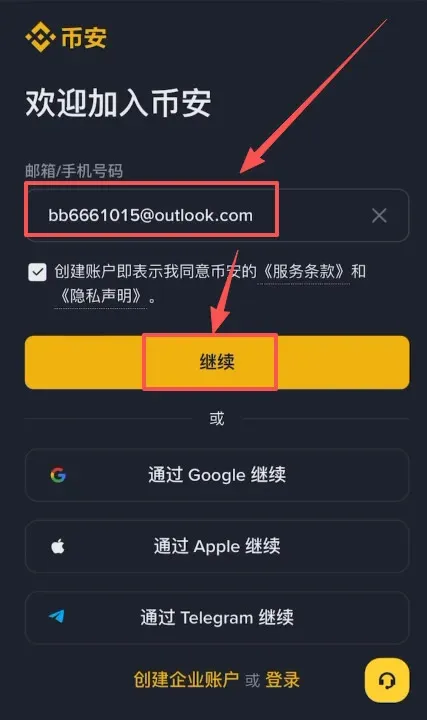
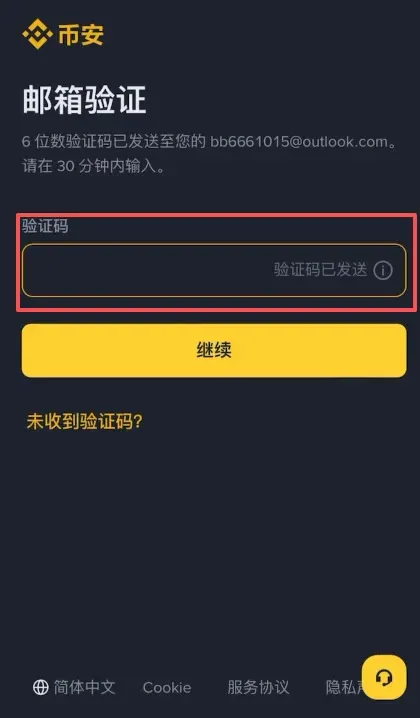
The system sends a verification code to the provided email; enter it to continue.
The password‑creation page requires at least 8 characters, including numbers and uppercase letters; click “Continue” after setting the password.
After successful registration, the system asks whether you have an inviter. Choose “Yes,” enter the invitation ID B2345, and you will receive a permanent 20 % fee discount.
OKX Registration Guide
Account Creation
- Referral Code: B2345 (exchange) / B23459 (wallet)
- Official Website: <https://www.okx.com/> (requires a VPN for some regions)
- China‑Specific Site: <https://www.okx.com/zh-hans/join/B2345> (no VPN needed)
- APP Download: <https://www.bitaigen.com/binance/download> (download without special tools)
Click “Register” on the homepage.
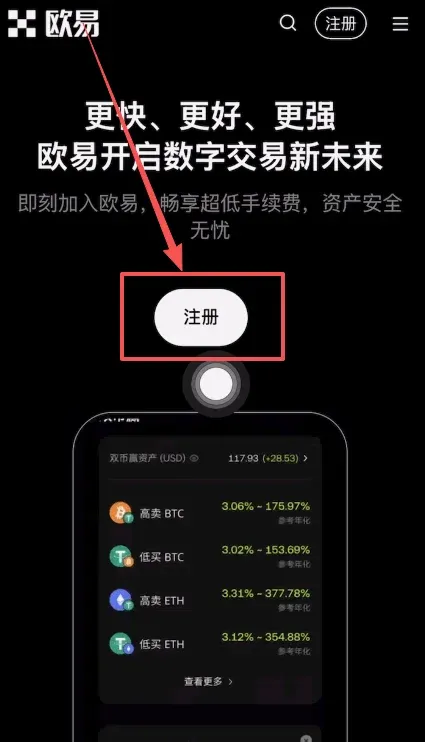
Select “China” as your residence, agree to the terms, and click “Create Account.”
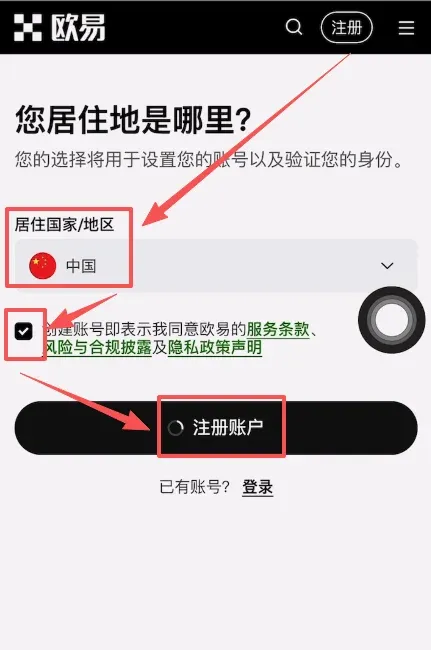
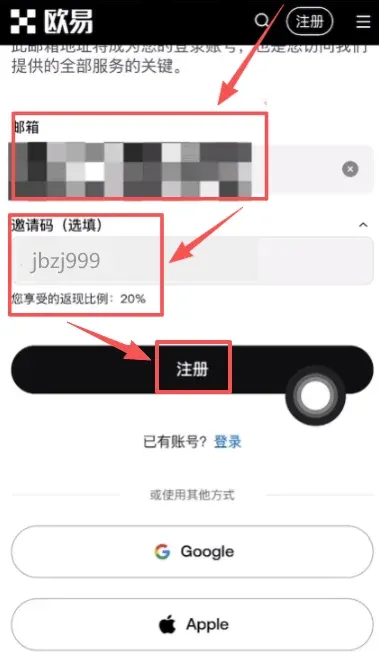
Enter an email address to finish registration; you may use 163, Outlook, Gmail, etc. Adding the referral code B2345 grants a permanent 20 % fee reduction.
Major Domestic Exchanges – APP Websites & Download Links
- OKX: Referral B2345 + 【Official Registration】 【Official Download】
- Binance: Referral B2345 + 【Official Registration】 【Official Download】 *(U.S. residents should use Binance.US)*
- Huobi: Referral b6yq8223 + 【Official Registration】 【Official Download】
- Bitget: Referral vxje + 【Official Registration】 【Official Download】
- Gate.io: Referral A1lBAVFW + 【Official Registration】 【Official Download】
- bybit: Referral 88946 + 【Official Registration】 【Official Download】
Crypto Exchange Installation, Registration, and Usage Tutorials
- 2025 OKX account‑opening duration, trading feasibility, and security full guide
- How iPhone users in China can download Binance: complete
Related Reading
- Is Binance Safe in 2026? Security Review & Trustworthiness
- Top Crypto Exchanges 2026: Binance, OKX, Huobi Review
- OKX vs Binance: Crypto Exchange for Liquidity & Security
💡 Register on Binance with referral code B2345 for the maximum trading fee discount. See Binance complete guide.



